

YOGEZ
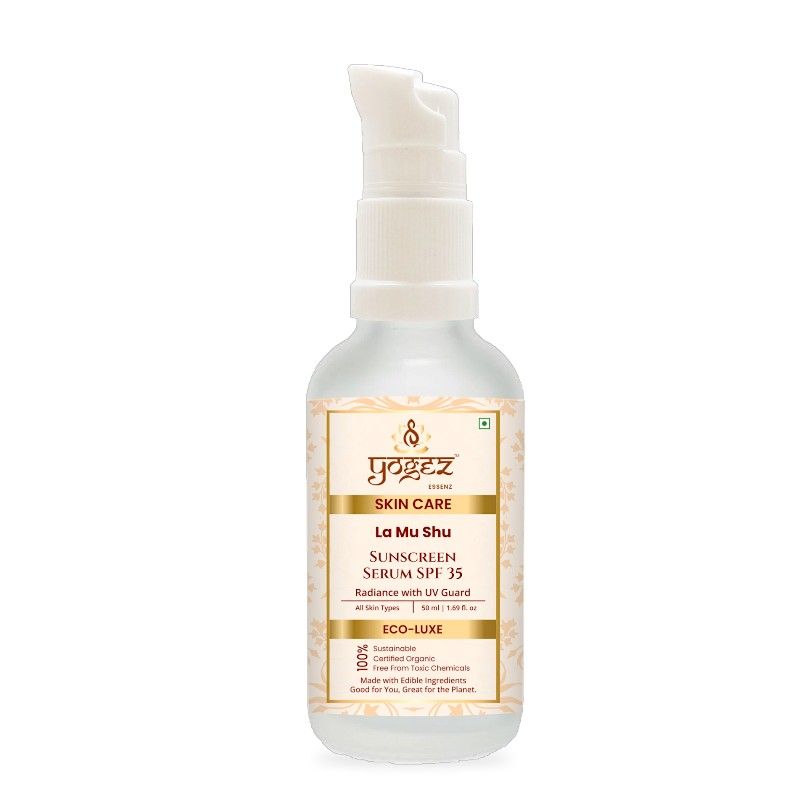
YOGEZ Organic Sunscreen Serum SPF 35

YOGEZ Organic Sunscreen Serum SPF 35
YOGEZ
yogez-organic-sunscreen-serum-spf-35
Suncare
10085497438501
Morning or Evening?
How often will you use this product?
Notes


Highlights
WHAT IS IT?
Sunscreen Serum with multiple natural oils and botanical extracts
FEATURES
SPF 35 sun protection, Hydrating, Nourishing, Anti-aging, Soothes irritation, Certified Organic, FDA approved, Free from harmful chemicals, Vegan and cruelty-free
BEST FOR
sensitive
CHECKS
parabens,sulfates,formaldehyde,phthalates,triclosan,synthetic fragrances,mineral oil,petrolatum,PEGs,oxybenzone,physical and organic sunscreens,HA/BHT,propylene glycol
Who Is It For?
What Does It Help With?
Sun Protection Hydration Anti-aging Soothing Irritation Nourishing Skin Skin Microbiome SupportBudget
Mid-range ($30-$75)How To Use
Which routine should it be used in?
Instructions:
Key Information


What YOGEZ Says
Product Description:
Enjoy a protected, nourished, and radiant complexion with La Mu Shu Sunscreen Serum SPF 35. Protect and nourish your skin with La Mu Shu Sunscreen Serum SPF 35, a luxurious blend of natural oils and botanical extracts designed to shield your skin from harmful UV rays while providing deep hydration and anti-aging benefits. La Mu Shu Sunscreen Serum SPF 35 is meticulously crafted with the finest natural ingredients to deliver superior sun protection and skincare benefits. La Mu Shu Sunscreen Serum SPF 35 stands out due to its unique blend of natural oils and advanced botanical extracts that provide comprehensive sun protection and skincare benefits. Unlike many sunscreens that can be harsh and drying, this serum ensures your skin remains hydrated, nourished, and protected. Struggling with finding a sunscreen that protects without harming your skin? La Mu Shu Sunscreen Serum SPF 35 addresses this common issue by: Providing effective sun protection: SPF 35 shields your skin from harmful UV rays. Nourishing and hydrating: Keeps your skin hydrated and nourished with natural oils and extracts. Combating signs of aging: Reduces fine lines and wrinkles with powerful anti-aging ingredients. Soothing irritation: Calms and soothes the skin with natural essential oils. Know more: Certified Organic and FDA approved. Free of parabens, sulfates, formaldehyde, phthalates, triclosan, synthetic fragrances, mineral oil, petrolatum, PEGs, oxybenzone, physical and organic sunscreens, HA/BHT, propylene glycol, etc. Vegan and cruelty-free. About the Brand: Yogez Essenz is the world’s first conscious beauty brand, rooted in the Himalayan range and committed to 100% certified organic, edible, and toxin-free formulations. Blending advanced Ayurveda, phyto-biotechnology, and probiotics, Yogez' eco-luxe hair, skin, and body care products are crafted with pure herb hydrosols, cold-pressed oils, and biodegradable ingredients - so pure they’re edible! Yogez' carbon-neutral, COSMOS Organic-certified factory champions sustainability with recycled packaging and water-saving, low-foam formulations that reduce water usage by up to 50%. Free from parabens, sulfates, silicones, and synthetic fragrances, every product is handcrafted in small batches, supporting sustainable farming with 5% of profits shared with the farmer community. Elevate your beauty ritual with Yogez Essenz - where nature meets science for clean, green, and transformative beauty.
About the Brand:
Ingredients Overview
Ingredients List
Red-Raspberry-Seed-Oil,Carrot-Seed-Oil,Sea-Buckthorn-Oil,Squalane-from-Olive-Oil,Jojoba-Oil,Argan-Oil,Rosehip-Oil,Tamanu-Oil,Bio-Ferment-Filtrate-(Kombucha),Enzyme-Q10,Blue-Tansy-Oil,Moringa-Oil,Vitamin-E-from-Sunflower-Oil,Lavender-Essential-Oil,Frankincense-Essential-Oil,Geranium-Essential-Oil
Key Ingredients
Red Raspberry Seed Oil, Carrot Seed Oil, Sea Buckthorn Oil, Squalane, Jojoba Oil, Argan Oil, Rosehip Oil, Tamanu Oil, Bio-Ferment Filtrate, Enzyme Q10, Blue Tansy Oil, Moringa Oil, Vitamin E, Lavender, Frankincense, Geranium Essential Oils
Ingredients Details
Argan Oil
Common Name(s): Argan oil,moroccan oil
CAS Number: 223747-87-3
DESCRIPTION
What It Does: Conditions and nourishes skin and hair with exceptional fatty acid, squalene, and tocopherol content.
Why It's Used: Premium multi-nutrient facial and hair oil – its unique phytosterol and squalene composition provides anti-aging benefits beyond simple emolliency.
How It Works: Balanced oleic/linoleic acid ratio provides both emolliency and barrier repair. high squalene content (6-7%) provides antioxidant and sebum-compatible emolliency. tocopherols provide antioxidant stability and skin benefit. phytosterols inhibit 5-alpha-reductase and reduce inflammation.
Typically Found In: Premium facial oils,hair oils,anti-aging products
TECHNICAL DETAILS
Primary Category: Functional ingredient – emollient
Secondary Functions: Squalene content,phytosterol activity,anti-aging
Application Areas:

Facial Skincare
Body Care
Hair Care
Beard Care

Color Cosmetics (Makeup)
Dietary/Oral Supplements
Typical Concentration Range: 1%–100%
SOURCING & ETHICS
Vegan Status: Yes – from argania spinosa kernels
Halal Status: Yes
Source Notes: Cold-pressed from roasted (food) or unroasted (cosmetic) argan kernels. unesco world heritage traditional production. fair trade certified sources available.
SKIN COMPATIBILITY
Irritancy Rating: 1/5 – very low
Comedogenicity Rating: 0/5 – non-comedogenic
Sensitivity Concerns: Non-irritating.
Safe for Sensitive Skin: Yes
SAFETY & COMPATIBILITY
Safety Profile: Excellent safety profile. ewg score: 1.
Works Well With: Humectants,ceramides,actives as carrier
Avoid Combining With: No significant incompatibilities
SCIENTIFIC NOTE
Argan oil's squalene content (6-7%) is among the highest of all plant oils, second only to olive oil. squalene is an endogenous skin lipid that declines with age, making argan oil's high squalene level particularly relevant for anti-aging facial use – replenishing both essential fatty acids and age-depleting skin lipids simultaneously.
Last Verified: 2026-03-12
Primary Sources: Cosing database,boucetta et al. argan oil review,cir safety assessment
Jojoba Oil
Common Name(s): Jojoba oil,jojoba seed oil
CAS Number: 61789-91-1
DESCRIPTION
What It Does: Provides sebum-identical emolliency with outstanding oxidative stability and non-comedogenic profile.
Why It's Used: The most sebum-compatible plant oil – its wax ester composition mimics human sebum for superior skin compatibility across all skin types including oily and acne-prone.
How It Works: Liquid wax ester composition (primarily c20:1 and c22:1 wax esters) provides exceptional molecular mimicry of human sebum wax esters. regulates sebum production via negative feedback to sebaceous glands. remarkable oxidative stability from fully unsaturated wax ester structure vs polyunsaturated triglycerides.
Typically Found In: Facial oils,hair oils,serums,body care,lip care,virtually all product categories
TECHNICAL DETAILS
Primary Category: Functional ingredient – emollient
Secondary Functions: Sebum balancing,oxidative stability,non-comedogenic
Application Areas:
Facial Skincare
Body Care
Hair Care
Beard Care
Color Cosmetics (Makeup)
Dietary/Oral Supplements
Typical Concentration Range: 1%–100%
SOURCING & ETHICS
Vegan Status: Yes – from simmondsia chinensis (jojoba) seeds
Halal Status: Yes
Source Notes: Cold-pressed from jojoba seeds. among the most oxidation-stable plant oils (shelf life 5+ years). desert-grown, drought-resistant crop.
SKIN COMPATIBILITY
Irritancy Rating: 1/5 – very low
Comedogenicity Rating: 0/5 – non-comedogenic; sebum-identical composition
Sensitivity Concerns: Non-irritating.
Safe for Sensitive Skin: Yes
SAFETY & COMPATIBILITY
Safety Profile: Excellent safety profile. ewg score: 1.
Works Well With: Humectants,ceramides,actives as carrier
Avoid Combining With: No significant incompatibilities
SCIENTIFIC NOTE
Jojoba oil's wax ester composition is uniquely different from all other plant oils (which are triglycerides). human sebum contains approximately 25% wax esters – the proportion matched by jojoba. this structural identity explains jojoba's superior skin and hair compatibility versus conventional triglyceride oils.
Last Verified: 2026-03-12
Primary Sources: Cosing database,gad et al. jojoba review,cir safety assessment
Lavender
Common Name(s): Lavender
DESCRIPTION
What It Does: Delivers targeted skin-conditioning or bioactive benefits through a specific mechanism of action suited to the formulation's intended purpose.
Why It's Used: Specialty actives address specific skin concerns through targeted molecular mechanisms, providing efficacy beyond what base formulation ingredients alone can achieve.
How It Works: The bioactive compound interacts with specific molecular targets in skin cells or the extracellular matrix — enzymes, receptors, structural proteins, or signaling molecules — triggering beneficial biological responses.
Typically Found In: Serums,treatments,moisturizers,specialty products
TECHNICAL DETAILS
Primary Category: Specialty actives
Secondary Functions: Skin-conditioning,anti-aging
Application Areas:
Facial Skincare
Body Care
Hair Care
Beard Care
Color Cosmetics (Makeup)
Dietary/Oral Supplements
Typical Concentration Range: 0.01–5%
SOURCING & ETHICS
Vegan Status: Conditional - supplier confirmation required
Halal Status: Unverified - supplier confirmation required
Source Notes: Specialty active ingredient; check individual sourcing for vegan status. [audit 2026-07-29 rev2: the record's own source_notes does not assert a non-animal origin, or instructs the reader to verify with the supplier; "yes" asserts knowledge the record does not hold. determination requires shariah-panel sign-off.]
SKIN COMPATIBILITY
Irritancy Rating: 1899-12-31 00:00:00 -0800
Sensitivity Concerns: Low sensitization potential at recommended use concentrations.
Safe for Sensitive Skin: Yes
SAFETY & COMPATIBILITY
Safety Profile: Well-characterized cosmetic ingredient with established safety profile. generally non-irritating at typical use concentrations. suitable for leave-on and rinse-off cosmetics.
Works Well With: Niacinamide,hyaluronic acid,vitamin c,peptides
Avoid Combining With: Incompatible with oxidizing agents; check ph stability
SCIENTIFIC NOTE
Specialty actives typically work through enzyme inhibition (e.g., tyrosinase inhibition for brightening, mmp inhibition for anti-aging), receptor activation (e.g., retinoid receptors, ppar-γ for barrier genes), or transcription factor modulation (e.g., nrf2 for antioxidant gene upregulation). structure-activity relationships determine potency and selectivity.
Last Verified: 2025-01-15
Primary Sources: Cosing eu database; pcpc cosmetic ingredient safety reviews; ingredient-specific safety and efficacy literature
Squalane
Common Name(s): Perhydrosqualene,2,6,10,15,19,23-hexamethyltetracosane
CAS Number: 0111-01-03
DESCRIPTION
What It Does: Provides endogenous-skin-identical emolliency with exceptional stability and skin compatibility.
Why It's Used: The most skin-compatible emollient – chemically identical to human sebum squalene component with outstanding tolerability across all skin types.
How It Works: Fully saturated hydrocarbon with zero oxidation sites provides exceptional stability unlike squalene's 6 double bonds. integrates into stratum corneum lipid bilayers with near-perfect biocompatibility. provides antioxidant protection to formulation via radical quenching.
Typically Found In: Facial oils,serums,non-comedogenic moisturizers,luxury body care
TECHNICAL DETAILS
Primary Category: Functional ingredient – emollient
Secondary Functions: Maximum biocompatibility,antioxidant stabilizer,non-comedogenic
Application Areas:
Facial Skincare
Body Care
Hair Care
Beard Care
Color Cosmetics (Makeup)
Dietary/Oral Supplements
Typical Concentration Range: 1%–100%
SOURCING & ETHICS
Vegan Status: Conditional - feedstock declaration required
Halal Status: Unverified - feedstock declaration required (plant, animal and petrochemical routes all exist)
Source Notes: Sustainable plant-derived squalane from sugarcane fermentation (amyris) or olive oil fractionation is preferred over shark liver-derived. chemically identical regardless of source. [audit 2026-07-29 rev2: origin-dependent: the same inci exists in plant, animal and petrochemical versions and the name does not discriminate. determination requires shariah-panel sign-off.]
SKIN COMPATIBILITY
Irritancy Rating: 1/5 – very low
Comedogenicity Rating: 0/5 – non-comedogenic
Sensitivity Concerns: Non-irritating.
Safe for Sensitive Skin: Yes
SAFETY & COMPATIBILITY
Safety Profile: Excellent safety profile. ewg score: 1.
Works Well With: Humectants,ceramides,actives as carrier
Avoid Combining With: No significant incompatibilities
SCIENTIFIC NOTE
Squalene constitutes approximately 12-15% of human sebum – the highest proportion of any skin lipid. topical squalane (stable, hydrogenated form) replenishes this abundant endogenous skin lipid. the complete absence of oxidizable double bonds (unlike squalene's 6 double bonds) eliminates the pro-oxidant concerns of natural squalene oxidation.
Last Verified: 2026-03-12
Primary Sources: Cosing database,huang et al. squalane review,cir safety assessment