

Wella Professionals
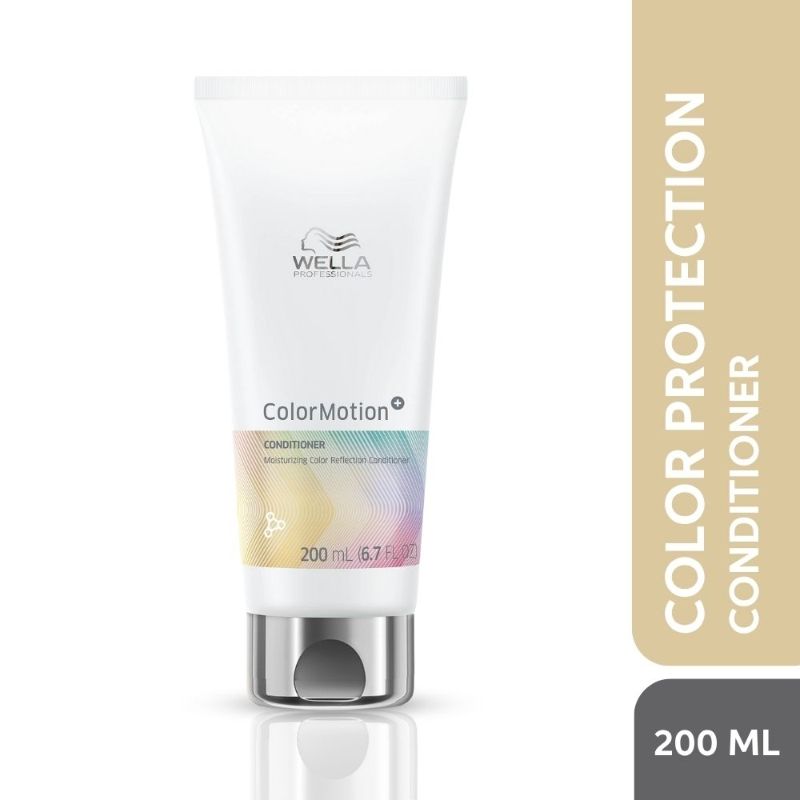
Wella Professionals ColorMotion+ Moisturizing Color Reflection Conditioner
Wella Professionals ColorMotion+ Conditioner is a moisturizing color reflection conditioner that helps restore hair surface quality for radiant light reflection. This conditioner not only smoothes your hair and protects color, it also leaves behind a soft floral fragrance. It offers up to 8 weeks of color protection and improves colored hair quality by protecting color, enhancing shine, and strengthening hair bonds.
Color-safe
Color Fading
Dryness
Color-treated
Daily
Condition
Optimized for Your Environment & Lifestyle
Nykaa
In stock
Recommended

Wella Professionals ColorMotion+ Moisturizing Color Reflection Conditioner
Wella Professionals
wella-professionals-colormotion-moisturizing-color-reflection-conditioner
Conditioner
10202971734309
Morning or Evening?
How often will you use this product?
Notes


Secure payment protection
Your Biodata Compatibility Analysis
Based on your 6 hair health indices and environmental factors
Poor Match
Significant incompatibilities
Growth Cycle Health Index
Hair Match
Hair Health Index Alignment
Optimal for OSI, SSI, DI, HSI
Ingredient Efficacy
Matching Ingredient Score
Environment Compatibility
Current UV, Air Quality & Humidity
Why This Works for Your Specific Profile
Damage Index:
Healthy to moderately damaged hair experiences over-conditioning or protein overload causing limpness or rigidity
Water Quality:
Fine hair becomes weighed down and greasy from heavy formulation
Hair:
Closed cuticles resist product penetration causing surface buildup without internal benefits
Active Lifestyle:
High activity and frequent washing rapidly strip product benefits requiring excessive reapplication
Your Hair Profile Integration
Your Hair Archetype

Density Level

Washing Frequency

Shedding Level

Oil Level
Your Hair Health Indices
Oil Secretion (OSI)
Very low oil production
Scalp Sensitivity (SSI)
Very low sensitivity
Growth Rate (CMR)
Poor metabolism rate
Damage Index (DI)
Minimal damage
Hair Strength (HSI)
Very weak strength
Softness Index (SI)
Significant improvement needed
Water & Environmental Integration

Water:


Expected Results & Timeline
Key Highlights

What is it?
Moisturizing color reflection conditioner, multiple key ingredients targeting color protection

Who Is It For
Adults, All genders

Budget
$12.98 - $25.96

Timeline
Up to 8 weeks color protection
Why You’ll Love It

What Does It Help With?
Color fading, dryness, hair strength

Best for
Color Fading

Features
Moisturizes hair, protects color for up to 8 weeks, smoothes hair cuticles for shine, reconstructs inner bonds for stronger hair, leaves a soft floral fragrance

Checks
100% Authentic (directly purchased from Wella Professionals)
Ingredients Overview
Ingredients List
Aqua/Water/Eau, Stearyl-Alcohol, Cetyl-Alcohol, Bis-Aminopropyl-Dimethicone, Behenamidopropyl-Dimethylamine, Glutamic-Acid, Panthenol, Benzyl-Alcohol, Phenoxyethanol, Parfum/Fragrance, Ethylhexyl-Methoxycinnamate, Octocrylene, Methylparaben, Propylparaben, Citric-Acid, Histidine, EDTA, Sodium-Chloride, Glyoxylic-Acid, Linalool, Limonene, Geraniol, Polyquaternium-7, Camellia-Oleifera-Seed-Oil, BHT
Key Ingredients
Bis-Aminopropyl Dimethicone, Wellaplex Bonding Agent, Camellia Oleifera Seed Oil, Panthenol
Ingredients Details
Aqua/water/eau
Common Name(s): Aqua/water/eau extract
DESCRIPTION
What It Does: Provides antioxidant protection, soothing anti-inflammatory effects, and skin-conditioning benefits through plant-derived polyphenols and phytochemicals.
Why It's Used: Plant extracts concentrate bioactive phytochemicals evolved for environmental protection — uv, microbial, and oxidative stressors — that translate to skin benefits.
How It Works: Polyphenols (flavonoids, phenolic acids) inhibit nf-κb-mediated inflammatory signaling, scavenge reactive oxygen species through electron donation, and chelate pro-oxidant metal ions to reduce oxidative skin damage.
Typically Found In: Serums,toners,moisturizers,masks,essences
TECHNICAL DETAILS
Primary Category: Botanical extracts
Secondary Functions: Antioxidant,anti-inflammatory
Application Areas:

Facial Skincare

Body Care
Hair Care
Beard Care
Color Cosmetics (Makeup)
Dietary/Oral Supplements
Typical Concentration Range: 0.1–10%
SOURCING & ETHICS
Vegan Status: Yes
Halal Status: Yes
Source Notes: Plant-derived extract; no animal components.
SKIN COMPATIBILITY
Irritancy Rating: 1
Comedogenicity Rating: 0
Sensitivity Concerns: Low sensitization potential at recommended use concentrations.
Safe for Sensitive Skin: Yes
SAFETY & COMPATIBILITY
Safety Profile: Well-characterized cosmetic ingredient with established safety profile. generally non-irritating at typical use concentrations. suitable for leave-on and rinse-off cosmetics.
Works Well With: Niacinamide,hyaluronic acid,vitamin c,ceramides
Avoid Combining With: Strong oxidizing agents
SCIENTIFIC NOTE
Plant secondary metabolites (flavonoids, terpenes, phenolic acids) are biosynthesized as defense compounds against uv, herbivores, and pathogens. their anti-inflammatory activity typically derives from competitive inhibition of cox-2 and 5-lox enzymes (ic50 1–50 µm), while antioxidant activity involves single electron transfer (set) and hydrogen atom transfer (hat) mechanisms with structure-dependent rate constants.
Last Verified: 2025-01-15
Primary Sources: Cosing eu database; pcpc cosmetic ingredient safety reviews; phytochemical and ethnobotanical literature
Bht
Common Name(s): Bht
DESCRIPTION
What It Does: Delivers targeted skin-conditioning or bioactive benefits through a specific mechanism of action suited to the formulation's intended purpose.
Why It's Used: Specialty actives address specific skin concerns through targeted molecular mechanisms, providing efficacy beyond what base formulation ingredients alone can achieve.
How It Works: The bioactive compound interacts with specific molecular targets in skin cells or the extracellular matrix — enzymes, receptors, structural proteins, or signaling molecules — triggering beneficial biological responses.
Typically Found In: Serums,treatments,moisturizers,specialty products
TECHNICAL DETAILS
Primary Category: Specialty actives
Secondary Functions: Skin-conditioning,anti-aging
Application Areas:
Facial Skincare
Body Care
Hair Care
Beard Care
Color Cosmetics (Makeup)
Dietary/Oral Supplements
Typical Concentration Range: 0.01–5%
SOURCING & ETHICS
Vegan Status: Conditional - supplier confirmation required
Halal Status: Unverified - supplier confirmation required
Source Notes: Specialty active ingredient; check individual sourcing for vegan status. [audit 2026-07-29 rev2: the record's own source_notes does not assert a non-animal origin, or instructs the reader to verify with the supplier; "yes" asserts knowledge the record does not hold. determination requires shariah-panel sign-off.]
SKIN COMPATIBILITY
Irritancy Rating: 1
Comedogenicity Rating: 0
Sensitivity Concerns: Low sensitization potential at recommended use concentrations.
Safe for Sensitive Skin: Yes
SAFETY & COMPATIBILITY
Safety Profile: Well-characterized cosmetic ingredient with established safety profile. generally non-irritating at typical use concentrations. suitable for leave-on and rinse-off cosmetics.
Works Well With: Niacinamide,hyaluronic acid,vitamin c,peptides
Avoid Combining With: Incompatible with oxidizing agents; check ph stability
SCIENTIFIC NOTE
Specialty actives typically work through enzyme inhibition (e.g., tyrosinase inhibition for brightening, mmp inhibition for anti-aging), receptor activation (e.g., retinoid receptors, ppar-γ for barrier genes), or transcription factor modulation (e.g., nrf2 for antioxidant gene upregulation). structure-activity relationships determine potency and selectivity.
Last Verified:
Bis-aminopropyl Dimethicone
Common Name(s): Bis-aminopropyl dimethicone
DESCRIPTION
What It Does: Creates a smooth, silky skin feel, reduces friction, and forms a breathable film on skin that enhances product application and wear.
Why It's Used: Silicones provide unmatched aesthetic elegance, thermal stability, and formulation flexibility that enhance both consumer experience and product performance.
How It Works: Siloxane backbone provides a flexible, chemically inert polymer that forms thin, breathable films on skin surface, filling surface irregularities and providing low surface energy for exceptional slip and spreadability.
Typically Found In: Moisturizers,primers,foundations,sunscreens,hair products
TECHNICAL DETAILS
Primary Category: Silicones
Secondary Functions: Emollient,film former
Application Areas:
Facial Skincare
Body Care
Hair Care
Beard Care
Color Cosmetics (Makeup)
Dietary/Oral Supplements
Typical Concentration Range: 0.5–30%
SOURCING & ETHICS
Vegan Status: Yes
Halal Status: Yes
Source Notes: Synthetic silicone polymer; not plant-derived but generally considered vegan.
SKIN COMPATIBILITY
Irritancy Rating: 1
Comedogenicity Rating: 0
Sensitivity Concerns: Low sensitization potential at recommended use concentrations.
Safe for Sensitive Skin: Yes
SAFETY & COMPATIBILITY
Safety Profile: Well-characterized cosmetic ingredient with established safety profile. generally non-irritating at typical use concentrations. suitable for leave-on and rinse-off cosmetics.
Works Well With: Other emollients,uv filters,pigments
Avoid Combining With: Silicone-sensitive formulations; biodegradability concerns in eco-formulations
SCIENTIFIC NOTE
Silicone polymers are poly(dimethylsiloxane) backbones with si-o bond energy (105 kcal/mol) significantly higher than c-c (83 kcal/mol), providing exceptional thermal and oxidative stability. the low surface energy (21 mn/m vs 30+ mn/m for organic polymers) accounts for silicone's unique slip feel, and the si-o bond's flexibility (rotation barrier ~0.3 kcal/mol) enables fluid behavior across wide temperature ranges.
Last Verified: 2025-01-15
Primary Sources: Cosing eu database; pcpc cosmetic ingredient safety reviews; ingredient-specific safety and efficacy literature
Camellia Oleifera Seed Oil
Common Name(s): Camellia oleifera seed oil
DESCRIPTION
What It Does: Nourishes and softens skin through its balanced fatty acid profile, while antioxidant compounds protect against oxidative skin damage.
Why It's Used: Plant oils provide physiologically compatible lipid structures that integrate into the skin barrier and deliver fat-soluble antioxidants directly to skin cells.
How It Works: Fatty acids integrate into stratum corneum lipid lamellae, reinforcing the lipid barrier. antioxidants (tocopherols, carotenoids, polyphenols) neutralize ros through electron donation or singlet oxygen quenching.
Typically Found In: Face oils,serums,moisturizers,hair treatments,body oils
TECHNICAL DETAILS
Primary Category: Plant oils
Secondary Functions: Emollient,antioxidant
Application Areas:
Facial Skincare
Body Care
Hair Care
Beard Care
Color Cosmetics (Makeup)
Dietary/Oral Supplements
Typical Concentration Range: 0.5–30%
SOURCING & ETHICS
Vegan Status: Yes
Halal Status: Yes
Source Notes: Cold-pressed or solvent-extracted plant oil; no animal components.
SKIN COMPATIBILITY
Irritancy Rating: 1
Comedogenicity Rating: 2
Sensitivity Concerns: Low sensitization potential at recommended use concentrations.
Safe for Sensitive Skin: Yes
SAFETY & COMPATIBILITY
Safety Profile: Well-characterized cosmetic ingredient with established safety profile. generally non-irritating at typical use concentrations. suitable for leave-on and rinse-off cosmetics.
Works Well With: Vitamin e,ceramides,other plant oils,squalane
Avoid Combining With: Strong oxidizers (accelerate rancidity)
SCIENTIFIC NOTE
Vegetable oils are triglyceride matrices where the fatty acid composition determines skin compatibility, barrier function, and comedogenicity. oleic acid-rich oils (>60%) soften barrier lipids and enhance penetration; linoleic acid-rich oils reinforce ceramide-poor stratum corneum; saturated fatty acid-rich oils provide occlusion without skin penetration.
Last Verified: 2025-01-15
Primary Sources: Cosing eu database; pcpc cosmetic ingredient safety reviews; aocs plant oil composition databases; fatty acid pharmacology reviews
Personalized Usage Instructions
How to Use
Step 1
Apply to clean, damp hair and distribute evenly
Step 2
Rinse thoroughly
Medical Chemicals

Protein/Moisture
- Moisture
pH Level
-

Porosity Taget
-
Customized for Your Profile
Scalp Condtions
Climate Suitability
Humid, Dry, UV Protection
Clinical Claims
Frequency
Apply to clean, damp hair and distribute evenly. Rinse thoroughly.
Product Information

100% Authentic (directly purchased from Wella Professionals)