

Votre
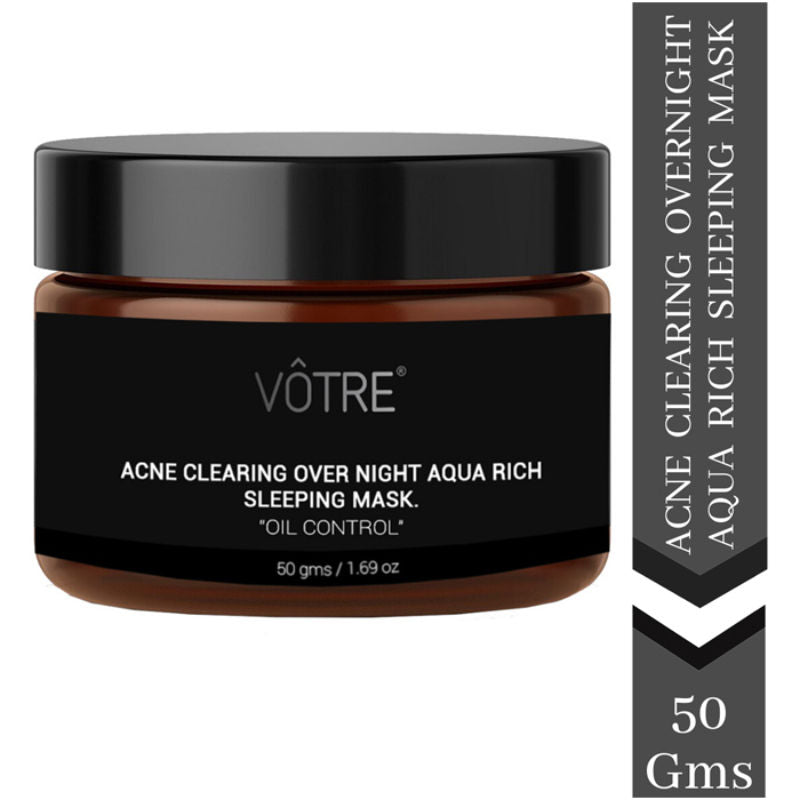
Votre Acne Clearing Over Night Aqua Rich Sleeping Mask Oil Control

Votre Acne Clearing Over Night Aqua Rich Sleeping Mask Oil Control
Votre
votre-acne-clearing-over-night-aqua-rich-sleeping-mask-oil-control
Face Mask
10085117952293
Morning or Evening?
How often will you use this product?
Notes


Highlights
WHAT IS IT?
Overnight sleeping mask
FEATURES
Gentle, purifying, detoxes, nourishes skin, reduces acne and pimples, controls oil production, leaves skin clean and clear
BEST FOR
oily
CHECKS
Parabens, sulphates, synthetic fragrances, synthetic dyes, petrochemicals, phthalates, GMOs, triclosan, alcohol
Who Is It For?
What Does It Help With?
Acne Pimples Excess Oil ProductionBudget
Mid-range ($30-$75)How To Use
Which routine should it be used in?
Instructions:
Key Information


What Votre Says
Product Description:
A gentle, purifying overnight sleeping mask that detoxes while nourishing skin. This mask helps to reduce existing acne, pimples and also control oil production, leaving the skin comfortably clean, clear, and conditioned.
About the Brand:
Ingredients Overview
Ingredients List
Tea Tree Oil, Azadirachta indica (Neem Extract), Saccharum officinarum (Sugarcane extract), Ocimum sanctum (Tulsi Extract), Curcuma longa (Turmeric extract ), Carica papaya (papaya extract), Glycyrrhiza glabra (Licorice), Water ( Aqua ), Vegetable Glycerin, Spectrastat
Key Ingredients
Ingredients Details
Tea Tree Oil
Common Name(s): Tea tree oil,tto,melaleuca oil
CAS Number: 68647-73-4
DESCRIPTION
What It Does: Provides the most potent single-plant broad-spectrum antimicrobial essential oil for skin antiseptic applications.
Why It's Used: The antimicrobial essential oil – tea tree oil's terpinen-4-ol provides clinically proven broad-spectrum antimicrobial activity in rct-level clinical studies for acne and mrsa decolonisation.
How It Works: Terpinen-4-ol (30-48%) provides membrane-disrupting antimicrobial activity vs gram+/- bacteria, fungi, and enveloped viruses. iso 4730 requires minimum 30% terpinen-4-ol and maximum 5% 1,8-cineole (sensitiser). anti-biofilm activity vs staphylococcus.
Typically Found In: Anti-acne products,antiseptic formulas,natural antimicrobials,scalp treatments
TECHNICAL DETAILS
Primary Category: Active ingredient – soothing / anti-inflammatory
Secondary Functions: Redness reduction,anti-inflammatory,calming
Application Areas:

Facial Skincare
Body Care

Hair Care
Beard Care
Color Cosmetics (Makeup)
Dietary/Oral Supplements
Typical Concentration Range: 0.001%–5%
SOURCING & ETHICS
Vegan Status: Yes – from melaleuca alternifolia leaves (australia)
Halal Status: Yes
Source Notes: Plant-derived extract or synthetic.
SKIN COMPATIBILITY
Irritancy Rating: 1/5 – very low
Comedogenicity Rating: 0/5 – non-comedogenic
Sensitivity Concerns: Non-irritating; ideal for reactive and sensitive skin.
Safe for Sensitive Skin: Yes – particularly recommended for sensitive skin
SAFETY & COMPATIBILITY
Safety Profile: Iso 4730:2017 quality standard defines authentic tea tree oil. can cause contact sensitisation at high concentrations. toxic if ingested.
Works Well With: Ceramides,panthenol,allantoin,hyaluronic acid,centella asiatica
Avoid Combining With: No significant incompatibilities
SCIENTIFIC NOTE
Randomised controlled trial comparison of 5% tea tree oil gel vs 5% benzoyl peroxide lotion for acne demonstrated equivalent efficacy for acne lesion reduction at 3 months. tea tree's slower onset (8 weeks vs 4 weeks for bpo) was offset by significantly fewer side effects (dryness, irritation, peeling) in the tto group – providing evidence-based support for clinical tto use as a well-tolerated bpo alternative.
Last Verified: Cosing database,bassett et al. tea tree oil acne rct,iso 4730
Primary Sources: 2026-03-12
Vegetable Glycerin
Common Name(s): Vegetable glycerol,plant-derived glycerin,sustainable glycerin
CAS Number: 56-81-5
DESCRIPTION
What It Does: Provides plant-derived glycerin humectancy with explicit vegan natural credentials.
Why It's Used: Credentialed natural humectant — vegetable glycerin's explicit plant origin provides the clean beauty and vegan credentials alongside glycerin's unmatched humectancy, safety, and barrier repair for natural cosmetic positioning.
How It Works: Glycerin (glycerol) from plant oil triglyceride hydrolysis during biodiesel production. chemically identical to synthetic glycerin but with plant-origin documentation. sustainable byproduct of renewable biodiesel production from rapeseed, soy, or palm.
Typically Found In: Natural cosmetics,vegan products,clean beauty — identical function to standard glycerin
TECHNICAL DETAILS
Primary Category: Functional ingredient – humectant
Secondary Functions: Tewl reduction,skin plumping
Application Areas:
Facial Skincare
Body Care
Hair Care
Beard Care
Color Cosmetics (Makeup)
Dietary/Oral Supplements
Typical Concentration Range: 1%–40%
SOURCING & ETHICS
Vegan Status: Yes – explicitly from plant sources (biodiesel byproduct)
Halal Status: Yes
Source Notes: Synthetic or naturally derived. excellent aqueous solubility.
SKIN COMPATIBILITY
Irritancy Rating: 2026-01-05 00:00:00 -0800
Comedogenicity Rating: 0/5
Sensitivity Concerns: Non-irritating; suitable for all skin types.
Safe for Sensitive Skin: Yes
SAFETY & COMPATIBILITY
Safety Profile: Excellent safety profile. ewg score: 1.
Works Well With: Ceramides,emollients,occlusives,glycerin,hyaluronic acid
Avoid Combining With: No significant incompatibilities
SCIENTIFIC NOTE
Vegetable glycerin's biodiesel byproduct origin provides circular economy sustainability: biodiesel production from plant triglycerides generates glycerin as a co-product (approximately 10% by mass of biodiesel). this abundant sustainable supply from renewable feedstocks makes vegetable glycerin one of cosmetics' most genuinely sustainable primary ingredients.
Last Verified: Cosing database,cir safety assessment
Primary Sources: 2026-03-12
