

Volamena
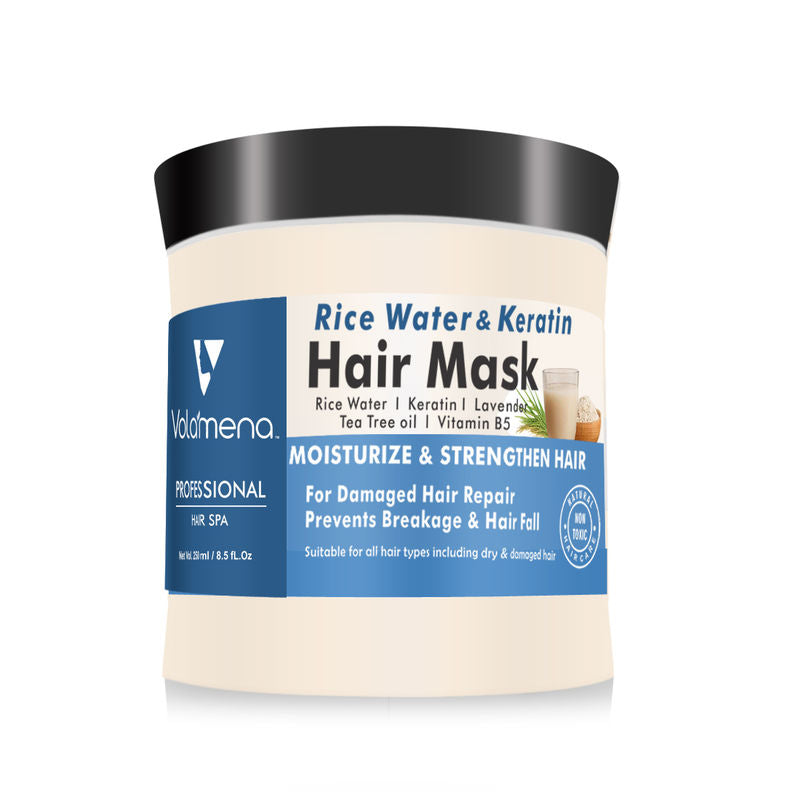
Volamena Rice Water & Keratin Hair Mask
Volamena Rice Water & Keratin Hair Mask is formulated with rice water and tea tree essential oil to strengthen breakage-prone damaged hair, stimulate weak roots, boost shine, and calm irritated scalp. Rich in antioxidants, amino acids, and vitamins B & C, it revives brittle hair and smooths hair cuticles with hydrolyzed keratin protein. Tea tree oil soothes itchy scalp. Suitable for regular use for both men and women. Free from phthalates, parabens, SLES, PEGs, and colors.
Sulfate-free
Paraben-free
Protein-free
Damage Repair
Breakage
Dullness
Optimized for Your Environment & Lifestyle
Nykaa
In stock
Recommended

Volamena Rice Water & Keratin Hair Mask
Volamena
volamena-rice-water-keratin-hair-mask
Hair Mask
10202971767077
Morning or Evening?
How often will you use this product?
Notes


Secure payment protection
Your Biodata Compatibility Analysis
Based on your 6 hair health indices and environmental factors
Poor Match
Significant incompatibilities
Growth Cycle Health Index
Hair Match
Hair Health Index Alignment
Optimal for OSI, SSI, DI, HSI
Ingredient Efficacy
Matching Ingredient Score
Environment Compatibility
Current UV, Air Quality & Humidity
Why This Works for Your Specific Profile
Damage Index:
Damage levels outside specified range may not benefit optimally from product formulation
Water Quality:
Dry or dull hair experiences increased brittleness from protein concentration without moisture balance
Hair:
Closed cuticles resist product penetration causing surface buildup without internal benefits
Active Lifestyle:
High activity and frequent washing rapidly strip product benefits requiring excessive reapplication
Your Hair Profile Integration
Your Hair Archetype

Density Level

Washing Frequency

Shedding Level

Oil Level
Your Hair Health Indices
Oil Secretion (OSI)
Very low oil production
Scalp Sensitivity (SSI)
Very low sensitivity
Growth Rate (CMR)
Poor metabolism rate
Damage Index (DI)
Minimal damage
Hair Strength (HSI)
Very weak strength
Softness Index (SI)
Significant improvement needed
Water & Environmental Integration

Water:


Expected Results & Timeline
Key Highlights

What is it?
Hair Mask with Rice Water & Keratin as key ingredients

Who Is It For
Adults, Both genders

Budget
$7.21 - $14.42

Timeline
Use 2 to 3 times weekly, results vary
Why You’ll Love It

What Does It Help With?
Breakage, Dullness, Irritated scalp

Best for
Damage Repair

Features
Boosts shine, Calms irritated scalp, Infused with rice water and keratin, Sulfate and paraben free

Checks
100% Authentic, Free from harmful chemicals (phthalates, parabens, SLES, PEGs, colors)
Ingredients Overview
Ingredients List
purified-water, stearic-acid, cetyl-alcohol, rice-water-extract, hydrolysed-keratin-protein, caprylic-capric-tri-glyceride, glycerine-vegetable-origin, capryl-capryl-glucoside, iso-propyl-misterate, cetrimonium-chloride, capric-carylic-tri-glyceride, polysorbate-20, aloe-vera-extract, polyquaternium-7, polyquaternium-39, sweet-almond-oil, brassicamidopropyl-dimethylamine, shea-butter, tocopherol-acetate-vitamin-e, tea-tree-oil, niacinamide-vitamin-b3, lavender-essential-oil, disodium-ethylenediaminetetraacetic-acid, sodium-benzoate, potassium-sorbate, vitamin-b5-d-panthenol, lavender-oil, citric-acid, fragrance
Key Ingredients
Rice Water Extract, Hydrolyzed Keratin Protein, Tea Tree Oil, Aloe Vera Extract, Niacinamide
Ingredients Details
Fragrance
Common Name(s): Fragrance ingredient,eu allergen or aromatic component,olfactory/flavour
CAS Number: N/a
DESCRIPTION
What It Does: Provides the complete fragrance profile contributing to product sensory experience and consumer appeal.
Why It's Used: Fragrance is a major consumer purchase driver — up to 70% of consumers make purchasing decisions partially based on product scent.
How It Works: Fragrance blends interact with olfactory receptors providing the sensory profile — complex mixtures activate multiple receptor types for rich, multidimensional scent experiences.
Typically Found In: All fragrance products
TECHNICAL DETAILS
Primary Category: Active ingredient – cosmetic active
Secondary Functions: Skin conditioning
Application Areas:

Facial Skincare

Body Care
Hair Care
Beard Care
Color Cosmetics (Makeup)
Dietary/Oral Supplements
Typical Concentration Range: Standard use levels
SOURCING & ETHICS
Vegan Status: Conditional - supplier confirmation required
Halal Status: Unverified - supplier confirmation required
Source Notes: Commercially produced for cosmetic use. verify vegan/halal status with supplier. [audit 2026-07-29 rev2: the record's own source_notes does not assert a non-animal origin, or instructs the reader to verify with the supplier; "yes" asserts knowledge the record does not hold. determination requires shariah-panel sign-off.]
SKIN COMPATIBILITY
Irritancy Rating: 1/5 – very low
Comedogenicity Rating: 0/5 – non-comedogenic
Sensitivity Concerns: Well-tolerated by most skin types.
Safe for Sensitive Skin: Yes
SAFETY & COMPATIBILITY
Safety Profile: Good safety profile at recommended concentrations. ewg score: 1–2.
Works Well With: Standard skincare actives
Avoid Combining With: No known significant incompatibilities
SCIENTIFIC NOTE
Ifra guidelines set usage limits for fragrance ingredients based on skin sensitisation and phototoxicity assessment for each application category.
Last Verified: 2026-03-12
Primary Sources: Eu regulation 1223/2009 annex iii,ifra standards,fragrance allergen declaration requirements
Niacinamide
Common Name(s): Vitamin b3,nicotinamide,pyridine-3-carboxamide
CAS Number: 98-92-0
DESCRIPTION
What It Does: Niacinamide strengthens the skin barrier, reduces visible pore size, regulates sebum production, fades dark spots, and improves skin texture and tone.
Why It's Used: It is used because it addresses multiple skin concerns at once without irritation, making it suitable for all skin types. it is stable in formulations and pairs well with most other actives.
How It Works: Niacinamide inhibits the transfer of melanosomes (pigment packets) to skin cells, reducing hyperpigmentation. it also stimulates ceramide synthesis to strengthen the skin barrier and reduces inflammation by modulating cytokine activity.
Typically Found In: Serums,moisturizers,toners,cleansers,eye creams,sunscreens,primers
TECHNICAL DETAILS
Primary Category: Active ingredient – vitamin
Secondary Functions: Barrier repair,brightening,anti-inflammatory
Application Areas:
Facial Skincare
Body Care
Hair Care
Beard Care
Color Cosmetics (Makeup)
Dietary/Oral Supplements
Typical Concentration Range: 2%–10% (typical: 5%; higher concentrations may cause flushing in some individuals)
SOURCING & ETHICS
Vegan Status: Yes – synthetically produced
Halal Status: Yes – synthetic origin
Source Notes: Commercially produced via synthesis from nicotinic acid or 3-cyanopyridine. no animal-derived sources used in cosmetic-grade niacinamide.
SKIN COMPATIBILITY
Irritancy Rating: 1/5 – very low; concentrations above 10% may cause temporary flushing in sensitive individuals
Comedogenicity Rating: 0/5 – non-comedogenic
Sensitivity Concerns: At concentrations >10%, some users experience niacin flush (transient redness/tingling). generally very well-tolerated.
Safe for Sensitive Skin: Yes – one of the best-tolerated actives for sensitive skin
SAFETY & COMPATIBILITY
Safety Profile: Extensively studied and considered very safe. ewg hazard score: 1. no significant systemic toxicity concerns at topical concentrations.
Works Well With: Retinol,peptides,ahas/bhas,hyaluronic acid,ceramides,zinc,vitamin c,spf
Avoid Combining With: High concentrations of vitamin c (ascorbic acid) may theoretically convert to niacin – use at different times if using pure l-ascorbic acid above 15%
SCIENTIFIC NOTE
Niacinamide is a precursor to nad+ and nadp+, coenzymes vital to cellular energy metabolism. its benefits for dna repair and mitochondrial function make it a key ingredient in anti-aging strategies.
Last Verified: 2026-03-12
Primary Sources: Cosing database,cir safety assessment,ewg skin deep,pubmed clinical studies
Polyquaternium-39
Common Name(s): Polyquaternium-39,cationic conditioning polymer,substantive film-former
CAS Number: N/a
DESCRIPTION
What It Does: Deposits a conditioning film on hair and skin through electrostatic attraction to negative cuticle/corneocyte surfaces, reduces hair-on-hair friction for improved combability and detangling, eliminates static charge buildup, and provides anti-frizz humidity resistance.
Why It's Used: Cationic polymers are the primary hair conditioning technology — the permanent positive quaternary ammonium groups provide substantive deposition that resists rinsing, delivering persistent conditioning between washes unlike small-molecule cationic conditioners.
How It Works: At shampoo/conditioner ph 4.5–5.5, hair cuticle carries net negative charge (isoelectric point ph ~3.5). polyquaternium cations undergo electrostatic attraction depositing on the cuticle surface. during rinsing, the deposited polymer film persists from reduced surface-solution equilibrium at low bulk concentration — substantive deposition from favourable interfacial versus bulk partitioning.
Typically Found In: Shampoos,conditioners,leave-in products
TECHNICAL DETAILS
Primary Category: Active ingredient – cosmetic active
Secondary Functions: Skin conditioning
Application Areas:
Facial Skincare
Body Care
Hair Care
Beard Care
Color Cosmetics (Makeup)
Dietary/Oral Supplements
Typical Concentration Range: 0.1%–3%
SOURCING & ETHICS
Vegan Status: Conditional - supplier confirmation required
Halal Status: Unverified - supplier confirmation required
Source Notes: Commercially produced for cosmetic use. verify vegan/halal status with supplier. [audit 2026-07-29 rev2: the record's own source_notes does not assert a non-animal origin, or instructs the reader to verify with the supplier; "yes" asserts knowledge the record does not hold. determination requires shariah-panel sign-off.]
SKIN COMPATIBILITY
Irritancy Rating: 1/5 – very low
Comedogenicity Rating: 0/5 – non-comedogenic
Sensitivity Concerns: Well-tolerated by most skin types.
Safe for Sensitive Skin: Yes
SAFETY & COMPATIBILITY
Safety Profile: Good safety profile at recommended concentrations. ewg score: 1–2.
Works Well With: Standard skincare actives
Avoid Combining With: No known significant incompatibilities
SCIENTIFIC NOTE
Different polyquaternium numbers indicate different backbone chemistries: pq-7 (acrylamide/quaternary acrylate copolymer) for leave-on flexibility; pq-10 (hydroxyethylcellulose/quaternary ammonium) for substantive deposition; pq-11 (vp/dimethylaminoethyl methacrylate) for styling fixation.
Last Verified: 2026-03-12
Primary Sources: Cosing database,polyquaternium-39 cationic conditioning deposition review
Polyquaternium-7
Common Name(s): Polyquaternium-7,cationic conditioning polymer,substantive film-former
CAS Number: N/a
DESCRIPTION
What It Does: Deposits a conditioning film on hair and skin through electrostatic attraction to negative cuticle/corneocyte surfaces, reduces hair-on-hair friction for improved combability and detangling, eliminates static charge buildup, and provides anti-frizz humidity resistance.
Why It's Used: Cationic polymers are the primary hair conditioning technology — the permanent positive quaternary ammonium groups provide substantive deposition that resists rinsing, delivering persistent conditioning between washes unlike small-molecule cationic conditioners.
How It Works: At shampoo/conditioner ph 4.5–5.5, hair cuticle carries net negative charge (isoelectric point ph ~3.5). polyquaternium cations undergo electrostatic attraction depositing on the cuticle surface. during rinsing, the deposited polymer film persists from reduced surface-solution equilibrium at low bulk concentration — substantive deposition from favourable interfacial versus bulk partitioning.
Typically Found In: Shampoos,conditioners,leave-in products
TECHNICAL DETAILS
Primary Category: Active ingredient – cosmetic active
Secondary Functions: Skin conditioning
Application Areas:
Facial Skincare
Body Care
Hair Care
Beard Care
Color Cosmetics (Makeup)
Dietary/Oral Supplements
Typical Concentration Range: 0.1%–3%
SOURCING & ETHICS
Vegan Status: Conditional - supplier confirmation required
Halal Status: Unverified - supplier confirmation required
Source Notes: Commercially produced for cosmetic use. verify vegan/halal status with supplier. [audit 2026-07-29 rev2: the record's own source_notes does not assert a non-animal origin, or instructs the reader to verify with the supplier; "yes" asserts knowledge the record does not hold. determination requires shariah-panel sign-off.]
SKIN COMPATIBILITY
Irritancy Rating: 1/5 – very low
Comedogenicity Rating: 0/5 – non-comedogenic
Sensitivity Concerns: Well-tolerated by most skin types.
Safe for Sensitive Skin: Yes
SAFETY & COMPATIBILITY
Safety Profile: Good safety profile at recommended concentrations. ewg score: 1–2.
Works Well With: Standard skincare actives
Avoid Combining With: No known significant incompatibilities
SCIENTIFIC NOTE
Different polyquaternium numbers indicate different backbone chemistries: pq-7 (acrylamide/quaternary acrylate copolymer) for leave-on flexibility; pq-10 (hydroxyethylcellulose/quaternary ammonium) for substantive deposition; pq-11 (vp/dimethylaminoethyl methacrylate) for styling fixation.
Last Verified: 2026-03-12
Primary Sources: Cosing database,polyquaternium-7 cationic conditioning deposition review
Personalized Usage Instructions
How to Use
Step 1
Apply adequate amount to dried shampooed damp hair
Step 2
Distribute evenly using hands and fingers from scalp to hair ends
Step 3
Comb through, leave for 5 to 15 minutes, then rinse
Step 4
Use 2 to 3 times weekly
Medical Chemicals

Protein/Moisture
- Protein/Moisture balance
pH Level
- Acidic

Porosity Taget
- Normal Porosity
Customized for Your Profile
Scalp Condtions
Sensitive Scalp, pH Balanced, Oil Control, Dry Scalp
Climate Suitability
Humid, Dry, UV Protection, Pollution Shield, Summer
Clinical Claims
Frequency
Apply adequate amount to dried shampooed damp hair. Distribute evenly using hands and fingers from scalp to hair ends. Comb through, leave for 5 to 15 minutes, then rinse. Use 2 to 3 times weekly.
Product Information

100% Authentic
Free from harmful chemicals (phthalates
parabens
SLES
PEGs
colors)