

Volamena
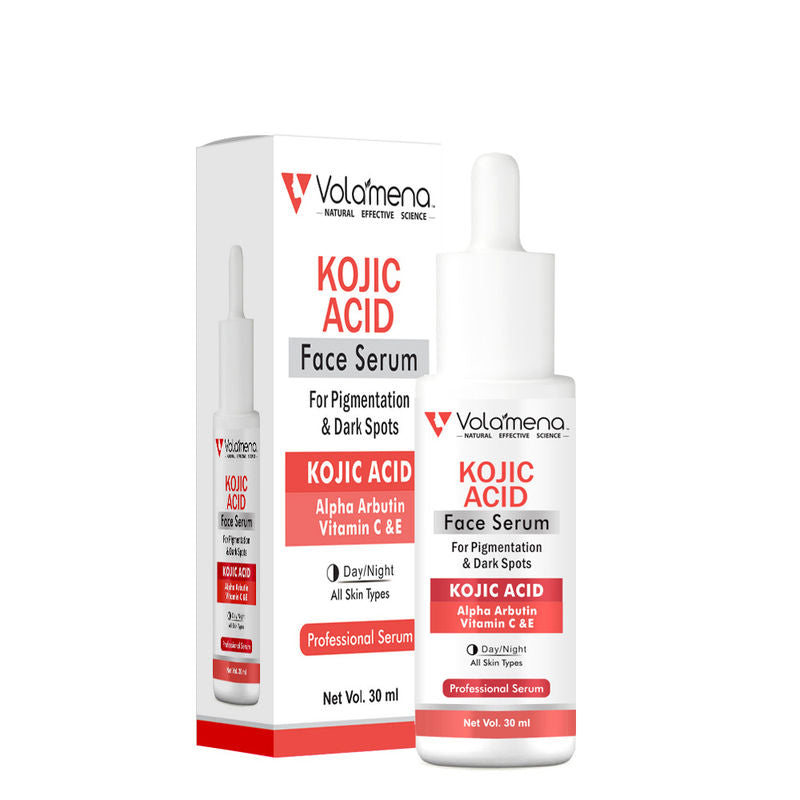
Volamena Kojic Acid Face Serum

Volamena Kojic Acid Face Serum
Volamena
volamena-kojic-acid-face-serum
Serum
10085037572389
Morning or Evening?
How often will you use this product?
Notes


Highlights
WHAT IS IT?
Face serum with natural skin lightening agents and antioxidants, contains multiple active ingredients
FEATURES
Clinically proven to protect against melanin pigmentation, contains kojic acid, alpha arbutin, vitamins C & E, ceramide & cica extract, reduces dark spots, acne scarring, hyperpigmentation, cruelty-free, safe and natural ingredients
BEST FOR
normal
CHECKS
No parabens, No phthalates, No mineral oils, No PABA, No petroleum, No paraffin, No animal ingredients
Who Is It For?
What Does It Help With?
Reduces Dark Spots Acne Scars Hyperpigmentation Blemishes Pigmentation Brightens Dull SkinBudget
Affordable (under $30)How To Use
Which routine should it be used in?
Instructions:
Key Information


What Volamena Says
Product Description:
Highly concentrated serum infused is clinically proven to helps protect skin against the appearance of melanin pigmentation to give you an even, translucent skin tone, for healthy, smoother, whiter skin with a natural glow. Kojic acid a natural skin lightening agent, Alpha Arbutin, Vitamin C & E combination reduces dark spots, acne scarring and hyperpigmentation, diminishes blemishes gives you even-toned glowing skin. Ceramide & Cica Extract are powerful antioxidants decreases the appearance of pigmentation & brighten dull skin. Benefits: Healthy, smoother, whiter skin with a natural glow. Kojic acid, Alpha Arbutin, Vitamin C & E. Cruelty Free, Safe & Natural Ingredients
About the Brand:
Ingredients Overview
Ingredients List
Purified-water,Glycerin-(vegetable-origin),Dimethicone,Aloe-barbadensis-(aloe-vera)-extract,Cyclopentaslloxane,Kojic-acid-dipalmitate,Sodium-pyrrolidone-carboxylic-acid,Centella-asiatica-(gotu-kola)-extract,Xanthnum-gum,Glycyrrhiza-glabra-(licorice)-root-extract,Niacinamide-(vitamin-b3),Sodium-ascorbyl-phosphate-(vitamin-c),Sodium-benzoate,Tocopheryl-acetate-(vitamin-e),Olive-squalane,Phytoceramides,Fragrance,Ethylene-diamine-tetra-acetic-acid
Key Ingredients
Kojic acid, Alpha Arbutin, Vitamin C, Vitamin E, Ceramide, Cica Extract
Ingredients Details
Dimethicone
Common Name(s): Pdms,polydimethylsiloxane,silicone fluid
CAS Number: 9006-65-9
DESCRIPTION
What It Does: Provides silicone-characteristic silky feel and skin protection with adjustable viscosity.
Why It's Used: The benchmark cosmetic silicone – sets the gold standard for silky application feel, spreadability, and skin protection in virtually all skin care categories.
How It Works: Polydimethylsiloxane chain flexibility provides extremely low surface tension and high spreadability. inert si-o backbone provides chemical stability and excellent skin tolerance. occlusive film formation reduces tewl. higher viscosity grades provide more intense conditioning.
Typically Found In: Moisturizers,foundations,primers,sunscreens – nearly universal
TECHNICAL DETAILS
Primary Category: Functional ingredient – polydimethylsiloxane
Secondary Functions: Barrier sealing,softening
Application Areas:

Facial Skincare
Body Care
Hair Care

Beard Care
Color Cosmetics (Makeup)
Dietary/Oral Supplements
Typical Concentration Range: 0.1%–30%
SOURCING & ETHICS
Vegan Status: Conditional - supplier confirmation required
Halal Status: Unverified - supplier confirmation required
Source Notes: Plant-derived, synthetic or animal-derived. verify source. [audit 2026-07-29 rev2: the record's own source_notes does not assert a non-animal origin, or instructs the reader to verify with the supplier; "yes" asserts knowledge the record does not hold. determination requires shariah-panel sign-off.]
SKIN COMPATIBILITY
Irritancy Rating: 1/5 – very low
Comedogenicity Rating: 1/5 – low; formulation-dependent
Sensitivity Concerns: Non-irritating.
Safe for Sensitive Skin: Yes
SAFETY & COMPATIBILITY
Safety Profile: Excellent safety profile. ewg score: 1.
Works Well With: Humectants,ceramides,actives as carrier
Avoid Combining With: No significant incompatibilities
SCIENTIFIC NOTE
Dimethicone's exceptional silky feel arises from its very low intermolecular attractive forces (weak van der waals forces due to non-polar methyl groups) that allow silicone chains to slide freely over skin. the coefficient of kinetic friction for pdms against skin (~0.04) is among the lowest of any cosmetic material – explaining why even small amounts transform product feel.
Last Verified: 2026-03-12
Primary Sources: Cosing database,cir safety assessment
Fragrance
Common Name(s): Fragrance ingredient,eu allergen or aromatic component,olfactory/flavour
CAS Number: N/a
DESCRIPTION
What It Does: Provides the complete fragrance profile contributing to product sensory experience and consumer appeal.
Why It's Used: Fragrance is a major consumer purchase driver — up to 70% of consumers make purchasing decisions partially based on product scent.
How It Works: Fragrance blends interact with olfactory receptors providing the sensory profile — complex mixtures activate multiple receptor types for rich, multidimensional scent experiences.
Typically Found In: All fragrance products
TECHNICAL DETAILS
Primary Category: Active ingredient – cosmetic active
Secondary Functions: Skin conditioning
Application Areas:
Facial Skincare
Body Care
Hair Care
Beard Care
Color Cosmetics (Makeup)
Dietary/Oral Supplements
Typical Concentration Range: Standard use levels
SOURCING & ETHICS
Vegan Status: Conditional - supplier confirmation required
Halal Status: Unverified - supplier confirmation required
Source Notes: Commercially produced for cosmetic use. verify vegan/halal status with supplier. [audit 2026-07-29 rev2: the record's own source_notes does not assert a non-animal origin, or instructs the reader to verify with the supplier; "yes" asserts knowledge the record does not hold. determination requires shariah-panel sign-off.]
SKIN COMPATIBILITY
Irritancy Rating: 1/5 – very low
Comedogenicity Rating: 0/5 – non-comedogenic
Sensitivity Concerns: Well-tolerated by most skin types.
Safe for Sensitive Skin: Yes
SAFETY & COMPATIBILITY
Safety Profile: Good safety profile at recommended concentrations. ewg score: 1–2.
Works Well With: Standard skincare actives
Avoid Combining With: No known significant incompatibilities
SCIENTIFIC NOTE
Ifra guidelines set usage limits for fragrance ingredients based on skin sensitisation and phototoxicity assessment for each application category.
Last Verified: 2026-03-12
Primary Sources: Eu regulation 1223/2009 annex iii,ifra standards,fragrance allergen declaration requirements
Phytoceramides
Common Name(s): Phytosterol,plant sterol membrane mimic,barrier repair emollient
CAS Number: N/a
DESCRIPTION
What It Does: Integrates into sc lipid bilayers to restore lamellar order (replacing depleted cholesterol), reduces inflammatory mediator production, and provides emollient skin conditioning from the sterol's amphiphilic structure.
Why It's Used: Phytosterols directly replace the cholesterol function in sc lipid bilayers that is depleted in damaged, aged, and environmentally stressed skin — providing genuine structural barrier repair rather than occlusive surface treatment.
How It Works: Phytosterols integrate into the sc lamellar body-derived lipid bilayers at the orthorhombic/hexagonal phase transition zone, where they regulate lipid fluidity similarly to cholesterol. the 5,6-double bond and oh at c3 provide the hydrogen bonding and van der waals geometry required for sc bilayer integration and ordering.
Typically Found In: Barrier repair,anti-aging,natural emollients
TECHNICAL DETAILS
Primary Category: Functional ingredient – emollient
Secondary Functions: Barrier sealing,softening
Application Areas:
Facial Skincare
Body Care
Hair Care
Beard Care
Color Cosmetics (Makeup)
Dietary/Oral Supplements
Typical Concentration Range: 0.1%–5%
SOURCING & ETHICS
Vegan Status: Conditional - supplier confirmation required
Halal Status: Unverified - supplier confirmation required
Source Notes: Plant-derived, synthetic or animal-derived. verify source. [audit 2026-07-29 rev2: the record's own source_notes does not assert a non-animal origin, or instructs the reader to verify with the supplier; "yes" asserts knowledge the record does not hold. determination requires shariah-panel sign-off.]
SKIN COMPATIBILITY
Irritancy Rating: 1/5 – very low
Comedogenicity Rating: 1/5 – low; formulation-dependent
Sensitivity Concerns: Non-irritating.
Safe for Sensitive Skin: Yes
SAFETY & COMPATIBILITY
Safety Profile: Excellent safety profile. ewg score: 1.
Works Well With: Humectants,ceramides,actives as carrier
Avoid Combining With: No significant incompatibilities
SCIENTIFIC NOTE
Sc requires an equimolar ratio of ceramides, free fatty acids, and cholesterol for optimal lamellar structure. phytosterols can substitute for cholesterol in this ratio — essential information for formulating targeted barrier repair for cholesterol-deficient sc conditions (aged skin, atopic dermatitis).
Last Verified: 2026-03-12
Primary Sources: Cosing database,phytosterol sc barrier integration cholesterol review