

Nykaa E retail limited
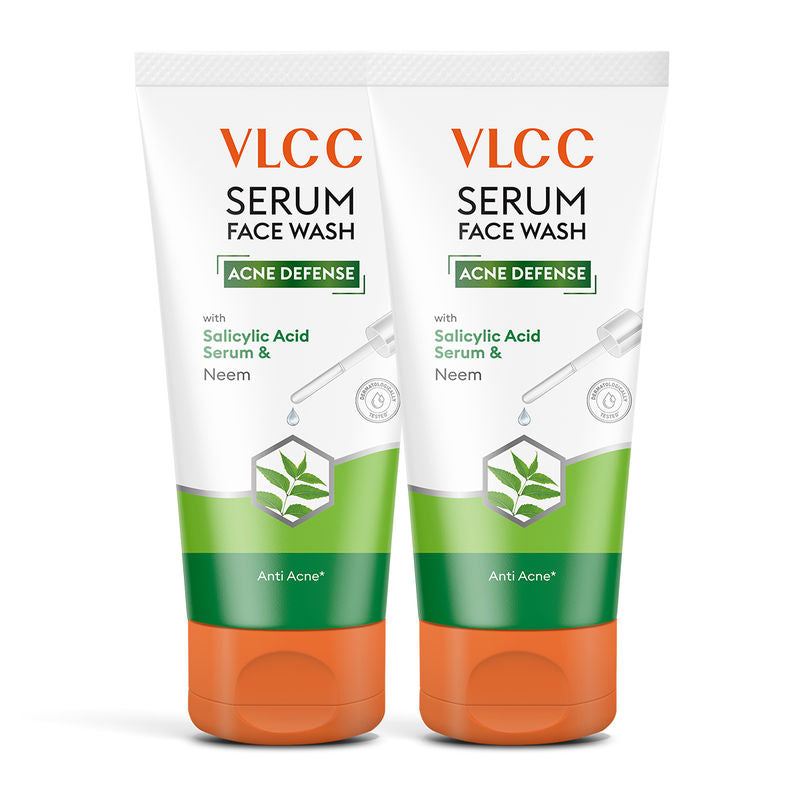
VLCC Acne Defense Serum Face Wash (Pack of 2)

VLCC Acne Defense Serum Face Wash (Pack of 2)
Nykaa E retail limited
vlcc-acne-defense-serum-face-wash-pack-of-2
Cleanse
10085454840101
Morning or Evening?
How often will you use this product?
Notes


Highlights
WHAT IS IT?
Face Wash with 2 key ingredients
FEATURES
Prevents buildup of dead skin cells, Reduces acne breakouts, Prevents blackheads and whiteheads, Promotes clearer complexion, Antibacterial properties
BEST FOR
oily
CHECKS
Paraben-Free,Fragrance-free,Silicone-free,PEG-free,Alcohol-free,Aluminum-free,Microplastic-free,Oil-free,Sulfate-free
Who Is It For?
Adults UnisexWhat Does It Help With?
Acne Blackheads Whiteheads Clearer ComplexionBudget
Affordable (under $30)How To Use
Which routine should it be used in?
Instructions:
Key Information


What Nykaa E retail limited Says
Product Description:
Salicylic Acid Prevents The Buildup Of Dead Skin Cells, Reducing The Occurrence Of Acne Breakouts. Prevents The Formation Of Blackheads And Whiteheads. Promotes A Clearer Complexion. Neem Extracts Known For Its Antibacterial Properties Fights Acne Causing Bacterias. VLCC Serum Face Wash Salicylic Acid Serum With Neem Kills 99% Germs That Cause Acne. *Disclaimer: Based On The In Vitro Tests Carried Out By An External Lab.
About the Brand:
Ingredients Overview
Ingredients List
salicylic-acid,neem-extracts
Key Ingredients
Salicylic Acid, Neem Extracts
Ingredients Details
Salicylic Acid
Common Name(s): Bha,2-hydroxybenzoic acid,orthohydroxybenzoic acid,willow bark acid
CAS Number: 69-72-7
DESCRIPTION
What It Does: Salicylic acid exfoliates the skin surface and inside pores, dissolves the 'glue' holding dead skin cells together, reduces sebum production, and combats acne-causing bacteria.
Why It's Used: Its oil solubility makes it uniquely effective at penetrating pores and dissolving sebum plugs – a function that water-soluble ahas cannot perform. it is the preferred exfoliant for oily, acne-prone, and congested skin.
How It Works: Salicylic acid disrupts desmosomal bonds between corneocytes, promoting exfoliation. its oil solubility allows it to penetrate the sebaceous follicle, dissolving sebum and dead cells. it also has anti-inflammatory properties by inhibiting prostaglandin synthesis.
Typically Found In: Cleansers,toners,serums,spot treatments,masks,chemical peels,anti-dandruff shampoos,acne treatments
TECHNICAL DETAILS
Primary Category: Active ingredient – beta hydroxy acid (bha)
Secondary Functions: Anti-acne,anti-dandruff,keratolytic
Application Areas:

Facial Skincare

Body Care
Hair Care
Beard Care
Color Cosmetics (Makeup)
Dietary/Oral Supplements
Typical Concentration Range: 0.5%–2% (otc acne treatment in us); up to 30% in professional chemical peels
SOURCING & ETHICS
Vegan Status: Yes – synthetic or willow bark derived
Halal Status: Yes
Source Notes: Naturally occurring in willow bark (salix alba) and wintergreen oil. commercially produced synthetically via kolbe-schmitt reaction for cosmetic use.
SKIN COMPATIBILITY
Irritancy Rating: 3/5 – moderate; can cause dryness, peeling, and irritation, especially at higher concentrations
Comedogenicity Rating: 0/5 – non-comedogenic; actually anti-comedogenic
Sensitivity Concerns: Can cause irritation, dryness, and sun sensitivity. avoid contact with eyes. not recommended during pregnancy at high concentrations. can be drying – follow with moisturizer.
Safe for Sensitive Skin: Use with caution – start with lower concentrations and frequency; may not be suitable for reactive or rosacea-prone skin
SAFETY & COMPATIBILITY
Safety Profile: Safe at otc concentrations (0.5–2%). regulated as a drug in some countries (us: fda category i acne treatment). avoid in pregnancy at high concentrations.
Works Well With: Niacinamide,zinc,tea tree oil,benzoyl peroxide (at different times),hyaluronic acid (to counteract dryness)
Avoid Combining With: High concentrations of retinol (cumulative irritation),multiple exfoliating acids simultaneously,benzoyl peroxide in same step (can increase irritation)
SCIENTIFIC NOTE
Salicylic acid is a member of the salicylate family and shares structural similarity with aspirin. its anti-inflammatory mechanism mirrors aspirin's cox inhibition pathway, making it uniquely effective for inflammatory acne.
Last Verified: Cosing database,cir safety assessment,us fda acne monograph,journal of the american academy of dermatology
Primary Sources: 2026-03-12
