
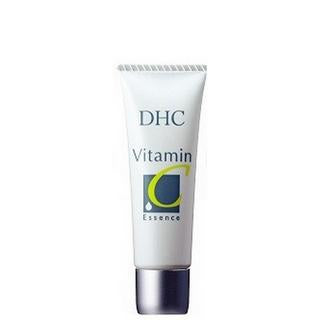

DHC
Vitamin C Essence

Vitamin C Essence
DHC
vitamin-c-essence
Serum
9706790158629
Morning or Evening?
How often will you use this product?
Notes


Highlights
WHAT IS IT?
Vitamin C serum with 10 ingredients
FEATURES
Lightweight Antioxidant Serum, brighten dark spots
BEST FOR
All skin types
CHECKS
Free of parabens, colorants, fragrance
Who Is It For?
Adults Women And MenWhat Does It Help With?
Dark Spots Uneven Skin Tone Fine Lines Wrinkles DullnessBudget
Mid-rangeHow To Use
Which routine should it be used in?
Instructions:
Key Information


What DHC Says
Product Description:
A targeted serum that helps brighten the look of dark spots and improve overall complexion radiance. A high concentration of vitamin C, it also improves the appearance of fine lines, wrinkles, uneven skin tone and dark spots—with natural antioxidant protection.
About the Brand:
Ingredients Overview
Ingredients List
Water/eau, magnesium ascorbyl phosphate, pentylene glycol, sodium citrate, citric acid, potassium chloride, saccharide isomerate, sodium hydroxide, phenoxyethanol, magnesium sulfate
Key Ingredients
Vitamin C (magnesium ascorbyl phosphate)
Ingredients Details
Citric Acid
Common Name(s): Lemon acid,2-hydroxypropane-1,2,3-tricarboxylic acid
CAS Number: 77-92-9
DESCRIPTION
What It Does: Adjusts ph to optimal ranges, chelates destabilizing metal ions, provides mild exfoliation at higher concentrations.
Why It's Used: Universal cosmetic ph adjuster and chelating agent. aha exfoliant activity is secondary.
How It Works: As ph adjuster, donates protons. as chelating agent, three carboxylic groups bind divalent metals (ca²⁺, mg²⁺, fe²⁺) preventing oxidative degradation.
Typically Found In: Nearly all cosmetic formulations,brightening products,exfoliants
TECHNICAL DETAILS
Primary Category: Active ingredient – alpha hydroxy acid (aha)
Secondary Functions: Chelating agent,ph adjustment,preservation enhancement
Application Areas:

Facial Skincare
Body Care
Hair Care

Beard Care
Color Cosmetics (Makeup)
Dietary/Oral Supplements
Typical Concentration Range: 0.1%–10%
SOURCING & ETHICS
Vegan Status: Yes – synthetic or fermentation-derived
Halal Status: Yes
Source Notes: Produced by fermentation of sugars by aspergillus niger. gras (e330). most abundant organic acid in citrus.
SKIN COMPATIBILITY
Irritancy Rating: 1/5 – very low at low concentrations; 2/5 at exfoliant concentrations
Comedogenicity Rating: 0/5 – non-comedogenic
Sensitivity Concerns: Photosensitizing – mandatory spf use. start at low frequency.
Safe for Sensitive Skin: Use with caution – spf required
SAFETY & COMPATIBILITY
Safety Profile: Safe at otc concentrations. eu: ≤10% leave-on at ph ≥3.5. mandatory spf advisory.
Works Well With: Niacinamide,ceramides,hyaluronic acid,spf
Avoid Combining With: Retinol in same step; multiple exfoliants simultaneously
SCIENTIFIC NOTE
Three carboxylic acid groups provide multiple proton donation sites and stronger chelation than monocarboxylic ahas. this makes citric acid the preferred cosmetic chelating agent alongside edta.
Last Verified: 2026-03-12
Primary Sources: Cosing database,cir safety assessment,ewg skin deep
Magnesium Ascorbyl Phosphate
Common Name(s): Map,l-ascorbic acid 2-phosphate magnesium
CAS Number: 113170-55-1
DESCRIPTION
What It Does: Provides stable vitamin c phosphate brightening with magnesium mineral skin conditioning.
Why It's Used: Gentle stable vitamin c for sensitive skin — map provides effective brightening without the irritation of pure ascorbic acid at equivalent brightening concentration.
How It Works: Phosphate ester protection vs oxidation. converted to ascorbic acid by phosphatase enzymes in skin. magnesium counterion provides mild anti-inflammatory skin benefit. inhibits tyrosinase for brightening. stimulates collagen synthesis.
Typically Found In: Brightening serums,sensitive skin vitamin c
TECHNICAL DETAILS
Primary Category: Active ingredient – magnesium vitamin c
Secondary Functions: Tyrosinase inhibitor,collagen cofactor
Application Areas:
Facial Skincare
Body Care
Hair Care
Beard Care
Color Cosmetics (Makeup)
Dietary/Oral Supplements
Typical Concentration Range: 1%–5%
SOURCING & ETHICS
Vegan Status: Yes – synthetic
Halal Status: Yes
Source Notes: Synthetically produced vitamin c derivative.
SKIN COMPATIBILITY
Irritancy Rating: 1/5 – very low
Comedogenicity Rating: 0/5 – non-comedogenic
Sensitivity Concerns: Non-irritating; suitable for all skin types.
Safe for Sensitive Skin: Yes
SAFETY & COMPATIBILITY
Safety Profile: Excellent safety profile. ewg score: 1.
Works Well With: Tocopherol,ferulic acid,niacinamide,spf
Avoid Combining With: No significant incompatibilities
SCIENTIFIC NOTE
Map's magnesium counterion provides a minor skin benefit beyond the vitamin c activity: mg²⁺ is an essential cofactor for 300+ enzymatic reactions in cells. as map hydrolyses releasing ascorbate and mg²⁺, the locally released magnesium may support keratinocyte enzymatic function, providing a supplementary skin benefit unique to magnesium vs sodium ascorbyl phosphate.
Last Verified: ##########
Primary Sources: Cosing database,cir safety assessment
Magnesium Sulfate
Common Name(s): Mineral salt,ionic strength modifier,skin mineralising agent
CAS Number: N/a
DESCRIPTION
What It Does: Provides mineral ion delivery to skin, modulates formulation ionic strength for viscosity and stability optimisation, and supports skin enzyme activity through essential mineral cofactor supplementation.
Why It's Used: Mineral salts are essential formulation ph and ionic strength adjusters — magnesium sulfate specifically provides the mg²⁺ ions that activate transglutaminase crosslinking during sc cornification, supporting barrier formation.
How It Works: Ionic dissociation in aqueous formulation provides free ions that modulate polymer viscosity (ionic strength reduces charge-based thickener swelling), provide mineral nutrition to skin enzymes (ca²⁺ for transglutaminase, mg²⁺ for mgatp phosphotransferases), and adjust osmolality for skin-surface tonicity matching.
Typically Found In: All formulations,mineral skin care
TECHNICAL DETAILS
Primary Category: Active ingredient – mineral / metal active
Secondary Functions: Antimicrobial,sebum regulation,antioxidant enzyme cofactor
Application Areas:
Facial Skincare
Body Care
Hair Care
Beard Care
Color Cosmetics (Makeup)
Dietary/Oral Supplements
Typical Concentration Range: 0.01%–5%
SOURCING & ETHICS
Vegan Status: Yes – mineral
Halal Status: Yes
Source Notes: Mineral/inorganic compound. cosmetic or pharmaceutical grade.
SKIN COMPATIBILITY
Irritancy Rating: 1/5 – very low
Comedogenicity Rating: 0/5 – non-comedogenic
Sensitivity Concerns: Non-irritating at recommended concentrations.
Safe for Sensitive Skin: Yes at recommended concentrations
SAFETY & COMPATIBILITY
Safety Profile: Excellent safety profile at cosmetic concentrations. ewg score: 1–2.
Works Well With: Niacinamide,salicylic acid,other actives
Avoid Combining With: No significant incompatibilities at standard concentrations
SCIENTIFIC NOTE
Mg²⁺ and ca²⁺ are essential cofactors for the sc cornification process — ca²⁺ specifically drives the ca²⁺ gradient across the epidermis (high in outer sc, low in basal layer) that regulates keratinocyte differentiation through ca²⁺-calmodulin signalling.
Last Verified: 2026-03-12
Primary Sources: Cosing database,magnesium sulfate mineral salt formulation review
Pentylene Glycol
Common Name(s): 1,2-pentanediol,pentanediol,hydrolite-5
CAS Number: 5765-44-6
DESCRIPTION
What It Does: Provides humectant moisture retention with antimicrobial preservative-boosting activity.
Why It's Used: The balanced multifunctional diol — pentylene glycol provides the ideal balance of humectancy and antimicrobial activity for clean beauty preservation systems with excellent sensory compatibility.
How It Works: C5 diol: longer chain than propylene glycol providing better antimicrobial activity but shorter than 1,2-hexanediol (slightly lower membrane activity). two oh groups provide humectant water binding. solvent for fragrances and some actives. synergistic with phenoxyethanol reducing required phenoxyethanol concentration.
Typically Found In: Clean beauty products,natural preservation systems,moisturisers
TECHNICAL DETAILS
Primary Category: Functional ingredient – multifunctional pentanediol
Secondary Functions: Tewl reduction,skin plumping
Application Areas:
Facial Skincare
Body Care
Hair Care
Beard Care
Color Cosmetics (Makeup)
Dietary/Oral Supplements
Typical Concentration Range: 0.5%–3%
SOURCING & ETHICS
Vegan Status: Yes – synthetic
Halal Status: Yes
Source Notes: Synthetic or naturally derived. excellent aqueous solubility.
SKIN COMPATIBILITY
Irritancy Rating: 1/5 – very low
Comedogenicity Rating: 0/5 – non-comedogenic
Sensitivity Concerns: Non-irritating; suitable for all skin types.
Safe for Sensitive Skin: Yes
SAFETY & COMPATIBILITY
Safety Profile: Excellent safety profile. ewg score: 1.
Works Well With: Ceramides,emollients,occlusives,glycerin,hyaluronic acid
Avoid Combining With: No significant incompatibilities
SCIENTIFIC NOTE
Pentylene glycol's position in clean beauty preservation is due to a regulatory quirk: 1,2-pentanediol is not classified as a preservative in eu cosmetics regulations (unlike phenoxyethanol which requires preservative listing), so it can provide antimicrobial activity while not requiring the 'contains preservative' designation — enabling cleaner labels in natural-positioned formulations.
Last Verified: 2026-03-12
Primary Sources: Cosing database,dsm hydrolite-5 technical data,cir safety assessment