

ViCREA
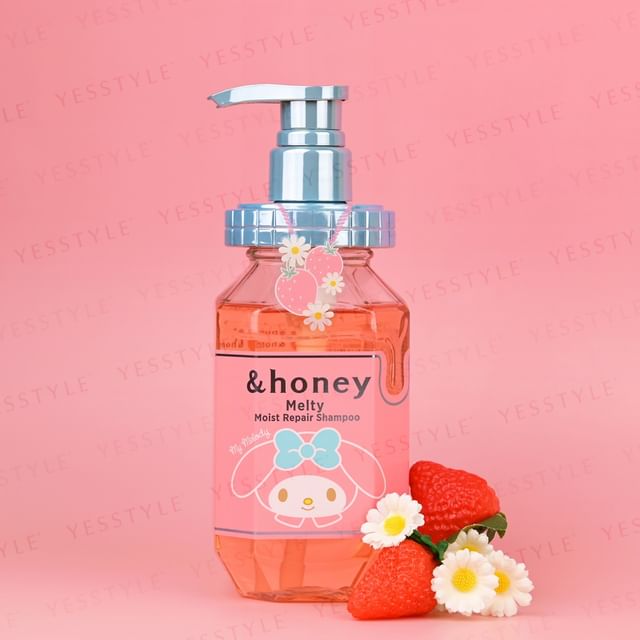
ViCREA - Sanrio My Melody &honey Melty Moist Repair Shampoo
A Japanese shampoo that gently cleanses hair with natural lather from shea and honey, ensuring essential moisture retention. Enriched with real rose honey and Bulgarian rose water, it's designed for wavy and curly hair, emphasizing moisture for a lustrous and shiny result.
Sulfate-free
Paraben-free
Silicone-free
Natural
Dryness
Frizz
Optimized for Your Environment & Lifestyle
Nykaa
In stock
Recommended

ViCREA - Sanrio My Melody &honey Melty Moist Repair Shampoo
ViCREA
vicrea-sanrio-my-melody-honey-melty-moist-repair-shampoo
Shampoo
10523364720933
Morning or Evening?
How often will you use this product?
Notes


Secure payment protection
Your Biodata Compatibility Analysis
Based on your 6 hair health indices and environmental factors
Poor Match
Significant incompatibilities
Growth Cycle Health Index
Hair Match
Hair Health Index Alignment
Optimal for OSI, SSI, DI, HSI
Ingredient Efficacy
Matching Ingredient Score
Environment Compatibility
Current UV, Air Quality & Humidity
Why This Works for Your Specific Profile
Damage Index:
Very healthy or severely damaged hair falls outside optimal treatment parameters
Water Quality:
Soft or moderately hard water does not require intensive treatment causing over-cleansing and dryness
Hair:
Closed cuticles resist product penetration causing surface buildup without internal benefits
Active Lifestyle:
High activity and frequent washing rapidly strip product benefits requiring excessive reapplication
Your Hair Profile Integration
Your Hair Archetype

Density Level

Washing Frequency

Shedding Level

Oil Level
Your Hair Health Indices
Oil Secretion (OSI)
Very low oil production
Scalp Sensitivity (SSI)
Very low sensitivity
Growth Rate (CMR)
Poor metabolism rate
Damage Index (DI)
Minimal damage
Hair Strength (HSI)
Very weak strength
Softness Index (SI)
Significant improvement needed
Water & Environmental Integration

Water:


Expected Results & Timeline
Key Highlights

What is it?
Shampoo with over 90% moisturizing and protective ingredients

Who Is It For
All ages, Unisex

Budget
$30.60 - $61.20

Timeline
Immediate improvement in moisture and shine
Why You’ll Love It

What Does It Help With?
Dryness, Frizz, Breakage

Best for
Dryness

Features
Contains real rose honey and Bulgarian rose water; designed for wavy and curly hair; emphasizes moisture for a lustrous and shiny result

Checks
Sulfate-free, Paraben-free, Silicone-free, Animal testing-free
Ingredients Overview
Ingredients List
water, honey, honey-extract, royal-jelly-extract, propolis-extract, gluconobacter/honey-ferment-filtrate, hydrolyzed-honey-protein, hydrolyzed-keratin, keratin-(wool), argania-spinosa-kernel-oil, damask-rose-flower-water, hyaluronic-acid, mild-cleansing-agents, fragrance
Key Ingredients
honey, royal-jelly-extract, propolis-extract, argania-spinosa-kernel-oil, damask-rose-flower-water
Ingredients Details
Fragrance
Common Name(s): Fragrance ingredient,eu allergen or aromatic component,olfactory/flavour
CAS Number: N/a
DESCRIPTION
What It Does: Provides the complete fragrance profile contributing to product sensory experience and consumer appeal.
Why It's Used: Fragrance is a major consumer purchase driver — up to 70% of consumers make purchasing decisions partially based on product scent.
How It Works: Fragrance blends interact with olfactory receptors providing the sensory profile — complex mixtures activate multiple receptor types for rich, multidimensional scent experiences.
Typically Found In: All fragrance products
TECHNICAL DETAILS
Primary Category: Active ingredient – cosmetic active
Secondary Functions: Skin conditioning
Application Areas:

Facial Skincare

Body Care
Hair Care
Beard Care
Color Cosmetics (Makeup)
Dietary/Oral Supplements
Typical Concentration Range: Standard use levels
SOURCING & ETHICS
Vegan Status: Conditional - supplier confirmation required
Halal Status: Unverified - supplier confirmation required
Source Notes: Commercially produced for cosmetic use. verify vegan/halal status with supplier. [audit 2026-07-29 rev2: the record's own source_notes does not assert a non-animal origin, or instructs the reader to verify with the supplier; "yes" asserts knowledge the record does not hold. determination requires shariah-panel sign-off.]
SKIN COMPATIBILITY
Irritancy Rating: 1/5 – very low
Comedogenicity Rating: 0/5 – non-comedogenic
Sensitivity Concerns: Well-tolerated by most skin types.
Safe for Sensitive Skin: Yes
SAFETY & COMPATIBILITY
Safety Profile: Good safety profile at recommended concentrations. ewg score: 1–2.
Works Well With: Standard skincare actives
Avoid Combining With: No known significant incompatibilities
SCIENTIFIC NOTE
Ifra guidelines set usage limits for fragrance ingredients based on skin sensitisation and phototoxicity assessment for each application category.
Last Verified: 2026-03-12
Primary Sources: Eu regulation 1223/2009 annex iii,ifra standards,fragrance allergen declaration requirements
Honey
Common Name(s): Honey,bee-derived humectant antimicrobial,wound healing active
CAS Number: N/a
DESCRIPTION
What It Does: Provides humectant moisture retention from the hygroscopic fructose/glucose matrix, antimicrobial activity from enzymatically generated h₂o₂ and (in manuka) methylglyoxal, anti-inflammatory activity from phenolic compounds, and wound healing promotion from growth factor activation.
Why It's Used: Honey is the only food-derived ingredient with documented clinical wound healing efficacy in medical grade form (medihoney) — combining humectancy, antimicrobial, anti-inflammatory, and healing activity in a gras, consumer-familiar ingredient.
How It Works: Glucose oxidase in honey catalyses glucose + o₂ → gluconolactone + h₂o₂ — providing sustained low-level h₂o₂ generation that provides bactericidal activity without tissue toxicity. manuka honey's methylglyoxal (mgo) provides additional non-peroxide antimicrobial activity through protein glycation of bacterial enzymes.
Typically Found In: Wound care,anti-aging,humectant products
TECHNICAL DETAILS
Primary Category: Active ingredient – cosmetic active
Secondary Functions: Skin conditioning
Application Areas:
Facial Skincare
Body Care
Hair Care
Beard Care
Color Cosmetics (Makeup)
Dietary/Oral Supplements
Typical Concentration Range: 1%–20%
SOURCING & ETHICS
Vegan Status: No - animal-derived
Halal Status: Conditional - bee-derived; widely held permissible, confirm certifier stance
Source Notes: Commercially produced for cosmetic use. verify vegan/halal status with supplier. [audit 2026-07-29 rev2: bee-derived; permissibility widely accepted but fatwa varies by jurisdiction. determination requires shariah-panel sign-off.]
SKIN COMPATIBILITY
Irritancy Rating: 1/5 – very low
Comedogenicity Rating: 0/5 – non-comedogenic
Sensitivity Concerns: Well-tolerated by most skin types.
Safe for Sensitive Skin: Yes
SAFETY & COMPATIBILITY
Safety Profile: Good safety profile at recommended concentrations. ewg score: 1–2.
Works Well With: Standard skincare actives
Avoid Combining With: No known significant incompatibilities
SCIENTIFIC NOTE
Manuka honey's unique mānuka factor (umf) grades correlate with methylglyoxal (mgo) concentration — umf10+ (mgo 263 mg/kg) provides bactericidal activity against mrsa at concentrations achievable in topical formulation.
Last Verified: 2026-03-12
Primary Sources: Cosing database,honey manuka honey wound healing antimicrobial review
Honey
Common Name(s): Honey,bee-derived humectant antimicrobial,wound healing active
CAS Number: N/a
DESCRIPTION
What It Does: Provides humectant moisture retention from the hygroscopic fructose/glucose matrix, antimicrobial activity from enzymatically generated h₂o₂ and (in manuka) methylglyoxal, anti-inflammatory activity from phenolic compounds, and wound healing promotion from growth factor activation.
Why It's Used: Honey is the only food-derived ingredient with documented clinical wound healing efficacy in medical grade form (medihoney) — combining humectancy, antimicrobial, anti-inflammatory, and healing activity in a gras, consumer-familiar ingredient.
How It Works: Glucose oxidase in honey catalyses glucose + o₂ → gluconolactone + h₂o₂ — providing sustained low-level h₂o₂ generation that provides bactericidal activity without tissue toxicity. manuka honey's methylglyoxal (mgo) provides additional non-peroxide antimicrobial activity through protein glycation of bacterial enzymes.
Typically Found In: Wound care,anti-aging,humectant products
TECHNICAL DETAILS
Primary Category: Active ingredient – cosmetic active
Secondary Functions: Skin conditioning
Application Areas:
Facial Skincare
Body Care
Hair Care
Beard Care
Color Cosmetics (Makeup)
Dietary/Oral Supplements
Typical Concentration Range: 1%–20%
SOURCING & ETHICS
Vegan Status: No - animal-derived
Halal Status: Conditional - bee-derived; widely held permissible, confirm certifier stance
Source Notes: Commercially produced for cosmetic use. verify vegan/halal status with supplier. [audit 2026-07-29 rev2: bee-derived; permissibility widely accepted but fatwa varies by jurisdiction. determination requires shariah-panel sign-off.]
SKIN COMPATIBILITY
Irritancy Rating: 1/5 – very low
Comedogenicity Rating: 0/5 – non-comedogenic
Sensitivity Concerns: Well-tolerated by most skin types.
Safe for Sensitive Skin: Yes
SAFETY & COMPATIBILITY
Safety Profile: Good safety profile at recommended concentrations. ewg score: 1–2.
Works Well With: Standard skincare actives
Avoid Combining With: No known significant incompatibilities
SCIENTIFIC NOTE
Manuka honey's unique mānuka factor (umf) grades correlate with methylglyoxal (mgo) concentration — umf10+ (mgo 263 mg/kg) provides bactericidal activity against mrsa at concentrations achievable in topical formulation.
Last Verified: 2026-03-12
Primary Sources: Cosing database,honey manuka honey wound healing antimicrobial review
Water
Common Name(s): Water,purified water,deionised water,inci water
CAS Number: 7732-18-5
DESCRIPTION
What It Does: Provides the universal solvent and vehicle for water-soluble actives and the continuous phase of all o/w emulsions.
Why It's Used: The most essential cosmetic ingredient — aqua (water) is listed first on virtually all water-containing cosmetic inci labels as the highest-concentration ingredient, serving as the foundation of the global cosmetics industry.
How It Works: Acts as solvent for all water-soluble ingredients (glycols, amino acids, water-soluble actives). forms the continuous external phase of o/w emulsions (lotions, creams, serums). provides aqueous environment for enzymatic and chemical reactions between actives. ph adjustment medium.
Typically Found In: Virtually all cosmetic products — the most universal cosmetic ingredient globally
TECHNICAL DETAILS
Primary Category: Functional ingredient – water
Secondary Functions: Skin conditioning
Application Areas:
Facial Skincare
Body Care
Hair Care
Beard Care
Color Cosmetics (Makeup)
Dietary/Oral Supplements
Typical Concentration Range: Varies widely — up to 95% in some toners and serums
SOURCING & ETHICS
Vegan Status: Yes – water (deionised/purified)
Halal Status: Yes
Source Notes: Cosmetic-grade water is purified (deionised, distilled, or ro filtered) to prevent mineral content interference with formulation stability. european pharmacopoeial water (aqua purificata ph. eur.) is the quality standard for pharmaceutical and high-end cosmetic formulations.
SKIN COMPATIBILITY
Irritancy Rating: 1/5 – non-irritant
Comedogenicity Rating: 0/5 – non-comedogenic
Sensitivity Concerns: Well-tolerated by most skin types.
Safe for Sensitive Skin: Yes
SAFETY & COMPATIBILITY
Safety Profile: Good safety profile at recommended concentrations. ewg score: 1–2.
Works Well With: Standard skincare actives
Avoid Combining With: No known significant incompatibilities
SCIENTIFIC NOTE
Water's position as the first inci ingredient on most cosmetic labels reflects the regulatory requirement to list ingredients in descending concentration order — meaning water is the most abundant ingredient in the majority of cosmetic products. the fundamental role of water as the universal cosmetic solvent and vehicle makes it simultaneously the most important cosmetic ingredient and the one that requires the most sophisticated formulation chemistry to control — every emulsifier, thickener, preservative, and ph adjuster exists primarily to manage water's interaction with other ingredients in formulation.
Last Verified: 2026-03-12
Primary Sources: Cosing database,eu cosmetics regulation 1223/2009 inci requirements,ph. eur. aqua purificata monograph
Personalized Usage Instructions
How to Use
Step 1
Wet hair and scalp thoroughly, apply an appropriate amount of shampoo, massage gently to create lather, and rinse well with water
Medical Chemicals

Protein/Moisture
- Moisture
pH Level
- Acidic

Porosity Taget
- High Porosity
Customized for Your Profile
Scalp Condtions
Sensitive Scalp, pH Balanced
Climate Suitability
Humid, Dry
Clinical Claims
Frequency
Wet hair and scalp thoroughly, apply an appropriate amount of shampoo, massage gently to create lather, and rinse well with water.
Product Information

Sulfate-free
Paraben-free
Silicone-free
Animal testing-free