

VI-JOHN
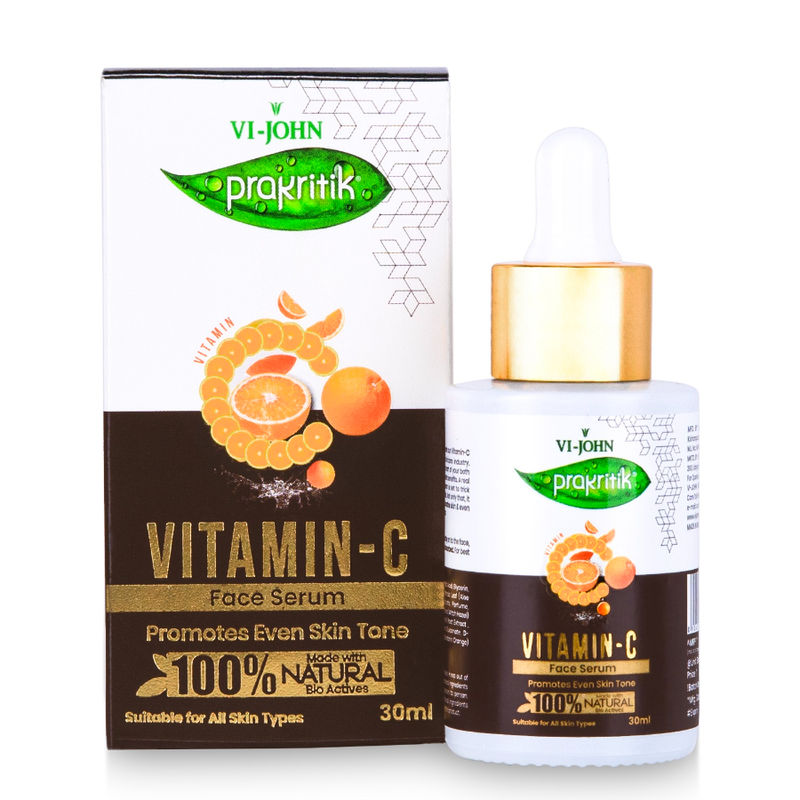
VI-JOHN Prakritik Vitamin C Face Serum

VI-JOHN Prakritik Vitamin C Face Serum
VI-JOHN
vi-john-prakritik-vitamin-c-face-serum
Serum
10084839358757
Morning or Evening?
How often will you use this product?
Notes


Highlights
WHAT IS IT?
Vitamin C Serum with 22 ingredients
FEATURES
Brightens Skin, Reduces Dark Spots, Anti-Aging, Collagen Boosting, Hydrating, Nourishing, Protects Against Environmental Damage, Lightweight, Fast Absorbing, Suitable for All Skin Types
BEST FOR
sensitive
CHECKS
Paraben-Free, Alcohol-free, Preservative-Free
Who Is It For?
Adults All GendersWhat Does It Help With?
Signs Of Ageing Scars Hyperpigmentation Uneven Skin Tone Brightening SkinBudget
Affordable (under $30)How To Use
Which routine should it be used in?
Instructions:
Key Information


What VI-JOHN Says
Product Description:
Crafted after time-tested patience & research our Vitamin C Serum is a complete game-changer in the skincare industry. Embedded with versatile properties, it can be a part of your both AM & PM routine to help you encounter several skin benefits. A real boon owing to its qualities out Vitamin C Serum is set to trick signs of ageing & keep that away from your skin. Not only that, it will tend to reduce scars, hyperpigmentation, soothe skin & even out the skin tone emitting a brighter complexion. Features: Brightens Skin & Reduces Dark Spots: Infused with Vitamin C, this serum works to lighten pigmentation, fade dark spots, and even out your complexion for a natural, luminous glow. Anti-Aging & Collagen Boosting: Boosts collagen production, reducing the appearance of fine lines and wrinkles, leaving your skin firm, plump, and youthful. Hydrating & Nourishing: Enriched with hydrating ingredients like Hyaluronic Acid locks in moisture, giving your skin a soft, supple feel all day long. Protects Against Environmental Damage: The antioxidant-rich formula shields your skin from UV rays and pollution, preventing premature aging. Lightweight & Fast Absorbing: This lightweight serum absorbs quickly without leaving any sticky residue, making it perfect for daily use under makeup or sunscreen. Suitable for All Skin Types: Whether you have oily, dry, or sensitive skin, this Vitamin C serum is gentle yet effective, offering visible results without irritation.
About the Brand:
Ingredients Overview
Ingredients List
Aqua, Propylene-Glycol, Propanediol, Ethyl-Ascorbic-Acid, Glycerin, Hydroxyethylcellulose, Trehalose, Aloe-Barbadensis-Leaf-Aloevera-Extract, Phenoxyethanol, Sodium-Benzoate, Perfume, Allantoin, Potassium-Sorbate, Hamamelis-Virginiana-Witch-Hazel-Extract, Vitamin-B3, Glycyrrhiza-Glabra-Licorice-Root-Extract, Citrus-Grandis-Grapefruit-Extract, Sodium-Gluconate, D-Panthenol, Tocopheryl-Acetate, Citrus-Nobilis-Mandarin-Orange-Peel-Oil, Melaleuca-Alternifolia-Tea-Tree-Oil
Key Ingredients
Ethyl Ascorbic Acid, Hyaluronic Acid, Aloe Barbadensis Leaf Extract, Vitamin B3, Glycyrrhiza Glabra Root Extract, D-Panthenol, Tocopheryl Acetate
Ingredients Details
Allantoin
Common Name(s): 5-ureidohydantoin,glyoxyldiureide,aluminum dihydroxy allantoinate
CAS Number: 97-59-6
DESCRIPTION
What It Does: Soothes irritation, accelerates wound healing, promotes skin cell renewal, and provides mild keratolytic exfoliation.
Why It's Used: Gold standard multi-function soothing active – one of the most widely used cosmetic ingredients across all product types for its exceptional tolerability and clinically proven multi-action skin conditioning.
How It Works: Promotes keratinocyte proliferation and fibroblast migration for wound healing. mild keratolytic activity by disrupting corneocyte binding. anti-irritant via direct protein binding and anti-inflammatory cytokine reduction. humectant activity via hydroxyl groups.
Typically Found In: Post-procedure products,sensitive skin formulas,wound care,anti-acne treatments,baby products
TECHNICAL DETAILS
Primary Category: Active ingredient – soothing / anti-inflammatory
Secondary Functions: Wound healing,keratolytic,anti-irritant
Application Areas:

Facial Skincare
Body Care

Hair Care
Beard Care
Color Cosmetics (Makeup)
Dietary/Oral Supplements
Typical Concentration Range: 0.1%–2%
SOURCING & ETHICS
Vegan Status: Conditional - feedstock declaration required
Halal Status: Unverified - feedstock declaration required (plant, animal and petrochemical routes all exist)
Source Notes: Plant-derived extract or synthetic. [audit 2026-07-29 rev2: origin-dependent: the same inci exists in plant, animal and petrochemical versions and the name does not discriminate. determination requires shariah-panel sign-off.]
SKIN COMPATIBILITY
Irritancy Rating: 1/5 – very low
Comedogenicity Rating: 0/5 – non-comedogenic
Sensitivity Concerns: Exceptionally well-tolerated; suitable for all skin types including baby and compromised skin.
Safe for Sensitive Skin: Yes – particularly recommended for sensitive skin
SAFETY & COMPATIBILITY
Safety Profile: Excellent safety profile. ewg score: 1.
Works Well With: Ceramides,panthenol,allantoin,hyaluronic acid,centella asiatica
Avoid Combining With: No significant incompatibilities
SCIENTIFIC NOTE
Allantoin's keratinocyte proliferation stimulation occurs via receptor-mediated signaling (possibly machr activation) rather than non-specific irritation-driven proliferation, making it a true wound-healing stimulant rather than a pro-inflammatory proliferative signal.
Last Verified: 2026-03-12
Primary Sources: Cosing database,cir safety assessment,araújo et al. allantoin review
D-panthenol
Common Name(s): D-panthenol,b-vitamin skin active,multi-benefit conditioning
CAS Number: N/a
DESCRIPTION
What It Does: Provides the specific b-vitamin's characteristic skin and hair benefits: brightening and barrier reinforcement (niacinamide), keratin structural support (biotin), deep conditioning humectancy (panthenol).
Why It's Used: B-vitamins operate through fundamental cellular biochemistry pathways — nad⁺ for niacinamide, carboxylase cofactor for biotin, coa synthesis for panthenol — providing multi-benefit activity from essential metabolic chemistry.
How It Works: Acts as coenzyme or substrate in essential metabolic pathways: niacinamide → nad⁺/nadp⁺ → ceramide synthesis, melanosome transfer inhibition; biotin → carboxylase → fatty acid synthesis for ceramide; panthenol → pantothenic acid → coa → lipid metabolism.
Typically Found In: Multi-function skin care,b-vitamin formulas
TECHNICAL DETAILS
Primary Category: Active ingredient – vitamin b complex
Secondary Functions: Antioxidant cofactor,metabolic support
Application Areas:
Facial Skincare
Body Care
Hair Care
Beard Care
Color Cosmetics (Makeup)
Dietary/Oral Supplements
Typical Concentration Range: 0.1%–10%
SOURCING & ETHICS
Vegan Status: Yes
Halal Status: Yes
Source Notes: Synthetically produced for cosmetic use.
SKIN COMPATIBILITY
Irritancy Rating: 1/5 – very low
Comedogenicity Rating: 0/5 – non-comedogenic
Sensitivity Concerns: Non-irritating; excellent tolerability.
Safe for Sensitive Skin: Yes
SAFETY & COMPATIBILITY
Safety Profile: Excellent safety profile. ewg score: 1.
Works Well With: Other b vitamins,niacinamide,antioxidant complexes
Avoid Combining With: No significant incompatibilities
SCIENTIFIC NOTE
B-vitamins are water-soluble, non-irritating, and well-tolerated across all skin types — providing clinical efficacy with an exceptional safety profile from their essential nutrient status.
Last Verified: 2026-03-12
Primary Sources: Cosing database,d-panthenol b-vitamin skin review
Glycerin
Common Name(s): Glycerol,glycerine,1,2,3-propanetriol
CAS Number: 56-81-5
DESCRIPTION
What It Does: Glycerin pulls water from the environment and deeper skin layers into the outer skin layer (epidermis), boosting moisture levels and keeping skin soft, smooth, and plump.
Why It's Used: It is used in virtually every moisturizer, serum, and cleanser because it is highly effective at hydrating skin, is well-tolerated by all skin types, and enhances the texture and spreadability of formulations.
How It Works: As a humectant, glycerin forms hydrogen bonds with water molecules, trapping them in the skin. it also reinforces the skin barrier by integrating into lipid structures between skin cells.
Typically Found In: Moisturizers,serums,cleansers,toners,sheet masks,sunscreens,body lotions,shampoos,conditioners
TECHNICAL DETAILS
Primary Category: Humectant
Secondary Functions: Skin barrier support,emollient,solvent
Application Areas:
Facial Skincare
Body Care
Hair Care
Beard Care
Color Cosmetics (Makeup)
Dietary/Oral Supplements
Typical Concentration Range: 1%–30% (typical: 3–10%)
SOURCING & ETHICS
Vegan Status: Conditional - feedstock declaration required
Halal Status: Unverified - feedstock declaration required (plant, animal and petrochemical routes all exist)
Source Notes: Derived from plant oils via hydrolysis or saponification; synthetic versions also available. palm-derived glycerin carries sustainability concerns. [audit 2026-07-29 rev2: origin-dependent: the same inci exists in plant, animal and petrochemical versions and the name does not discriminate. determination requires shariah-panel sign-off.]
SKIN COMPATIBILITY
Irritancy Rating: 1/5 – very low; non-irritating at all standard concentrations
Comedogenicity Rating: 0/5 – non-comedogenic
Sensitivity Concerns: Extremely rare allergic reactions; generally safe for all skin types including sensitive and baby skin
Safe for Sensitive Skin: Yes
SAFETY & COMPATIBILITY
Safety Profile: Widely recognized as safe. ewg hazard score: 1. no significant concerns for irritation, sensitization, or toxicity at typical concentrations (up to 50%).
Works Well With: Hyaluronic acid,ceramides,niacinamide,panthenol,urea,peptides,retinol,ahas/bhas
Avoid Combining With: No known incompatibilities at standard concentrations
SCIENTIFIC NOTE
Glycerin is an endogenous skin component found naturally in the stratum corneum. aquaporin-3 channels in keratinocytes facilitate glycerin transport, making it integral to natural skin hydration pathways.
Last Verified: 2026-03-12
Primary Sources: Cosing database,cir safety assessment,ewg skin deep,inci decoder
Hydroxyethylcellulose
Common Name(s): Hec,natrosol,ethylhydroxyethylcellulose
CAS Number: 9004-62-0
DESCRIPTION
What It Does: Provides non-ionic thickening compatible with anionic surfactants and electrolyte-containing formulations.
Why It's Used: Non-ionic cellulose thickener for surfactant systems where anionic/cationic thickener incompatibility is a concern.
How It Works: Hydroxyethyl substitution disrupts cellulose crystallinity enabling water solubility. non-ionic nature provides compatibility with anionic, cationic, and amphoteric surfactants. pseudoplastic rheology provides shear-thinning for dispensing. film formation from cellulose backbone.
Typically Found In: Shampoos,body washes,clear gels,surfactant systems
TECHNICAL DETAILS
Primary Category: Functional ingredient – cellulose thickener
Secondary Functions: Tewl reduction,skin plumping
Application Areas:
Facial Skincare
Body Care
Hair Care
Beard Care
Color Cosmetics (Makeup)
Dietary/Oral Supplements
Typical Concentration Range: 0.1%–3%
SOURCING & ETHICS
Vegan Status: Conditional - supplier confirmation required
Halal Status: Unverified - supplier confirmation required
Source Notes: Synthetic or naturally derived. excellent aqueous solubility. [audit 2026-07-29 rev2: status downgraded on audit. determination requires shariah-panel sign-off.]
SKIN COMPATIBILITY
Irritancy Rating: 1/5 – very low
Comedogenicity Rating: 0/5 – non-comedogenic
Sensitivity Concerns: Non-irritating; suitable for all skin types.
Safe for Sensitive Skin: Yes
SAFETY & COMPATIBILITY
Safety Profile: Excellent safety profile. ewg score: 1.
Works Well With: Ceramides,emollients,occlusives,glycerin,hyaluronic acid
Avoid Combining With: No significant incompatibilities
SCIENTIFIC NOTE
Hydroxyethylcellulose's non-ionic character is its primary differentiator from anionic carboxymethylcellulose – the absence of ionizable groups means hec maintains stable viscosity across ph 2-12 and at high electrolyte concentrations where carboxymethylcellulose destabilizes. this ionic independence makes hec the preferred cellulose thickener for acidic and salt-containing formulations.
Last Verified: 2026-03-12
Primary Sources: Cosing database,ashland hec technical data,cir safety assessment