

Pharmaceutical Specialties, Inc.
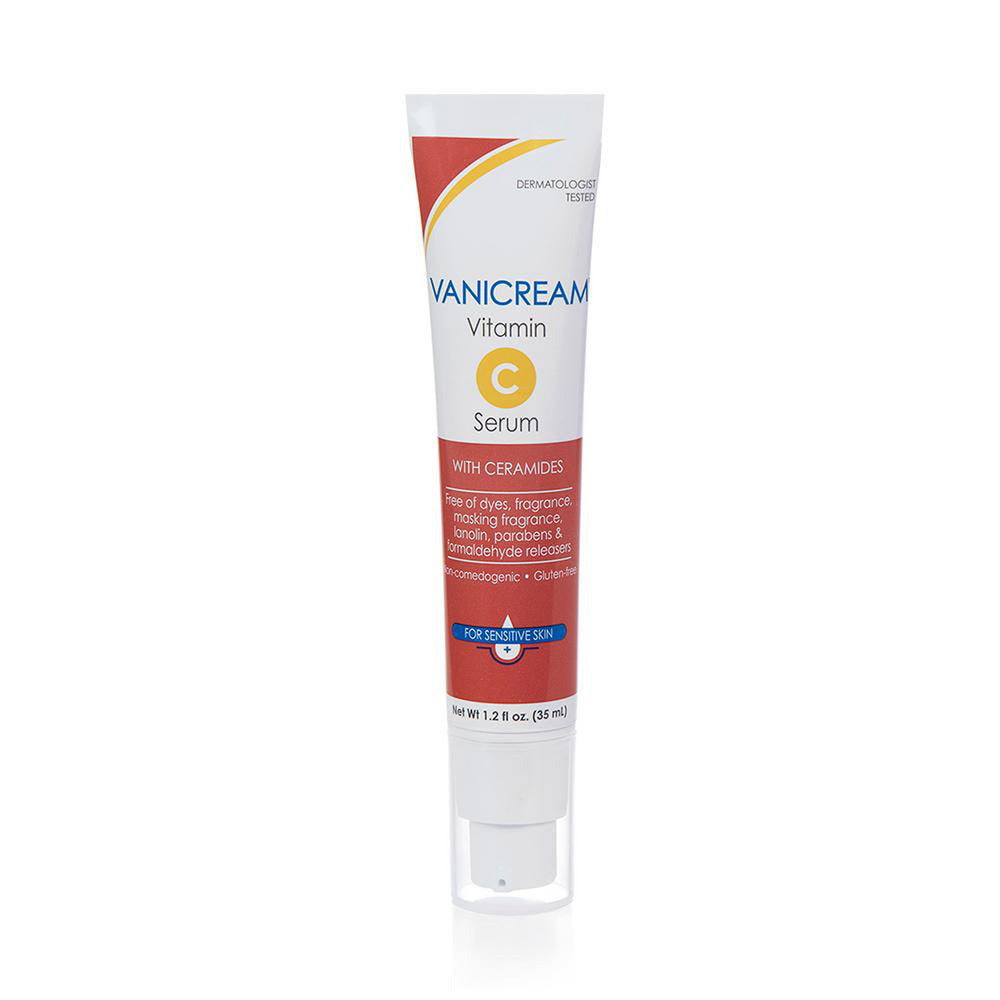
Vanicream Vitamin C Serum

Vanicream Vitamin C Serum
Pharmaceutical Specialties, Inc.
vanicream-vitamin-c-serum
Serum
9818305233189
Morning or Evening?
How often will you use this product?
Notes


Highlights
WHAT IS IT?
Vitamin C Serum with ceramides
FEATURES
Airless pump packaging, Quick absorption, Non-greasy, pH balanced
BEST FOR
sensitive
CHECKS
No dyes, fragrance, lanolin, parabens, formaldehyde releasers, botanical extracts, essential oils
Who Is It For?
All Ages With Sensitive SkinWhat Does It Help With?
Skin Brightness Even Skin Tone Dull SkinBudget
Affordable (under $30)How To Use
Which routine should it be used in?
Instructions:
Key Information


What Pharmaceutical Specialties, Inc. Says
Product Description:
A milky and lightweight serum specifically designed for sensitive skin that contains a potent yet gentle vitamin c derivative and ceramides. Enhances skin's brightness for a fresh glow and fits seamlessly into any skin care regimen.
About the Brand:
Ingredients Overview
Ingredients List
water,glycerin,diisooctyl-succinate,tetrahexyldecyl-ascorbate,pentylene-glycol,polyglyceryl-2-stearate,carnosine,ceramide-NP,ceramide-EOP,ceramide-AP,ceramide-NG,ceramide-AS,phytosterols,glyceryl-stearate,stearyl-alcohol,hydrogenated-lecithin,1-2-hexanediol,polyacrylate-crosspolymer-6,citric-acid,caprylyl-glycol
Key Ingredients
tetrahexyldecyl ascorbate, ceramides, glycerin
Ingredients Details
Carnosine
Common Name(s): Beta-alanyl-l-histidine,n-beta-alanyl-l-histidine dipeptide
CAS Number: 305-84-0
DESCRIPTION
What It Does: Provides anti-glycation and anti-carbonylation activity protecting collagen from glycation-induced crosslinking.
Why It's Used: Natural anti-age dipeptide targeting glycation — complementary to antioxidant-only anti-aging strategies with documented collagen protection.
How It Works: Histidine imidazole chelates cu²⁺ for antioxidant metal chelation. beta-alanine traps reactive carbonyl species (glycating aldehydes). quenches 4-hydroxynonenal (hne) protein carbonylation. anti-glycation via competing with lysine residues.
Typically Found In: Anti-aging serums,anti-glycation products,longevity skincare
TECHNICAL DETAILS
Primary Category: Active ingredient – antioxidant
Secondary Functions: Free radical scavenging,anti-aging
Application Areas:

Facial Skincare
Body Care

Hair Care
Beard Care
Color Cosmetics (Makeup)
Dietary/Oral Supplements
Typical Concentration Range: 0.5%–5%
SOURCING & ETHICS
Vegan Status: Conditional - feedstock declaration required
Halal Status: Unverified - feedstock declaration required (plant, animal and petrochemical routes all exist)
Source Notes: Plant-derived extract or synthetic. [audit 2026-07-29 rev2: origin-dependent: the same inci exists in plant, animal and petrochemical versions and the name does not discriminate. determination requires shariah-panel sign-off.]
SKIN COMPATIBILITY
Irritancy Rating: 1/5 – very low
Comedogenicity Rating: 0/5 – non-comedogenic
Sensitivity Concerns: Non-irritating; well-tolerated.
Safe for Sensitive Skin: Yes
SAFETY & COMPATIBILITY
Safety Profile: Excellent safety profile. ewg score: 1.
Works Well With: Vitamin c,vitamin e,ferulic acid,spf,other antioxidants
Avoid Combining With: No significant incompatibilities
SCIENTIFIC NOTE
Carnosine's anti-glycation mechanism is sacrificial carbonyl trapping: reactive carbonyl species (methylglyoxal, glyoxal) that would normally glycate collagen lysines are instead captured by carnosine's free amino groups — carnosine acts as a sacrificial protector for collagen, being consumed in the process of preventing more damaging collagen glycation.
Last Verified: 2026-03-12
Primary Sources: Cosing database,guiotto et al. carnosine anti-glycation review
Ceramide Ap
Common Name(s): Ceramide 6 ii,n-(2-hydroxy)-stearoyl phytosphingosine,alpha-hydroxy ceramide
CAS Number: 100403-19-8
DESCRIPTION
What It Does: Provides alpha-hydroxy ceramide for complementary barrier repair alongside ceramide np and eop.
Why It's Used: Essential barrier ceramide trio component — ceramide ap's alpha-hydroxy fatty acid provides the specific lamellar body formation chemistry needed for complete barrier restoration with ceramide np and ceramide eop.
How It Works: N-(2-hydroxyfatty acid) phytosphingosine: 2-hydroxylation of fatty acid is critical for optimal packing of ceramide ap in lamellar lipid bilayers. the alpha-hydroxy group creates stronger intermolecular hydrogen bonding between ceramide ap molecules than non-hydroxylated ceramides. used in combination with ceramide np and ceramide eop for comprehensive barrier repair.
Typically Found In: Complete barrier repair formulas,triple ceramide systems,eczema treatment
TECHNICAL DETAILS
Primary Category: Active ingredient – alpha-hydroxy ceramide
Secondary Functions: Skin conditioning
Application Areas:
Facial Skincare
Body Care
Hair Care
Beard Care
Color Cosmetics (Makeup)
Dietary/Oral Supplements
Typical Concentration Range: 0.01%–1%
SOURCING & ETHICS
Vegan Status: Conditional - feedstock declaration required
Halal Status: Unverified - feedstock declaration required (plant, animal and petrochemical routes all exist)
Source Notes: Commercially produced for cosmetic use. verify vegan/halal status with supplier. [audit 2026-07-29 rev2: origin-dependent: the same inci exists in plant, animal and petrochemical versions and the name does not discriminate. determination requires shariah-panel sign-off.]
SKIN COMPATIBILITY
Irritancy Rating: 1/5 – very low
Comedogenicity Rating: 0/5 – non-comedogenic
Sensitivity Concerns: Well-tolerated by most skin types.
Safe for Sensitive Skin: Yes
SAFETY & COMPATIBILITY
Safety Profile: Good safety profile at recommended concentrations. ewg score: 1–2.
Works Well With: Standard skincare actives
Avoid Combining With: No known significant incompatibilities
SCIENTIFIC NOTE
The ceramide np + ceramide ap + ceramide eop triple combination mimics the natural ratio of ceramide classes in healthy stratum corneum (approximately 1:0.5:0.3 ratio). clinical studies comparing single ceramide vs triple ceramide barrier repair show significantly greater tewl reduction with triple ceramide combinations — the complementary molecular packing geometries of different ceramide classes creating a more complete lamellar bilayer than any single ceramide can provide.
Last Verified: 2026-03-12
Primary Sources: Cosing database,elias & feingold barrier ceramide review
Ceramide Eop
Common Name(s): Ceramide 1,omega-hydroxy ceramide linoleate,acylceramide
CAS Number: N/a
DESCRIPTION
What It Does: Provides the essential acylceramide scaffold for stratum corneum lamellar lipid organisation and barrier architecture.
Why It's Used: The architectural ceramide — ceramide eop's covalent corneocyte envelope binding is unique among ceramides and essential for organising the lamellar lipid matrix of the stratum corneum barrier.
How It Works: Omega-hydroxy ceramide esterified with linoleic acid at the omega-end. omega-hydroxyl group covalently bonds to involucrin/envoplakin proteins of corneocyte envelope via ester bond. this covalent anchor organises the lamellar lipid bilayers around each corneocyte. linoleate deficiency impairs this covalent anchoring — the biochemical basis of linoleic acid deficiency skin disease.
Typically Found In: Complete barrier repair systems,eczema treatment,omega-ceramide products
TECHNICAL DETAILS
Primary Category: Active ingredient – linoleate acylceramide
Secondary Functions: Skin conditioning
Application Areas:
Facial Skincare
Body Care
Hair Care
Beard Care
Color Cosmetics (Makeup)
Dietary/Oral Supplements
Typical Concentration Range: 0.001%–0.5%
SOURCING & ETHICS
Vegan Status: Conditional - feedstock declaration required
Halal Status: Unverified - feedstock declaration required (plant, animal and petrochemical routes all exist)
Source Notes: Commercially produced for cosmetic use. verify vegan/halal status with supplier. [audit 2026-07-29 rev2: origin-dependent: the same inci exists in plant, animal and petrochemical versions and the name does not discriminate. determination requires shariah-panel sign-off.]
SKIN COMPATIBILITY
Irritancy Rating: 1/5 – very low
Comedogenicity Rating: 0/5 – non-comedogenic
Sensitivity Concerns: Well-tolerated by most skin types.
Safe for Sensitive Skin: Yes
SAFETY & COMPATIBILITY
Safety Profile: Good safety profile at recommended concentrations. ewg score: 1–2.
Works Well With: Standard skincare actives
Avoid Combining With: No known significant incompatibilities
SCIENTIFIC NOTE
Ceramide eop's covalent corneocyte envelope binding is the only covalent interaction in the stratum corneum lipid structure — all other lamellar lipids interact via non-covalent van der waals and hydrogen bonds. this unique covalent anchoring of eop to the protein envelope provides the mechanical scaffold from which the entire lamellar lipid architecture is organised, making ceramide eop architecturally irreplaceable in barrier function.
Last Verified: 2026-03-12
Primary Sources: Cosing database,holleran et al. ceramide eop review
Ceramide Ng
Common Name(s): Ceramide 2,n-palmitoyldihydrosphingosine
CAS Number: 100403-19-8
DESCRIPTION
What It Does: Strengthens skin barrier and reduces inflammation in sensitive, atopic, and compromised skin.
Why It's Used: Part of comprehensive ceramide barrier repair complexes; important for formulations targeting sensitive and atopic dermatitis-prone skin.
How It Works: Dihydrosphingosine backbone provides slightly different lamellar packing geometry than sphingosine-based ceramides, filling structural positions within the lamellar body that other ceramides cannot occupy.
Typically Found In: Sensitive skin moisturizers,eczema care,barrier repair serums
TECHNICAL DETAILS
Primary Category: Active ingredient – ceramide / barrier lipid
Secondary Functions: Anti-inflammatory,barrier support
Application Areas:
Facial Skincare
Body Care
Hair Care
Beard Care
Color Cosmetics (Makeup)
Dietary/Oral Supplements
Typical Concentration Range: 0.01%–1%
SOURCING & ETHICS
Vegan Status: Conditional - feedstock declaration required
Halal Status: Unverified - feedstock declaration required (plant, animal and petrochemical routes all exist)
Source Notes: Synthetic production or phytoceramide analog from plant sources. [audit 2026-07-29 rev2: origin-dependent: the same inci exists in plant, animal and petrochemical versions and the name does not discriminate. determination requires shariah-panel sign-off.]
SKIN COMPATIBILITY
Irritancy Rating: 1/5 – very low
Comedogenicity Rating: 0/5 – non-comedogenic
Sensitivity Concerns: Endogenous molecule; excellent tolerability.
Safe for Sensitive Skin: Yes
SAFETY & COMPATIBILITY
Safety Profile: Exceptional safety profile. natural skin component. ewg score: 1.
Works Well With: Other ceramides,cholesterol,free fatty acids,hyaluronic acid,niacinamide
Avoid Combining With: No significant incompatibilities
SCIENTIFIC NOTE
Ceramide ng and np together represent the majority of stratum corneum ceramide content. their complementary lamellar body positioning means both are required for complete barrier restoration – formulations with both show clinically superior barrier repair vs single ceramide products.
Last Verified: 2026-03-12
Primary Sources: Cosing database,elias ceramide structure review