

Vaadi Herbals Pvt. Ltd.
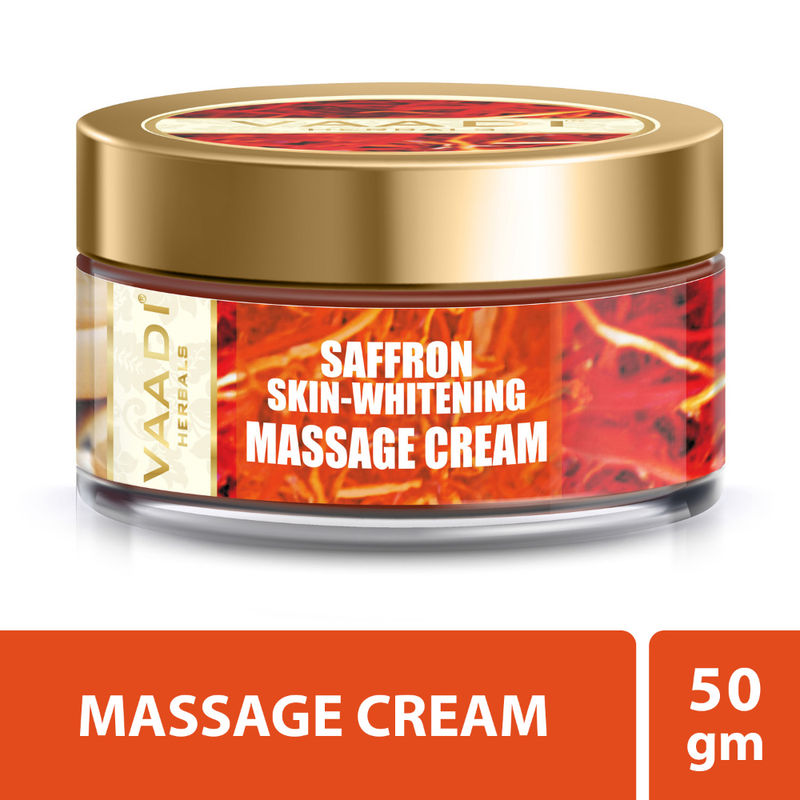
Vaadi Herbals Saffron Skin-Whitening Massage Cream

Vaadi Herbals Saffron Skin-Whitening Massage Cream
Vaadi Herbals Pvt. Ltd.
vaadi-herbals-saffron-skin-whitening-massage-cream
Moisturize
10085091770661
Morning or Evening?
How often will you use this product?
Notes


Highlights
WHAT IS IT?
Massage cream with 6 key ingredients
FEATURES
Improves complexion, feeds skin minerals and vitamins, reduces puffiness and perspiration, reduces under eye circles, freckles and spots, unclogs pores, brightens skin, fights acne, antioxidant, anti-inflammatory, firms skin, hydrates and retains moisture, promotes wound healing and anti-aging
BEST FOR
combination
CHECKS
No added preservatives, fragrance-free information not explicitly stated, alcohol-free information not explicitly stated
Who Is It For?
Adults UnisexWhat Does It Help With?
Uneven Skin Tone Pigmentation Acne Scars Skin Dullness Dryness Fine Lines InflammationBudget
Affordable (under $30)How To Use
Which routine should it be used in?
Instructions:
Key Information


What Vaadi Herbals Pvt. Ltd. Says
Product Description:
This rich composition of saffron and various oils improves skin complexion and feeds the skin with essential minerals and vitamins. Lemongrass oil reduces skin puffiness and perspiration. Sandalwood oil reduces under eye circles, freckles, and spots. Saffron brightens, unclogs pores, reduces blemishes, pigmentation and acne scars, and promotes collagen formation. Basil oil fights acne, has antioxidant properties, reduces inflammation and improves skin tone and texture. Lemongrass oil has antimicrobial, anti-inflammatory and astringent properties, enhances blood circulation, and firms the skin. Shea butter hydrates, retains moisture, improves skin elasticity, has SPF 6 sunscreen, reduces dark spots, promotes wound healing and is anti-inflammatory.
About the Brand:
Ingredients Overview
Ingredients List
Saffron, Sandalwood Oil, Basil Oil, Lemongrass Oil, Shea Butter, Manjistha
Key Ingredients
Saffron, Sandalwood Oil, Basil Oil, Lemongrass Oil, Shea Butter
Ingredients Details
Lemongrass Oil
Common Name(s): Essential oil,concentrated volatile aromatic,bioactive fragrance active
CAS Number: N/a
DESCRIPTION
What It Does: Provides aromatic sensory benefit alongside bioactive skin activity from concentrated plant volatile compounds — including antimicrobial activity (tea tree, thyme, clove), anti-inflammatory activity (lavender, chamomile), or circulatory stimulation (peppermint, rosemary).
Why It's Used: Essential oils provide authentic 'aromatherapy' narrative with genuine bioactive chemistry — the concentrated terpenoid constituents have documented biological activity in addition to olfactory benefit, justifying ingredient claims beyond pure fragrance.
How It Works: Essential oil complexity: steam distillation concentrates volatile terpenes (monoterpenes, sesquiterpenes), phenylpropanoids, and other volatiles. antimicrobial activity from terpenoid membrane disruption (terpinen-4-ol, eugenol, thymol disrupt bacterial membranes); anti-inflammatory from sesquiterpene nf-kb inhibition; sensitisation risk from electrophilic monoterpene oxides and aldehydes.
Typically Found In: Aromatherapy,bioactive skin care,fragrance
TECHNICAL DETAILS
Primary Category: Active ingredient – cosmetic active
Secondary Functions: Skin conditioning
Application Areas:

Facial Skincare

Body Care
Hair Care
Beard Care
Color Cosmetics (Makeup)
Dietary/Oral Supplements
Typical Concentration Range: 0.01%–2%
SOURCING & ETHICS
Vegan Status: Yes
Halal Status: Yes
Source Notes: Commercially produced for cosmetic use. verify vegan/halal status with supplier.
SKIN COMPATIBILITY
Irritancy Rating: 1/5 – very low
Comedogenicity Rating: 0/5 – non-comedogenic
Sensitivity Concerns: Well-tolerated by most skin types.
Safe for Sensitive Skin: Yes
SAFETY & COMPATIBILITY
Safety Profile: Good safety profile at recommended concentrations. ewg score: 1–2.
Works Well With: Standard skincare actives
Avoid Combining With: No known significant incompatibilities
SCIENTIFIC NOTE
Essential oil concentration in cosmetics must respect ifra (international fragrance association) guidelines — each oil has category-specific maximum use levels based on skin sensitisation quantitative risk assessment (qra). tea tree oil maximum 0.5% (rinse-off), lavender oil 2% (leave-on skin) as examples.
Last Verified: Cosing database,ifra standards,essential oil bioactive fragrance review
Primary Sources: 2026-03-12
Shea Butter
Common Name(s): Shea butter,karite butter
CAS Number: 91080-23-8
DESCRIPTION
What It Does: Provides deep nourishing emolliency with anti-inflammatory cinnamic acid esters and a uniquely rich unsaponifiable fraction.
Why It's Used: The most nutritious plant butter – unique cinnamic acid esters, lupeol, and rich unsaponifiable fraction provide anti-inflammatory and wound healing benefits beyond standard fatty acid emolliency.
How It Works: Cinnamic acid esters absorb uv radiation providing mild natural uv filtering (spf 3-4). lupeol inhibits nf-kb for anti-inflammatory activity. high stearic acid provides occlusive barrier function. rich unsaponifiable fraction (4-9%) provides phytosterols, tocopherols, and triterpenes for bioactive skin benefits.
Typically Found In: Body butters,rich moisturizers,baby products,hair conditioners,lip balms
TECHNICAL DETAILS
Primary Category: Functional ingredient – emollient
Secondary Functions: Cinnamic acid uv support,lupeol anti-inflammatory,rich emolliency
Application Areas:
Facial Skincare
Body Care
Hair Care
Beard Care
Color Cosmetics (Makeup)
Dietary/Oral Supplements
Typical Concentration Range: 1%–100%
SOURCING & ETHICS
Vegan Status: Yes – from butyrospermum parkii nuts
Halal Status: Yes
Source Notes: Unrefined (raw) shea retains more unsaponifiable fraction and stronger natural scent/color. refined shea is odorless, white, and cleaner for formulation. certified fair trade supports west african women's cooperatives.
SKIN COMPATIBILITY
Irritancy Rating: 1/5 – very low
Comedogenicity Rating: 0/5 – non-comedogenic (refined); 2/5 – low (raw/unrefined)
Sensitivity Concerns: Non-irritating.
Safe for Sensitive Skin: Yes
SAFETY & COMPATIBILITY
Safety Profile: Excellent safety profile. ewg score: 1.
Works Well With: Humectants,ceramides,actives as carrier
Avoid Combining With: No significant incompatibilities
SCIENTIFIC NOTE
Shea butter's unsaponifiable fraction (4-9%, vs coconut oil's 0.5% and olive oil's 1-2%) is exceptionally rich in triterpenes, phytosterols, and tocopherols. this fraction is responsible for shea's anti-inflammatory and wound healing properties that simple fatty acid analysis fails to reveal.
Last Verified: Cosing database,lin et al. shea butter cinnamic acid study,cir safety assessment
Primary Sources: 2026-03-12
