

Vaadi Herbals Pvt. Ltd.
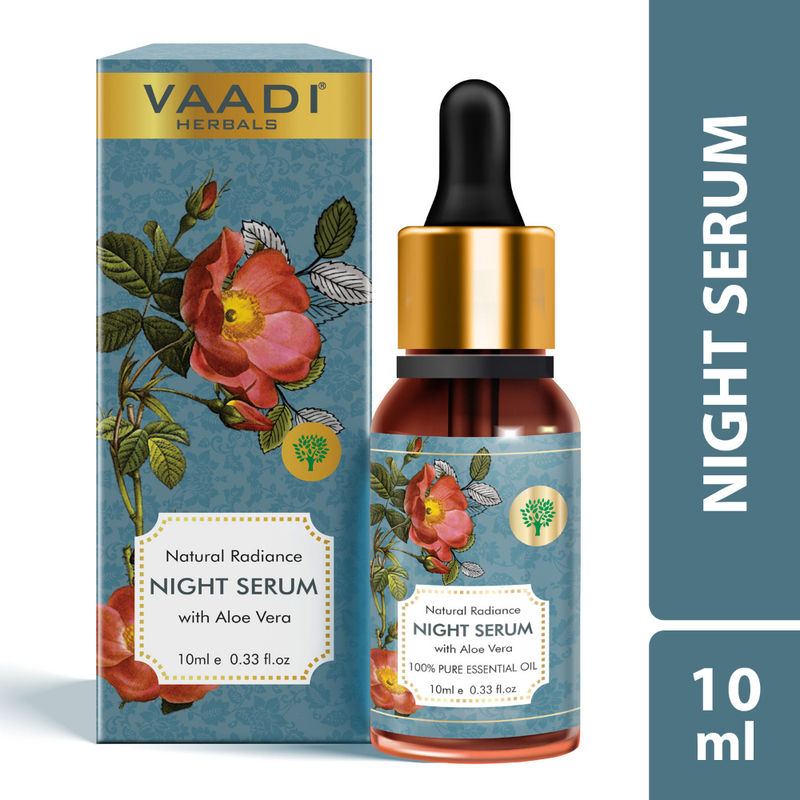
Vaadi Herbals Natural Radiance Night Serum With Aloe Vera 100% Pure Essential Oil

Vaadi Herbals Natural Radiance Night Serum With Aloe Vera 100% Pure Essential Oil
Vaadi Herbals Pvt. Ltd.
vaadi-herbals-natural-radiance-night-serum-with-aloe-vera-100-pure-essential-oil
Serum
10085503598885
Morning or Evening?
How often will you use this product?
Notes


Highlights
WHAT IS IT?
Natural radiance night serum with 3 key ingredients
FEATURES
100% pure natural night serum with jasmine, aloe vera and green tea, improves skin texture and brightens complexion, reduces dark spots and patches, repairs damaged skin to balance uneven skin tone, firms the skin to reduce fine lines and wrinkles, paraben-free, halal, GMP and ISO certified, organic certified, not tested on animals, soft and floral scent, suggested carrier oils coconut, jojoba or avocado
BEST FOR
sensitive
CHECKS
Parabens, Animal testing, Chemicals
Who Is It For?
Adults (gender Not Specified)What Does It Help With?
Improves Skin Complexion Reduces Fine Lines Dark Spots Firms Skin Restores Moisture Balance Replenishes Skin For Smoother And Radiant Appearance Repairs Damaged Skin Balances Uneven Skin ToneBudget
Affordable (under $30)How To Use
Which routine should it be used in?
Instructions:
Key Information


What Vaadi Herbals Pvt. Ltd. Says
Product Description:
Vaadi Herbals Natural Radiance Night Serum with Aloe Vera is excellent for improving the skin complexion and giving it a natural glow by reducing fine lines, dark spots, and firming the skin. It penetrates deep into the skin and provides it with the nourishment required to restore the natural moisture balance of the skin, and keep the skin clear and healthy. This exotic blend of distilled essential oils has been formulated to replenish the skin for visibly smoother, and more radiant appearance by morning. It helps firm the skin, makes it soft, supple & hydrated, and rejuvenates the skin at night when it is most receptive to repairing itself. Adding just a few drops to the moisturizer and massaging it well into the skin, works with the skin's nocturnal functions to help restore the skin's health.
About the Brand:
Ingredients Overview
Ingredients List
steam-distilled-aloe-vera-extract,green-tea-extract,jasmine-oil
Key Ingredients
Aloe Vera, Green Tea Extract, Jasmine Oil
Ingredients Details
Aloe Vera
Common Name(s): Aloe vera juice,aloe vera gel,aloe barbadensis
CAS Number: 85507-69-3
DESCRIPTION
What It Does: Provides acemannan-based wound healing and comprehensive moisturising skin conditioning from the quintessential healing plant.
Why It's Used: The most universally recognised natural healing plant — aloe vera's acemannan polysaccharides, vitamins, and enzymes provide a comprehensive wound healing and soothing profile with thousands of years of documented use.
How It Works: Acemannan (poly-mannose) activates dectin-1 for wound healing immune stimulation. gibberellin promotes fibroblast growth. salicylic acid derivative provides anti-inflammatory. vitamins c and e provide antioxidant. glucomannan provides humectant.
Typically Found In: After-sun products,wound healing,moisturisers,virtually all skin care categories
TECHNICAL DETAILS
Primary Category: Active ingredient – aloe vera gel
Secondary Functions: Redness reduction,anti-inflammatory,calming
Application Areas:

Facial Skincare
Body Care

Hair Care
Beard Care
Color Cosmetics (Makeup)
Dietary/Oral Supplements
Typical Concentration Range: 0.5%–99%
SOURCING & ETHICS
Vegan Status: Yes – from aloe barbadensis leaf
Halal Status: Yes
Source Notes: Plant-derived extract or synthetic.
SKIN COMPATIBILITY
Irritancy Rating: 1/5 – very low
Comedogenicity Rating: 0/5 – non-comedogenic
Sensitivity Concerns: Non-irritating; ideal for reactive and sensitive skin.
Safe for Sensitive Skin: Yes – particularly recommended for sensitive skin
SAFETY & COMPATIBILITY
Safety Profile: Excellent safety profile. ewg score: 1.
Works Well With: Ceramides,panthenol,allantoin,hyaluronic acid,centella asiatica
Avoid Combining With: No significant incompatibilities
SCIENTIFIC NOTE
Aloe vera's clinical evidence for sunburn relief is among the best for any botanical wound healing ingredient. multiple rcts demonstrate that aloe vera gel reduces healing time of first and second degree burns and sunburns, attributed primarily to acemannan's immunomodulatory wound healing activity and the anti-inflammatory salicylate derivatives providing prostaglandin inhibition.
Last Verified: 2026-03-12
Primary Sources: Cosing database,surjushe et al. aloe vera skin review,cir safety assessment
Jasmine Oil
Common Name(s): Essential oil,concentrated volatile aromatic,bioactive fragrance active
CAS Number: N/a
DESCRIPTION
What It Does: Provides aromatic sensory benefit alongside bioactive skin activity from concentrated plant volatile compounds — including antimicrobial activity (tea tree, thyme, clove), anti-inflammatory activity (lavender, chamomile), or circulatory stimulation (peppermint, rosemary).
Why It's Used: Essential oils provide authentic 'aromatherapy' narrative with genuine bioactive chemistry — the concentrated terpenoid constituents have documented biological activity in addition to olfactory benefit, justifying ingredient claims beyond pure fragrance.
How It Works: Essential oil complexity: steam distillation concentrates volatile terpenes (monoterpenes, sesquiterpenes), phenylpropanoids, and other volatiles. antimicrobial activity from terpenoid membrane disruption (terpinen-4-ol, eugenol, thymol disrupt bacterial membranes); anti-inflammatory from sesquiterpene nf-kb inhibition; sensitisation risk from electrophilic monoterpene oxides and aldehydes.
Typically Found In: Aromatherapy,bioactive skin care,fragrance
TECHNICAL DETAILS
Primary Category: Active ingredient – cosmetic active
Secondary Functions: Skin conditioning
Application Areas:
Facial Skincare
Body Care
Hair Care
Beard Care
Color Cosmetics (Makeup)
Dietary/Oral Supplements
Typical Concentration Range: 0.01%–2%
SOURCING & ETHICS
Vegan Status: Conditional - supplier confirmation required
Halal Status: Unverified - supplier confirmation required
Source Notes: Commercially produced for cosmetic use. verify vegan/halal status with supplier. [audit 2026-07-29 rev2: the record's own source_notes does not assert a non-animal origin, or instructs the reader to verify with the supplier; "yes" asserts knowledge the record does not hold. determination requires shariah-panel sign-off.]
SKIN COMPATIBILITY
Irritancy Rating: 1/5 – very low
Comedogenicity Rating: 0/5 – non-comedogenic
Sensitivity Concerns: Well-tolerated by most skin types.
Safe for Sensitive Skin: Yes
SAFETY & COMPATIBILITY
Safety Profile: Good safety profile at recommended concentrations. ewg score: 1–2.
Works Well With: Standard skincare actives
Avoid Combining With: No known significant incompatibilities
SCIENTIFIC NOTE
Essential oil concentration in cosmetics must respect ifra (international fragrance association) guidelines — each oil has category-specific maximum use levels based on skin sensitisation quantitative risk assessment (qra). tea tree oil maximum 0.5% (rinse-off), lavender oil 2% (leave-on skin) as examples.
Last Verified: 2026-03-12
Primary Sources: Cosing database,ifra standards,essential oil bioactive fragrance review