
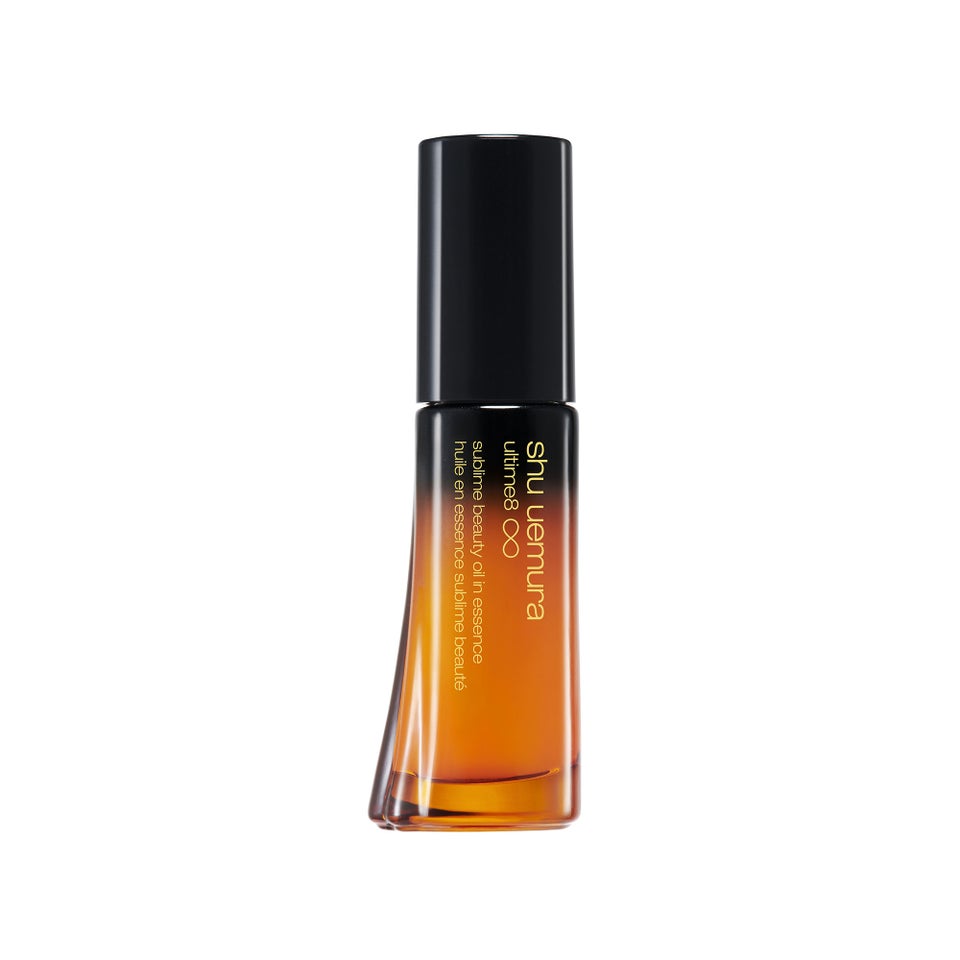

Shu Uemura
Ultime8 Sublime Beauty Oil in Essence

Ultime8 Sublime Beauty Oil in Essence
Shu Uemura
ultime8-sublime-beauty-oil-in-essence
Serum
9784831967525
Morning or Evening?
How often will you use this product?
Notes


Highlights
WHAT IS IT?
Anti-aging oil essence with 8 precious oils
FEATURES
Firms, lifts, and plumps skin, smooths lines, increases collagen, transforms into fresh moisturizing serum
BEST FOR
combination
CHECKS
Contains alcohol, phenoxyethanol, and fragrance
Who Is It For?
Adult WomenWhat Does It Help With?
Anti-aging Firmness Plumpness Fine Lines And WrinklesBudget
Mid-range ($30-$75)How To Use
Which routine should it be used in?
Instructions:
Key Information


What Shu Uemura Says
Product Description:
A luxurious oil in essence born from shu uemura's half a century expertise in oil. This essence unveils skin's ageless beauty, proven to firm, lift and lively plump skin to smooth out lines. Features a sublime combination of 8 precious oils with cutting-edge anti-aging care technology.
About the Brand:
Ingredients Overview
Ingredients List
Aqua-Water, Glycerin, Alcohol-Denat, Diphenylsiloxy-Phenyl-Trimethicone, Trimethyl-Pentaphenyl-Trisiloxane, Calcium-Chloride, Phenoxyethanol, Chlorphenesin, Hydroxypropyl-Tetrahydropyrantriol, Propylene-Glycol, Gellan-Gum, Xanthan-Gum, Adenosine, Linalool, Ethylcellulose, Geraniol, Zea-Mays-Corn-Germ-Oil, Squalane, Glycine-Soja-Oil, Simmondsia-Chinensis-Seed-Oil, Carthamus-Tinctorius-Seed-Oil, Butyrospermum-Parkii-Butter, Camellia-Oleifera-Seed-Oil, Lavandula-Hybrida-Oil, Tocopherol, Tetradecyl-Aminobutyroylvalylaminobutyric-Urea-Trifluoroacetate, Magnesium-Chloride, Citric-Acid, Parfum-Fragrance
Key Ingredients
Proxylane, Geranium oil, 8 precious oils complex
Ingredients Details
Alcohol Denat.
Common Name(s): Alcohol denat.,denatured ethanol,solvent antimicrobial astringent
CAS Number: N/a
DESCRIPTION
What It Does: Alcohol denat. dissolves oil-soluble and water-soluble cosmetic actives, provides rapid antimicrobial activity at concentrations above 60–70% by denaturing microbial proteins, delivers a refreshing cooling sensation through evaporative cooling on skin, and temporarily enhances the penetration of topical actives by transiently disrupting the stratum corneum lipid bilayer organisation.
Why It's Used: Formulators choose alcohol denat. for its irreplaceable combination of solvent power, antimicrobial activity, and penetration-enhancing properties. no other cosmetic solvent simultaneously provides the cooling sensory experience of alcohol (from evaporative cooling at the skin surface), the immediate antimicrobial activity required for sanitisers (from protein denaturation above 60%), and the transient sc lipid disruption that improves active ingredient delivery (essential in actives-rich toners and essences). for denatured alcohol specifically, denaturing agents (typically 5% isopropanol or bitrex) prevent consumption without affecting cosmetic function.
How It Works: Alcohol denat. works through multiple mechanisms depending on concentration: (1) solvent action — alcohol's hydroxyl group provides hydrogen bonding with water while the short alkyl chain provides interaction with organic solutes, enabling dissolution of both hydrophilic and moderately lipophilic cosmetic actives in a single solvent; (2) antimicrobial — above 60% concentration, ethanol denatures microbial proteins by disrupting non-covalent bonds maintaining protein secondary and tertiary structure — the alcohol molecules intercalate between protein chains, disrupting the hydrophobic interactions and hydrogen bonds that maintain enzyme active site geometry. this non-specific protein denaturation is immediately bactericidal and virucidal with no resistance mechanism possible; (3) sc penetration enhancement — at lower concentrations (5–30%), ethanol transiently fluidises the sc lipid bilayer by intercalating between the ordered lipid lamellae, disrupting the crystal packing and increasing lipid bilayer fluidity. this transient fluidisation increases the diffusion coefficient of co-applied actives through the sc for up to 30 minutes post-application; (4) astringency — alcohol's protein precipitating action at the skin surface contracts superficial proteins, temporarily tightening pores and reducing oiliness.
Typically Found In: Toners,hand sanitisers,actives serums
TECHNICAL DETAILS
Primary Category: Active ingredient – cosmetic active
Secondary Functions: Skin conditioning
Application Areas:

Facial Skincare

Body Care
Hair Care
Beard Care
Color Cosmetics (Makeup)
Dietary/Oral Supplements
Typical Concentration Range: 5%–95%
SOURCING & ETHICS
Vegan Status: Yes - standard ethanol routes are non-animal; confirm denaturant origin
Halal Status: Conditional - ethanol production route and residual concentration; jurisdiction-dependent, refer to certifier stance
Source Notes: Commercially produced for cosmetic use. verify vegan/halal status with supplier. [audit 2026-07-29 rev2: ethanol pathway; determination depends on route, on whether the plant also produces beverage alcohol, and on residual concentration. determination requires shariah-panel sign-off.]
SKIN COMPATIBILITY
Irritancy Rating: 1/5 – very low
Comedogenicity Rating: 0/5 – non-comedogenic
Sensitivity Concerns: Well-tolerated by most skin types.
Safe for Sensitive Skin: Yes
SAFETY & COMPATIBILITY
Safety Profile: Good safety profile at recommended concentrations. ewg score: 1–2.
Works Well With: Standard skincare actives
Avoid Combining With: No known significant incompatibilities
SCIENTIFIC NOTE
Ethanol concentration-dependent antimicrobial efficacy: below 40% — minimal bactericidal effect (insufficient protein denaturation); 40–60% — bacteriostatic, not bactericidal; 60–70% — peak bactericidal efficacy against both enveloped and non-enveloped viruses and vegetative bacteria (optimal water content maintains protein hydration required for denaturation to proceed); 80–90% — remains effective but slightly reduced from decreased water activity; 95–100% — reduced efficacy (insufficient water for protein denaturation). the 70% 'sweet spot' for sanitisers reflects this concentration-efficacy peak, not a formulation convenience.
Last Verified: 2026-03-12
Primary Sources: Cosing database,alcohol denat. ethanol solvent antimicrobial review
Calcium Chloride
Common Name(s): Calcium chloride,cosmetic active,functional ingredient
CAS Number: N/a
DESCRIPTION
What It Does: Delivers characteristic cosmetic function at recommended use concentration.
Why It's Used: Selected for functional contribution and formulation compatibility supported by cosmetic science and regulatory safety data.
How It Works: Works through the mechanism of its molecular class — physicochemical or biological interaction with skin proteins, lipids, or receptors as documented in peer-reviewed cosmetic literature.
Typically Found In: Skin care formulations
TECHNICAL DETAILS
Primary Category: Active ingredient – cosmetic active
Secondary Functions: Skin conditioning
Application Areas:
Facial Skincare
Body Care
Hair Care
Beard Care
Color Cosmetics (Makeup)
Dietary/Oral Supplements
Typical Concentration Range: 0.1%–10%
SOURCING & ETHICS
Vegan Status: Conditional - supplier confirmation required
Halal Status: Unverified - supplier confirmation required
Source Notes: Commercially produced for cosmetic use. verify vegan/halal status with supplier. [audit 2026-07-29 rev2: the record's own source_notes does not assert a non-animal origin, or instructs the reader to verify with the supplier; "yes" asserts knowledge the record does not hold. determination requires shariah-panel sign-off.]
SKIN COMPATIBILITY
Irritancy Rating: 1/5 – very low
Comedogenicity Rating: 0/5 – non-comedogenic
Sensitivity Concerns: Well-tolerated by most skin types.
Safe for Sensitive Skin: Yes
SAFETY & COMPATIBILITY
Safety Profile: Good safety profile at recommended concentrations. ewg score: 1–2.
Works Well With: Standard skincare actives
Avoid Combining With: No known significant incompatibilities
SCIENTIFIC NOTE
Calcium chloride has an established safety and efficacy profile within the cosmetic regulatory framework at standard use concentrations.
Last Verified: 2026-03-12
Primary Sources: Cosing database,calcium chloride technical literature
Chlorphenesin
Common Name(s): 3-(4-chlorophenoxy)-1,2-propanediol,globacid
CAS Number: 104-29-0
DESCRIPTION
What It Does: Provides gram-negative focused preservation complementary to phenoxyethanol for comprehensive spectrum coverage.
Why It's Used: Phenoxyethanol complement — chlorphenesin's gram-negative and antifungal coverage complements phenoxyethanol's gram-positive activity for full-spectrum preservation at lower individual concentrations.
How It Works: 4-chlorophenol ether glycol disrupts bacterial and fungal membranes. strong gram-negative activity (pseudomonas, e. coli). good candida antifungal activity. used with phenoxyethanol for synergistic broad-spectrum coverage. ph stable 3-9.
Typically Found In: Comprehensive preservation systems,baby products (low concentration)
TECHNICAL DETAILS
Primary Category: Functional ingredient – glycerol ether preservative
Secondary Functions: Skin conditioning
Application Areas:
Facial Skincare
Body Care
Hair Care
Beard Care
Color Cosmetics (Makeup)
Dietary/Oral Supplements
Typical Concentration Range: 0.1%–0.3%
SOURCING & ETHICS
Vegan Status: Conditional - supplier confirmation required
Halal Status: Unverified - supplier confirmation required
Source Notes: Commercially produced for cosmetic use. verify vegan/halal status with supplier. [audit 2026-07-29 rev2: the record's own source_notes does not assert a non-animal origin, or instructs the reader to verify with the supplier; "yes" asserts knowledge the record does not hold. determination requires shariah-panel sign-off.]
SKIN COMPATIBILITY
Irritancy Rating: 1/5 – very low
Comedogenicity Rating: 0/5 – non-comedogenic
Sensitivity Concerns: Well-tolerated by most skin types.
Safe for Sensitive Skin: Yes
SAFETY & COMPATIBILITY
Safety Profile: Eu max 0.3% cosmetics. good safety profile. synergistic combination with phenoxyethanol (0.3% pe + 0.1% chlorphenesin often equivalent to 1% pe alone).
Works Well With: Standard skincare actives
Avoid Combining With: No known significant incompatibilities
SCIENTIFIC NOTE
Chlorphenesin + phenoxyethanol synergy operates through a classic spectrum-filling combination: phenoxyethanol provides strong gram-positive antimicrobial activity while chlorphenesin provides gram-negative and antifungal coverage. the combination's minimum inhibitory concentration sum is subadditive (provides equivalent preservation at combined concentrations below what either alone would require) — textbook pharmacological synergy enabling lower total preservative load.
Last Verified: 2026-03-12
Primary Sources: Cosing database,eu preservative annex v,cir safety assessment
Diphenylsiloxy Phenyl Trimethicone
Common Name(s): Diphenylsiloxy phenyl trimethicone,phenyl silicone,conditioning silky film-forming
CAS Number: N/a
DESCRIPTION
What It Does: Diphenylsiloxy phenyl trimethicone deposits an ultra-thin, flexible conditioning film on skin and hair that dramatically reduces surface friction, provides water-repellent moisture lock-in, protects hair from heat damage and humidity-induced frizz, and delivers the smooth, silky sensory experience that distinguishes premium personal care from basic functional products.
Why It's Used: Formulators choose diphenylsiloxy phenyl trimethicone for its unique functional profile that organic emollients cannot replicate: the si-o backbone (bond angle 150° vs c-c 109°) provides exceptional molecular flexibility allowing the silicone polymer to flatten along any surface topology, creating an ultra-conforming film. the surface energy of cured silicone (~20 mn/m) is lower than any organic emollient, providing superior lubricity without the heaviness or comedogenic character of equivalent organic oils. for hair specifically, silicone deposition dramatically reduces the coefficient of friction between hair fibres from ~0.8 (uncoated) to ~0.25 (silicone-coated), providing the detangling and smoothing that defines premium conditioner performance.
How It Works: Diphenylsiloxy phenyl trimethicone functions through the si-o siloxane backbone's fundamental physical chemistry: (1) surface deposition — the polymer's backbone flexibility allows it to flatten onto hair and skin surfaces, maximising contact area and van der waals adhesion. the polydimethylsiloxane chain adopts a helical conformation in free solution but extends to near-flat conformation on surfaces, providing maximum coverage per molecule deposited; (2) low surface energy film — the methyl groups surrounding the si-o backbone present an array of non-polar, non-hydrogen-bonding surfaces. the surface energy of ~20 mn/m is lower than water (~72 mn/m) and organic oils (~30–35 mn/m), providing excellent lubricity from the lowest-energy surface; (3) thermal stability — si-o bond energy (105 kcal/mol vs c-c 83 kcal/mol) provides exceptional heat resistance, making dimethicone uniquely suitable as a heat-protectant on hair during blow-drying and flat-ironing up to 230°c; (4) breathability — despite the water-repellent surface, silicone films have sufficient molecular-scale porosity to allow oxygen, co₂, and water vapour transmission from the film's non-crystalline, flexible structure — unlike occlusive waxes that form dense impermeable films.
Typically Found In: Hair conditioners,skin care emollients,heat protectants
TECHNICAL DETAILS
Primary Category: Functional ingredient – emollient
Secondary Functions: Barrier sealing,softening
Application Areas:
Facial Skincare
Body Care
Hair Care
Beard Care
Color Cosmetics (Makeup)
Dietary/Oral Supplements
Typical Concentration Range: 0.5%–25%
SOURCING & ETHICS
Vegan Status: Conditional - supplier confirmation required
Halal Status: Unverified - supplier confirmation required
Source Notes: Plant-derived, synthetic or animal-derived. verify source. [audit 2026-07-29 rev2: the record's own source_notes does not assert a non-animal origin, or instructs the reader to verify with the supplier; "yes" asserts knowledge the record does not hold. determination requires shariah-panel sign-off.]
SKIN COMPATIBILITY
Irritancy Rating: 1/5 – very low
Comedogenicity Rating: 1/5 – low; formulation-dependent
Sensitivity Concerns: Non-irritating.
Safe for Sensitive Skin: Yes
SAFETY & COMPATIBILITY
Safety Profile: Excellent safety profile. ewg score: 1.
Works Well With: Humectants,ceramides,actives as carrier
Avoid Combining With: No significant incompatibilities
SCIENTIFIC NOTE
Si-o backbone flexibility vs organic polymers: c-c bond angle is fixed at 109.5° (tetrahedral sp3) with restricted rotation, giving organic polymer chains a preferred helical structure that resists lying flat on surfaces. si-o bond angle is 150° with near-free rotation from the longer si-o bond (1.64 å vs c-c 1.54 å) and lower rotational barrier (~0.6 kcal/mol vs c-c ~3 kcal/mol). this 5× lower rotational barrier allows silicone chains to adopt virtually any conformation essentially free of energy cost — enabling the flat, conforming surface adsorption that provides optimal thin-film coverage and explains the silky-smooth feel unobtainable from rigid organic polymer films.
Last Verified: 2026-03-12
Primary Sources: Cosing database,diphenylsiloxy phenyl trimethicone silicone film conditioning review