

Estee Lauder
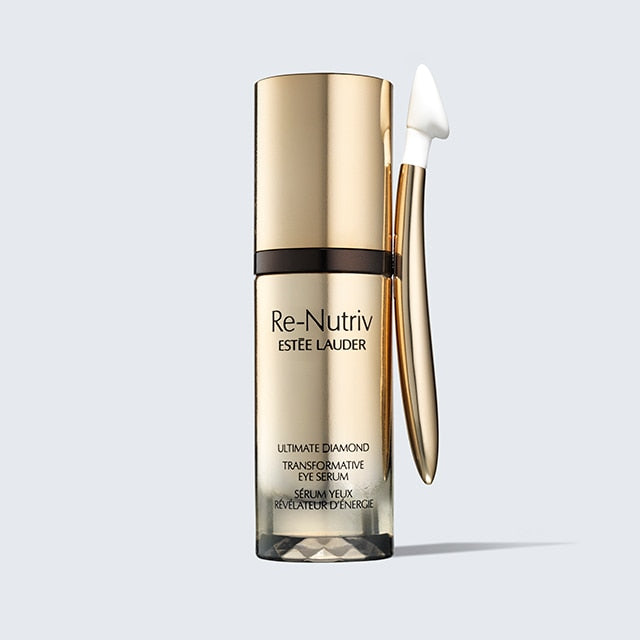
Ultimate Diamond Transformative Brilliance Eye Serum

Ultimate Diamond Transformative Brilliance Eye Serum
Estee Lauder
ultimate-diamond-transformative-brilliance-eye-serum
Eyecare
9784756863269
Morning or Evening?
How often will you use this product?
Notes


Highlights
WHAT IS IT?
Eye serum with Black Diamond Truffle Extract
FEATURES
Cooling Sculpted Ceramic Eye Wand, Quick-absorbing formula, Magnetic wand storage
BEST FOR
normal
CHECKS
Free of parabens, phthalates, sulfites, sulfates, drying alcohol, synthetic colors and mineral oil
Who Is It For?
Adult WomenWhat Does It Help With?
Depuffing Dark Circles Lines Crepey Texture Uneven ToneBudget
Professional (over $150)How To Use
Which routine should it be used in?
Instructions:
Key Information


What Estee Lauder Says
Product Description:
Eyes reflect a multi-faceted brilliance. Eyes look transformed at key facets. More sculpted. Brighter. This whisper-light serum absorbs quickly and visibly transforms key facets of the eye area.
About the Brand:
Ingredients Overview
Ingredients List
Water\Aqua\Eau, Dimethicone, Hydrogenated Lecithin, Dimethicone/Vinyl Dimethicone Crosspolymer, Butylene Glycol, Tuber Melanosporum Extract, Laminaria Digitata Extract, Narcissus Tazetta Bulb Extract, Hydrolyzed Yeast Protein, Acetyl Hexapeptide-8, Aminopropyl Ascorbyl Phosphate, Silybum Marianum (Lady'S Thistle) Extract, Citrus Aurantium Dulcis (Orange) Peel Extract, Sodium Hyaluronate, Lactobacillus Ferment, Asparagopsis Armata Extract, Ascophyllum Nodosum Extract, Acetyl Glucosamine, Caffeine, Trehalose, Polygonum Cuspidatum Root Extract, Scutellaria Baicalensis Root Extract, Cucumis Sativus (Cucumber) Fruit Extract, Hordeum Vulgare (Barley) Extract\Extrait D'Orge, Gold, Pearl Powder, Helianthus Annuus (Sunflower) Seed Extract, Tocopheryl Acetate, Porphyridium Cruentum Extract, Pyrus Malus (Apple) Fruit Extract, Hydrolyzed Wheat Protein, Lauryl Pca, Polymethylsilsesquioxane, Glycerin, Glucose, Artemia Extract, Acacia Senegal Gum, Rhizobian Gum, Hexylene Glycol, Sorbitol, Caprylyl Glycol, Propylene Glycol Dicaprate, Ammonium Acryloyldimethyltaurate/Vp Copolymer, Synthetic Fluorphlogopite, Dimethicone Crosspolymer-3, Hydroxypropyl Methylcellulose, Decarboxy Carnosine Hcl, Peg-11 Methyl Ether Dimethicone, C12-14 Pareth-12, Tin Oxide, Citric Acid, Sodium Hydroxide, Bht, Sodium Metabisulfite, Sodium Sulfite, Disodium Edta, Potassium Sorbate, Chlorphenesin, Sodium Benzoate, Phenoxyethanol, Mica, Iron Oxides (Ci 77491), Titanium Dioxide (Ci 77891)
Key Ingredients
Black Diamond Truffle Extract
Ingredients Details
Acetyl Hexapeptide-8
Common Name(s): Argireline plus,snap-6,acetyl glutamyl hexapeptide-3 modified
CAS Number: 616204-22-9
DESCRIPTION
What It Does: Inhibits neuromuscular acetylcholine release for reduced facial muscle contraction and expression line formation.
Why It's Used: Enhanced argireline analog with improved stability for formulations requiring optimized neuro-inhibiting anti-wrinkle performance.
How It Works: Competes with snap-25 protein for binding to the snare complex, reducing vesicular acetylcholine release at neuromuscular junctions. reduced acetylcholine binding decreases muscle contraction amplitude, reducing expression line depth with repeated use.
Typically Found In: Anti-wrinkle creams,expression line treatments,forehead/eye area products
TECHNICAL DETAILS
Primary Category: Active ingredient – neurotransmitter-inhibiting peptide
Secondary Functions: Enhanced snare inhibition,improved stability
Application Areas:

Facial Skincare

Body Care
Hair Care
Beard Care
Color Cosmetics (Makeup)
Dietary/Oral Supplements
Typical Concentration Range: 3–1000 ppm
SOURCING & ETHICS
Vegan Status: Yes – synthetic
Halal Status: Yes
Source Notes: Synthetically produced. encapsulation may improve delivery to neuromuscular junction.
SKIN COMPATIBILITY
Irritancy Rating: 1/5 – very low
Comedogenicity Rating: 0/5 – non-comedogenic
Sensitivity Concerns: Non-irritating.
Safe for Sensitive Skin: Yes
SAFETY & COMPATIBILITY
Safety Profile: Exceptional safety profile. ewg score: 1.
Works Well With: Hyaluronic acid,ceramides,retinol,moisturizers
Avoid Combining With: No significant incompatibilities
SCIENTIFIC NOTE
Hexapeptide-8 differs from argireline (hexapeptide-3) in its c-terminal modification that increases resistance to enzymatic degradation by skin proteases. this improved stability extends the bioavailability of the active peptide at the neuromuscular junction, potentially improving clinical anti-wrinkle efficacy vs the original argireline.
Last Verified: 2026-03-12
Primary Sources: Cosing database,lipotec argireline plus data
Butylene Glycol
Common Name(s): 1,3-butanediol,bg,1,3-butylene glycol
CAS Number: 107-88-0
DESCRIPTION
What It Does: Provides humectant hydration and active ingredient solubilization with excellent skin feel.
Why It's Used: Preferred glycol humectant in premium and k-beauty formulations for superior skin feel vs propylene glycol with equivalent functionality.
How It Works: Two hydroxyl groups at 1,3-positions provide water binding and solvent activity. better tolerated than propylene glycol with minimal sensitization risk. 4-carbon backbone provides slightly greater hydrophobic character enabling dissolution of less polar actives vs pg.
Typically Found In: Toners,essences,serums,k-beauty formulas
TECHNICAL DETAILS
Primary Category: Functional ingredient – glycol humectant
Secondary Functions: Tewl reduction,skin plumping
Application Areas:
Facial Skincare
Body Care
Hair Care
Beard Care
Color Cosmetics (Makeup)
Dietary/Oral Supplements
Typical Concentration Range: 1%–10%
SOURCING & ETHICS
Vegan Status: Yes – synthetic
Halal Status: Yes
Source Notes: Synthetic or naturally derived. excellent aqueous solubility.
SKIN COMPATIBILITY
Irritancy Rating: 1/5 – very low
Comedogenicity Rating: 0/5 – non-comedogenic
Sensitivity Concerns: Non-irritating; suitable for all skin types.
Safe for Sensitive Skin: Yes
SAFETY & COMPATIBILITY
Safety Profile: Excellent safety profile. ewg score: 1.
Works Well With: Ceramides,emollients,occlusives,glycerin,hyaluronic acid
Avoid Combining With: No significant incompatibilities
SCIENTIFIC NOTE
K-beauty's preference for butylene glycol over propylene glycol is driven by two factors: bg's superior skin feel (less tacky than pg's higher viscosity) and its lower sensitization potential (1,3-bg has better spatial distribution of hydroxyl groups that reduces protein interaction vs pg's 1,2-position oh groups).
Last Verified: 2026-03-12
Primary Sources: Cosing database,cir safety assessment
Dimethicone
Common Name(s): Pdms,polydimethylsiloxane,silicone fluid
CAS Number: 9006-65-9
DESCRIPTION
What It Does: Provides silicone-characteristic silky feel and skin protection with adjustable viscosity.
Why It's Used: The benchmark cosmetic silicone – sets the gold standard for silky application feel, spreadability, and skin protection in virtually all skin care categories.
How It Works: Polydimethylsiloxane chain flexibility provides extremely low surface tension and high spreadability. inert si-o backbone provides chemical stability and excellent skin tolerance. occlusive film formation reduces tewl. higher viscosity grades provide more intense conditioning.
Typically Found In: Moisturizers,foundations,primers,sunscreens – nearly universal
TECHNICAL DETAILS
Primary Category: Functional ingredient – polydimethylsiloxane
Secondary Functions: Barrier sealing,softening
Application Areas:
Facial Skincare
Body Care
Hair Care
Beard Care
Color Cosmetics (Makeup)
Dietary/Oral Supplements
Typical Concentration Range: 0.1%–30%
SOURCING & ETHICS
Vegan Status: Conditional - supplier confirmation required
Halal Status: Unverified - supplier confirmation required
Source Notes: Plant-derived, synthetic or animal-derived. verify source. [audit 2026-07-29 rev2: the record's own source_notes does not assert a non-animal origin, or instructs the reader to verify with the supplier; "yes" asserts knowledge the record does not hold. determination requires shariah-panel sign-off.]
SKIN COMPATIBILITY
Irritancy Rating: 1/5 – very low
Comedogenicity Rating: 1/5 – low; formulation-dependent
Sensitivity Concerns: Non-irritating.
Safe for Sensitive Skin: Yes
SAFETY & COMPATIBILITY
Safety Profile: Excellent safety profile. ewg score: 1.
Works Well With: Humectants,ceramides,actives as carrier
Avoid Combining With: No significant incompatibilities
SCIENTIFIC NOTE
Dimethicone's exceptional silky feel arises from its very low intermolecular attractive forces (weak van der waals forces due to non-polar methyl groups) that allow silicone chains to slide freely over skin. the coefficient of kinetic friction for pdms against skin (~0.04) is among the lowest of any cosmetic material – explaining why even small amounts transform product feel.
Last Verified: 2026-03-12
Primary Sources: Cosing database,cir safety assessment
Dimethicone/vinyl Dimethicone Crosspolymer
Common Name(s): Dimethicone/vinyl dimethicone crosspolymer
DESCRIPTION
What It Does: Creates a smooth, silky skin feel, reduces friction, and forms a breathable film on skin that enhances product application and wear.
Why It's Used: Silicones provide unmatched aesthetic elegance, thermal stability, and formulation flexibility that enhance both consumer experience and product performance.
How It Works: Siloxane backbone provides a flexible, chemically inert polymer that forms thin, breathable films on skin surface, filling surface irregularities and providing low surface energy for exceptional slip and spreadability.
Typically Found In: Moisturizers,primers,foundations,sunscreens,hair products
TECHNICAL DETAILS
Primary Category: Silicones
Secondary Functions: Emollient,film former
Application Areas:
Facial Skincare
Body Care
Hair Care
Beard Care
Color Cosmetics (Makeup)
Dietary/Oral Supplements
Typical Concentration Range: 0.5–30%
SOURCING & ETHICS
Vegan Status: Yes
Halal Status: Yes
Source Notes: Synthetic silicone polymer; not plant-derived but generally considered vegan.
SKIN COMPATIBILITY
Irritancy Rating: 1
Comedogenicity Rating: 0
Sensitivity Concerns: Low sensitization potential at recommended use concentrations.
Safe for Sensitive Skin: Yes
SAFETY & COMPATIBILITY
Safety Profile: Well-characterized cosmetic ingredient with established safety profile. generally non-irritating at typical use concentrations. suitable for leave-on and rinse-off cosmetics.
Works Well With: Other emollients,uv filters,pigments
Avoid Combining With: Silicone-sensitive formulations; biodegradability concerns in eco-formulations
SCIENTIFIC NOTE
Silicone polymers are poly(dimethylsiloxane) backbones with si-o bond energy (105 kcal/mol) significantly higher than c-c (83 kcal/mol), providing exceptional thermal and oxidative stability. the low surface energy (21 mn/m vs 30+ mn/m for organic polymers) accounts for silicone's unique slip feel, and the si-o bond's flexibility (rotation barrier ~0.3 kcal/mol) enables fluid behavior across wide temperature ranges.
Last Verified: 2025-01-15
Primary Sources: Cosing eu database; pcpc cosmetic ingredient safety reviews; ingredient-specific safety and efficacy literature