

TONYMOLY
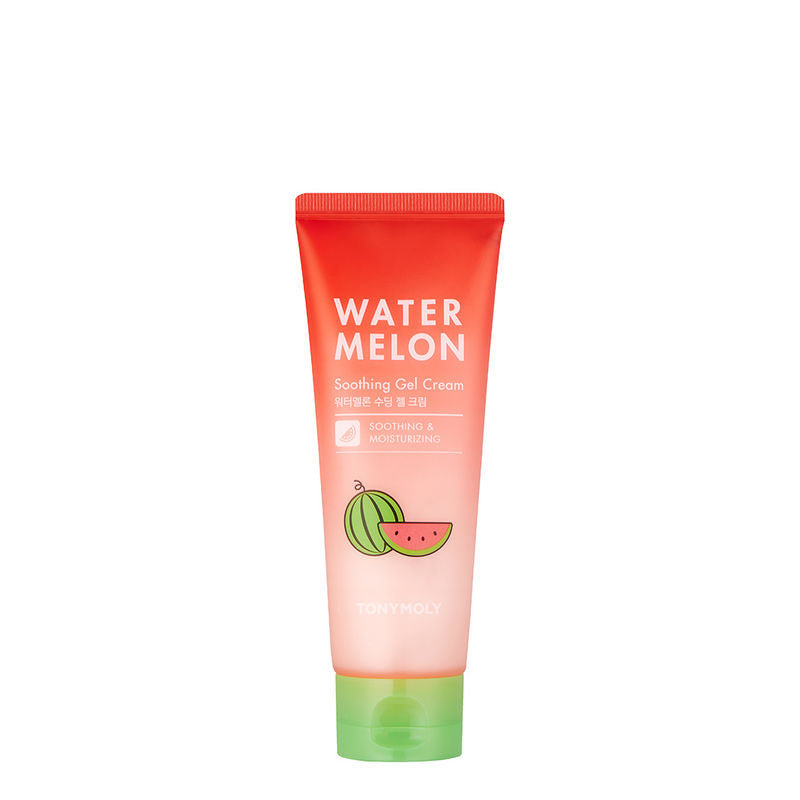
TONYMOLY Watermelon Soothing Gel Cream

TONYMOLY Watermelon Soothing Gel Cream
TONYMOLY
tonymoly-watermelon-soothing-gel-cream
Moisturize
10085506777381
Morning or Evening?
How often will you use this product?
Notes


Highlights
WHAT IS IT?
Gel Cream with 3 key ingredients
FEATURES
Contains 50% watermelon fruit extract, antioxidant rich, excellent source of vitamin A, B6 and C, soothes and hydrates sun-damaged skin
BEST FOR
sensitive
CHECKS
No animal testing
Who Is It For?
What Does It Help With?
Skin Rejuvenation And Repair Hydration Soothing InflammationBudget
Mid-range ($30-$75)How To Use
Which routine should it be used in?
Instructions:
Key Information


What TONYMOLY Says
Product Description:
Soothe, hydrate and replenish moisture in tired, sun-damaged skin with TONYMOLY Watermelon Soothing Gel Cream! Packed with 50% watermelon fruit extract, this antioxidant rich ingredient is known to be an excellent source of vitamin A, B6 and C for skin rejuvenation and repair.
About the Brand:
Ingredients Overview
Ingredients List
centella-asiatica-extract,meadowfoam-seed-oil,aloe-barbadensis-leaf-extract
Key Ingredients
Centella Asiatica Extract, Meadowfoam Seed Oil, Aloe Barbadensis Leaf Extract
Ingredients Details
Aloe Barbadensis Leaf Extract
Common Name(s): Aloe barbadensis leaf extract,botanical extract,phytochemical active
CAS Number: N/a
DESCRIPTION
What It Does: Provides antioxidant protection from reactive oxygen species, reduces inflammatory cytokine production in skin, and conditions skin surface through the plant's secondary metabolite complex.
Why It's Used: Chosen for its natural origin narrative, traditional use heritage, and multi-functional phytochemical profile that supports several concurrent skin care claims from one ingredient.
How It Works: Polyphenols, terpenoids, and alkaloids in the extract scavenge ros via hydrogen atom transfer, inhibit nf-kb or cox-2 inflammatory pathways, and interact with skin surface proteins for conditioning.
Typically Found In: Botanical skin care,natural products
TECHNICAL DETAILS
Primary Category: Active ingredient – antioxidant
Secondary Functions: Free radical scavenging,anti-aging
Application Areas:

Facial Skincare
Body Care

Hair Care
Beard Care
Color Cosmetics (Makeup)
Dietary/Oral Supplements
Typical Concentration Range: 0.1%–10%
SOURCING & ETHICS
Vegan Status: Yes
Halal Status: Yes
Source Notes: Plant-derived extract or synthetic.
SKIN COMPATIBILITY
Irritancy Rating: 1/5 – very low
Comedogenicity Rating: 0/5 – non-comedogenic
Sensitivity Concerns: Non-irritating; well-tolerated.
Safe for Sensitive Skin: Yes
SAFETY & COMPATIBILITY
Safety Profile: Excellent safety profile. ewg score: 1.
Works Well With: Vitamin c,vitamin e,ferulic acid,spf,other antioxidants
Avoid Combining With: No significant incompatibilities
SCIENTIFIC NOTE
Plant secondary metabolites evolved as uv photoprotectants and antimicrobial agents — mechanisms that directly translate to cosmetic antioxidant and anti-inflammatory activity in human skin.
Last Verified: 2026-03-12
Primary Sources: Cosing database,aloe barbadensis leaf extract botanical review
Centella Asiatica Extract
Common Name(s): Centella asiatica extract,botanical extract,phytochemical active
CAS Number: N/a
DESCRIPTION
What It Does: Provides antioxidant protection from reactive oxygen species, reduces inflammatory cytokine production in skin, and conditions skin surface through the plant's secondary metabolite complex.
Why It's Used: Chosen for its natural origin narrative, traditional use heritage, and multi-functional phytochemical profile that supports several concurrent skin care claims from one ingredient.
How It Works: Polyphenols, terpenoids, and alkaloids in the extract scavenge ros via hydrogen atom transfer, inhibit nf-kb or cox-2 inflammatory pathways, and interact with skin surface proteins for conditioning.
Typically Found In: Botanical skin care,natural products
TECHNICAL DETAILS
Primary Category: Active ingredient – antioxidant
Secondary Functions: Free radical scavenging,anti-aging
Application Areas:
Facial Skincare
Body Care
Hair Care
Beard Care
Color Cosmetics (Makeup)
Dietary/Oral Supplements
Typical Concentration Range: 0.1%–10%
SOURCING & ETHICS
Vegan Status: Yes
Halal Status: Yes
Source Notes: Plant-derived extract or synthetic.
SKIN COMPATIBILITY
Irritancy Rating: 1/5 – very low
Comedogenicity Rating: 0/5 – non-comedogenic
Sensitivity Concerns: Non-irritating; well-tolerated.
Safe for Sensitive Skin: Yes
SAFETY & COMPATIBILITY
Safety Profile: Excellent safety profile. ewg score: 1.
Works Well With: Vitamin c,vitamin e,ferulic acid,spf,other antioxidants
Avoid Combining With: No significant incompatibilities
SCIENTIFIC NOTE
Plant secondary metabolites evolved as uv photoprotectants and antimicrobial agents — mechanisms that directly translate to cosmetic antioxidant and anti-inflammatory activity in human skin.
Last Verified: 2026-03-12
Primary Sources: Cosing database,centella asiatica extract botanical review
Meadowfoam Seed Oil
Common Name(s): Meadowfoam seed oil
DESCRIPTION
What It Does: Forms a long-lasting protective film providing exceptional moisture retention and hair conditioning with outstanding stability.
Why It's Used: Unique long-chain fatty acid oil providing extended moisture retention and exceptional film-forming properties not available from conventional triglyceride oils.
How It Works: Very long-chain fatty acids (c20:1, c22:1, c22:2) create a uniquely stable, film-forming emollient with minimal oxidation susceptibility. long chains pack more efficiently in hair cuticle scales and skin surface for extended wear and conditioning.
Typically Found In: Long-wearing moisturizers,hair conditioners,glossy finishes,lip products
TECHNICAL DETAILS
Primary Category: Functional ingredient – emollient
Secondary Functions: Film-forming,exceptional stability,hair gloss
Application Areas:
Facial Skincare
Body Care
Hair Care
Beard Care
Color Cosmetics (Makeup)
Dietary/Oral Supplements
Typical Concentration Range: 1%–30%
SOURCING & ETHICS
Vegan Status: Yes – from limnanthes alba seeds
Halal Status: Yes
Source Notes: Cold-pressed from meadowfoam seeds – a sustainable pacific northwest crop. shell life 5+ years without antioxidants.
SKIN COMPATIBILITY
Irritancy Rating: 1/5 – very low
Comedogenicity Rating: 1/5 – very low
Sensitivity Concerns: Non-irritating.
Safe for Sensitive Skin: Yes
SAFETY & COMPATIBILITY
Safety Profile: Excellent safety profile. ewg score: 1.
Works Well With: Humectants,ceramides,actives as carrier
Avoid Combining With: No significant incompatibilities
SCIENTIFIC NOTE
Meadowfoam oil's very long-chain fatty acid composition (>95% c20-c22 fatty acids vs most plant oils' c16-c18 dominance) provides uniquely efficient film formation from tighter packing of the longer carbon chains, explaining its superior moisturization duration and hair conditioning film formation.
Last Verified: 2026-03-12
Primary Sources: Cosing database,cir safety assessment