

Yes To
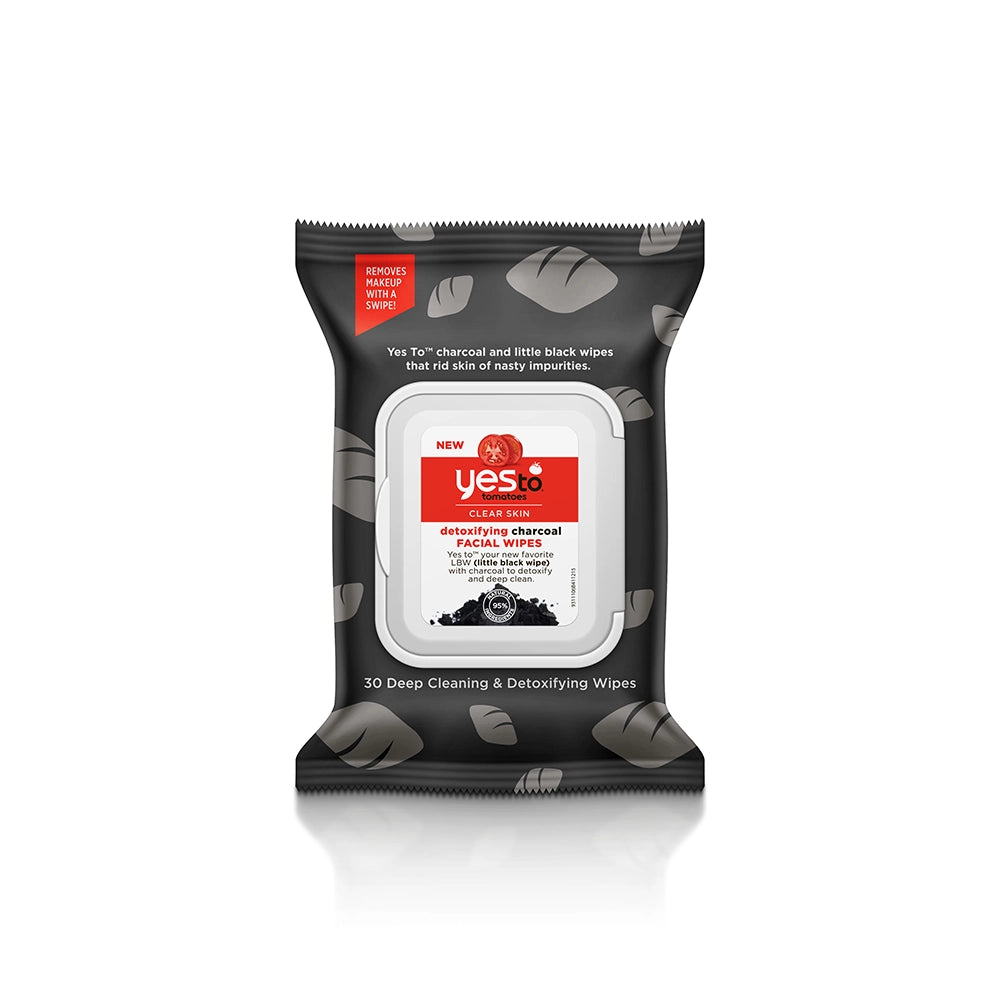
tomatoes clear skin detoxifying charcoal facial wipes _x0096_ 30ct

tomatoes clear skin detoxifying charcoal facial wipes _x0096_ 30ct
Yes To
tomatoes-clear-skin-detoxifying-charcoal-facial-wipes-30ct
Cleanse
9706834657573
Morning or Evening?
How often will you use this product?
Notes


Highlights
WHAT IS IT?
Facial cleansing wipes with charcoal and tomato extracts
FEATURES
Pre-moistened, plant-based, compostable, detoxifying
BEST FOR
Blemish-prone skin
CHECKS
Free of parabens, silicones, phthalates
Who Is It For?
Adults Both Men And WomenWhat Does It Help With?
Removes Makeup Cleanses Skin Balances OilBudget
AffordableHow To Use
Which routine should it be used in?
Instructions:
Key Information


What Yes To Says
Product Description:
These 30 pre-moistened facial wipes cleanse, remove makeup and rid skin of pore-clogging impurities without the need to rinse. Formulated for blemish-prone skin with Charcoal to help remove dirt, oil and bacteria and antioxidant-rich Tomatoes to help balance oil, these gentle black towelettes leave skin clean and detoxified. And what makes these daily facial wipes even better is that they are plant-based and compostable under both municipal and home conditions. So you can put them in your home compost bin with your coffee grounds and banana peels, and know that it's safe for the environment, your plants and for you!
About the Brand:
Ingredients Overview
Ingredients List
Water (Aqua), Aloe Barbadensis (Aloe) Leaf Juice, Glycerin, Betaine, Polyglyceryl-4 Caprate, Solanum Lycopersicum (Tomato) Fruit Extract, Charcoal Powder, Galactoarabinan, Caprylyl/Capryl Glucoside, Hamamelis Virginiana (Witch Hazel) Extract, Alcohol, Citrullus Vulgaris (Watermelon) Fruit Extract, Aspalathus Linearis (Rooibos) Leaf Extract, Sodium Hydroxide, Potassium Sorbate, Sodium Benzoate, Citric Acid, Fragrance (Parfum), Phenoxyethanol, Butylphenyl Methylpropional, Coumarin.
Key Ingredients
Charcoal, Tomato Fruit Extract, Aloe Leaf Juice, Glycerin
Ingredients Details
Aloe Barbadensis Aloe Leaf Juice
Common Name(s): Aloe barbadensis aloe leaf juice extract
DESCRIPTION
What It Does: Provides antioxidant protection, soothing anti-inflammatory effects, and skin-conditioning benefits through plant-derived polyphenols and phytochemicals.
Why It's Used: Plant extracts concentrate bioactive phytochemicals evolved for environmental protection — uv, microbial, and oxidative stressors — that translate to skin benefits.
How It Works: Polyphenols (flavonoids, phenolic acids) inhibit nf-κb-mediated inflammatory signaling, scavenge reactive oxygen species through electron donation, and chelate pro-oxidant metal ions to reduce oxidative skin damage.
Typically Found In: Serums,toners,moisturizers,masks,essences
TECHNICAL DETAILS
Primary Category: Botanical extracts
Secondary Functions: Antioxidant,anti-inflammatory
Application Areas:

Facial Skincare

Body Care
Hair Care
Beard Care
Color Cosmetics (Makeup)
Dietary/Oral Supplements
Typical Concentration Range: 0.1–10%
SOURCING & ETHICS
Vegan Status: Yes
Halal Status: Yes
Source Notes: Plant-derived extract; no animal components.
SKIN COMPATIBILITY
Irritancy Rating: 1899-12-31 00:00:00 -0800
Sensitivity Concerns: Low sensitization potential at recommended use concentrations.
Safe for Sensitive Skin: Yes
SAFETY & COMPATIBILITY
Safety Profile: Well-characterized cosmetic ingredient with established safety profile. generally non-irritating at typical use concentrations. suitable for leave-on and rinse-off cosmetics.
Works Well With: Niacinamide,hyaluronic acid,vitamin c,ceramides
Avoid Combining With: Strong oxidizing agents
SCIENTIFIC NOTE
Plant secondary metabolites (flavonoids, terpenes, phenolic acids) are biosynthesized as defense compounds against uv, herbivores, and pathogens. their anti-inflammatory activity typically derives from competitive inhibition of cox-2 and 5-lox enzymes (ic50 1–50 µm), while antioxidant activity involves single electron transfer (set) and hydrogen atom transfer (hat) mechanisms with structure-dependent rate constants.
Last Verified: 2025-01-15
Primary Sources: Cosing eu database; pcpc cosmetic ingredient safety reviews; phytochemical and ethnobotanical literature
Betaine
Common Name(s): Trimethylglycine,tmg,natural betaine
CAS Number: 107-43-7
DESCRIPTION
What It Does: Provides osmoprotective humectant conditioning with anti-irritant and mild foam-boosting activity.
Why It's Used: Natural-origin multifunctional osmolyte from sugar beet providing hydration, anti-irritancy, and conditioning in virtually every cosmetic category.
How It Works: Quaternary ammonium betaine provides zwitterionic character for water binding via ionic hydration. osmoprotective function at 100–500mm as compatible solute protecting cells from osmotic stress. reduces surfactant irritation by competing with sls for protein binding sites. mild foam enhancement.
Typically Found In: Virtually all categories — moisturisers, shampoos, cleansers
TECHNICAL DETAILS
Primary Category: Functional ingredient – humectant
Secondary Functions: Tewl reduction,skin plumping
Application Areas:
Facial Skincare
Body Care
Hair Care
Beard Care
Color Cosmetics (Makeup)
Dietary/Oral Supplements
Typical Concentration Range: 0.5%–10%
SOURCING & ETHICS
Vegan Status: Conditional - feedstock declaration required
Halal Status: Unverified - feedstock declaration required (plant, animal and petrochemical routes all exist)
Source Notes: Synthetic or naturally derived. excellent aqueous solubility. [audit 2026-07-29 rev2: origin-dependent: the same inci exists in plant, animal and petrochemical versions and the name does not discriminate. determination requires shariah-panel sign-off.]
SKIN COMPATIBILITY
Irritancy Rating: 1/5 – very low
Comedogenicity Rating: 0/5 – non-comedogenic
Sensitivity Concerns: Non-irritating; suitable for all skin types.
Safe for Sensitive Skin: Yes
SAFETY & COMPATIBILITY
Safety Profile: Excellent safety profile. ewg score: 1.
Works Well With: Ceramides,emollients,occlusives,glycerin,hyaluronic acid
Avoid Combining With: No significant incompatibilities
SCIENTIFIC NOTE
Betaine's anti-irritant mechanism for surfactant systems involves competitive protein protection: betaine at high concentrations preferentially interacts with skin proteins, occupying binding sites that would otherwise be occupied by surfactant molecules causing protein denaturation. this competition reduces available protein binding for irritating surfactants, explaining betaine's well-documented ability to reduce sls irritation when co-formulated.
Last Verified: 2026-03-12
Primary Sources: Cosing database,craig betaine osmoprotective review,cir safety assessment
Caprylyl/capryl Glucoside
Common Name(s): C8-c10 apg,light cleansing glucoside,natural light cleanser
CAS Number: N/a
DESCRIPTION
What It Does: Provides the lightest apg mild cleansing for facial and micellar applications.
Why It's Used: Light facial apg cleanser — c8-c10 short chain apg provides the mildest, lightest-rinse apg cleansing suited for everyday facial washing and micellar water formulation where heavier c12-c16 apgs leave residue.
How It Works: Caprylyl (c8) + capryl (c10) glucose glucoside: short chain apg. very gentle: non-ionic + short chain. very fast rinse: short chain high solubility. micellar: compatible as non-ionic surfactant. cosmos. minimal skin feel.
Typically Found In: Micellar water,gentle facial cleanser,daily cosmos wash
TECHNICAL DETAILS
Primary Category: Active ingredient – cosmetic active
Secondary Functions: Skin conditioning
Application Areas:
Facial Skincare
Body Care
Hair Care
Beard Care
Color Cosmetics (Makeup)
Dietary/Oral Supplements
Typical Concentration Range: 2%–15%
SOURCING & ETHICS
Vegan Status: Conditional - supplier confirmation required
Halal Status: Unverified - supplier confirmation required
Source Notes: Commercially produced for cosmetic use. verify vegan/halal status with supplier. [audit 2026-07-29 rev2: the record's own source_notes does not assert a non-animal origin, or instructs the reader to verify with the supplier; "yes" asserts knowledge the record does not hold. determination requires shariah-panel sign-off.]
SKIN COMPATIBILITY
Irritancy Rating: 1/5 – very low
Comedogenicity Rating: 0/5 – non-comedogenic
Sensitivity Concerns: Well-tolerated by most skin types.
Safe for Sensitive Skin: Yes
SAFETY & COMPATIBILITY
Safety Profile: Good safety profile at recommended concentrations. ewg score: 1–2.
Works Well With: Standard skincare actives
Avoid Combining With: No known significant incompatibilities
SCIENTIFIC NOTE
C8-c10 apg lighter rinse vs c12-c16 from cmc differences: shorter chain apgs have higher cmc (critical micelle concentration) → less tendency to remain on skin post-rinse as micelles vs monomer ratio favours monomer at post-rinse dilution. this higher cmc means c8-c10 apg leaves less surfactant residue on skin post-rinsing vs longer chain apgs, providing the faster 'clean rinse' sensation.
Last Verified: 2026-03-12
Primary Sources: Cosing database,short-chain apg technical literature
Charcoal Powder
Common Name(s): Activated charcoal/fuller's earth,pore cleansing adsorbent,detoxifying clay
CAS Number: N/a
DESCRIPTION
What It Does: Physically adsorbs excess sebum, environmental pollution particulates, and skin surface impurities into the porous structure, purifies pores during mask application, and provides the 'detox' pore-drawing action validated by the visible sebum and debris transfer to the mask on removal.
Why It's Used: Provides genuine documented high-capacity physical adsorption — not a marketing claim but a measurable adsorbent capacity. activated charcoal's ~2000 m²/g surface area adsorbs sebum lipids and particulate pollutants through van der waals forces at concentrations no clay or silica alternative can match.
How It Works: Activated charcoal's turbostratic graphite structure (disordered graphene layers) provides pore sizes of 0.5–50 nm covering micro, meso, and macro pore ranges. sebum lipids adsorb into mesopores (2–50 nm) via van der waals forces; pollutant pahs adsorb via π-π stacking with graphene rings; the high-capacity adsorption drives equilibrium-driven partitioning from pore to charcoal surface.
Typically Found In: Charcoal masks,pore purifying,detox
TECHNICAL DETAILS
Primary Category: Active ingredient – mineral / metal active
Secondary Functions: Antimicrobial,sebum regulation,antioxidant enzyme cofactor
Application Areas:
Facial Skincare
Body Care
Hair Care
Beard Care
Color Cosmetics (Makeup)
Dietary/Oral Supplements
Typical Concentration Range: 5%–30%
SOURCING & ETHICS
Vegan Status: Yes
Halal Status: Yes
Source Notes: Mineral/inorganic compound. cosmetic or pharmaceutical grade.
SKIN COMPATIBILITY
Irritancy Rating: 1/5 – very low
Comedogenicity Rating: 0/5 – non-comedogenic
Sensitivity Concerns: Non-irritating at recommended concentrations.
Safe for Sensitive Skin: Yes at recommended concentrations
SAFETY & COMPATIBILITY
Safety Profile: Excellent safety profile at cosmetic concentrations. ewg score: 1–2.
Works Well With: Niacinamide,salicylic acid,other actives
Avoid Combining With: No significant incompatibilities at standard concentrations
SCIENTIFIC NOTE
Activated charcoal's adsorption capacity (1–3 g sebum/g charcoal) significantly exceeds kaolin clay (~0.5 g/g) and bentonite (~0.8 g/g) — the higher porosity-to-mass ratio from carbonisation providing the most efficient sebum adsorption per gram of any cosmetic adsorbent.
Last Verified: 2026-03-12
Primary Sources: Cosing database,activated charcoal pore adsorption capacity review