

Nykaa E retail limited
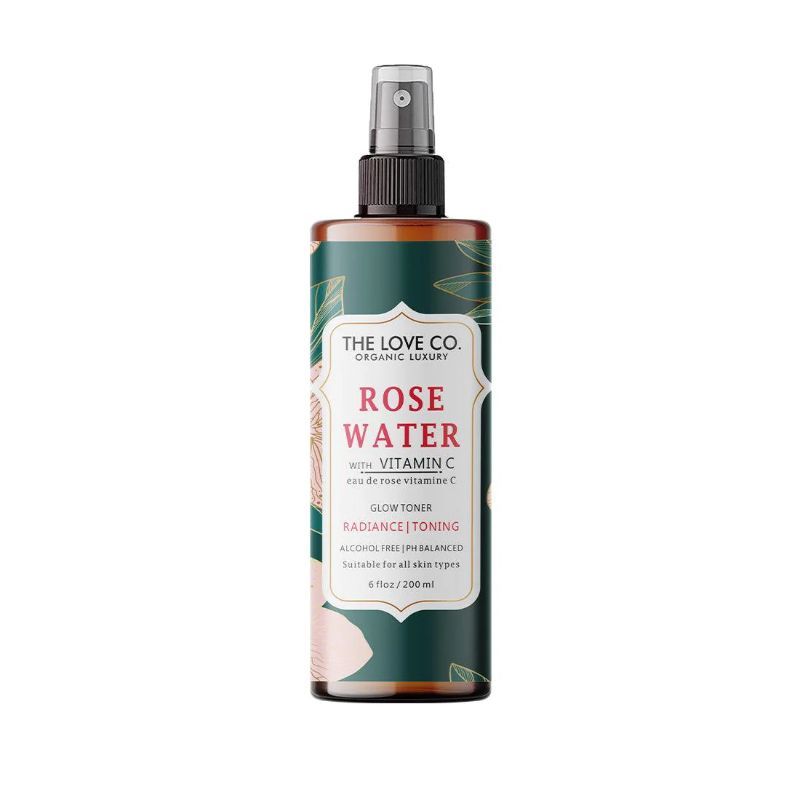
The Love Co. Rose Water Spray For Face With Vitamin C Toner For Glowing Skin Face Mist

The Love Co. Rose Water Spray For Face With Vitamin C Toner For Glowing Skin Face Mist
Nykaa E retail limited
the-love-co-rose-water-spray-for-face-with-vitamin-c-toner-for-glowing-skin-face-mist
Tone
10085080662309
Morning or Evening?
How often will you use this product?
Notes


Highlights
WHAT IS IT?
Rose Water Spray, 1 key ingredient
FEATURES
Natural rose water, daily toner for oily and dry skin, face mist for all skin types including sensitive, tightens pores, treats blemishes, revitalising spray, soothes irritated skin, balances pH, adds hydration, restores moisture barrier
BEST FOR
sensitive
CHECKS
Who Is It For?
What Does It Help With?
Tightening Pores Treating Blemishes Soothing Irritated Skin Balancing Ph Levels Hydration Restoring Moisture BarrierBudget
Affordable (under $30)How To Use
Which routine should it be used in?
Instructions:
Key Information


What Nykaa E retail limited Says
Product Description:
The Love Co. Rose Water Spray is natural rose water for skin, a daily toner for oily skin, a toner for dry skin, and a face mist for all skin types, including sensitive skin. Use as a daily refreshing toner for tightening pores on the face, treating blemishes, and revitalising "pick-me-up" spray. Rose water organic toner for the face soothes irritated skin, tightens pores, and helps balance pH levels. For those with dry or dehydrated skin, rose hydrosol benefits by adding the extra moisture and hydration that your skin needs. A facial mist with the goodness of rose water can help restore your skin’s natural moisture barrier to maintain fresh and good-looking skin. Rosewater skin spray also acts as a toner for combination skin and hair.
About the Brand:
Ingredients Overview
Ingredients List
Rose Water*,Ethyl Ascorbic Acid **, Aloe barbadensis (Aloe Vera) Juice, Hamamelis Virginiana Extract, Cucumis sativus (Cucumber) Extract, Hyaluronic acid, Trehalose , Sodium Benzoate, Potassium Sorbate
Key Ingredients
Rose Water
Ingredients Details
Hamamelis Virginiana Extract
Common Name(s): Hamamelis virginiana extract
DESCRIPTION
What It Does: Provides antioxidant protection, soothing anti-inflammatory effects, and skin-conditioning benefits through plant-derived polyphenols and phytochemicals.
Why It's Used: Plant extracts concentrate bioactive phytochemicals evolved for environmental protection — uv, microbial, and oxidative stressors — that translate to skin benefits.
How It Works: Polyphenols (flavonoids, phenolic acids) inhibit nf-κb-mediated inflammatory signaling, scavenge reactive oxygen species through electron donation, and chelate pro-oxidant metal ions to reduce oxidative skin damage.
Typically Found In: Serums,toners,moisturizers,masks,essences
TECHNICAL DETAILS
Primary Category: Botanical extracts
Secondary Functions: Antioxidant,anti-inflammatory
Application Areas:

Facial Skincare

Body Care
Hair Care
Beard Care
Color Cosmetics (Makeup)
Dietary/Oral Supplements
Typical Concentration Range: 0.1–10%
SOURCING & ETHICS
Vegan Status: Yes
Halal Status: Yes
Source Notes: Plant-derived extract; no animal components.
SKIN COMPATIBILITY
Irritancy Rating: 1
Comedogenicity Rating: 0
Sensitivity Concerns: Low sensitization potential at recommended use concentrations.
Safe for Sensitive Skin: Yes
SAFETY & COMPATIBILITY
Safety Profile: Well-characterized cosmetic ingredient with established safety profile. generally non-irritating at typical use concentrations. suitable for leave-on and rinse-off cosmetics.
Works Well With: Niacinamide,hyaluronic acid,vitamin c,ceramides
Avoid Combining With: Strong oxidizing agents
SCIENTIFIC NOTE
Plant secondary metabolites (flavonoids, terpenes, phenolic acids) are biosynthesized as defense compounds against uv, herbivores, and pathogens. their anti-inflammatory activity typically derives from competitive inhibition of cox-2 and 5-lox enzymes (ic50 1–50 µm), while antioxidant activity involves single electron transfer (set) and hydrogen atom transfer (hat) mechanisms with structure-dependent rate constants.
Last Verified: 2025-01-15
Primary Sources: Cosing eu database; pcpc cosmetic ingredient safety reviews; phytochemical and ethnobotanical literature
Hyaluronic Acid
Common Name(s): Ha,sodium hyaluronate (salt form),hyaluronan,d-glucuronic acid-n-acetyl-d-glucosamine polymer
CAS Number: 9004-61-9
DESCRIPTION
What It Does: Hyaluronic acid draws and locks moisture into the skin at multiple depths (surface and deeper layers depending on molecular weight), creating a plumping, smoothing, and hydrating effect.
Why It's Used: It is used because it is endogenous to human skin, making it exceptionally biocompatible and non-irritating. its unparalleled moisture-binding capacity makes it the most effective hydrating ingredient available.
How It Works: Ha binds water molecules through its many hydroxyl and carboxyl groups, creating a gel-like matrix. high molecular weight ha (>500 kda) hydrates the skin surface; low molecular weight ha (<50 kda) penetrates deeper to provide interior hydration.
Typically Found In: Serums,moisturizers,sheet masks,toners,eye creams,lip treatments,dermal fillers (injectable)
TECHNICAL DETAILS
Primary Category: Active ingredient – humectant/hydrator
Secondary Functions: Barrier repair,plumping,anti-aging
Application Areas:
Facial Skincare
Body Care
Hair Care
Beard Care
Color Cosmetics (Makeup)
Dietary/Oral Supplements
Typical Concentration Range: 0.1%–2% (effective at very low concentrations; multi-weight ha provides superior results)
SOURCING & ETHICS
Vegan Status: Conditional - feedstock declaration required
Halal Status: Unverified - feedstock declaration required (plant, animal and petrochemical routes all exist)
Source Notes: Originally extracted from rooster combs; now predominantly produced via biotechnology (bacterial fermentation), which is vegan and more sustainable. [audit 2026-07-29 rev2: origin-dependent: the same inci exists in plant, animal and petrochemical versions and the name does not discriminate. determination requires shariah-panel sign-off.]
SKIN COMPATIBILITY
Irritancy Rating: 1/5 – very low; one of the gentlest skincare ingredients known
Comedogenicity Rating: 0/5 – non-comedogenic
Sensitivity Concerns: In very dry environments, high-molecular-weight ha on the surface can potentially draw moisture out of the skin if not sealed with an occlusive. apply to damp skin and seal with moisturizer.
Safe for Sensitive Skin: Yes – ideal for all skin types including rosacea, eczema, and post-procedure skin
SAFETY & COMPATIBILITY
Safety Profile: Exceptional safety profile. endogenous molecule – no toxicity concerns. ewg hazard score: 1. safe during pregnancy.
Works Well With: Virtually all ingredients; especially ceramides,glycerin,peptides,retinol (reduces irritation),niacinamide,vitamin c
Avoid Combining With: No significant incompatibilities; high concentrations of alcohol in a formula may reduce its efficacy
SCIENTIFIC NOTE
Hyaluronic acid naturally degrades in skin (half-life ~1–2 days). the skin produces it endogenously, but production decreases with age. multi-molecular-weight ha formulas provide hydration at both surface and deeper skin levels.
Last Verified: 2026-03-12
Primary Sources: Cosing database,cir safety assessment,papakonstantinou et al. (2012) dermato-endocrinology
Potassium Sorbate
Common Name(s): Potassium e,2-hexenoate,sorbate of potash
CAS Number: 24634-61-5
DESCRIPTION
What It Does: Provides mould and yeast focused broad-spectrum preservation in a widely accepted food-grade preservative.
Why It's Used: Standard mould and yeast preservative — potassium sorbate is effective at slightly higher ph than sodium benzoate, making it the preferred sorbate preservative for formulations at ph 4.5-6.
How It Works: Inactive salt form — sorbic acid (free acid, pka 4.76) is active. more effective than benzoate at higher ph (pka 4.76 vs benzoate 4.2). active at ph up to ~6.0 (meaningful sorbic acid present). inhibits malassezia and candida at lower concentrations than bacteria. synergistic with sodium benzoate.
Typically Found In: Cosmetics ph 4-6,natural preservation systems,combined with sodium benzoate
TECHNICAL DETAILS
Primary Category: Functional ingredient – sorbate preservative
Secondary Functions: Skin conditioning
Application Areas:
Facial Skincare
Body Care
Hair Care
Beard Care
Color Cosmetics (Makeup)
Dietary/Oral Supplements
Typical Concentration Range: 0.1%–0.6%
SOURCING & ETHICS
Vegan Status: Conditional - supplier confirmation required
Halal Status: Unverified - supplier confirmation required
Source Notes: Commercially produced for cosmetic use. verify vegan/halal status with supplier. [audit 2026-07-29 rev2: the record's own source_notes does not assert a non-animal origin, or instructs the reader to verify with the supplier; "yes" asserts knowledge the record does not hold. determination requires shariah-panel sign-off.]
SKIN COMPATIBILITY
Irritancy Rating: 1/5 – very low
Comedogenicity Rating: 0/5 – non-comedogenic
Sensitivity Concerns: Well-tolerated by most skin types.
Safe for Sensitive Skin: Yes
SAFETY & COMPATIBILITY
Safety Profile: Eu max 0.6% cosmetics. fda gras. synergistic with sodium benzoate. oxidises to sorbaldehyde (yellow colouration) on uv exposure — protect from light.
Works Well With: Standard skincare actives
Avoid Combining With: No known significant incompatibilities
SCIENTIFIC NOTE
Potassium sorbate's antifungal mechanism (disruption of mitochondrial electron transport in fungi) is different from its antibacterial mechanism (cell membrane and enzyme disruption). this mechanistic bifunctionality provides broad spectrum from a single preservative, though the lower antifungal mic values mean mould and yeast protection is achieved at lower concentrations than bacterial protection.
Last Verified: 2026-03-12
Primary Sources: Cosing database,eu preservative annex v,fda gras,cir safety assessment
Sodium Benzoate
Common Name(s): Benzoic acid sodium salt,e211 food preservative
CAS Number: 532-32-1
DESCRIPTION
What It Does: Preserves acidic formulations against yeast and mold contamination.
Why It's Used: Natural-derived (from benzoic acid found in cranberries, cinnamon) preservative for acidic ph formulations where it provides excellent antimicrobial activity.
How It Works: Undissociated benzoic acid (active form, pka 4.2) penetrates microbial cell membranes and disrupts electron transport chain and ph homeostasis. at ph>5, mostly ionized (sodium salt) and inactive – requires acidic formulation ph for efficacy.
Typically Found In: Acidic serums,toners,low-ph formulations
TECHNICAL DETAILS
Primary Category: Functional ingredient – benzoate preservative
Secondary Functions: Skin conditioning
Application Areas:
Facial Skincare
Body Care
Hair Care
Beard Care
Color Cosmetics (Makeup)
Dietary/Oral Supplements
Typical Concentration Range: 0.1%–0.5%
SOURCING & ETHICS
Vegan Status: Conditional - supplier confirmation required
Halal Status: Unverified - supplier confirmation required
Source Notes: Commercially produced for cosmetic use. verify vegan/halal status with supplier. [audit 2026-07-29 rev2: the record's own source_notes does not assert a non-animal origin, or instructs the reader to verify with the supplier; "yes" asserts knowledge the record does not hold. determination requires shariah-panel sign-off.]
SKIN COMPATIBILITY
Irritancy Rating: 1/5 – very low
Comedogenicity Rating: 0/5 – non-comedogenic
Sensitivity Concerns: Well-tolerated by most skin types.
Safe for Sensitive Skin: Yes
SAFETY & COMPATIBILITY
Safety Profile: Eu max 0.5%. gras food additive. ewg score: 3 (benzene formation concern with vitamin c at >80°c – normal use temperatures do not form benzene).
Works Well With: Standard skincare actives
Avoid Combining With: No known significant incompatibilities
SCIENTIFIC NOTE
Sodium benzoate's strict ph dependency (90% inactive at ph>5.5) makes its preservative activity dramatically sensitive to formulation ph. a serum formulated at ph 4.0 is fully preserved by benzoate; the same formula adjusted to ph 5.5 has <10% of the preservative activity. this ph dependency must be considered in any benzoate-preserved formulation.
Last Verified: 2026-03-12
Primary Sources: Cosing database,siegert & frieling benzoate review,cir safety assessment