

The Face Shop
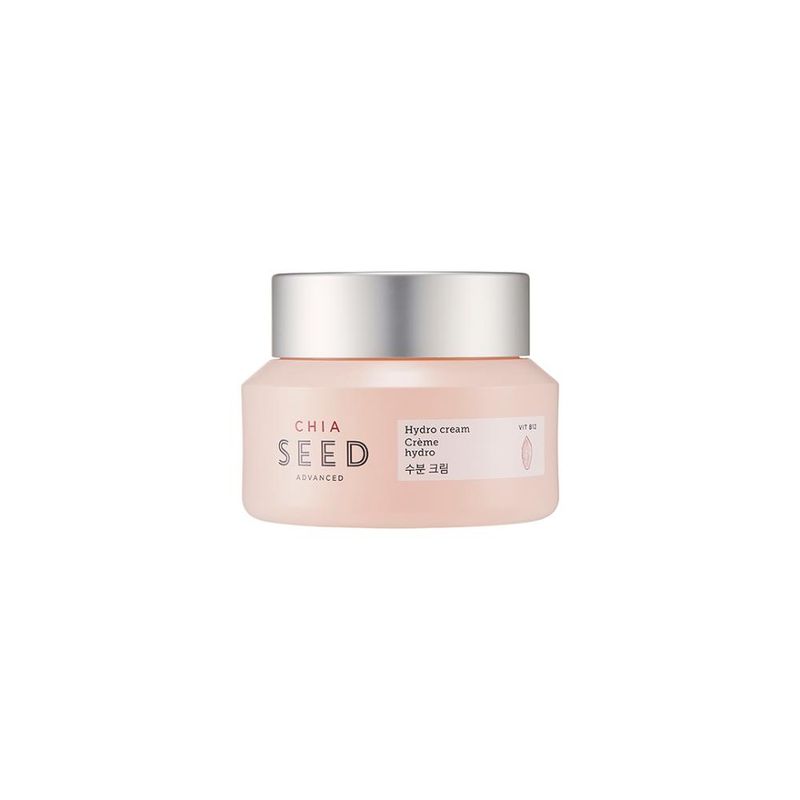
The Face Shop Chia Seed Hydro Cream with Vitamin B12, 24HR Intense Hydration Face Moisturizer

The Face Shop Chia Seed Hydro Cream with Vitamin B12, 24HR Intense Hydration Face Moisturizer
The Face Shop
the-face-shop-chia-seed-hydro-cream-with-vitamin-b12-24hr-intense-hydration-face-moisturizer
Moisturize
10084749836581
Morning or Evening?
How often will you use this product?
Notes


Highlights
WHAT IS IT?
Hydrating gel cream, contains multiple natural and vitamin B12 ingredients
FEATURES
Hydrating gel cream, vitamin B12 enriched, quick absorption, smoothens skin, moisturizes, suitable for all skin types, free from harmful chemicals and animal ingredients, vegan and cruelty-free
BEST FOR
normal
CHECKS
Phenoxyethanol, Tar colorant, Animal-derived ingredients, Mineral oil, BHT, Benzophenone-3, Parabens, Harmful silicones, Cyclopentasiloxane, Sulfates, SLS, Petroleum, Artificial preservatives, Synthetic fragrances
Who Is It For?
All Genders Not Specifically Age-limitedWhat Does It Help With?
Intense Hydration Moisture Retention Skin Soothing RevitalizationBudget
Mid-range ($30-$75)How To Use
Which routine should it be used in?
Instructions:
Key Information


What The Face Shop Says
Product Description:
A rich hydrating gel cream with pink vitamin (B12) for moisture-rich complexion and skin-soothing chia seed extract that revitalizes and hydrates skin. Refreshing gel moisturizing cream that drenches skin with moisture, absorbs quickly without stickiness, smoothens and moisturizes skin. Suitable for all skin types. Formulated without phenoxyethanol, tar colorant, animal-derived ingredients, mineral oil, BHT, benzophenone-3; free from parabens, harmful silicones, cyclopentasiloxane, sulfates, mineral oils, SLS, petroleum, artificial preservatives, and synthetic fragrances. Vegan and cruelty-free.
About the Brand:
Ingredients Overview
Ingredients List
Water/Eau,Glycerin,Cyclohexasiloxane,Propanediol,Polyglyceryl-4-Caprate,1,2-Hexanediol,Butylene-Glycol,Hydrogenated-Olive-Oil-Stearyl-Esters,Hydrogenated-Polydecene,Cetyl-Palmitate,Panthenol,Caprylic/Capric-Oil,Jojoba-Esters,Hydrogenated-Olive-Oil-Unsaponifiables,Maltodextrin,Sodium-Citrate,Citric-Acid,Cyanocobalamin,Dipentaerythrityl-Hexacaprylate/Hexacaprate,Isohexadecane,Eclipta-Prostrata-Extract,Melia-Azadirachta-Leaf-Extract,Moringa-Oleifera-Seed-Oil,Tocopherol,Acrylates/C10-30-Alkyl-Acrylate-Crosspolymer,Hydroxyethyl-Acrylate/Sodium-Acryloyldimethyl-Taurate-Copolymer,Polysorbate-60,Trisodium-Edta,Tromethamine,Perfume/Fragrance
Key Ingredients
Chia Seed Extract, Vitamin B12 (Cyanocobalamin), Panthenol, Moringa Oleifera Seed Oil, Tocopherol
Ingredients Details
1-2-hexanediol
Common Name(s): 1-2-hexanediol,cosmetic active,functional ingredient
CAS Number: N/a
DESCRIPTION
What It Does: Delivers characteristic cosmetic function at recommended use concentration.
Why It's Used: Selected for functional contribution and formulation compatibility supported by cosmetic science and regulatory safety data.
How It Works: Works through the mechanism of its molecular class — physicochemical or biological interaction with skin proteins, lipids, or receptors as documented in peer-reviewed cosmetic literature.
Typically Found In: Skin care formulations
TECHNICAL DETAILS
Primary Category: Active ingredient – cosmetic active
Secondary Functions: Skin conditioning
Application Areas:

Facial Skincare

Body Care
Hair Care
Beard Care
Color Cosmetics (Makeup)
Dietary/Oral Supplements
Typical Concentration Range: 0.1%–10%
SOURCING & ETHICS
Vegan Status: Conditional
Halal Status: Yes
Source Notes: Commercially produced for cosmetic use. verify vegan/halal status with supplier.
SKIN COMPATIBILITY
Irritancy Rating: 1/5 – very low
Comedogenicity Rating: 0/5 – non-comedogenic
Sensitivity Concerns: Well-tolerated by most skin types.
Safe for Sensitive Skin: Yes
SAFETY & COMPATIBILITY
Safety Profile: Good safety profile at recommended concentrations. ewg score: 1–2.
Works Well With: Standard skincare actives
Avoid Combining With: No known significant incompatibilities
SCIENTIFIC NOTE
1-2-hexanediol has an established safety and efficacy profile within the cosmetic regulatory framework at standard use concentrations.
Last Verified: Cosing database,1-2-hexanediol technical literature
Primary Sources: 2026-03-12
Cyanocobalamin
Common Name(s): Vitamin b12,cobalamin
CAS Number: 68-19-9
DESCRIPTION
What It Does: Conditions skin and reduces inflammation; clinically effective for psoriasis.
Why It's Used: Used in skin health formulations for anti-inflammatory activity; studied for inflammatory skin conditions.
How It Works: Reduces nitric oxide production in keratinocytes and t-lymphocytes, explaining anti-inflammatory effects in psoriasis.
Typically Found In: Multivitamin serums,anti-inflammatory formulations,psoriasis creams
TECHNICAL DETAILS
Primary Category: Active ingredient – vitamin b12
Secondary Functions: Anti-inflammatory,cell renewal
Application Areas:
Facial Skincare
Body Care
Hair Care
Beard Care
Color Cosmetics (Makeup)
Dietary/Oral Supplements
Typical Concentration Range: 0.001%–0.07%
SOURCING & ETHICS
Vegan Status: Yes – synthetically produced
Halal Status: Yes
Source Notes: Cyanocobalamin is the stable synthetic form. more formulation-stable than methylcobalamin.
SKIN COMPATIBILITY
Irritancy Rating: 1/5 – very low
Comedogenicity Rating: 0/5 – non-comedogenic
Sensitivity Concerns: Very well-tolerated; suitable for sensitive and inflammatory skin conditions.
Safe for Sensitive Skin: Yes
SAFETY & COMPATIBILITY
Safety Profile: Excellent safety profile. ewg score: 1.
Works Well With: Other b vitamins,niacinamide,antioxidant complexes
Avoid Combining With: No significant incompatibilities
SCIENTIFIC NOTE
A 2009 rct (stucker et al., bjd) found topical 0.07% cyanocobalamin cream significantly effective for plaque psoriasis at 8 weeks, reducing nitric oxide levels in keratinocytes.
Last Verified: Cosing database,stucker et al. (2009) british journal of dermatology
Primary Sources: 2026-03-12
Cyclohexasiloxane
Common Name(s): D6,cyclomethicone d6,hexamethylcyclotrisiloxane
CAS Number: 540-97-6
DESCRIPTION
What It Does: Provides volatile silicone delivery with longer contact time than d5 for extended active delivery.
Why It's Used: Longer-evaporation volatile silicone for formulations requiring extended delivery contact time vs d5's rapid evaporation.
How It Works: Larger ring (6 silicone units) provides lower vapor pressure than d5 (5 units). slower evaporation rate (2-3× longer than d5) provides extended delivery window. same dry-touch after complete evaporation.
Typically Found In: Longer-duration volatile vehicles,serum formulations
TECHNICAL DETAILS
Primary Category: Functional ingredient – volatile cyclic silicone
Secondary Functions: Skin conditioning
Application Areas:
Facial Skincare
Body Care
Hair Care
Beard Care
Color Cosmetics (Makeup)
Dietary/Oral Supplements
Typical Concentration Range: 1%–30%
SOURCING & ETHICS
Vegan Status: Yes – synthetic
Halal Status: Yes
Source Notes: Commercially produced for cosmetic use. verify vegan/halal status with supplier.
SKIN COMPATIBILITY
Irritancy Rating: 1/5 – very low
Comedogenicity Rating: 0/5 – non-comedogenic
Sensitivity Concerns: Well-tolerated by most skin types.
Safe for Sensitive Skin: Yes
SAFETY & COMPATIBILITY
Safety Profile: Eu restrictions on d5 do not apply to d6 – d6 may be used in rinse-off products without restriction.
Works Well With: Standard skincare actives
Avoid Combining With: No known significant incompatibilities
SCIENTIFIC NOTE
The different evaporation rates of d4 (methylcyclosiloxane), d5, and d6 provide formulators with a toolkit of volatile silicone delivery windows: d4 evaporates in ~1 minute, d5 in ~5 minutes, d6 in ~15 minutes. blending these provides precisely tunable evaporation kinetics for specific delivery timing requirements.
Last Verified: Cosing database,dow silicone technical data,cir safety assessment
Primary Sources: 2026-03-12
Glycerin
Common Name(s): Glycerol,glycerine,1,2,3-propanetriol
CAS Number: 56-81-5
DESCRIPTION
What It Does: Glycerin pulls water from the environment and deeper skin layers into the outer skin layer (epidermis), boosting moisture levels and keeping skin soft, smooth, and plump.
Why It's Used: It is used in virtually every moisturizer, serum, and cleanser because it is highly effective at hydrating skin, is well-tolerated by all skin types, and enhances the texture and spreadability of formulations.
How It Works: As a humectant, glycerin forms hydrogen bonds with water molecules, trapping them in the skin. it also reinforces the skin barrier by integrating into lipid structures between skin cells.
Typically Found In: Moisturizers,serums,cleansers,toners,sheet masks,sunscreens,body lotions,shampoos,conditioners
TECHNICAL DETAILS
Primary Category: Humectant
Secondary Functions: Skin barrier support,emollient,solvent
Application Areas:
Facial Skincare
Body Care
Hair Care
Beard Care
Color Cosmetics (Makeup)
Dietary/Oral Supplements
Typical Concentration Range: 1%–30% (typical: 3–10%)
SOURCING & ETHICS
Vegan Status: Yes – plant-derived (coconut, soy, palm) or synthetic
Halal Status: Yes – when plant-derived or synthetic; verify source with supplier
Source Notes: Derived from plant oils via hydrolysis or saponification; synthetic versions also available. palm-derived glycerin carries sustainability concerns.
SKIN COMPATIBILITY
Irritancy Rating: 1/5 – very low; non-irritating at all standard concentrations
Comedogenicity Rating: 0/5 – non-comedogenic
Sensitivity Concerns: Extremely rare allergic reactions; generally safe for all skin types including sensitive and baby skin
Safe for Sensitive Skin: Yes
SAFETY & COMPATIBILITY
Safety Profile: Widely recognized as safe. ewg hazard score: 1. no significant concerns for irritation, sensitization, or toxicity at typical concentrations (up to 50%).
Works Well With: Hyaluronic acid,ceramides,niacinamide,panthenol,urea,peptides,retinol,ahas/bhas
Avoid Combining With: No known incompatibilities at standard concentrations
SCIENTIFIC NOTE
Glycerin is an endogenous skin component found naturally in the stratum corneum. aquaporin-3 channels in keratinocytes facilitate glycerin transport, making it integral to natural skin hydration pathways.
Last Verified: Cosing database,cir safety assessment,ewg skin deep,inci decoder
Primary Sources: 2026-03-12
