

tgin
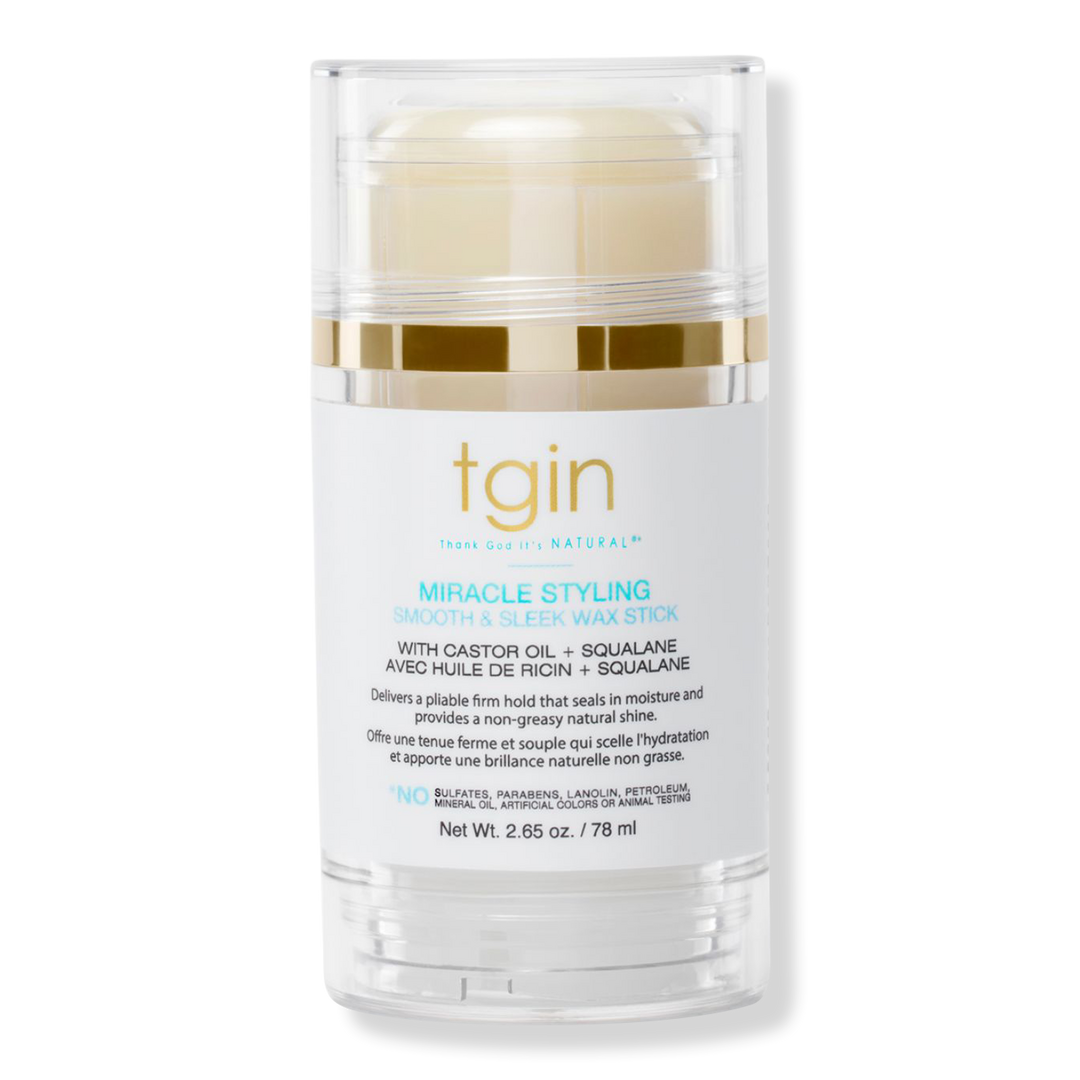
tgin Miracle Styling Smooth & Sleek Wax Stick
tgin Smooth & Sleek Wax Stick is the answer to achieving sleek and polished hairstyles with ease. Formulated with Castor oil and Squalane, tgin's wax stick offers moisturizing, lightweight, and pliable hold for smooth, frizz-free styles.
Paraben-free
Sulfate-free
Frizz
Dryness
Breakage
All Hair Types
Optimized for Your Environment & Lifestyle
Nykaa
In stock
Recommended

tgin Miracle Styling Smooth & Sleek Wax Stick
tgin
tgin-miracle-styling-smooth-sleek-wax-stick
Wax Stick
10365006938405
Morning or Evening?
How often will you use this product?
Notes


Secure payment protection
Your Biodata Compatibility Analysis
Based on your 6 hair health indices and environmental factors
Poor Match
Significant incompatibilities
Growth Cycle Health Index
Hair Match
Hair Health Index Alignment
Optimal for OSI, SSI, DI, HSI
Ingredient Efficacy
Matching Ingredient Score
Environment Compatibility
Current UV, Air Quality & Humidity
Why This Works for Your Specific Profile
Damage Index:
Damaged hair structure cannot withstand product intensity causing increased breakage and further compromise
Water Quality:
Wavy to coily patterns require curl-specific formulation that straight hair finds heavy or greasy
Hair:
Porous structure over-absorbs product leading to buildup, stiffness, or excessive dryness
Active Lifestyle:
High activity and frequent washing rapidly strip product benefits requiring excessive reapplication
Your Hair Profile Integration
Your Hair Archetype

Density Level

Washing Frequency

Shedding Level

Oil Level
Your Hair Health Indices
Oil Secretion (OSI)
Very low oil production
Scalp Sensitivity (SSI)
Very low sensitivity
Growth Rate (CMR)
Poor metabolism rate
Damage Index (DI)
Minimal damage
Hair Strength (HSI)
Very weak strength
Softness Index (SI)
Significant improvement needed
Water & Environmental Integration

Water:


Expected Results & Timeline
Key Highlights

What is it?
Wax Stick with 10 ingredients

Who Is It For
All ages, All genders

Budget
$18.99 - $37.98

Timeline
Immediate
Why You’ll Love It

What Does It Help With?
Frizz, Dryness, Breakage

Best for
Frizz

Features
Moisturizes and combats dryness, Smooths and reduces flyaways, Lightweight pliable hold

Checks
Paraben-free, Sulfate-free, Petrolatum-free, Lanolin-free, Artificial color-free
Ingredients Overview
Ingredients List
ricinus-communis-castor-seed-oil, beeswax, hydrogenated-castor-oil, japan-wax-synthetic, candeliua-euphorbia-cerifera-cera, sorbitan-stearate, hydrogentated-olive-oil-unsaponifiables, squalane, fragrance-parfum, biotin, tocopheryl-acetate, benzyl-benzoate, citral, limonene, linalool
Key Ingredients
squalane, castor-oil
Ingredients Details
Beeswax
Common Name(s): Cera alba (white),cera flava (yellow),apis mellifera wax
CAS Number: 8012-89-3
DESCRIPTION
What It Does: Provides natural wax structure and emolliency for cosmetic texture and lip balm applications.
Why It's Used: The original cosmetic wax – provides natural, hard-texture structure for lip balms, sticks, and creams with emollient skin conditioning.
How It Works: Complex mixture of esters (wax esters), hydrocarbons (hentriacontane), and fatty acids provides semi-crystalline structure. melting point 62-65°c enables stable solid products. emulsifying capacity from free cerotic acid content.
Typically Found In: Lip balms,cosmetic sticks,creams,natural cosmetics
TECHNICAL DETAILS
Primary Category: Functional ingredient – natural wax
Secondary Functions: Natural wax structure,occlusive conditioning
Application Areas:

Facial Skincare

Body Care
Hair Care
Beard Care
Color Cosmetics (Makeup)
Dietary/Oral Supplements
Typical Concentration Range: 2%–30%
SOURCING & ETHICS
Vegan Status: No – honeybee-derived
Halal Status: Conditional – animal-derived; verify halal certification
Source Notes: Plant-derived, synthetic or animal-derived. verify source.
SKIN COMPATIBILITY
Irritancy Rating: 1/5 – very low
Comedogenicity Rating: 1/5 – low; formulation-dependent
Sensitivity Concerns: Non-irritating.
Safe for Sensitive Skin: Yes
SAFETY & COMPATIBILITY
Safety Profile: Excellent safety profile. ewg score: 1.
Works Well With: Humectants,ceramides,actives as carrier
Avoid Combining With: No significant incompatibilities
SCIENTIFIC NOTE
Beeswax's multi-component wax ester composition (myricyl palmitate as primary component) provides a unique crystalline structure that gives lip balms and cosmetic sticks their characteristic 'dragée' glide – different from synthetic wax esters that lack this crystalline lattice diversity.
Last Verified: Cosing database,cir safety assessment
Primary Sources: 2026-03-12
Biotin
Common Name(s): Vitamin b7,vitamin h,d-biotin
CAS Number: 58-85-5
DESCRIPTION
What It Does: Supports keratin production for stronger hair and nails.
Why It's Used: Hair and nail keratin infrastructure support; widely marketed despite evidence being primarily oral supplementation-based.
How It Works: Coenzyme for carboxylase enzymes essential for fatty acid synthesis and amino acid metabolism relevant to hair follicle function.
Typically Found In: Hair growth shampoos,nail treatments,multivitamin products
TECHNICAL DETAILS
Primary Category: Active ingredient – vitamin b7
Secondary Functions: Hair growth support,nail strengthening
Application Areas:
Facial Skincare
Body Care
Hair Care
Beard Care
Color Cosmetics (Makeup)
Dietary/Oral Supplements
Typical Concentration Range: 0.01%–0.5%
SOURCING & ETHICS
Vegan Status: Yes – synthetically produced
Halal Status: Yes
Source Notes: Synthetically produced for cosmetic use.
SKIN COMPATIBILITY
Irritancy Rating: 1/5 – very low
Comedogenicity Rating: 0/5 – non-comedogenic
Sensitivity Concerns: Non-irritating; excellent tolerability.
Safe for Sensitive Skin: Yes
SAFETY & COMPATIBILITY
Safety Profile: Excellent safety profile. ewg score: 1.
Works Well With: Other b vitamins,niacinamide,antioxidant complexes
Avoid Combining With: No significant incompatibilities
SCIENTIFIC NOTE
Evidence for topical biotin efficacy in hair growth is limited – most clinical evidence comes from oral supplementation in biotin-deficient individuals.
Last Verified: Cosing database,cir safety assessment,patel et al. (2017) skin appendage disorders
Primary Sources: 2026-03-12
Citral
Common Name(s): 3,7-dimethyl-2,6-octadienal,geranial+neral mix
CAS Number: 5392-40-5
DESCRIPTION
What It Does: Provides the defining intense lemon-citrus fragrance note.
Why It's Used: The lemon scent compound – citral defines the fresh lemon scent in lemon essential oil and lemongrass with potent antimicrobial activity.
How It Works: Mixture of e-isomer (geranial) and z-isomer (neral). antimicrobial via michael addition to thiol enzymes. inhibits nf-kb for anti-inflammatory activity. antioxidant via allylic aldehyde.
Typically Found In: Citrus fragrances,antibacterial products,lemon-scented cosmetics
TECHNICAL DETAILS
Primary Category: Fragrance component – lemon aldehyde
Secondary Functions: Skin conditioning
Application Areas:
Facial Skincare
Body Care
Hair Care
Beard Care
Color Cosmetics (Makeup)
Dietary/Oral Supplements
Typical Concentration Range: 0.001%–0.5%
SOURCING & ETHICS
Vegan Status: Yes – from lemon, lemongrass, melissa oils
Halal Status: Yes
Source Notes: Commercially produced for cosmetic use. verify vegan/halal status with supplier.
SKIN COMPATIBILITY
Irritancy Rating: 1/5 – very low
Comedogenicity Rating: 0/5 – non-comedogenic
Sensitivity Concerns: Well-tolerated by most skin types.
Safe for Sensitive Skin: Yes
SAFETY & COMPATIBILITY
Safety Profile: Eu cosmetics regulation: declared fragrance allergen. high sensitisation potential from alpha,beta-unsaturated aldehyde structure. ifra strict limits.
Works Well With: Standard skincare actives
Avoid Combining With: No known significant incompatibilities
SCIENTIFIC NOTE
Citral's high sensitisation potential (llna ec3 ~0.11%) is a consequence of its alpha,beta-unsaturated aldehyde structure providing a highly reactive michael acceptor for skin protein covalent binding. the e/z mixture (geranial/neral) in natural citral means both isomers contribute to the sensitisation burden – explaining why lemongrass oil (very high citral content, ~60-80%) is one of the more common essential oil allergens.
Last Verified: Cosing database,ifra standards
Primary Sources: 2026-03-12
Limonene
Common Name(s): D-limonene,(r)-limonene,dipentene
CAS Number: 5989-27-5
DESCRIPTION
What It Does: Provides the defining fresh citrus fragrance note alongside solvent and antimicrobial properties.
Why It's Used: The citrus industry's primary fragrance compound and the most abundant terpene in essential oils – limonene provides the clean, universally appealing fresh citrus scent character.
How It Works: D-limonene activates trpv1 mildly at high concentrations. antimicrobial via membrane disruption. solvent for oils and lipophilic compounds. cleaning via emulsification of lipid soils.
Typically Found In: Citrus-scented products,cleaning products,fragrance compounds
TECHNICAL DETAILS
Primary Category: Fragrance component – cyclic monoterpene
Secondary Functions: Skin conditioning
Application Areas:
Facial Skincare
Body Care
Hair Care
Beard Care
Color Cosmetics (Makeup)
Dietary/Oral Supplements
Typical Concentration Range: 0.001%–3%
SOURCING & ETHICS
Vegan Status: Yes – from citrus peel essential oils
Halal Status: Yes
Source Notes: Commercially produced for cosmetic use. verify vegan/halal status with supplier.
SKIN COMPATIBILITY
Irritancy Rating: 1/5 – very low
Comedogenicity Rating: 0/5 – non-comedogenic
Sensitivity Concerns: Well-tolerated by most skin types.
Safe for Sensitive Skin: Yes
SAFETY & COMPATIBILITY
Safety Profile: Eu cosmetics regulation: declared fragrance allergen. oxidises to sensitising compounds (limonene hydroperoxides) on air exposure – use with antioxidant stabilisers. ifra guidelines apply.
Works Well With: Standard skincare actives
Avoid Combining With: No known significant incompatibilities
SCIENTIFIC NOTE
Limonene's sensitisation risk arises not from limonene itself but from its autooxidation products (limonene-1,2-epoxide and limonene hydroperoxides) formed on air exposure. fresh limonene has low sensitisation potential, but air-oxidised limonene's hydroperoxide products are potent skin sensitisers. this explains why oxidation-stabilised formulations (with bht or other antioxidants) are required to manage limonene safety.
Last Verified: Cosing database,ifra standards,bråred christensson et al. limonene oxidation study
Primary Sources: 2026-03-12
Personalized Usage Instructions
How to Use
Step 1
Apply wax stick directly to hair, using a brush smooth product into hair and style as desired
Step 2
Pre-caution: Avoid contact with eyes and any open/irritated skin
Step 3
Always perform a patch test before use
Step 4
FOR EXTERNAL USE ONLY
Step 5
KEEP OUT OF THE REACH OF CHILDREN
Medical Chemicals

Protein/Moisture
- Moisture
pH Level
- Acidic

Porosity Taget
- Normal Porosity
Customized for Your Profile
Scalp Condtions
Sensitive Scalp
Climate Suitability
Humid, Dry
Clinical Claims
Frequency
Apply wax stick directly to hair, using a brush smooth product into hair and style as desired. Pre-caution: Avoid contact with eyes and any open/irritated skin. Always perform a patch test before use. FOR EXTERNAL USE ONLY. KEEP OUT OF THE REACH OF CHILDREN.
Product Information

Paraben-free
Sulfate-free
Petrolatum-free
Lanolin-free
Artificial color-free
