

Revision Skincare
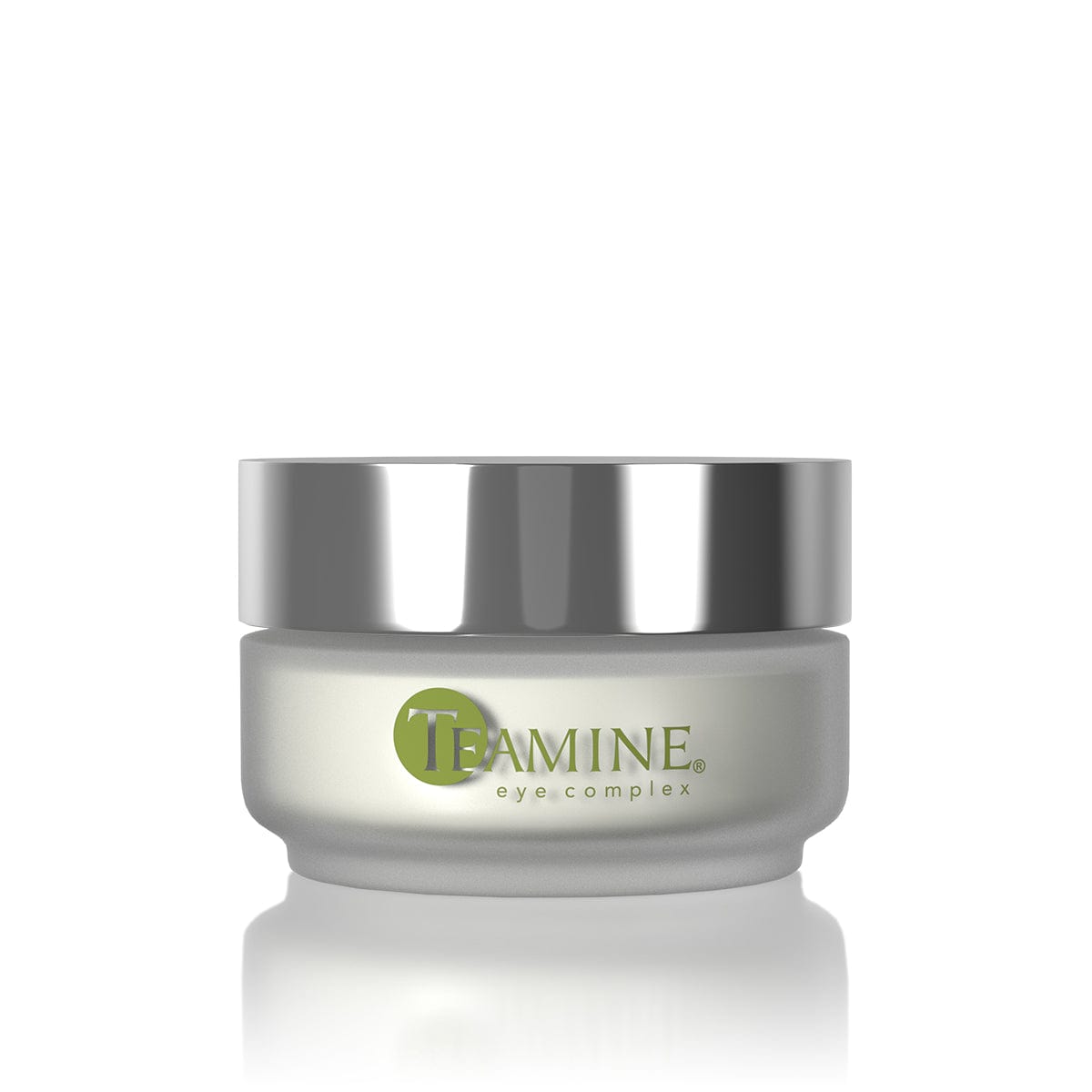
Teamine® Eye Complex 0.5 oz

Teamine® Eye Complex 0.5 oz
Revision Skincare
teamine-r-eye-complex-0-5-oz
Eyecare
9784772722981
Morning or Evening?
How often will you use this product?
Notes


Highlights
WHAT IS IT?
Eye Complex with 3 key ingredients
FEATURES
Visibly diminishes dark under-eye circles, Smooths fine lines and wrinkles, Brightens skin, Provides antioxidant benefits
BEST FOR
sensitive
CHECKS
FRAGRANCE-FREE, NO ARTIFICIAL DYES, PARABEN FREE, PHTHALATES FREE, ALCOHOL FREE, FORMALDEHYDES FREE, NO HORMONES
Who Is It For?
All Skin Types 18-25What Does It Help With?
Dark Circles Fine Lines Wrinkles Skin BrighteningBudget
Premium ($76-$150)How To Use
Which routine should it be used in?
Instructions:
Key Information


What Revision Skincare Says
Product Description:
Formulated with Green tea Extract, THD Ascorbate - the superior form of Vitamin C - and Hyaluronic Acid to effectively address the appearance of dark circles while also instantly brightening and smoothing the eye area plus reducing the appearance of fine lines and wrinkles.
About the Brand:
Ingredients Overview
Ingredients List
Water (Aqua), Jojoba Esters, Vitis Vinifera (Grape) Seed Oil, Glyceryl Stearate, Glycerin, Persea Gratissima (Avocado) Oil, Hydrogenated Starch Hydrolysate, Dimethicone, PEG-100 Stearate, Tetrahexyldecyl Ascorbate, Ethylhexyl Stearate, Cetyl Alcohol, Aloe Barbadensis Leaf Juice, Butylene Glycol, Superoxide Dismutase, Glycine Soja (Soybean) Protein, Caprylic/Capric Triglyceride, Sodium Methylesculetin Acetate, Oenothera Biennis (Evening Primrose) Seed Extract, Yeast Extract (Faex), Ubiquinone, Arnica Montana Flower Extract, Camellia Sinensis Leaf Extract, Palmitoyl Pentapeptide-4, Sodium Hyaluronate, Polysorbate 20, Hydrolyzed Rice Protein, Squalane, Phytonadione, Tocopherol, Aesculus Hippocastanum (Horse Chestnut) Seed Extract, Triethanolamine, Caffeine, Carbomer, Lavandula Hybrida Oil, Acrylates/C10-30 Alkyl Acrylate Crosspolymer, Silica, Diazolidinyl Urea, Disodium EDTA, Iodopropynyl Butylcarbamate, Tocopheryl Acetate, Iron Oxides (CI 77491), Titanium Dioxide (CI 77891), Potassium Sorbate, Sodium Dextran Sulfate, Phenoxyethanol, Sodium Benzoate
Key Ingredients
Green tea Extract, THD Ascorbate, Hyaluronic Acid
Ingredients Details
Cetyl Alcohol
Common Name(s): 1-hexadecanol,palmityl alcohol,n-cetyl alcohol
CAS Number: 36653-82-4
DESCRIPTION
What It Does: Provides c16 fatty alcohol emolliency and thickening for well-textured cosmetic emulsions.
Why It's Used: Lighter-textured fatty alcohol alternative to stearyl alcohol for creams and conditioners requiring less heavy emolliency.
How It Works: C16 chain length provides slightly lower melting point (49°c) than stearyl (60°c) giving softer, lighter emulsion texture. forms lamellar networks for thickening and stability. direct skin and hair conditioning via fatty alcohol film.
Typically Found In: Creams,hair conditioners,lotions
TECHNICAL DETAILS
Primary Category: Functional ingredient – fatty alcohol
Secondary Functions: Barrier sealing,softening
Application Areas:

Facial Skincare
Body Care
Hair Care

Beard Care
Color Cosmetics (Makeup)
Dietary/Oral Supplements
Typical Concentration Range: 1%–15%
SOURCING & ETHICS
Vegan Status: Yes - standard ethanol routes are non-animal; confirm denaturant origin
Halal Status: Conditional - ethanol production route and residual concentration; jurisdiction-dependent, refer to certifier stance
Source Notes: Plant-derived, synthetic or animal-derived. verify source. [audit 2026-07-29 rev2: ethanol pathway; determination depends on route, on whether the plant also produces beverage alcohol, and on residual concentration. determination requires shariah-panel sign-off.]
SKIN COMPATIBILITY
Irritancy Rating: 1/5 – very low
Comedogenicity Rating: 1/5 – low; formulation-dependent
Sensitivity Concerns: Non-irritating.
Safe for Sensitive Skin: Yes
SAFETY & COMPATIBILITY
Safety Profile: Excellent safety profile. ewg score: 1.
Works Well With: Humectants,ceramides,actives as carrier
Avoid Combining With: No significant incompatibilities
SCIENTIFIC NOTE
Cetyl alcohol's c16 chain length is at the approximate thermal transition point for fatty alcohol lamellar crystallization at skin temperature (33°c). this transition (from ordered crystalline to disordered liquid phase near skin temperature) provides the characteristic 'melts on application' sensory profile that makes cetyl alcohol-containing products feel cooling and light on initial application.
Last Verified: 2026-03-12
Primary Sources: Cosing database,cir safety assessment
Dimethicone
Common Name(s): Pdms,polydimethylsiloxane,silicone fluid
CAS Number: 9006-65-9
DESCRIPTION
What It Does: Provides silicone-characteristic silky feel and skin protection with adjustable viscosity.
Why It's Used: The benchmark cosmetic silicone – sets the gold standard for silky application feel, spreadability, and skin protection in virtually all skin care categories.
How It Works: Polydimethylsiloxane chain flexibility provides extremely low surface tension and high spreadability. inert si-o backbone provides chemical stability and excellent skin tolerance. occlusive film formation reduces tewl. higher viscosity grades provide more intense conditioning.
Typically Found In: Moisturizers,foundations,primers,sunscreens – nearly universal
TECHNICAL DETAILS
Primary Category: Functional ingredient – polydimethylsiloxane
Secondary Functions: Barrier sealing,softening
Application Areas:
Facial Skincare
Body Care
Hair Care
Beard Care
Color Cosmetics (Makeup)
Dietary/Oral Supplements
Typical Concentration Range: 0.1%–30%
SOURCING & ETHICS
Vegan Status: Conditional - supplier confirmation required
Halal Status: Unverified - supplier confirmation required
Source Notes: Plant-derived, synthetic or animal-derived. verify source. [audit 2026-07-29 rev2: the record's own source_notes does not assert a non-animal origin, or instructs the reader to verify with the supplier; "yes" asserts knowledge the record does not hold. determination requires shariah-panel sign-off.]
SKIN COMPATIBILITY
Irritancy Rating: 1/5 – very low
Comedogenicity Rating: 1/5 – low; formulation-dependent
Sensitivity Concerns: Non-irritating.
Safe for Sensitive Skin: Yes
SAFETY & COMPATIBILITY
Safety Profile: Excellent safety profile. ewg score: 1.
Works Well With: Humectants,ceramides,actives as carrier
Avoid Combining With: No significant incompatibilities
SCIENTIFIC NOTE
Dimethicone's exceptional silky feel arises from its very low intermolecular attractive forces (weak van der waals forces due to non-polar methyl groups) that allow silicone chains to slide freely over skin. the coefficient of kinetic friction for pdms against skin (~0.04) is among the lowest of any cosmetic material – explaining why even small amounts transform product feel.
Last Verified: 2026-03-12
Primary Sources: Cosing database,cir safety assessment
Glycerin
Common Name(s): Glycerol,glycerine,1,2,3-propanetriol
CAS Number: 56-81-5
DESCRIPTION
What It Does: Glycerin pulls water from the environment and deeper skin layers into the outer skin layer (epidermis), boosting moisture levels and keeping skin soft, smooth, and plump.
Why It's Used: It is used in virtually every moisturizer, serum, and cleanser because it is highly effective at hydrating skin, is well-tolerated by all skin types, and enhances the texture and spreadability of formulations.
How It Works: As a humectant, glycerin forms hydrogen bonds with water molecules, trapping them in the skin. it also reinforces the skin barrier by integrating into lipid structures between skin cells.
Typically Found In: Moisturizers,serums,cleansers,toners,sheet masks,sunscreens,body lotions,shampoos,conditioners
TECHNICAL DETAILS
Primary Category: Humectant
Secondary Functions: Skin barrier support,emollient,solvent
Application Areas:
Facial Skincare
Body Care
Hair Care
Beard Care
Color Cosmetics (Makeup)
Dietary/Oral Supplements
Typical Concentration Range: 1%–30% (typical: 3–10%)
SOURCING & ETHICS
Vegan Status: Conditional - feedstock declaration required
Halal Status: Unverified - feedstock declaration required (plant, animal and petrochemical routes all exist)
Source Notes: Derived from plant oils via hydrolysis or saponification; synthetic versions also available. palm-derived glycerin carries sustainability concerns. [audit 2026-07-29 rev2: origin-dependent: the same inci exists in plant, animal and petrochemical versions and the name does not discriminate. determination requires shariah-panel sign-off.]
SKIN COMPATIBILITY
Irritancy Rating: 1/5 – very low; non-irritating at all standard concentrations
Comedogenicity Rating: 0/5 – non-comedogenic
Sensitivity Concerns: Extremely rare allergic reactions; generally safe for all skin types including sensitive and baby skin
Safe for Sensitive Skin: Yes
SAFETY & COMPATIBILITY
Safety Profile: Widely recognized as safe. ewg hazard score: 1. no significant concerns for irritation, sensitization, or toxicity at typical concentrations (up to 50%).
Works Well With: Hyaluronic acid,ceramides,niacinamide,panthenol,urea,peptides,retinol,ahas/bhas
Avoid Combining With: No known incompatibilities at standard concentrations
SCIENTIFIC NOTE
Glycerin is an endogenous skin component found naturally in the stratum corneum. aquaporin-3 channels in keratinocytes facilitate glycerin transport, making it integral to natural skin hydration pathways.
Last Verified: 2026-03-12
Primary Sources: Cosing database,cir safety assessment,ewg skin deep,inci decoder
Glyceryl Stearate
Common Name(s): Glycerol monostearate,gms,glycerin monostearate
CAS Number: 31566-31-1
DESCRIPTION
What It Does: Provides o/w emulsification with emolliency and skin feel improvement from a natural glycerol ester.
Why It's Used: Standard cosmetic monoglyceride emulsifier – widely used for o/w cream formation with clean, natural-origin credentials and good sensory profile.
How It Works: Monoglyceride structure (one fatty acid + glycerol) provides amphiphilic hlb ~3-4 for o/w emulsification when combined with higher hlb co-emulsifiers. forms alpha-gel lamellar structure with water for emulsion stabilization. direct skin conditioning via fatty acid film.
Typically Found In: Creams,lotions,moisturizers – standard in o/w emulsions
TECHNICAL DETAILS
Primary Category: Functional ingredient – monoglyceride emulsifier
Secondary Functions: Barrier sealing,softening
Application Areas:
Facial Skincare
Body Care
Hair Care
Beard Care
Color Cosmetics (Makeup)
Dietary/Oral Supplements
Typical Concentration Range: 1%–10%
SOURCING & ETHICS
Vegan Status: Conditional - feedstock declaration required
Halal Status: Unverified - feedstock declaration required (plant, animal and petrochemical routes all exist)
Source Notes: Plant-derived, synthetic or animal-derived. verify source. [audit 2026-07-29 rev2: origin-dependent: the same inci exists in plant, animal and petrochemical versions and the name does not discriminate. determination requires shariah-panel sign-off.]
SKIN COMPATIBILITY
Irritancy Rating: 1/5 – very low
Comedogenicity Rating: 1/5 – low; formulation-dependent
Sensitivity Concerns: Non-irritating.
Safe for Sensitive Skin: Yes
SAFETY & COMPATIBILITY
Safety Profile: Excellent safety profile. ewg score: 1.
Works Well With: Humectants,ceramides,actives as carrier
Avoid Combining With: No significant incompatibilities
SCIENTIFIC NOTE
Glyceryl stearate's alpha-gel lamellar phase formation (distinguishable by x-ray crystallography from beta crystalline phase) provides superior emulsion stability compared to its beta crystalline form. the alpha-gel phase creates a viscoelastic network that resists droplet coalescence – the fundamental mechanism behind gms's long use as a reliable primary emulsifier.
Last Verified: 2026-03-12
Primary Sources: Cosing database,cir safety assessment