
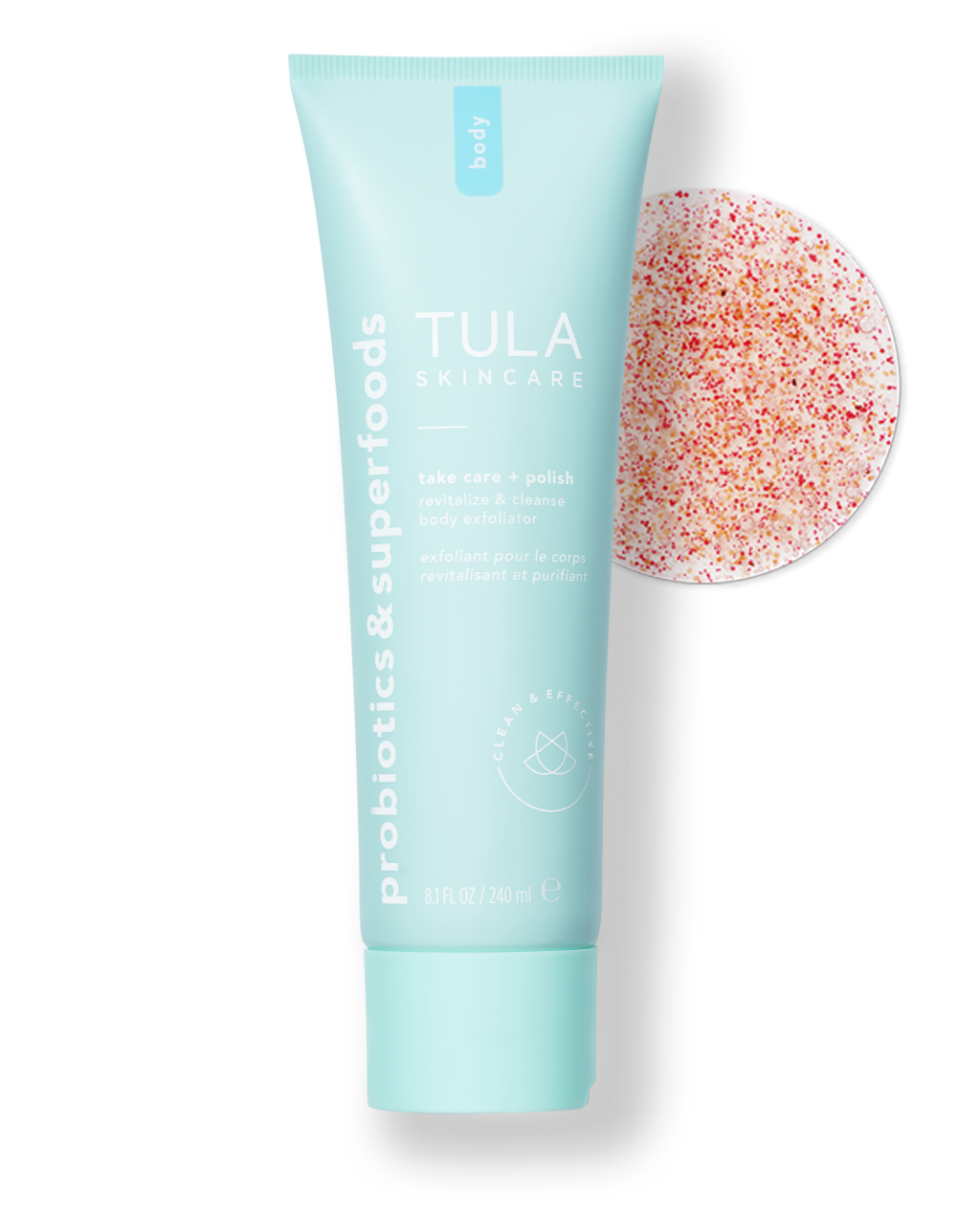

TULA
Take Care + Polish

Take Care + Polish
TULA
take-care-polish
Exfoliation
9818386497829
Morning or Evening?
How often will you use this product?
Notes


Highlights
WHAT IS IT?
Body polish with triple AHA blend
FEATURES
Foaming body polish, contains lemon peel and hibiscus flower acid, improves skin texture and tone, provides invigorating scent
BEST FOR
All skin types
CHECKS
Free of Parabens, sulfates, phthalates, mineral oil & petrolatum, formaldehyde, formaldehyde releasing preservatives, triclosan, retinol, synthetic fragrance, dairy, gluten
Who Is It For?
AdultsWhat Does It Help With?
Smoothing Skin Evening Skin Tone Brightening Deep CleansingBudget
Affordable (under $30)How To Use
Which routine should it be used in?
Instructions:
Key Information


What TULA Says
Product Description:
Meet your multi-tasking bodycare best friend. This supercharged foaming body polish features a triple AHA blend to dissolve dirt & debris to reveal smoother, more even-looking skin.
About the Brand:
Ingredients Overview
Ingredients List
Water (Aqua), Cocamidopropyl Hydroxysultaine, Sodium Lauroyl Sarcosinate, Sodium Cocoyl Glycinate, Sodium Chloride, Cherry Seed Extract, Glycerin, Pyrus Malus (Apple) Fruit Extract, Synthetic Wax, Acrylates Copolymer, Cellulose Acetate, Citrus Limon (Lemon) Peel Powder, Citrus Limon (Lemon) Peel Oil, Citrus Aurantium Dulcis (Orange) Peel Oil, Hibiscus Sabdariffa Flower Extract , Glycolic Acid, Lactic Acid , Malic Acid, Citric Acid, Beta Vulgaris (Beet) Root Extract, Alpha-Glucan Oligosaccharide, Polymnia Sonchifolia Root Juice, Inulin, Curcuma Longa (Turmeric) Root Extract, Lactobacillus Ferment, Lactococcus Ferment Lysate, Lactobacillus, Maltooligosyl Glucoside, Sodium PCA, Sodium Lauroyl Methyl Isethionate, Copernicia Cerifera (Carnauba) Wax, Caprylyl Glycol, Phenoxyethanol, Hydrogenated Starch Hydrolysate, Polyglyceryl-4 Caprate, Polyglyceryl-6 Caprylate, Hexylene Glycol, Potassium Hydroxide, Caprylic/Capric Triglyceride, Trisodium Ethylenediamine Disuccinate, Sodium Benzoate, Maltodextrin, Butylene Glycol, 1,2 Hexanediol, Fragrance/Parfum, Citral, Limonene ,Red 33 Lake (CI 17200), Red 7 Lake (CI 15850)
Key Ingredients
lemon peel, hibiscus flower acid, triple AHA blend
Ingredients Details
Water (aqua)
Common Name(s): Water (aqua) extract
DESCRIPTION
What It Does: Provides antioxidant protection, soothing anti-inflammatory effects, and skin-conditioning benefits through plant-derived polyphenols and phytochemicals.
Why It's Used: Plant extracts concentrate bioactive phytochemicals evolved for environmental protection — uv, microbial, and oxidative stressors — that translate to skin benefits.
How It Works: Polyphenols (flavonoids, phenolic acids) inhibit nf-κb-mediated inflammatory signaling, scavenge reactive oxygen species through electron donation, and chelate pro-oxidant metal ions to reduce oxidative skin damage.
Typically Found In: Serums,toners,moisturizers,masks,essences
TECHNICAL DETAILS
Primary Category: Botanical extracts
Secondary Functions: Antioxidant,anti-inflammatory
Application Areas:

Facial Skincare

Body Care
Hair Care
Beard Care
Color Cosmetics (Makeup)
Dietary/Oral Supplements
Typical Concentration Range: 0.1–10%
SOURCING & ETHICS
Vegan Status: Yes
Halal Status: Yes
Source Notes: Plant-derived extract; no animal components.
SKIN COMPATIBILITY
Irritancy Rating: 1899-12-31 00:00:00 -0800
Sensitivity Concerns: Low sensitization potential at recommended use concentrations.
Safe for Sensitive Skin: Yes
SAFETY & COMPATIBILITY
Safety Profile: Well-characterized cosmetic ingredient with established safety profile. generally non-irritating at typical use concentrations. suitable for leave-on and rinse-off cosmetics.
Works Well With: Niacinamide,hyaluronic acid,vitamin c,ceramides
Avoid Combining With: Strong oxidizing agents
SCIENTIFIC NOTE
Plant secondary metabolites (flavonoids, terpenes, phenolic acids) are biosynthesized as defense compounds against uv, herbivores, and pathogens. their anti-inflammatory activity typically derives from competitive inhibition of cox-2 and 5-lox enzymes (ic50 1–50 µm), while antioxidant activity involves single electron transfer (set) and hydrogen atom transfer (hat) mechanisms with structure-dependent rate constants.
Last Verified: Cosing eu database; pcpc cosmetic ingredient safety reviews; phytochemical and ethnobotanical literature
Primary Sources: 2025-01-15
