

TAC - The Ayurveda Co.
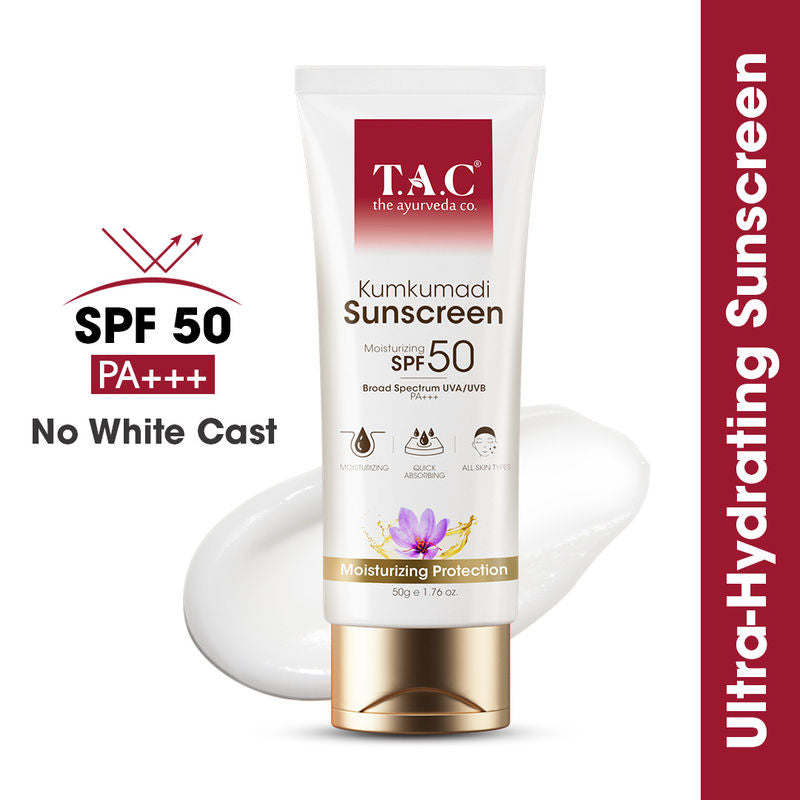
TAC - The Ayurveda Co. Kumkumadi Sunscreen SPF 50 with Saffron & Manjistha - Reduces Tan & Dullness

TAC - The Ayurveda Co. Kumkumadi Sunscreen SPF 50 with Saffron & Manjistha - Reduces Tan & Dullness
TAC - The Ayurveda Co.
tac-the-ayurveda-co-kumkumadi-sunscreen-spf-50-with-saffron-manjistha-reduces-tan-dullness
Suncare
10085448843557
Morning or Evening?
How often will you use this product?
Notes


Highlights
WHAT IS IT?
Sunscreen with 15 ingredients
FEATURES
Broad-spectrum UVA and UVB protection, Lightweight and non-greasy formula, Moisturizing, Skin brightening with Kumkumadi oil and herbs, Reduces dark spots and tan
BEST FOR
sensitive
CHECKS
No harsh chemicals, No white cast
Who Is It For?
All Genders No Specific Age MentionedWhat Does It Help With?
Sun Protection Reduces Tan Reduces Dark Spots HydrationBudget
Affordable (under $30)How To Use
Which routine should it be used in?
Instructions:
Key Information


What TAC - The Ayurveda Co. Says
Product Description:
Kumkumadi Sunscreen is a high-performance formula that not only protects against UV damage but also hydrates your skin. Enriched with SPF 50 and skin-brightening agents, it shields the skin from harmful rays while reducing the appearance of dark spots and uneven tone. Lightweight and non-comedogenic, it provides broad-spectrum protection without clogging pores. Broad Spectrum Protection: Provides broad-spectrum protection against UVA and UVB rays, helping to prevent sunburn and premature aging. Lightweight Formula: Features a lightweight, non-greasy formula that absorbs quickly into the skin without leaving a white cast. Moisturizing Benefits: Infused with moisturizing ingredients, it helps to keep the skin hydrated and nourished throughout the day. Skin Brightening: Contains Kumkumadi oil and brightening herbs, which help to improve skin tone and reduce the appearance of dark spots.
About the Brand:
Ingredients Overview
Ingredients List
Kumkumadi-Ext,Rose-Extract,Avocado-Oil,Raspberry-Oil,Carrot-Seed-Oil,Bala,Manjistha,Vitamin-E,Zinc-Oxide,Titanium-Dioxide,Isopropyl-Myristate,Olivem-1000,Sodium-Benzoate,Potassium-Sorbate,Stearic-Acid,Xanthan-Gum
Key Ingredients
Kumkumadi oil, Saffron, Manjistha, Zinc Oxide, Titanium Dioxide
Ingredients Details
Titanium Dioxide
Common Name(s): Ci 77891,tio2,rutile,anatase
CAS Number: 13463-67-7
DESCRIPTION
What It Does: Physically reflects and scatters uvb and uva-ii radiation providing broad-spectrum physical sun protection.
Why It's Used: Most widely used mineral uv filter – photostable, non-irritating physical sun protection compatible with all skin types including baby and sensitive skin.
How It Works: High refractive index (2.5–2.7) and semiconductor bandgap provide physical reflection and absorption of uv radiation. primarily uvb (280–320nm) and uva-ii (320–340nm) protection, less effective for uva-i (340–400nm) vs zinc oxide.
Typically Found In: Sunscreens,tinted products,foundations,baby sunscreens
TECHNICAL DETAILS
Primary Category: Active ingredient – mineral uv filter
Secondary Functions: Photostable uv filter,opacifier
Application Areas:

Facial Skincare
Body Care

Hair Care
Beard Care
Color Cosmetics (Makeup)
Dietary/Oral Supplements
Typical Concentration Range: 1%–25% (spf products: eu max 25%)
SOURCING & ETHICS
Vegan Status: Yes – inorganic mineral
Halal Status: Yes
Source Notes: Produced from ilmenite or rutile mineral processing. nano tio2 (<100nm) for transparency; non-nano for opacity.
SKIN COMPATIBILITY
Irritancy Rating: 1/5 – very low
Comedogenicity Rating: 0/5 – non-comedogenic
Sensitivity Concerns: Non-irritating; suitable for baby and sensitive skin.
Safe for Sensitive Skin: Yes at recommended concentrations
SAFETY & COMPATIBILITY
Safety Profile: Excellent safety profile. fda category i grase for sunscreen. eu max 25%. non-nano preferred for safety. ewg score: 1.
Works Well With: Niacinamide,salicylic acid,other actives
Avoid Combining With: No significant incompatibilities at standard concentrations
SCIENTIFIC NOTE
Tio2 provides superior uvb protection vs zno but inferior uva-i coverage. this complementarity means tio2+zno combination sunscreens provide more complete uv spectrum coverage (uvb+uva-i+uva-ii) than either mineral filter alone.
Last Verified: Cosing database,fda sunscreen grase ruling,ewg sunscreen database
Primary Sources: 2026-03-12
Zinc Oxide
Common Name(s): Zinc white,chinese white,calamine component
CAS Number: 1314-13-2
DESCRIPTION
What It Does: Physically reflects and scatters uv radiation while providing antimicrobial, anti-inflammatory, and wound healing benefits.
Why It's Used: Multi-action mineral uv filter that simultaneously provides sun protection and skin-therapeutic benefits – the cornerstone of physical sunscreen formulations.
How It Works: Wide bandgap semiconductor physically reflects and scatters uv radiation (uva 320–400nm and uvb 280–320nm). dissolves to zn²⁺ providing antimicrobial activity, inhibiting bacterial and fungal growth. anti-inflammatory via inhibition of 5-lipoxygenase and il-8 production.
Typically Found In: Sunscreens,baby products,diaper creams,wound care,anti-acne formulations
TECHNICAL DETAILS
Primary Category: Active ingredient – mineral uv filter / antimicrobial
Secondary Functions: Broad-spectrum uv filter,anti-acne,diaper rash treatment
Application Areas:
Facial Skincare
Body Care
Hair Care
Beard Care
Color Cosmetics (Makeup)
Dietary/Oral Supplements
Typical Concentration Range: 1%–25% (spf products: 10–25%; eu max 25%)
SOURCING & ETHICS
Vegan Status: Yes – mineral/inorganic
Halal Status: Yes
Source Notes: Produced from zinc metal oxidation or chemical synthesis. nano zinc oxide (<100nm) improves aesthetics.
SKIN COMPATIBILITY
Irritancy Rating: 1/5 – very low
Comedogenicity Rating: 0/5 – non-comedogenic
Sensitivity Concerns: Non-irritating; recommended for sensitive, baby, and rosacea-prone skin.
Safe for Sensitive Skin: Yes at recommended concentrations
SAFETY & COMPATIBILITY
Safety Profile: Excellent safety profile. fda category i generally recognized as safe and effective (grase) for sunscreen. eu cosmetics regulation: max 25%. ewg sunscreen score: 1.
Works Well With: Niacinamide,salicylic acid,other actives
Avoid Combining With: No significant incompatibilities at standard concentrations
SCIENTIFIC NOTE
Zinc oxide's broad-spectrum uv coverage extends into the uva1 region (360–400nm) more effectively than titanium dioxide, making it preferred for photoaging protection. nano zinc oxide (<100nm) achieves transparency on skin while maintaining uv protection efficiency.
Last Verified: Cosing database,fda sunscreen grase ruling,ewg sunscreen database,eu cosmetics regulation
Primary Sources: 2026-03-12
