
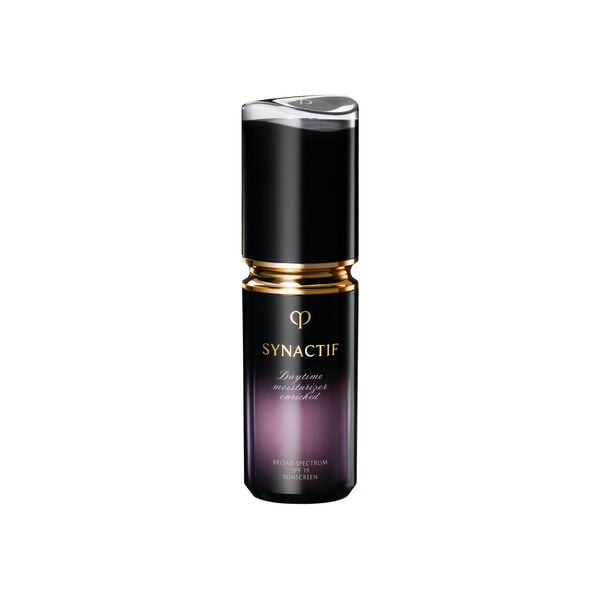

Clé de Peau Beauté
Synactif daytime moisturizer

Synactif daytime moisturizer
Clé de Peau Beauté
synactif-daytime-moisturizer
Moisturize
9605079925029
Morning or Evening?
How often will you use this product?
Notes


Highlights
WHAT IS IT?
Light daily face moisturizer with SPF 19
FEATURES
Hydrates, protects against UV rays, supports skin purification and regeneration processes
BEST FOR
Dry skin
CHECKS
Does not contain formaldehyde, dioxins, tetrasodium EDTA, DEET, toluene, sodium lauryl sulfate (SLS), sodium laureth sulfate (SLES), triclosan, talc, acrylic acid (none of these are listed in ingredients)
Who Is It For?
Not Specifically Mentioned Likely For AdultsWhat Does It Help With?
Protects Against Environmental Damage Diminishes Dullness Enhances Skin Clarity And Youthful ResilienceBudget
PremiumHow To Use
Which routine should it be used in?
Instructions:
Key Information

What Clé de Peau Beauté Says
Product Description:
A light daytime moisturizer that protects and purifies skin.
About the Brand:
Ingredients Overview
Ingredients List
Water (Aqua), Xylitol, Glycerin, Dipropylene Glycol, Ethylhexyl Methoxycinnamate, Alcohol, Isododecane, Diphenylsiloxy Phenyl Trimethicone, Bis-Ethylhexyloxyphenol Methoxyphenyl Triazine, Triethylhexanoin, Silica, Butyl Methoxydibenzoylmethane, Hydrogenated Polydecene, PPG-17, Beheneth-20, Dimethicone, Methyl Aminomethylcyclohexane Carboxamide Hcl, Behenyl Alcohol, Phenoxyethanol, Hydrogenated Palm Oil, Elaeis Guineensis (Palm) Kernel Oil, Stearyl Alcohol, Elaeis Guineensis (Palm) Oil, Xanthan Gum, Butylene Glycol, Carbomer, Acrylates/C10-30 Alkyl Acrylate Crosspolymer, PEG/PPG-14/7 Dimethyl Ether, Tocopheryl Acetate, PEG-10 Dimethicone, Phytosteryl Macadamiate, Fragrance (Parfum), Potassium Hydroxide, Sodium Metaphosphate, Cellulose Gum, Glycylglycine, Disodium EDTA, BHT, Isostearic Acid, Butylphenyl Methylpropional, Sodium Acetylated Hyaluronate, Sodium Hyaluronate, Iron Oxides (Ci 77491), Linalool, Lauryl Betaine, Citronellol, Tocopherol, Cinnamomum Cassia Bark Extract, Nuphar Japonicum Root Extract (Nymphaea Odorata), Bupleurum Falcatum Root Extract, Citric Acid, Ginkgo Biloba Leaf Extract (Ginkgo Biloba), Camellia Sinensis Leaf Extract, Sodium Benzoate
Key Ingredients
Avobenzone, Octinoxate, Octocrylene, Centaurea Cyanus Flower Extract, Ginseng Extract, Ginkgo Biloba Leaf Extract, Vitamin E Derivatives, Green Tea Extract
Ingredients Details
Water (aqua)
Common Name(s): Water (aqua) extract
DESCRIPTION
What It Does: Provides antioxidant protection, soothing anti-inflammatory effects, and skin-conditioning benefits through plant-derived polyphenols and phytochemicals.
Why It's Used: Plant extracts concentrate bioactive phytochemicals evolved for environmental protection — uv, microbial, and oxidative stressors — that translate to skin benefits.
How It Works: Polyphenols (flavonoids, phenolic acids) inhibit nf-κb-mediated inflammatory signaling, scavenge reactive oxygen species through electron donation, and chelate pro-oxidant metal ions to reduce oxidative skin damage.
Typically Found In: Serums,toners,moisturizers,masks,essences
TECHNICAL DETAILS
Primary Category: Botanical extracts
Secondary Functions: Antioxidant,anti-inflammatory
Application Areas:

Facial Skincare

Body Care
Hair Care
Beard Care
Color Cosmetics (Makeup)
Dietary/Oral Supplements
Typical Concentration Range: 0.1–10%
SOURCING & ETHICS
Vegan Status: Yes
Halal Status: Yes
Source Notes: Plant-derived extract; no animal components.
SKIN COMPATIBILITY
Irritancy Rating: 1899-12-31 00:00:00 -0800
Sensitivity Concerns: Low sensitization potential at recommended use concentrations.
Safe for Sensitive Skin: Yes
SAFETY & COMPATIBILITY
Safety Profile: Well-characterized cosmetic ingredient with established safety profile. generally non-irritating at typical use concentrations. suitable for leave-on and rinse-off cosmetics.
Works Well With: Niacinamide,hyaluronic acid,vitamin c,ceramides
Avoid Combining With: Strong oxidizing agents
SCIENTIFIC NOTE
Plant secondary metabolites (flavonoids, terpenes, phenolic acids) are biosynthesized as defense compounds against uv, herbivores, and pathogens. their anti-inflammatory activity typically derives from competitive inhibition of cox-2 and 5-lox enzymes (ic50 1–50 µm), while antioxidant activity involves single electron transfer (set) and hydrogen atom transfer (hat) mechanisms with structure-dependent rate constants.
Last Verified: 2025-01-15
Primary Sources: Cosing eu database; pcpc cosmetic ingredient safety reviews; phytochemical and ethnobotanical literature