

Super Aqua
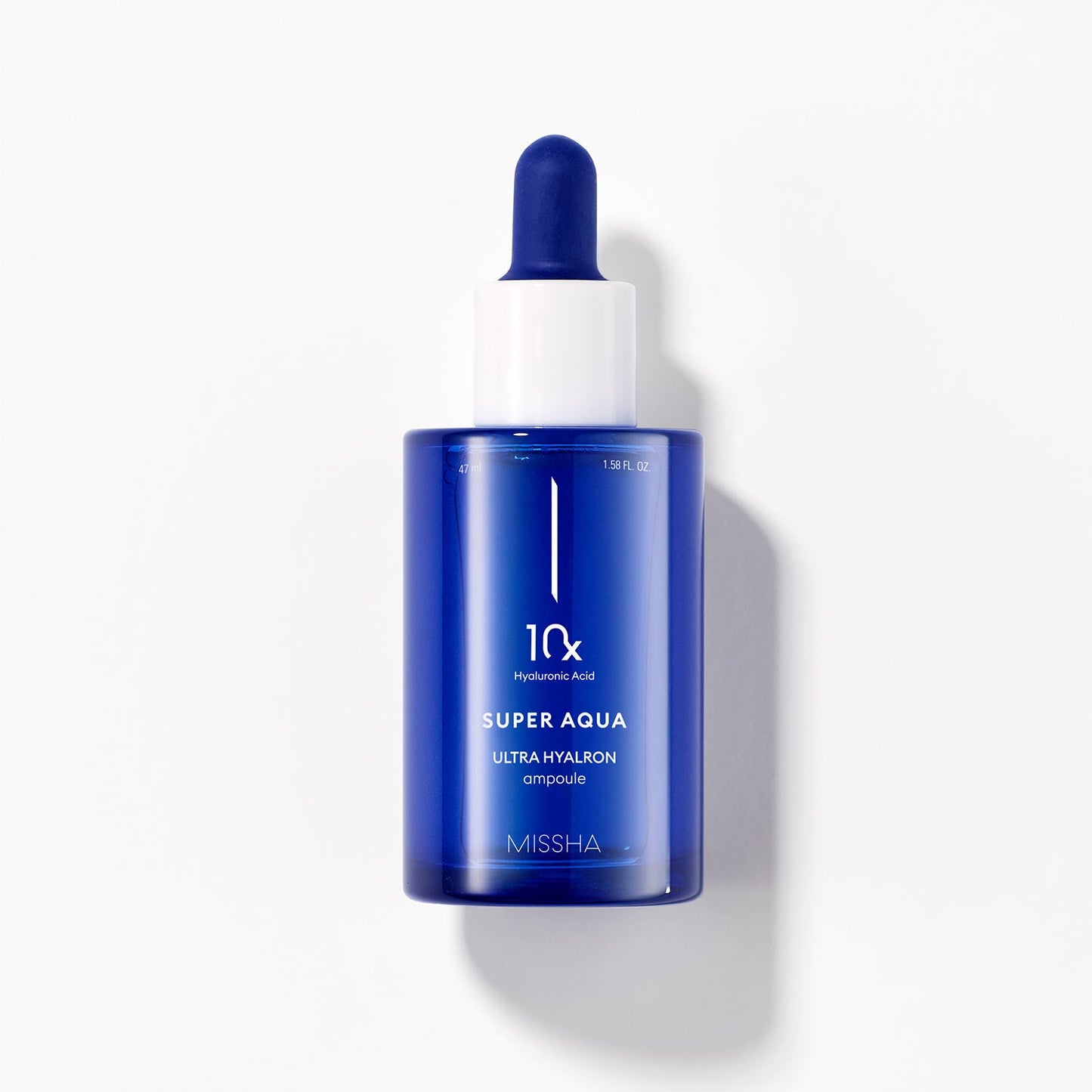
Super Aqua Ultra Hyalron Ampoule

Super Aqua Ultra Hyalron Ampoule
Super Aqua
super-aqua-ultra-hyalron-ampoule
Serum
9706769252645
Morning or Evening?
How often will you use this product?
Notes


Highlights
WHAT IS IT?
A concentrated ampoule with 10 kinds of hyaluronic acids
FEATURES
Penetrates 10 layers of skin, provides deep moisture, shows faster results, gentle formula
BEST FOR
Dry and sensitive skin
CHECKS
Free of parabens, phthalates
Who Is It For?
Suitable For Those 18 And Above Both Men And WomenWhat Does It Help With?
Deep Moisture And HydrationBudget
Mid-rangeHow To Use
Which routine should it be used in?
Instructions:
Key Information

What Super Aqua Says
Product Description:
Renew your skin with deep moisture and hydration using our new and improved Super Aqua Ultra Hyalron Ampoule. This concentrated ampoule penetrates 10 layers of skin with 10 kinds of hyaluronic acids. This ampoule has deeper moisture, shows faster results, and is made with a gentle formula that's free from 20 skin-irritating chemicals. Best paired with other Super Aqua Ultra Hyalron products.
About the Brand:
Ingredients Overview
Ingredients List
Water, methylpropanediol, glycerin, cyclohexasiloxane, 1,2-hexanediol, niacinamide, polyglycerin-3, octyldodeceth-16, ammonium acryloyldimethyltaurate/vp copolymer, xanthan gum, ethylhexylglycerin, pentylene glycol, adenosine, methyl diisopropyl propionamide, carbomer, disodium edta, tromethamine, cynara scolymus (artichoke) leaf extract, avena sativa (oat) kernel extract, sodium hyaluronate, polyquaternium-51, camellia sinensis leaf water, hydrogenated lecithin, beta-glucan, citrus aurantium dulcis (orange) peel oil, citrus aurantium bergamia (bergamot) fruit oil, lavandula angustifolia (lavender) oil, anthemis nobilis flower oil, tocopherol, hydroxypropyltrimonium hyaluronate, hydrolyzed sodium hyaluronate, hydrolyzed hyaluronic acid, sodium acetylated hyaluronate, propanediol, tetradecyl aminobutyroylvalylaminobutyric urea trifluoroacetate, hyaluronic acid, sodium hyaluronate crosspolymer, magnesium chloride, potassium hyaluronate, glycine soja (soybean) seed extract, tetrahydropiperine, phloretin, arginine, limonene, linalool.
Key Ingredients
10 kinds of hyaluronic acids
Ingredients Details
1-2-hexanediol
Common Name(s): 1-2-hexanediol,cosmetic active,functional ingredient
CAS Number: N/a
DESCRIPTION
What It Does: Delivers characteristic cosmetic function at recommended use concentration.
Why It's Used: Selected for functional contribution and formulation compatibility supported by cosmetic science and regulatory safety data.
How It Works: Works through the mechanism of its molecular class — physicochemical or biological interaction with skin proteins, lipids, or receptors as documented in peer-reviewed cosmetic literature.
Typically Found In: Skin care formulations
TECHNICAL DETAILS
Primary Category: Active ingredient – cosmetic active
Secondary Functions: Skin conditioning
Application Areas:

Facial Skincare

Body Care
Hair Care
Beard Care
Color Cosmetics (Makeup)
Dietary/Oral Supplements
Typical Concentration Range: 0.1%–10%
SOURCING & ETHICS
Vegan Status: Conditional
Halal Status: Yes
Source Notes: Commercially produced for cosmetic use. verify vegan/halal status with supplier.
SKIN COMPATIBILITY
Irritancy Rating: 1/5 – very low
Comedogenicity Rating: 0/5 – non-comedogenic
Sensitivity Concerns: Well-tolerated by most skin types.
Safe for Sensitive Skin: Yes
SAFETY & COMPATIBILITY
Safety Profile: Good safety profile at recommended concentrations. ewg score: 1–2.
Works Well With: Standard skincare actives
Avoid Combining With: No known significant incompatibilities
SCIENTIFIC NOTE
1-2-hexanediol has an established safety and efficacy profile within the cosmetic regulatory framework at standard use concentrations.
Last Verified: Cosing database,1-2-hexanediol technical literature
Primary Sources: 2026-03-12
Ammonium Acryloyldimethyltaurate/vp Copolymer
Common Name(s): Ammonium acryloyldimethyltaurate/vp copolymer
DESCRIPTION
What It Does: Delivers targeted skin-conditioning or bioactive benefits through a specific mechanism of action suited to the formulation's intended purpose.
Why It's Used: Specialty actives address specific skin concerns through targeted molecular mechanisms, providing efficacy beyond what base formulation ingredients alone can achieve.
How It Works: The bioactive compound interacts with specific molecular targets in skin cells or the extracellular matrix — enzymes, receptors, structural proteins, or signaling molecules — triggering beneficial biological responses.
Typically Found In: Serums,treatments,moisturizers,specialty products
TECHNICAL DETAILS
Primary Category: Specialty actives
Secondary Functions: Skin-conditioning,anti-aging
Application Areas:
Facial Skincare
Body Care
Hair Care
Beard Care
Color Cosmetics (Makeup)
Dietary/Oral Supplements
Typical Concentration Range: 0.01–5%
SOURCING & ETHICS
Vegan Status: Yes
Halal Status: Yes
Source Notes: Specialty active ingredient; check individual sourcing for vegan status.
SKIN COMPATIBILITY
Irritancy Rating: 1
Comedogenicity Rating: 0
Sensitivity Concerns: Low sensitization potential at recommended use concentrations.
Safe for Sensitive Skin: Yes
SAFETY & COMPATIBILITY
Safety Profile: Well-characterized cosmetic ingredient with established safety profile. generally non-irritating at typical use concentrations. suitable for leave-on and rinse-off cosmetics.
Works Well With: Niacinamide,hyaluronic acid,vitamin c,peptides
Avoid Combining With: Incompatible with oxidizing agents; check ph stability
SCIENTIFIC NOTE
Specialty actives typically work through enzyme inhibition (e.g., tyrosinase inhibition for brightening, mmp inhibition for anti-aging), receptor activation (e.g., retinoid receptors, ppar-γ for barrier genes), or transcription factor modulation (e.g., nrf2 for antioxidant gene upregulation). structure-activity relationships determine potency and selectivity.
Last Verified: Cosing eu database; pcpc cosmetic ingredient safety reviews; ingredient-specific safety and efficacy literature
Primary Sources: 2025-01-15
Cyclohexasiloxane
Common Name(s): D6,cyclomethicone d6,hexamethylcyclotrisiloxane
CAS Number: 540-97-6
DESCRIPTION
What It Does: Provides volatile silicone delivery with longer contact time than d5 for extended active delivery.
Why It's Used: Longer-evaporation volatile silicone for formulations requiring extended delivery contact time vs d5's rapid evaporation.
How It Works: Larger ring (6 silicone units) provides lower vapor pressure than d5 (5 units). slower evaporation rate (2-3× longer than d5) provides extended delivery window. same dry-touch after complete evaporation.
Typically Found In: Longer-duration volatile vehicles,serum formulations
TECHNICAL DETAILS
Primary Category: Functional ingredient – volatile cyclic silicone
Secondary Functions: Skin conditioning
Application Areas:
Facial Skincare
Body Care
Hair Care
Beard Care
Color Cosmetics (Makeup)
Dietary/Oral Supplements
Typical Concentration Range: 1%–30%
SOURCING & ETHICS
Vegan Status: Yes – synthetic
Halal Status: Yes
Source Notes: Commercially produced for cosmetic use. verify vegan/halal status with supplier.
SKIN COMPATIBILITY
Irritancy Rating: 1/5 – very low
Comedogenicity Rating: 0/5 – non-comedogenic
Sensitivity Concerns: Well-tolerated by most skin types.
Safe for Sensitive Skin: Yes
SAFETY & COMPATIBILITY
Safety Profile: Eu restrictions on d5 do not apply to d6 – d6 may be used in rinse-off products without restriction.
Works Well With: Standard skincare actives
Avoid Combining With: No known significant incompatibilities
SCIENTIFIC NOTE
The different evaporation rates of d4 (methylcyclosiloxane), d5, and d6 provide formulators with a toolkit of volatile silicone delivery windows: d4 evaporates in ~1 minute, d5 in ~5 minutes, d6 in ~15 minutes. blending these provides precisely tunable evaporation kinetics for specific delivery timing requirements.
Last Verified: Cosing database,dow silicone technical data,cir safety assessment
Primary Sources: 2026-03-12
Glycerin
Common Name(s): Glycerol,glycerine,1,2,3-propanetriol
CAS Number: 56-81-5
DESCRIPTION
What It Does: Glycerin pulls water from the environment and deeper skin layers into the outer skin layer (epidermis), boosting moisture levels and keeping skin soft, smooth, and plump.
Why It's Used: It is used in virtually every moisturizer, serum, and cleanser because it is highly effective at hydrating skin, is well-tolerated by all skin types, and enhances the texture and spreadability of formulations.
How It Works: As a humectant, glycerin forms hydrogen bonds with water molecules, trapping them in the skin. it also reinforces the skin barrier by integrating into lipid structures between skin cells.
Typically Found In: Moisturizers,serums,cleansers,toners,sheet masks,sunscreens,body lotions,shampoos,conditioners
TECHNICAL DETAILS
Primary Category: Humectant
Secondary Functions: Skin barrier support,emollient,solvent
Application Areas:
Facial Skincare
Body Care
Hair Care
Beard Care
Color Cosmetics (Makeup)
Dietary/Oral Supplements
Typical Concentration Range: 1%–30% (typical: 3–10%)
SOURCING & ETHICS
Vegan Status: Yes – plant-derived (coconut, soy, palm) or synthetic
Halal Status: Yes – when plant-derived or synthetic; verify source with supplier
Source Notes: Derived from plant oils via hydrolysis or saponification; synthetic versions also available. palm-derived glycerin carries sustainability concerns.
SKIN COMPATIBILITY
Irritancy Rating: 1/5 – very low; non-irritating at all standard concentrations
Comedogenicity Rating: 0/5 – non-comedogenic
Sensitivity Concerns: Extremely rare allergic reactions; generally safe for all skin types including sensitive and baby skin
Safe for Sensitive Skin: Yes
SAFETY & COMPATIBILITY
Safety Profile: Widely recognized as safe. ewg hazard score: 1. no significant concerns for irritation, sensitization, or toxicity at typical concentrations (up to 50%).
Works Well With: Hyaluronic acid,ceramides,niacinamide,panthenol,urea,peptides,retinol,ahas/bhas
Avoid Combining With: No known incompatibilities at standard concentrations
SCIENTIFIC NOTE
Glycerin is an endogenous skin component found naturally in the stratum corneum. aquaporin-3 channels in keratinocytes facilitate glycerin transport, making it integral to natural skin hydration pathways.
Last Verified: Cosing database,cir safety assessment,ewg skin deep,inci decoder
Primary Sources: 2026-03-12
