

Etude
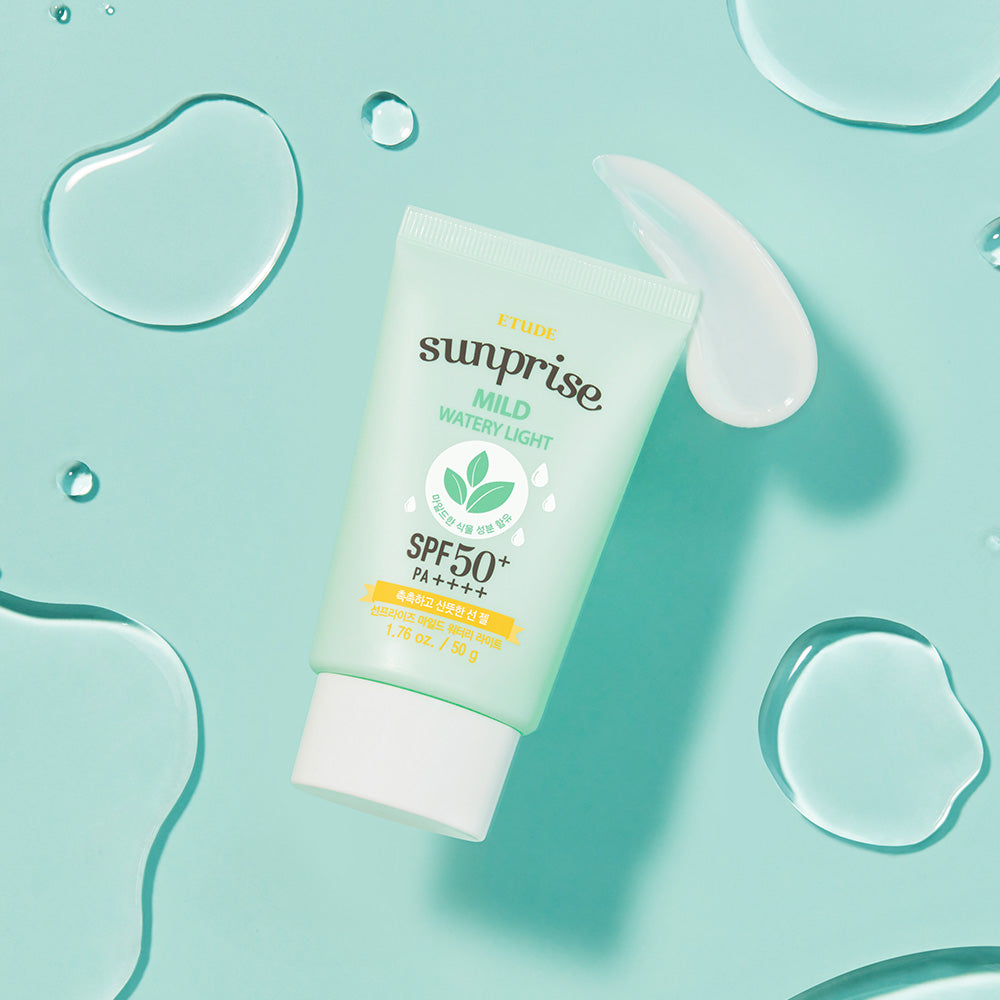
Sunprise Mild Watery Light SPF50+ PA++++

Sunprise Mild Watery Light SPF50+ PA++++
Etude
sunprise-mild-watery-light-spf50-pa
Suncare
9706782589221
Morning or Evening?
How often will you use this product?
Notes


Highlights
WHAT IS IT?
Sunscreen with multiple ingredients
FEATURES
SPF50+, PA++++, Gentle, Moisturizing, Refreshing
BEST FOR
likely suitable for sensitive skin based on "Mild" in the name
CHECKS
Free of mineral oil, artiticial fragrance, silicone, PEG, parabens, essential oils
Who Is It For?
Suitable For Adults 18+ Of All GendersWhat Does It Help With?
Sun Protection MoisturizingBudget
AffordableHow To Use
Which routine should it be used in?
Instructions:
Key Information


What Etude Says
Product Description:
Amazingly gentle, moisturizing, and refreshing sun gel
About the Brand:
Ingredients Overview
Ingredients List
Aqua, DIBUTYL ADIPATE, PROPANEDIOL, DIISOPROPYL SEBACATE, ETHYLHEXYL TRIAZONE, TEREPHTHALYLIDENE DICAMPHOR SULFONIC ACID, POLYGLYCERYL-3 DISTEARATE, GLYCERIN, TROMETHAMINE, CETEARYL ALCOHOL, 1,2-HEXANEDIOL, PENTYLENE GLYCOL, DIETHYLAMINO HYDROXYBENZOYL HEXYL BENZOATE, CAPRYLYL METHICONE, POLYSILICONE-15, POLYMETHYLSILSESQUIOXANE, CAPRYLIC/CAPRIC/SUCCINIC TRIGLYCERIDE, GLYCERYL STEARATE, BIS-ETHYLHEXYLOXYPHENOL METHOXYPHENYL TRIAZINE, POTASSIUM CETYL PHOSPHATE, METHYLPROPANEDIOL, AMMONIUM ACRYLOYLDIMETHYLTAURATE/VP COPOLYMER, FRAGRANCE / PARFUM, AMMONIUM POLYACRYLOYLDIMETHYL TAURATE, GLYCERYL STEARATE CITRATE, ETHYLHEXYLGLYCERIN, CARBOMER, SODIUM POLYACRYLATE, POLYETHER-1, ACRYLATES/C10-30 ALKYL ACRYLATE CROSSPOLYMER, T-BUTYL ALCOHOL, HELIANTHUS ANNUUS (SUNFLOWER) SEED OIL, ADANSONIA DIGITATA SEED OIL, BUTYLENE GLYCOL, BIOSACCHARIDE GUM-1, TOCOPHEROL, OPUNTIA FICUS-INDICA EXTRACT, SODIUM HYALURONATE, PHENOXYETHANOL, ALOE BARBADENSIS LEAF JUICE, CITRIC ACID, POTASSIUM SORBATE, CAREX HUMILLIS ROOT EXTRACT, SODIUM BENZOATE, MALPIGHIA EMARGINATA (ACEROLA) FRUIT EXTRACT, EUTERPE OLERACEA FRUIT EXTRACT, TERMINALIA FERDINANDIANA FRUIT EXTRACT
Key Ingredients
in the provided data
Ingredients Details
Cetearyl Alcohol
Common Name(s): Cetostearyl alcohol,c16-18 fatty alcohol
CAS Number: 8005-44-5
DESCRIPTION
What It Does: Provides fatty alcohol emulsification and thickening for stable, well-textured emulsions.
Why It's Used: The most widely used fatty alcohol in cosmetics – provides emulsification, thickening, and emolliency simultaneously from a single ingredient with excellent safety profile.
How It Works: Forms bilayer lamellar structures in water with emulsifiers creating a viscous structured network that thickens and stabilizes emulsions. fatty alcohol emolliency provides direct skin conditioning. bilayer formation reduces inter-droplet coalescence in emulsions.
Typically Found In: Creams,lotions,conditioners – virtually all emulsion products
TECHNICAL DETAILS
Primary Category: Functional ingredient – fatty alcohol emulsifier/thickener
Secondary Functions: Barrier sealing,softening
Application Areas:

Facial Skincare
Body Care
Hair Care

Beard Care
Color Cosmetics (Makeup)
Dietary/Oral Supplements
Typical Concentration Range: 1%–25%
SOURCING & ETHICS
Vegan Status: Yes - standard ethanol routes are non-animal; confirm denaturant origin
Halal Status: Conditional - ethanol production route and residual concentration; jurisdiction-dependent, refer to certifier stance
Source Notes: Plant-derived, synthetic or animal-derived. verify source. [audit 2026-07-29 rev2: ethanol pathway; determination depends on route, on whether the plant also produces beverage alcohol, and on residual concentration. determination requires shariah-panel sign-off.]
SKIN COMPATIBILITY
Irritancy Rating: 1/5 – very low
Comedogenicity Rating: 1/5 – low; formulation-dependent
Sensitivity Concerns: Non-irritating.
Safe for Sensitive Skin: Yes
SAFETY & COMPATIBILITY
Safety Profile: Excellent safety profile. ewg score: 1.
Works Well With: Humectants,ceramides,actives as carrier
Avoid Combining With: No significant incompatibilities
SCIENTIFIC NOTE
Cetearyl alcohol's ability to form lamellar liquid crystal structures ('krafft phases') with water and co-emulsifiers provides not only emulsion stability but also enhanced skin penetration via the lamellar skin barrier pathway. these crystalline structures can act as a reservoir for active ingredients, slowly releasing them as the lamellar structure melts on skin contact.
Last Verified: 2026-03-12
Primary Sources: Cosing database,cir safety assessment
Dibutyl Adipate
Common Name(s): Dibutyl adipate,cosmetic active,functional ingredient
CAS Number: N/a
DESCRIPTION
What It Does: Delivers characteristic cosmetic function at recommended use concentration.
Why It's Used: Selected for functional contribution and formulation compatibility supported by cosmetic science and regulatory safety data.
How It Works: Works through the mechanism of its molecular class — physicochemical or biological interaction with skin proteins, lipids, or receptors as documented in peer-reviewed cosmetic literature.
Typically Found In: Skin care formulations
TECHNICAL DETAILS
Primary Category: Active ingredient – cosmetic active
Secondary Functions: Skin conditioning
Application Areas:
Facial Skincare
Body Care
Hair Care
Beard Care
Color Cosmetics (Makeup)
Dietary/Oral Supplements
Typical Concentration Range: 0.1%–10%
SOURCING & ETHICS
Vegan Status: Conditional - supplier confirmation required
Halal Status: Unverified - supplier confirmation required
Source Notes: Commercially produced for cosmetic use. verify vegan/halal status with supplier. [audit 2026-07-29 rev2: the record's own source_notes does not assert a non-animal origin, or instructs the reader to verify with the supplier; "yes" asserts knowledge the record does not hold. determination requires shariah-panel sign-off.]
SKIN COMPATIBILITY
Irritancy Rating: 1/5 – very low
Comedogenicity Rating: 0/5 – non-comedogenic
Sensitivity Concerns: Well-tolerated by most skin types.
Safe for Sensitive Skin: Yes
SAFETY & COMPATIBILITY
Safety Profile: Good safety profile at recommended concentrations. ewg score: 1–2.
Works Well With: Standard skincare actives
Avoid Combining With: No known significant incompatibilities
SCIENTIFIC NOTE
Dibutyl adipate has an established safety and efficacy profile within the cosmetic regulatory framework at standard use concentrations.
Last Verified: 2026-03-12
Primary Sources: Cosing database,dibutyl adipate technical literature
Diisopropyl Sebacate
Common Name(s): Diisopropyl sebacate,cosmetic active,functional ingredient
CAS Number: N/a
DESCRIPTION
What It Does: Delivers characteristic cosmetic function at recommended use concentration.
Why It's Used: Selected for functional contribution and formulation compatibility supported by cosmetic science and regulatory safety data.
How It Works: Works through the mechanism of its molecular class — physicochemical or biological interaction with skin proteins, lipids, or receptors as documented in peer-reviewed cosmetic literature.
Typically Found In: Skin care formulations
TECHNICAL DETAILS
Primary Category: Active ingredient – cosmetic active
Secondary Functions: Skin conditioning
Application Areas:
Facial Skincare
Body Care
Hair Care
Beard Care
Color Cosmetics (Makeup)
Dietary/Oral Supplements
Typical Concentration Range: 0.1%–10%
SOURCING & ETHICS
Vegan Status: Conditional - supplier confirmation required
Halal Status: Unverified - supplier confirmation required
Source Notes: Commercially produced for cosmetic use. verify vegan/halal status with supplier. [audit 2026-07-29 rev2: the record's own source_notes does not assert a non-animal origin, or instructs the reader to verify with the supplier; "yes" asserts knowledge the record does not hold. determination requires shariah-panel sign-off.]
SKIN COMPATIBILITY
Irritancy Rating: 1/5 – very low
Comedogenicity Rating: 0/5 – non-comedogenic
Sensitivity Concerns: Well-tolerated by most skin types.
Safe for Sensitive Skin: Yes
SAFETY & COMPATIBILITY
Safety Profile: Good safety profile at recommended concentrations. ewg score: 1–2.
Works Well With: Standard skincare actives
Avoid Combining With: No known significant incompatibilities
SCIENTIFIC NOTE
Diisopropyl sebacate has an established safety and efficacy profile within the cosmetic regulatory framework at standard use concentrations.
Last Verified: 2026-03-12
Primary Sources: Cosing database,diisopropyl sebacate technical literature
Ethylhexyl Triazone
Common Name(s): Uvinul t 150,octyl triazone,eht
CAS Number: 88122-99-0
DESCRIPTION
What It Does: Provides maximum spf contribution per unit concentration from the highest-extinction-coefficient uvb filter.
Why It's Used: Most spf-efficient uvb filter — eht provides 6× more spf contribution per gram than omc, enabling high-spf formulations with minimal uv filter load.
How It Works: Three benzotriazole chromophores on triazine core provide εmax ~155,000 (vs omc ~24,000 — 6× more potent). photostable from triazine scaffold preventing chromophore photodegradation. oil-soluble for lipid phase.
Typically Found In: High-spf european sunscreens
TECHNICAL DETAILS
Primary Category: Active ingredient – efficient uvb filter
Secondary Functions: Skin conditioning
Application Areas:
Facial Skincare
Body Care
Hair Care
Beard Care
Color Cosmetics (Makeup)
Dietary/Oral Supplements
Typical Concentration Range: Up to 5% (eu)
SOURCING & ETHICS
Vegan Status: Conditional - supplier confirmation required
Halal Status: Unverified - supplier confirmation required
Source Notes: Commercially produced for cosmetic use. verify vegan/halal status with supplier. [audit 2026-07-29 rev2: the record's own source_notes does not assert a non-animal origin, or instructs the reader to verify with the supplier; "yes" asserts knowledge the record does not hold. determination requires shariah-panel sign-off.]
SKIN COMPATIBILITY
Irritancy Rating: 1/5 – very low
Comedogenicity Rating: 0/5 – non-comedogenic
Sensitivity Concerns: Well-tolerated by most skin types.
Safe for Sensitive Skin: Yes
SAFETY & COMPATIBILITY
Safety Profile: Eu approved. not fda approved. ewg score: 1.
Works Well With: Standard skincare actives
Avoid Combining With: No known significant incompatibilities
SCIENTIFIC NOTE
Ethylhexyl triazone's εmax of ~155,000 l/mol·cm is 6× greater than omc (~24,000), 48× greater than homosalate (~3,200), and represents the practical upper limit of organic uvb filter molar absorptivity. this extraordinary absorption coefficient arises from three benzotriazole chromophores geometrically arranged on the triazine core to simultaneously absorb uvb photons — a triplex chromophore design providing additive absorptivity.
Last Verified: 2026-03-12
Primary Sources: Cosing database,basf uvinul t 150 technical data