

Stella Seed
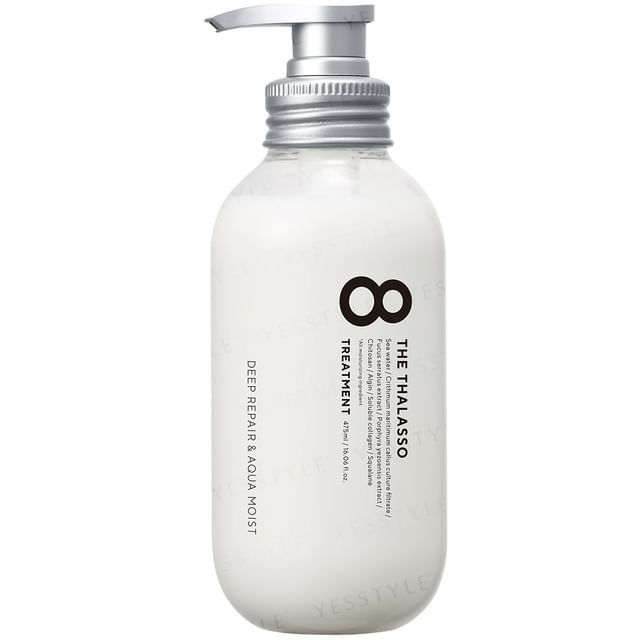
Stella Seed - 8 THE THALASSO Deep Repair & Aqua Moist Treatment
A deep repair and aqua moist treatment that hydrates both the scalp and hair thoroughly, repairing at the cellular level. Formulated with the proprietary 'Thalasso Stem Cell Formula' consisting of stem cells, marine collagen, ceramide, hyaluronic acid, keratin, amino acid, and seaweed. Provides anti-aging benefits for the scalp while cleansing and improving the scalp environment to aid healthier hair growth. The 'Aqua Delivery System' quickly repairs holes and tears in the cuticles and maintains hydration with the 'Aqua Network'.
Sulfate-free
Paraben-free
Silicone-free
Natural
Protein-free
CGM
Optimized for Your Environment & Lifestyle
Nykaa
In stock
Recommended

Stella Seed - 8 THE THALASSO Deep Repair & Aqua Moist Treatment
Stella Seed
stella-seed-8-the-thalasso-deep-repair-aqua-moist-treatment
Hair Treatment
10523358822693
Morning or Evening?
How often will you use this product?
Notes


Secure payment protection
Your Biodata Compatibility Analysis
Based on your 6 hair health indices and environmental factors
Poor Match
Significant incompatibilities
Growth Cycle Health Index
Hair Match
Hair Health Index Alignment
Optimal for OSI, SSI, DI, HSI
Ingredient Efficacy
Matching Ingredient Score
Environment Compatibility
Current UV, Air Quality & Humidity
Why This Works for Your Specific Profile
Damage Index:
Damage levels outside specified range may not benefit optimally from product formulation
Water Quality:
Dry or dull hair experiences increased brittleness from protein concentration without moisture balance
Hair:
Closed to moderately open cuticles limit product penetration causing surface buildup or inadequate absorption
Active Lifestyle:
Activity levels outside optimal range affect product performance and maintenance requirements
Your Hair Profile Integration
Your Hair Archetype

Density Level

Washing Frequency

Shedding Level

Oil Level
Your Hair Health Indices
Oil Secretion (OSI)
Very low oil production
Scalp Sensitivity (SSI)
Very low sensitivity
Growth Rate (CMR)
Poor metabolism rate
Damage Index (DI)
Minimal damage
Hair Strength (HSI)
Very weak strength
Softness Index (SI)
Significant improvement needed
Water & Environmental Integration

Water:


Expected Results & Timeline
Key Highlights

What is it?
Hair treatment with a proprietary formula containing multiple active ingredients

Who Is It For
All ages and genders

Budget
$30.20 - $60.40

Timeline
Immediate hydration and repair; noticeable improvement with regular use
Why You’ll Love It

What Does It Help With?
Damage Repair, Dryness, Frizz, Breakage, Split Ends, Dullness

Best for
Damage Repair

Features
Hydrates scalp and hair, repairs at the cellular level, anti-aging benefits for the scalp, improves scalp environment, quickly repairs cuticle damage, maintains hydration

Checks
Sulfate-free, Paraben-free, Silicone-free
Ingredients Overview
Ingredients List
water, cetearyl-alcohol, dimethicone, behentrimonium-chloride, glycerin, ethylhexyl-palmitate, crithmum-maritimum-callus-culture-filtrate, malus-domestica-fruit-cell-culture-extract, argania-spinosa-callus-culture-extract, alginate-na, fucus-serratus-extract, porphyra-yezoensis-extract, soluble-collagen, phytosteryl-octyldodecyl-lauroyl-glutamate, quaternium-33, hydroxyethyl-urea, hydrolyzed-keratin, ceramide-ng, ceramide-np, ceramide-ap, polyquaternium-51, chitosan-hydroxypropyltrimonium-chloride, prunus-mume-fruit-extract, salvia-officinalis-leaf-extract, rosmarinus-officinalis-leaf-oil, lavandula-angustifolia-oil, squalane, chitosan, isomalt, hydrogenated-lecithin, glycine-soja-sterols, xanthan-gum, lecithin, distearyldimonium-chloride, cholesterol, sea-water, cyclohexane-1,4-dicarboxylic-acid-bisethoxydiglycol, hydroxyethyl-cellulose, propylene-glycol, sodium-citrate, citric-acid, butylene-glycol, pentetic-acid, sodium-benzoate, phenoxyethanol, fragrance
Key Ingredients
crithmum-maritimum-callus-culture-filtrate, malus-domestica-fruit-cell-culture-extract, argania-spinosa-callus-culture-extract, soluble-collagen, ceramide-ng, ceramide-np, ceramide-ap, hydrolyzed-keratin, chitosan, sea-water
Ingredients Details
Chitosan
Common Name(s): Chitosan,deacetylated chitin biopolymer,cationic film-former
CAS Number: N/a
DESCRIPTION
What It Does: Forms a substantive cationic film on skin and hair through electrostatic attraction to negative surfaces, provides antimicrobial activity against gram-positive bacteria and fungi, and promotes wound healing via keratinocyte and fibroblast stimulation.
Why It's Used: The only natural cationic biopolymer from shellfish providing simultaneous substantive deposition and antimicrobial activity — preferred over synthetic quats for clean-label hair and skin conditioning.
How It Works: Protonated amine groups (pka ~6.5) in chitosan electrostatically bind hair cuticle and skin corneocytes (net negative charge at ph >5.5), depositing a film that reduces friction and provides conditioning. cationic character disrupts bacterial membranes providing antimicrobial activity.
Typically Found In: Hair conditioning,wound care,film-forming
TECHNICAL DETAILS
Primary Category: Active ingredient – cosmetic active
Secondary Functions: Skin conditioning
Application Areas:

Facial Skincare

Body Care
Hair Care
Beard Care
Color Cosmetics (Makeup)
Dietary/Oral Supplements
Typical Concentration Range: 0.1%–3%
SOURCING & ETHICS
Vegan Status: Conditional - crustacean or fungal route; fungal chitosan is vegan
Halal Status: Conditional - crustacean or fungal route; feedstock declaration required
Source Notes: Commercially produced for cosmetic use. verify vegan/halal status with supplier. [audit 2026-07-29 rev2: chitin family; a fungal route exists that is both halal-simpler and vegan, so origin must be declared. determination requires shariah-panel sign-off.]
SKIN COMPATIBILITY
Irritancy Rating: 1/5 – very low
Comedogenicity Rating: 0/5 – non-comedogenic
Sensitivity Concerns: Well-tolerated by most skin types.
Safe for Sensitive Skin: Yes
SAFETY & COMPATIBILITY
Safety Profile: Good safety profile at recommended concentrations. ewg score: 1–2.
Works Well With: Standard skincare actives
Avoid Combining With: No known significant incompatibilities
SCIENTIFIC NOTE
Chitosan's partial structural identity with hyaluronic acid (shared n-acetylglucosamine backbone) provides biocompatibility with skin extracellular matrix proteins and partial cross-reactivity with cd44 hyaluronan receptors.
Last Verified: 2026-03-12
Primary Sources: Cosing database,chitosan cationic biopolymer conditioning review
Chitosan
Common Name(s): Chitosan,deacetylated chitin biopolymer,cationic film-former
CAS Number: N/a
DESCRIPTION
What It Does: Forms a substantive cationic film on skin and hair through electrostatic attraction to negative surfaces, provides antimicrobial activity against gram-positive bacteria and fungi, and promotes wound healing via keratinocyte and fibroblast stimulation.
Why It's Used: The only natural cationic biopolymer from shellfish providing simultaneous substantive deposition and antimicrobial activity — preferred over synthetic quats for clean-label hair and skin conditioning.
How It Works: Protonated amine groups (pka ~6.5) in chitosan electrostatically bind hair cuticle and skin corneocytes (net negative charge at ph >5.5), depositing a film that reduces friction and provides conditioning. cationic character disrupts bacterial membranes providing antimicrobial activity.
Typically Found In: Hair conditioning,wound care,film-forming
TECHNICAL DETAILS
Primary Category: Active ingredient – cosmetic active
Secondary Functions: Skin conditioning
Application Areas:
Facial Skincare
Body Care
Hair Care
Beard Care
Color Cosmetics (Makeup)
Dietary/Oral Supplements
Typical Concentration Range: 0.1%–3%
SOURCING & ETHICS
Vegan Status: Conditional - crustacean or fungal route; fungal chitosan is vegan
Halal Status: Conditional - crustacean or fungal route; feedstock declaration required
Source Notes: Commercially produced for cosmetic use. verify vegan/halal status with supplier. [audit 2026-07-29 rev2: chitin family; a fungal route exists that is both halal-simpler and vegan, so origin must be declared. determination requires shariah-panel sign-off.]
SKIN COMPATIBILITY
Irritancy Rating: 1/5 – very low
Comedogenicity Rating: 0/5 – non-comedogenic
Sensitivity Concerns: Well-tolerated by most skin types.
Safe for Sensitive Skin: Yes
SAFETY & COMPATIBILITY
Safety Profile: Good safety profile at recommended concentrations. ewg score: 1–2.
Works Well With: Standard skincare actives
Avoid Combining With: No known significant incompatibilities
SCIENTIFIC NOTE
Chitosan's partial structural identity with hyaluronic acid (shared n-acetylglucosamine backbone) provides biocompatibility with skin extracellular matrix proteins and partial cross-reactivity with cd44 hyaluronan receptors.
Last Verified: 2026-03-12
Primary Sources: Cosing database,chitosan cationic biopolymer conditioning review
Cholesterol
Common Name(s): 5-cholesten-3-ol,cholesterin
CAS Number: 57-88-5
DESCRIPTION
What It Does: Provides essential barrier sterol function as one of three critical stratum corneum lipid components.
Why It's Used: Essential component of complete barrier repair formulations – the stratum corneum barrier requires ceramides:cholesterol:fatty acids in approximately 1:1:1 molar ratio for complete barrier restoration.
How It Works: Integrates between ceramide headgroups in lamellar body structures, providing fluidity and flexibility to the otherwise rigid ceramide-dominated lipid matrix. controls lamellar body phase behavior for functional barrier.
Typically Found In: Barrier repair moisturizers,eczema treatments,dry skin formulations
TECHNICAL DETAILS
Primary Category: Active ingredient – barrier sterol
Secondary Functions: Lamellar body structure,barrier sterol
Application Areas:
Facial Skincare
Body Care
Hair Care
Beard Care
Color Cosmetics (Makeup)
Dietary/Oral Supplements
Typical Concentration Range: 0.01%–1%
SOURCING & ETHICS
Vegan Status: Conditional - feedstock declaration required
Halal Status: Unverified - feedstock declaration required (plant, animal and petrochemical routes all exist)
Source Notes: Traditionally from lanolin (wool grease). plant-derived cholesterol alternatives include phytosterols, though these show slightly different barrier integration. verify for vegan/halal. [audit 2026-07-29 rev2: origin-dependent: the same inci exists in plant, animal and petrochemical versions and the name does not discriminate. determination requires shariah-panel sign-off.]
SKIN COMPATIBILITY
Irritancy Rating: 1/5 – very low
Comedogenicity Rating: 0/5 – non-comedogenic
Sensitivity Concerns: Endogenous molecule; excellent tolerability.
Safe for Sensitive Skin: Yes
SAFETY & COMPATIBILITY
Safety Profile: Exceptional safety profile. natural skin component. ewg score: 1.
Works Well With: Other ceramides,cholesterol,free fatty acids,hyaluronic acid,niacinamide
Avoid Combining With: No significant incompatibilities
SCIENTIFIC NOTE
Elias demonstrated that barrier repair requires all three lipid classes (ceramides, cholesterol, fatty acids) in approximately equimolar ratios. formulations providing only ceramides without cholesterol and fatty acids show significantly inferior barrier restoration vs complete triple-lipid combinations.
Last Verified: 2026-03-12
Primary Sources: Cosing database,elias et al. barrier lipid ratio study,loden barrier repair review
Dimethicone
Common Name(s): Pdms,polydimethylsiloxane,silicone fluid
CAS Number: 9006-65-9
DESCRIPTION
What It Does: Provides silicone-characteristic silky feel and skin protection with adjustable viscosity.
Why It's Used: The benchmark cosmetic silicone – sets the gold standard for silky application feel, spreadability, and skin protection in virtually all skin care categories.
How It Works: Polydimethylsiloxane chain flexibility provides extremely low surface tension and high spreadability. inert si-o backbone provides chemical stability and excellent skin tolerance. occlusive film formation reduces tewl. higher viscosity grades provide more intense conditioning.
Typically Found In: Moisturizers,foundations,primers,sunscreens – nearly universal
TECHNICAL DETAILS
Primary Category: Functional ingredient – polydimethylsiloxane
Secondary Functions: Barrier sealing,softening
Application Areas:
Facial Skincare
Body Care
Hair Care
Beard Care
Color Cosmetics (Makeup)
Dietary/Oral Supplements
Typical Concentration Range: 0.1%–30%
SOURCING & ETHICS
Vegan Status: Conditional - supplier confirmation required
Halal Status: Unverified - supplier confirmation required
Source Notes: Plant-derived, synthetic or animal-derived. verify source. [audit 2026-07-29 rev2: the record's own source_notes does not assert a non-animal origin, or instructs the reader to verify with the supplier; "yes" asserts knowledge the record does not hold. determination requires shariah-panel sign-off.]
SKIN COMPATIBILITY
Irritancy Rating: 1/5 – very low
Comedogenicity Rating: 1/5 – low; formulation-dependent
Sensitivity Concerns: Non-irritating.
Safe for Sensitive Skin: Yes
SAFETY & COMPATIBILITY
Safety Profile: Excellent safety profile. ewg score: 1.
Works Well With: Humectants,ceramides,actives as carrier
Avoid Combining With: No significant incompatibilities
SCIENTIFIC NOTE
Dimethicone's exceptional silky feel arises from its very low intermolecular attractive forces (weak van der waals forces due to non-polar methyl groups) that allow silicone chains to slide freely over skin. the coefficient of kinetic friction for pdms against skin (~0.04) is among the lowest of any cosmetic material – explaining why even small amounts transform product feel.
Last Verified: 2026-03-12
Primary Sources: Cosing database,cir safety assessment
Personalized Usage Instructions
How to Use
Step 1
After shampooing, lightly drain hair and massage into hair
Step 2
Rinse thoroughly
Medical Chemicals

Protein/Moisture
- Protein/Moisture balance
pH Level
- Acidic

Porosity Taget
- High Porosity
Customized for Your Profile
Scalp Condtions
Sensitive Scalp, pH Balanced, Oil Control, Dry Scalp
Climate Suitability
Humid, Dry, Hard Water, Soft Water, UV Protection, Pollution Shield, Winter, Summer
Clinical Claims
Frequency
After shampooing, lightly drain hair and massage into hair. Rinse thoroughly.
Product Information

Sulfate-free
Paraben-free
Silicone-free