

SILKY GIRL
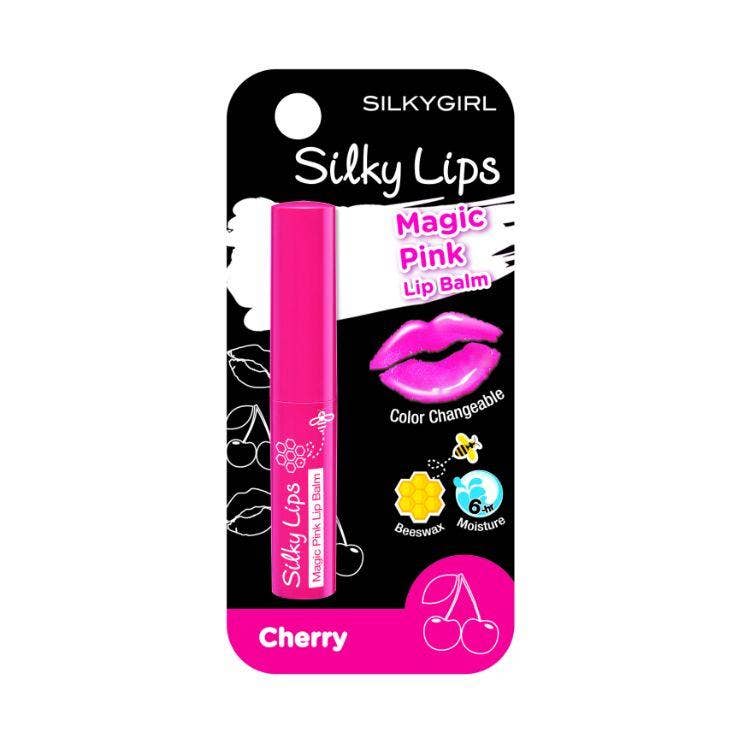
Silky Lips Magic Pink Lipbalm Cherry 1.6G

Silky Lips Magic Pink Lipbalm Cherry 1.6G
SILKY GIRL
silky-lips-magic-pink-lipbalm-cherry-1-6g
Lip care
10084960534821
Morning or Evening?
How often will you use this product?
Notes


Highlights
WHAT IS IT?
Lip Balm with multiple natural oils and waxes
FEATURES
Colorless lip balm, blooms into natural pink, locks in moisture for 6 hours, made from natural ingredients
BEST FOR
normal
CHECKS
Methylparaben, Propylparaben
Who Is It For?
All Genders Age Range Not SpecifiedWhat Does It Help With?
Lip Moisture Softness SmoothnessBudget
Affordable (under $30)How To Use
Which routine should it be used in?
Instructions:
Key Information


What SILKY GIRL Says
Product Description:
A colorless lipbalm that magically blooms into a subtle, natural pink when applied onto your lips. It is specially formulated from natural ingredients to help lock in moisture for 6 hours, giving you soft, smooth and luscious lips.
About the Brand:
Ingredients Overview
Ingredients List
Macadamia-Ternifolia-Seed-Oil, Ricinus-Communis-Seed-Oil, Simmondsia-Chinensis-Seed-Oil, Mineral-Oil, Butyrospermum-Parkii-Butter, Petrolatum, Ozokerite, Polyethylene, Microcrytalline-Wax, Beeswax, Menthol, BHT, Tocopheryl-Acetate, Caprylic-Capric-Triglyceride, Methylparaben, Propylparaben, Chamomilla-Recutita-Flower-Extract, Tocopherol, Red-27
Key Ingredients
Macadamia Ternifolia Seed Oil, Ricinus Communis Seed Oil, Simmondsia Chinensis Seed Oil
Ingredients Details
Beeswax
Common Name(s): Cera alba (white),cera flava (yellow),apis mellifera wax
CAS Number: 8012-89-3
DESCRIPTION
What It Does: Provides natural wax structure and emolliency for cosmetic texture and lip balm applications.
Why It's Used: The original cosmetic wax – provides natural, hard-texture structure for lip balms, sticks, and creams with emollient skin conditioning.
How It Works: Complex mixture of esters (wax esters), hydrocarbons (hentriacontane), and fatty acids provides semi-crystalline structure. melting point 62-65°c enables stable solid products. emulsifying capacity from free cerotic acid content.
Typically Found In: Lip balms,cosmetic sticks,creams,natural cosmetics
TECHNICAL DETAILS
Primary Category: Functional ingredient – natural wax
Secondary Functions: Natural wax structure,occlusive conditioning
Application Areas:

Facial Skincare

Body Care
Hair Care
Beard Care
Color Cosmetics (Makeup)
Dietary/Oral Supplements
Typical Concentration Range: 2%–30%
SOURCING & ETHICS
Vegan Status: No – honeybee-derived
Halal Status: Conditional – animal-derived; verify halal certification
Source Notes: Plant-derived, synthetic or animal-derived. verify source.
SKIN COMPATIBILITY
Irritancy Rating: 1/5 – very low
Comedogenicity Rating: 1/5 – low; formulation-dependent
Sensitivity Concerns: Non-irritating.
Safe for Sensitive Skin: Yes
SAFETY & COMPATIBILITY
Safety Profile: Excellent safety profile. ewg score: 1.
Works Well With: Humectants,ceramides,actives as carrier
Avoid Combining With: No significant incompatibilities
SCIENTIFIC NOTE
Beeswax's multi-component wax ester composition (myricyl palmitate as primary component) provides a unique crystalline structure that gives lip balms and cosmetic sticks their characteristic 'dragée' glide – different from synthetic wax esters that lack this crystalline lattice diversity.
Last Verified: Cosing database,cir safety assessment
Primary Sources: 2026-03-12
Bht
Common Name(s): Bht
DESCRIPTION
What It Does: Delivers targeted skin-conditioning or bioactive benefits through a specific mechanism of action suited to the formulation's intended purpose.
Why It's Used: Specialty actives address specific skin concerns through targeted molecular mechanisms, providing efficacy beyond what base formulation ingredients alone can achieve.
How It Works: The bioactive compound interacts with specific molecular targets in skin cells or the extracellular matrix — enzymes, receptors, structural proteins, or signaling molecules — triggering beneficial biological responses.
Typically Found In: Serums,treatments,moisturizers,specialty products
TECHNICAL DETAILS
Primary Category: Specialty actives
Secondary Functions: Skin-conditioning,anti-aging
Application Areas:
Facial Skincare
Body Care
Hair Care
Beard Care
Color Cosmetics (Makeup)
Dietary/Oral Supplements
Typical Concentration Range: 0.01–5%
SOURCING & ETHICS
Vegan Status: Yes
Halal Status: Yes
Source Notes: Specialty active ingredient; check individual sourcing for vegan status.
SKIN COMPATIBILITY
Irritancy Rating: 1
Comedogenicity Rating: 0
Sensitivity Concerns: Low sensitization potential at recommended use concentrations.
Safe for Sensitive Skin: Yes
SAFETY & COMPATIBILITY
Safety Profile: Well-characterized cosmetic ingredient with established safety profile. generally non-irritating at typical use concentrations. suitable for leave-on and rinse-off cosmetics.
Works Well With: Niacinamide,hyaluronic acid,vitamin c,peptides
Avoid Combining With: Incompatible with oxidizing agents; check ph stability
SCIENTIFIC NOTE
Specialty actives typically work through enzyme inhibition (e.g., tyrosinase inhibition for brightening, mmp inhibition for anti-aging), receptor activation (e.g., retinoid receptors, ppar-γ for barrier genes), or transcription factor modulation (e.g., nrf2 for antioxidant gene upregulation). structure-activity relationships determine potency and selectivity.
Last Verified: Cosing eu database; pcpc cosmetic ingredient safety reviews; ingredient-specific safety and efficacy literature
Primary Sources: 2025-01-15
Menthol
Common Name(s): L-menthol,peppermint camphor,(-)-menthol
CAS Number: 89-78-1
DESCRIPTION
What It Does: Activates trpm8 cold thermoreceptors for intense cooling sensation and analgesic activity.
Why It's Used: The most potent cosmetic cooling agent – direct trpm8 agonist providing cooling sensation without actual temperature reduction for refreshing and analgesic formulations.
How It Works: Potent trpm8 (menthol receptor/cold thermosensor) agonist – activation at room temperature mimics cold sensation without actual cooling. anti-pruritic via trpm8 activation competing with itch c-fiber signaling. antimicrobial via membrane disruption.
Typically Found In: Cooling products,scalp treatments,oral care,pain relief,foot care,after-sun
TECHNICAL DETAILS
Primary Category: Active ingredient – cooling sensory terpenoid
Secondary Functions: Redness reduction,anti-inflammatory,calming
Application Areas:
Facial Skincare
Body Care
Hair Care
Beard Care
Color Cosmetics (Makeup)
Dietary/Oral Supplements
Typical Concentration Range: 0.1%–2%
SOURCING & ETHICS
Vegan Status: Yes – from mentha piperita or synthetic
Halal Status: Yes
Source Notes: Plant-derived extract or synthetic.
SKIN COMPATIBILITY
Irritancy Rating: 2/5 – low to moderate; potential sensitizer
Comedogenicity Rating: 0/5 – non-comedogenic
Sensitivity Concerns: Non-irritating; ideal for reactive and sensitive skin.
Safe for Sensitive Skin: Avoid near eyes. use with caution at concentrations above 1% for sensitive skin.
SAFETY & COMPATIBILITY
Safety Profile: Eu max 4.5% (leave-on); regulations vary by application site. avoid on infants' face.
Works Well With: Ceramides,panthenol,allantoin,hyaluronic acid,centella asiatica
Avoid Combining With: No significant incompatibilities
SCIENTIFIC NOTE
Menthol's exceptional cooling potency stems from its ec50 for trpm8 activation of approximately 10μm (vs camphor's ec50 of ~5mm – 500× lower potency). this 500× potency advantage explains why even tiny concentrations of menthol provide intense cooling, while much higher concentrations of camphor are required for equivalent sensation.
Last Verified: Cosing database,mckemy et al. menthol trpm8 discovery,cir safety assessment
Primary Sources: 2026-03-12
Methylparaben
Common Name(s): Methylparaben,cosmetic active,functional ingredient
CAS Number: N/a
DESCRIPTION
What It Does: Delivers characteristic cosmetic function at recommended use concentration.
Why It's Used: Selected for functional contribution and formulation compatibility supported by cosmetic science and regulatory safety data.
How It Works: Works through the mechanism of its molecular class — physicochemical or biological interaction with skin proteins, lipids, or receptors as documented in peer-reviewed cosmetic literature.
Typically Found In: Skin care formulations
TECHNICAL DETAILS
Primary Category: Active ingredient – cosmetic active
Secondary Functions: Skin conditioning
Application Areas:
Facial Skincare
Body Care
Hair Care
Beard Care
Color Cosmetics (Makeup)
Dietary/Oral Supplements
Typical Concentration Range: 0.1%–10%
SOURCING & ETHICS
Vegan Status: Conditional
Halal Status: Yes
Source Notes: Commercially produced for cosmetic use. verify vegan/halal status with supplier.
SKIN COMPATIBILITY
Irritancy Rating: 1/5 – very low
Comedogenicity Rating: 0/5 – non-comedogenic
Sensitivity Concerns: Well-tolerated by most skin types.
Safe for Sensitive Skin: Yes
SAFETY & COMPATIBILITY
Safety Profile: Good safety profile at recommended concentrations. ewg score: 1–2.
Works Well With: Standard skincare actives
Avoid Combining With: No known significant incompatibilities
SCIENTIFIC NOTE
Methylparaben has an established safety and efficacy profile within the cosmetic regulatory framework at standard use concentrations.
Last Verified: Cosing database,methylparaben technical literature
Primary Sources: 2026-03-12
