

Mario Badescu
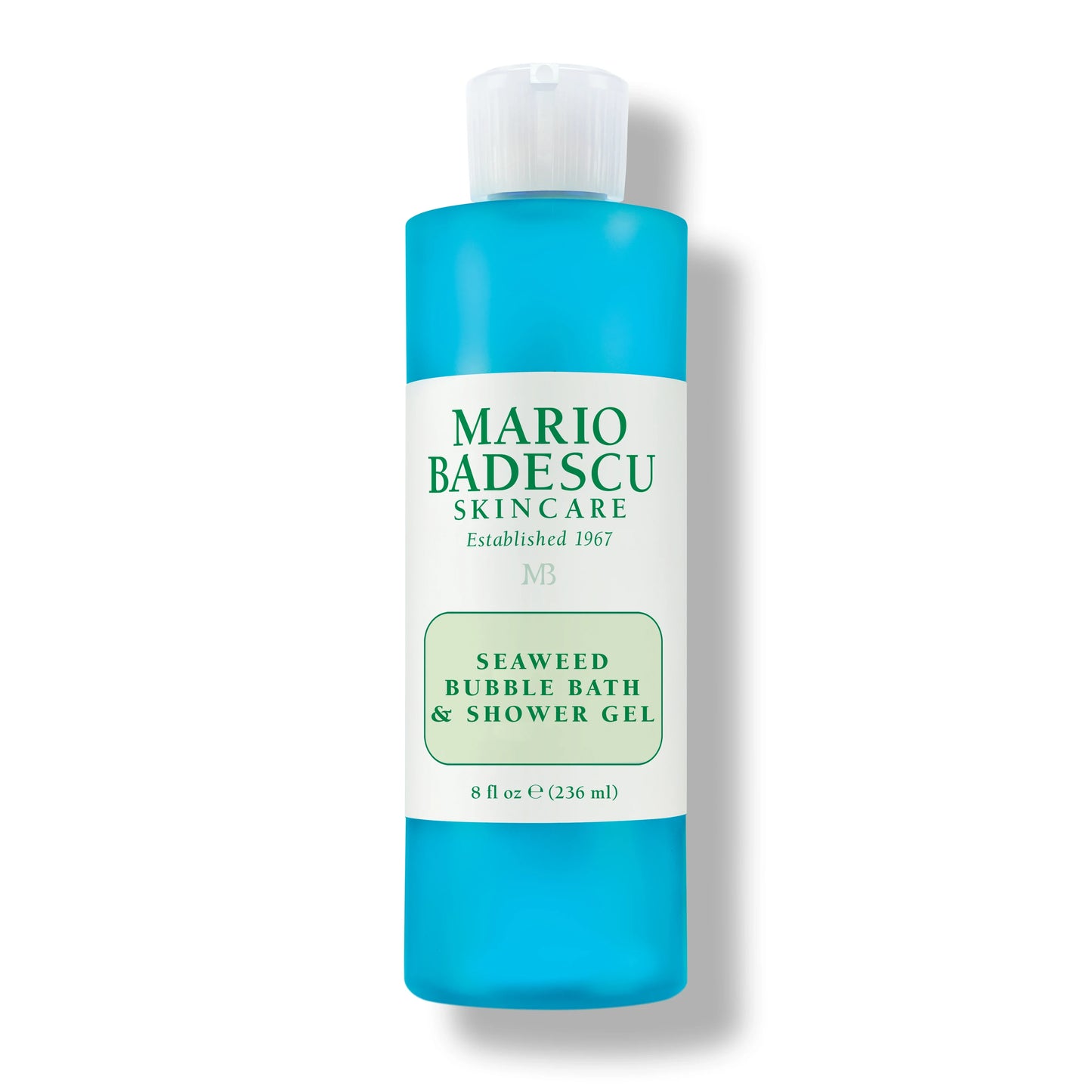
Seaweed Bubble Bath & Shower Gel

Seaweed Bubble Bath & Shower Gel
Mario Badescu
seaweed-bubble-bath-shower-gel
Body care
9818366017829
Morning or Evening?
How often will you use this product?
Notes


Highlights
WHAT IS IT?
Bubble Bath and Shower Gel
FEATURES
Creates long-lasting bubbles, Marine-inspired formula
BEST FOR
normal, combination, dry, oil
CHECKS
Who Is It For?
All Ages All GendersWhat Does It Help With?
Cleansing RelaxationBudget
Affordable (under $30)How To Use
Which routine should it be used in?
Instructions:
Key Information


What Mario Badescu Says
Product Description:
A versatile bath-time companion that transforms your daily ritual into a tranquil, marine-inspired escape with bubbles that last all bath long.
About the Brand:
Ingredients Overview
Ingredients List
SODIUM LAURETH SULFATE, CHONDRUS CRISPUS (CARRAGEENAN), PROPYLENE GLYCOL, CITRIC ACID, ISOPROPYL MYRISTATE, SESAMUM INDICUM (SESAME) SEED OIL, FUCUS VESICULOSUS EXTRACT, MINERAL OIL (PARAFFINUM LIQUIDUM), PANAX GINSENG ROOT EXTRACT
Key Ingredients
Bladderwrack, Nori
Ingredients Details
Sodium Laureth Sulfate
Common Name(s): Sles,sodium lauryl ether sulfate,ales
CAS Number: 9004-82-4
DESCRIPTION
What It Does: Provides excellent foam and cleansing with significantly lower irritation than sls.
Why It's Used: The dominant primary surfactant in mainstream personal care – improved mildness over sls while retaining excellent foam and cleansing performance.
How It Works: Ethoxylation (2-3 eo units) inserts polyethylene oxide spacer between dodecyl chain and sulfate, sterically shielding sulfate from direct protein contact, reducing irritation vs sls. full micellar cleansing capacity retained.
Typically Found In: Shampoos,body washes,facial cleansers,household cleansers
TECHNICAL DETAILS
Primary Category: Functional ingredient – ethoxylated anionic surfactant
Secondary Functions: Skin conditioning
Application Areas:

Facial Skincare
Body Care
Hair Care

Beard Care
Color Cosmetics (Makeup)
Dietary/Oral Supplements
Typical Concentration Range: 2%–15%
SOURCING & ETHICS
Vegan Status: Conditional - feedstock declaration required
Halal Status: Unverified - feedstock declaration required (plant, animal and petrochemical routes all exist)
Source Notes: Ethoxylation process can generate trace 1,4-dioxane impurity – reputable manufacturers purify to <1ppm. look for sles certified with dioxane specification. [audit 2026-07-29 rev2: origin-dependent: the same inci exists in plant, animal and petrochemical versions and the name does not discriminate. determination requires shariah-panel sign-off.]
SKIN COMPATIBILITY
Irritancy Rating: 2/5 – low to moderate (significantly milder than sls)
Comedogenicity Rating: 0/5 – non-comedogenic
Sensitivity Concerns: Well-tolerated by most skin types.
Safe for Sensitive Skin: Yes
SAFETY & COMPATIBILITY
Safety Profile: Well-established safety. ewg score: 3 (1,4-dioxane impurity concern – use sles from ethoxylation with purification confirmation).
Works Well With: Standard skincare actives
Avoid Combining With: No known significant incompatibilities
SCIENTIFIC NOTE
Sles's reduced irritation vs sls directly correlates with the degree of ethoxylation – sles-2 (2 eo units) is milder than sls but not as mild as sles-3 (3 eo units). each ethylene oxide unit adds steric shielding around the sulfate group, progressively reducing its protein-binding and denaturation capacity.
Last Verified: 2026-03-12
Primary Sources: Cosing database,ananthapadmanabhan et al. surfactant review,cir safety assessment