

SAFI
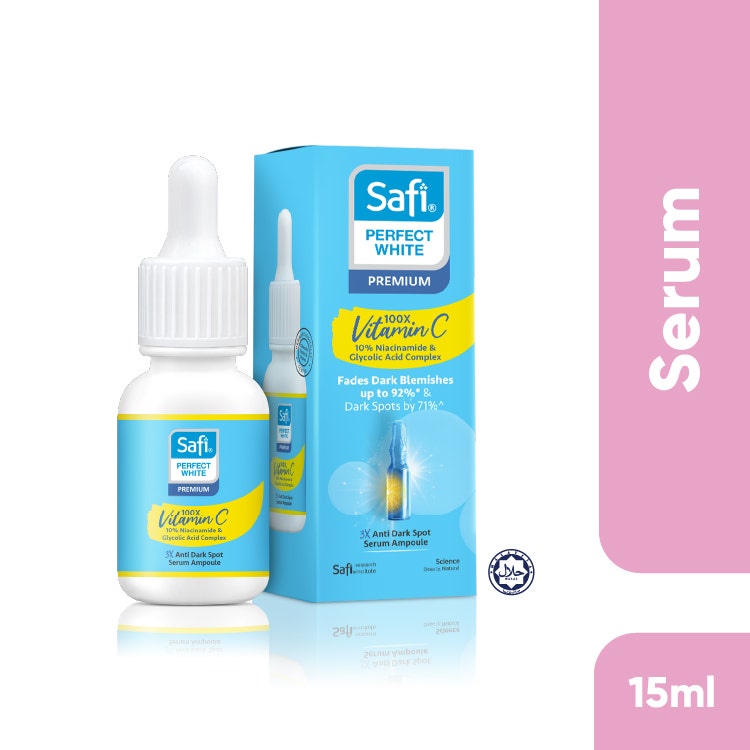
Safi Perfect White 3X Anti Dark Spot Serum Ampoule 15Ml

Safi Perfect White 3X Anti Dark Spot Serum Ampoule 15Ml
SAFI
safi-perfect-white-3x-anti-dark-spot-serum-ampoule-15ml
Serum
10084760715557
Morning or Evening?
How often will you use this product?
Notes


Highlights
WHAT IS IT?
Serum with multiple active ingredients including Nano BioWhite and Kakadu Plum
FEATURES
Powerful Vitamin C, reverastrol antioxidants, reduces dark spots and acne scars, brightens and evens skin tone, contains Nano Biowhite and Kakadu Plum, no mineral oil, no alcohol, no parabens, no phthalates, no colorant, no animal testing or animal derived ingredients
BEST FOR
sensitive
CHECKS
No Mineral Oil, No Alcohol, No Paraben, No Phthalates, No Colorant, No Animal Testing, No Animal Derived Ingredients
Who Is It For?
Not Explicitly SpecifiedWhat Does It Help With?
Reduces Stubborn Dark Spots Acne Scars Promotes Brightening Anti-dullness Evens Skin ToneBudget
Mid-range ($30-$75)How To Use
Which routine should it be used in?
Instructions:
Key Information


What SAFI Says
Product Description:
A nourishing water-based serum with powerful Vitamin C, reverastrol antioxidants that provides intense lightening to reduce stuborn dark spots and acne scars for perfect radiant, spotless and even skin tone. Ultra white technology intergrates multifunctional active ingredients of Nano Biowhite and Kakadu Plum to speed up skin brightening and luminosity. Nano BioWhite - Penetrate deep into the basal layer of skin to reduce the appearance of dark spots for even toned and brighter skin. Kakadu Plum- 100X Vit C more than an orange for luminously healthy radiant skin. Niacinamide - Promotes skin lightening, anti dullness and brightens skin. Refined Formulation with: NO MINERAL OIL | NO ALCOHOL | NO PARABEN NO PHTHALATES | NO COLORANT | NO ANIMAL TESTING NO ANIMAL DERIVED INGREDIENTS
About the Brand:
Ingredients Overview
Ingredients List
Water,Panthenol,Methylpropanediol,Betaine,3-O-Ethyl Ascorbic Acid,PEG-12 Dimethicone,Sodium Polyacryloyldimethyl taurate,Sclerotium Gum,Bis-PEG-18Methyl Ether Dimethyl,Silane,Revesratrol,Sodium Hyaluronate,Glycerin,Disodium EDTA,Lactic acid,Niacinamide,Acetyl Glycyl Beta-Alanine,Terminalia Ferdinandiana fruit extract,Lithothamnion Calcareum Extract,Butylene,Glycol,Borago Officinalis Seed Oil,Mannitol,Arginine,Perfluorodecalin,4-Butylresorcinol,Dextrin,Diatomaceous Earth,Simmondsia Chinensis,Seed Oil,Lecithin,Glycosphingolipids,Sucrose,Palmitate,Prunus Yedoensis (Sakura) Leaf Extract,Zinc Sulfate,Xanthan Gum,Fragrance,Phenoxyethanol,Chlorphenesin,Sodium Metabisulfite,Potassium Sorbate,Sodium Benzoate
Key Ingredients
3-O-Ethyl Ascorbic Acid,Revesratrol,Nano Biowhite (implied by term),Kakadu Plum (Terminalia Ferdinandiana fruit extract),Niacinamide
Ingredients Details
3-o-ethyl Ascorbic Acid
Common Name(s): 3-o-ethyl ascorbic acid
DESCRIPTION
What It Does: Loosens corneocyte adhesion in the stratum corneum, accelerating cell turnover, refining skin texture, and improving radiance.
Why It's Used: Organic acids at cosmetic ph values provide controlled keratolytic exfoliation that improves skin texture, pore appearance, and radiance without mechanical irritation.
How It Works: At appropriate ph, the acid's undissociated form penetrates the stratum corneum and dissolves the ionic bonds between corneocyte desmosomes (calcium chelation mechanism), facilitating controlled desquamation and cell renewal.
Typically Found In: Toners,exfoliants,serums,peels,cleansers
TECHNICAL DETAILS
Primary Category: Exfoliants
Secondary Functions: Brightening,keratolytic
Application Areas:

Facial Skincare

Body Care
Hair Care
Beard Care
Color Cosmetics (Makeup)
Dietary/Oral Supplements
Typical Concentration Range: 0.5–20%
SOURCING & ETHICS
Vegan Status: Yes
Halal Status: Yes
Source Notes: Synthetic or plant-derived acid; no animal components.
SKIN COMPATIBILITY
Irritancy Rating: 2
Comedogenicity Rating: 0
Sensitivity Concerns: May cause irritation or stinging in sensitive or barrier-compromised skin at high concentrations; patch test recommended.
Safe for Sensitive Skin: Conditional
SAFETY & COMPATIBILITY
Safety Profile: Safe within recommended ph and concentration ranges. sensitization risk increases above 10% aha. patch test recommended for sensitive skin. mildly irritating to some individuals at typical cosmetic use concentrations.
Works Well With: Niacinamide,hyaluronic acid,ceramides,vitamin c
Avoid Combining With: High concentrations on sensitive/broken skin; avoid with physical exfoliants
SCIENTIFIC NOTE
Cosmetic acids function at the pka boundary: only the undissociated acid (rcooh) penetrates the stratum corneum lipid barrier, while the ionized carboxylate (rcoo⁻) does not. the henderson-hasselbalch equation governs the fraction of active species at formulation ph; typically 0.5–3.0% undissociated acid provides efficacy while minimizing irritation.
Last Verified: 2025-01-15
Primary Sources: Cosing eu database; pcpc cosmetic ingredient safety reviews; ingredient-specific safety and efficacy literature
4-butylresorcinol
Common Name(s): P-butylresorcinol,rucinol
CAS Number: 18979-61-8
DESCRIPTION
What It Does: Provides exceptional brightening through the most potent tyrosinase inhibition of any commonly used cosmetic brightening agent.
Why It's Used: The most potent tyrosinase inhibitor available in cosmetics – exceptional for refractory hyperpigmentation and melasma where standard brighteners provide insufficient efficacy.
How It Works: Resorcinol backbone competitively inhibits both tyrosine hydroxylase (reaction 1) and dopa oxidase (reaction 2) activities of tyrosinase. n-butyl chain provides superior membrane affinity for enhanced delivery to melanosomes.
Typically Found In: High-potency brightening serums,melasma treatments,stubborn hyperpigmentation products
TECHNICAL DETAILS
Primary Category: Active ingredient – resorcinol tyrosinase inhibitor
Secondary Functions: Dual tyrosinase reaction inhibition,potent brightening
Application Areas:
Facial Skincare
Body Care
Hair Care
Beard Care
Color Cosmetics (Makeup)
Dietary/Oral Supplements
Typical Concentration Range: 0.1%–1%
SOURCING & ETHICS
Vegan Status: Yes – synthetic
Halal Status: Yes
Source Notes: Synthetic or plant-derived.
SKIN COMPATIBILITY
Irritancy Rating: 2/5 – low to moderate
Comedogenicity Rating: 0/5 – non-comedogenic
Sensitivity Concerns: Use with spf; introduce gradually. photosensitizing.
Safe for Sensitive Skin: Yes
SAFETY & COMPATIBILITY
Safety Profile: Excellent safety profile. use with spf for maximum efficacy. ewg score: 1.
Works Well With: Niacinamide,vitamin c,alpha-arbutin,tranexamic acid,spf
Avoid Combining With: No significant incompatibilities
SCIENTIFIC NOTE
4-butylresorcinol's inhibition of both tyrosinase catalytic reactions (tyrosine→dopa and dopa→dopaquinoneoxidase) is unique among common brighteners. most tyrosinase inhibitors only block the first reaction (tyrosine→dopa). blocking both steps provides more complete melanin biosynthesis inhibition.
Last Verified: ##########
Primary Sources: Cosing database,choi et al. 4-butylresorcinol study,sccs opinion on butylresorcinol
Acetyl Glycyl Beta-alanine
Common Name(s): Acetyl glycyl beta-alanine,acetyl glycyl beta-alanine,beta-alanine modified peptide,carnosine biosynthesis stimulating anti-aging
CAS Number: N/a
DESCRIPTION
What It Does: Stimulates collagen synthesis through peptide sequence receptor activation while simultaneously providing beta-alanine for carnosine biosynthesis — dual anti-aging mechanism from collagen upregulation and anti-glycation protection.
Why It's Used: Combining signal peptide collagen stimulation with beta-alanine carnosine precursor in one molecule provides synergistic anti-aging from two independent mechanisms — dermal matrix upregulation (collagen synthesis) and dermal matrix protection (age prevention).
How It Works: The peptide sequence activates tgf-β/smad → col1a1 upregulation. beta-alanine simultaneously enters the carnosine pathway: beta-alanine + histidine → carnosine (by carnosine synthetase) → carbonyl quenching of methylglyoxal/4-hne preventing age crosslinks on collagen. the dual mechanism addresses both collagen quantity and quality.
Typically Found In: Premium anti-aging serums
TECHNICAL DETAILS
Primary Category: Active ingredient – peptide
Secondary Functions: Collagen synthesis,anti-aging
Application Areas:
Facial Skincare
Body Care
Hair Care
Beard Care
Color Cosmetics (Makeup)
Dietary/Oral Supplements
Typical Concentration Range: 1–5000 ppm
SOURCING & ETHICS
Vegan Status: Conditional - feedstock declaration required
Halal Status: Unverified - feedstock declaration required (plant, animal and petrochemical routes all exist)
Source Notes: Synthetically produced via solid-phase peptide synthesis (spps). [audit 2026-07-29 rev2: origin-dependent: the same inci exists in plant, animal and petrochemical versions and the name does not discriminate. determination requires shariah-panel sign-off.]
SKIN COMPATIBILITY
Irritancy Rating: 1/5 – very low
Comedogenicity Rating: 0/5 – non-comedogenic
Sensitivity Concerns: Non-irritating at recommended concentrations.
Safe for Sensitive Skin: Yes
SAFETY & COMPATIBILITY
Safety Profile: Excellent safety profile. ewg score: 1.
Works Well With: Retinoids,niacinamide,vitamin c,hyaluronic acid
Avoid Combining With: Strong acids below ph 3.5; oxidising agents
SCIENTIFIC NOTE
Beta-alanine-containing peptides provide superior carnosine pathway stimulation versus free beta-alanine — the peptide scaffold improves sc penetration delivering beta-alanine deeper into the dermis where carnosine synthetase is concentrated in fibroblasts.
Last Verified: 2026-03-22
Primary Sources: Cosing database,acetyl glycyl beta-alanine beta-alanine peptide anti-aging review
Arginine
Common Name(s): L-arginine,2-amino-5-guanidinopentanoic acid
CAS Number: 74-79-3
DESCRIPTION
What It Does: Conditions skin, attracts moisture, supports wound healing, and improves microcirculation via no synthesis.
Why It's Used: Multi-functional amino acid for skin hydration, conditioning, and wound healing in peptide and nmf formulations.
How It Works: Guanidinium group binds water (humectant). substrate for nitric oxide synthase (enos) producing nitric oxide that vasodilates capillaries improving skin nutrition. stimulates fibroblast proliferation for wound healing.
Typically Found In: Anti-aging serums,wound healing products,nmf moisturizers,scalp treatments
TECHNICAL DETAILS
Primary Category: Active ingredient – amino acid
Secondary Functions: Wound healing,microcirculation,nmf component
Application Areas:
Facial Skincare
Body Care
Hair Care
Beard Care
Color Cosmetics (Makeup)
Dietary/Oral Supplements
Typical Concentration Range: 0.5%–5%
SOURCING & ETHICS
Vegan Status: Conditional - feedstock declaration required
Halal Status: Unverified - feedstock declaration required (plant, animal and petrochemical routes all exist)
Source Notes: Fermentation-derived or synthetic. natural skin component. [audit 2026-07-29 rev2: origin-dependent: the same inci exists in plant, animal and petrochemical versions and the name does not discriminate. determination requires shariah-panel sign-off.]
SKIN COMPATIBILITY
Irritancy Rating: 1/5 – very low
Comedogenicity Rating: 0/5 – non-comedogenic
Sensitivity Concerns: Non-irritating; endogenous skin molecule.
Safe for Sensitive Skin: Yes
SAFETY & COMPATIBILITY
Safety Profile: Excellent safety profile. natural skin nmf component. ewg score: 1.
Works Well With: Hyaluronic acid,ceramides,peptides,other amino acids
Avoid Combining With: No significant incompatibilities
SCIENTIFIC NOTE
Arginine is a conditionally essential amino acid in wound healing where local demand exceeds synthesis capacity. topical arginine provides the nos substrate locally for no-mediated vasodilation and immune cell function in healing tissue.
Last Verified: 2026-03-12
Primary Sources: Cosing database,cir safety assessment,witte & barbul arginine wound healing review