

SAFI
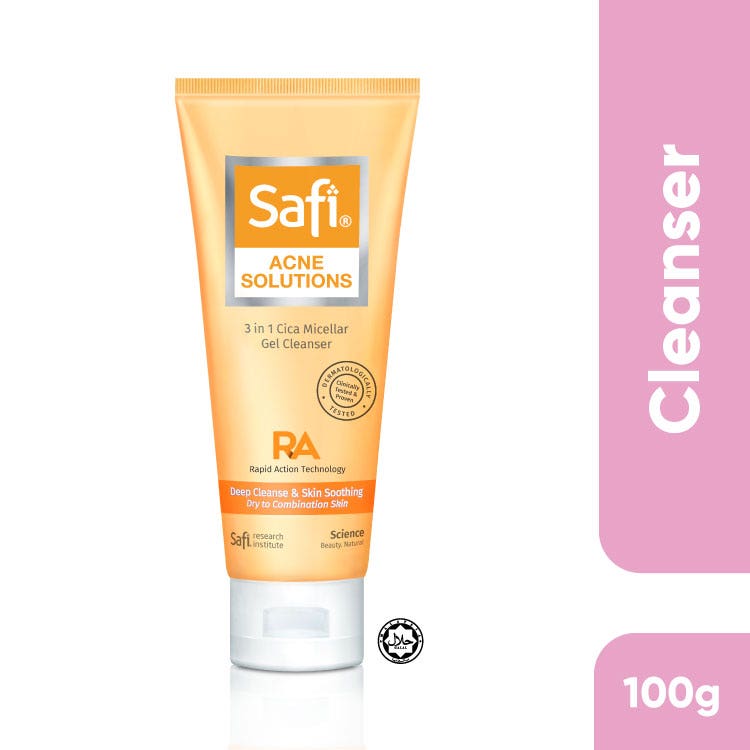
Safi Acne Solutions 3 In 1 Cica Micellar Gel Cleanser 100G

Safi Acne Solutions 3 In 1 Cica Micellar Gel Cleanser 100G
SAFI
safi-acne-solutions-3-in-1-cica-micellar-gel-cleanser-100g
Cleanse
10084872454437
Morning or Evening?
How often will you use this product?
Notes


Highlights
WHAT IS IT?
Micellar Gel Cleanser with multiple active ingredients (PHA, BHA, Cica, Neem)
FEATURES
Exfoliates, cleanses, anti acne, Anti PM2.5 formulation, mild exfoliation, promotes skin renewal, controls sebum, soothes skin, restores skin barrier, minimizes scarring, scientifically proven pollutant removal
BEST FOR
combination
CHECKS
Discontinue if irritation, avoid eye contact
Who Is It For?
What Does It Help With?
Prevents Acne Brightens Skin Controls Sebum Soothes Skin Restores Skin Barrier Removes ImpuritiesBudget
Affordable (under $30)How To Use
Which routine should it be used in?
Instructions:
Key Information


What SAFI Says
Product Description:
3 in 1: Exfoliates, Cleanses & Anti Acne. Mild micellar gel cleanser with Anti PM2.5 formulation that gently exfoliates and washes away dirt, excess oil and impurities without over-drying, leaving skin clean and acne-free. Rapid Action Technology is an infusion formula of PHA, BHA, Cica & Neem that prevents new acne formation leaving skin smooth and blemish free. PHA provides mild exfoliation of dead skin and promotes skin renewal leaving skin brighter. BHA penetrates deep into pores, controls sebum & removes impurities that clog up pores. Cica & Neem soothe skin, promote skin barrier restoration & minimize scarring. Scientifically proven to remove pollutants. Suitable for Dry to Combination Skin.
About the Brand:
Ingredients Overview
Ingredients List
Water,Ammonium-Lauryl-Sulfate,Sodium-Cocoyl-Alaninate,Cocamidopropyl-Betaine,Acrylates-C10-30-Alkyl-Acrylate-Crosspolymer,Butylene-Glycol,Lactic-Acid,PEG-8,Sodium-Hydroxide,Melia-Azadirachta-Neem-Leaf-Extract,Propylene-Glycol,Gluconolactone,Mandelic-Acid,Centella-Asiatica-Leaf-Extract,Salicylic-Acid,Dextrin,Polydextrose,Amylopectin,Niacinamide,Methylchloroisothiazolinone,Methylisothiazolinone,Phenoxyethanol
Key Ingredients
PHA,BHA,Cica,Neem
Ingredients Details
Amylopectin
Common Name(s): Amylopectin,cosmetic active,functional ingredient
CAS Number: N/a
DESCRIPTION
What It Does: Delivers characteristic cosmetic function at recommended use concentration.
Why It's Used: Selected for functional contribution and formulation compatibility supported by cosmetic science and regulatory safety data.
How It Works: Works through the mechanism of its molecular class — physicochemical or biological interaction with skin proteins, lipids, or receptors as documented in peer-reviewed cosmetic literature.
Typically Found In: Skin care formulations
TECHNICAL DETAILS
Primary Category: Active ingredient – cosmetic active
Secondary Functions: Skin conditioning
Application Areas:

Facial Skincare

Body Care
Hair Care
Beard Care
Color Cosmetics (Makeup)
Dietary/Oral Supplements
Typical Concentration Range: 0.1%–10%
SOURCING & ETHICS
Vegan Status: Conditional
Halal Status: Yes
Source Notes: Commercially produced for cosmetic use. verify vegan/halal status with supplier.
SKIN COMPATIBILITY
Irritancy Rating: 1/5 – very low
Comedogenicity Rating: 0/5 – non-comedogenic
Sensitivity Concerns: Well-tolerated by most skin types.
Safe for Sensitive Skin: Yes
SAFETY & COMPATIBILITY
Safety Profile: Good safety profile at recommended concentrations. ewg score: 1–2.
Works Well With: Standard skincare actives
Avoid Combining With: No known significant incompatibilities
SCIENTIFIC NOTE
Amylopectin has an established safety and efficacy profile within the cosmetic regulatory framework at standard use concentrations.
Last Verified: Cosing database,amylopectin technical literature
Primary Sources: 2026-03-12
Dextrin
Common Name(s): Dextrin,cosmetic active,functional ingredient
CAS Number: N/a
DESCRIPTION
What It Does: Delivers characteristic cosmetic function at recommended use concentration.
Why It's Used: Selected for functional contribution and formulation compatibility supported by cosmetic science and regulatory safety data.
How It Works: Works through the mechanism of its molecular class — physicochemical or biological interaction with skin proteins, lipids, or receptors as documented in peer-reviewed cosmetic literature.
Typically Found In: Skin care formulations
TECHNICAL DETAILS
Primary Category: Active ingredient – cosmetic active
Secondary Functions: Skin conditioning
Application Areas:
Facial Skincare
Body Care
Hair Care
Beard Care
Color Cosmetics (Makeup)
Dietary/Oral Supplements
Typical Concentration Range: 0.1%–10%
SOURCING & ETHICS
Vegan Status: Conditional
Halal Status: Yes
Source Notes: Commercially produced for cosmetic use. verify vegan/halal status with supplier.
SKIN COMPATIBILITY
Irritancy Rating: 1/5 – very low
Comedogenicity Rating: 0/5 – non-comedogenic
Sensitivity Concerns: Well-tolerated by most skin types.
Safe for Sensitive Skin: Yes
SAFETY & COMPATIBILITY
Safety Profile: Good safety profile at recommended concentrations. ewg score: 1–2.
Works Well With: Standard skincare actives
Avoid Combining With: No known significant incompatibilities
SCIENTIFIC NOTE
Dextrin has an established safety and efficacy profile within the cosmetic regulatory framework at standard use concentrations.
Last Verified: Cosing database,dextrin technical literature
Primary Sources: 2026-03-12
Gluconolactone
Common Name(s): D-gluconolactone,delta-gluconolactone
CAS Number: 90-80-2
DESCRIPTION
What It Does: Provides the gentlest chemical exfoliation with simultaneous antioxidant, moisture retention, and barrier support.
Why It's Used: Preferred exfoliant for rosacea, eczema, sensitive skin, and post-procedure recovery where standard ahas cause unacceptable irritation.
How It Works: Hydrolyzes slowly on skin surface to gluconic acid providing gentle exfoliation. multiple hydroxyl groups enable water binding (humectant) and metal chelation (antioxidant).
Typically Found In: Sensitive skin exfoliants,rosacea treatments,eczema care,post-procedure recovery
TECHNICAL DETAILS
Primary Category: Active ingredient – polyhydroxy acid (pha)
Secondary Functions: Gentle exfoliation,antioxidant,humectant
Application Areas:
Facial Skincare
Body Care
Hair Care
Beard Care
Color Cosmetics (Makeup)
Dietary/Oral Supplements
Typical Concentration Range: 5%–15%
SOURCING & ETHICS
Vegan Status: Yes – fermentation or synthetic
Halal Status: Yes
Source Notes: Fermentation-derived from glucose or synthetic. among the safest chemical exfoliants available.
SKIN COMPATIBILITY
Irritancy Rating: 1/5 – very low
Comedogenicity Rating: 0/5 – non-comedogenic
Sensitivity Concerns: No photosensitization; no stinging; suitable for very sensitive skin.
Safe for Sensitive Skin: Yes – ideal for sensitive, reactive, rosacea, and eczema-prone skin; no photosensitization
SAFETY & COMPATIBILITY
Safety Profile: Exceptional safety profile. no photosensitization. ewg score: 1.
Works Well With: Ceramides,niacinamide,hyaluronic acid,soothing actives
Avoid Combining With: No significant incompatibilities
SCIENTIFIC NOTE
Phas have molecular weights 2–3× larger than ahas, limiting penetration to superficial layers. combined humectant and antioxidant properties make them uniquely well-tolerated while providing meaningful exfoliation.
Last Verified: Cosing database,green & yu (2003) pha review,cir safety assessment
Primary Sources: 2026-03-12
Methylchloroisothiazolinone
Common Name(s): Methylchloroisothiazolinone,cosmetic active,functional ingredient
CAS Number: N/a
DESCRIPTION
What It Does: Delivers characteristic cosmetic function at recommended use concentration.
Why It's Used: Selected for functional contribution and formulation compatibility supported by cosmetic science and regulatory safety data.
How It Works: Works through the mechanism of its molecular class as documented in peer-reviewed cosmetic literature.
Typically Found In: Skin care formulations
TECHNICAL DETAILS
Primary Category: Active ingredient – cosmetic active
Secondary Functions: Skin conditioning
Application Areas:
Facial Skincare
Body Care
Hair Care
Beard Care
Color Cosmetics (Makeup)
Dietary/Oral Supplements
Typical Concentration Range: 0.1%–10%
SOURCING & ETHICS
Vegan Status: Conditional
Halal Status: Yes
Source Notes: Commercially produced for cosmetic use. verify vegan/halal status with supplier.
SKIN COMPATIBILITY
Irritancy Rating: 1/5 – very low
Comedogenicity Rating: 0/5 – non-comedogenic
Sensitivity Concerns: Well-tolerated by most skin types.
Safe for Sensitive Skin: Yes
SAFETY & COMPATIBILITY
Safety Profile: Good safety profile at recommended concentrations. ewg score: 1–2.
Works Well With: Standard skincare actives
Avoid Combining With: No known significant incompatibilities
SCIENTIFIC NOTE
Methylchloroisothiazolinone has an established safety profile within the cosmetic regulatory framework at standard use concentrations.
Last Verified: Cosing database,methylchloroisothiazolinone technical literature
Primary Sources: 2026-03-12
