

RéVive
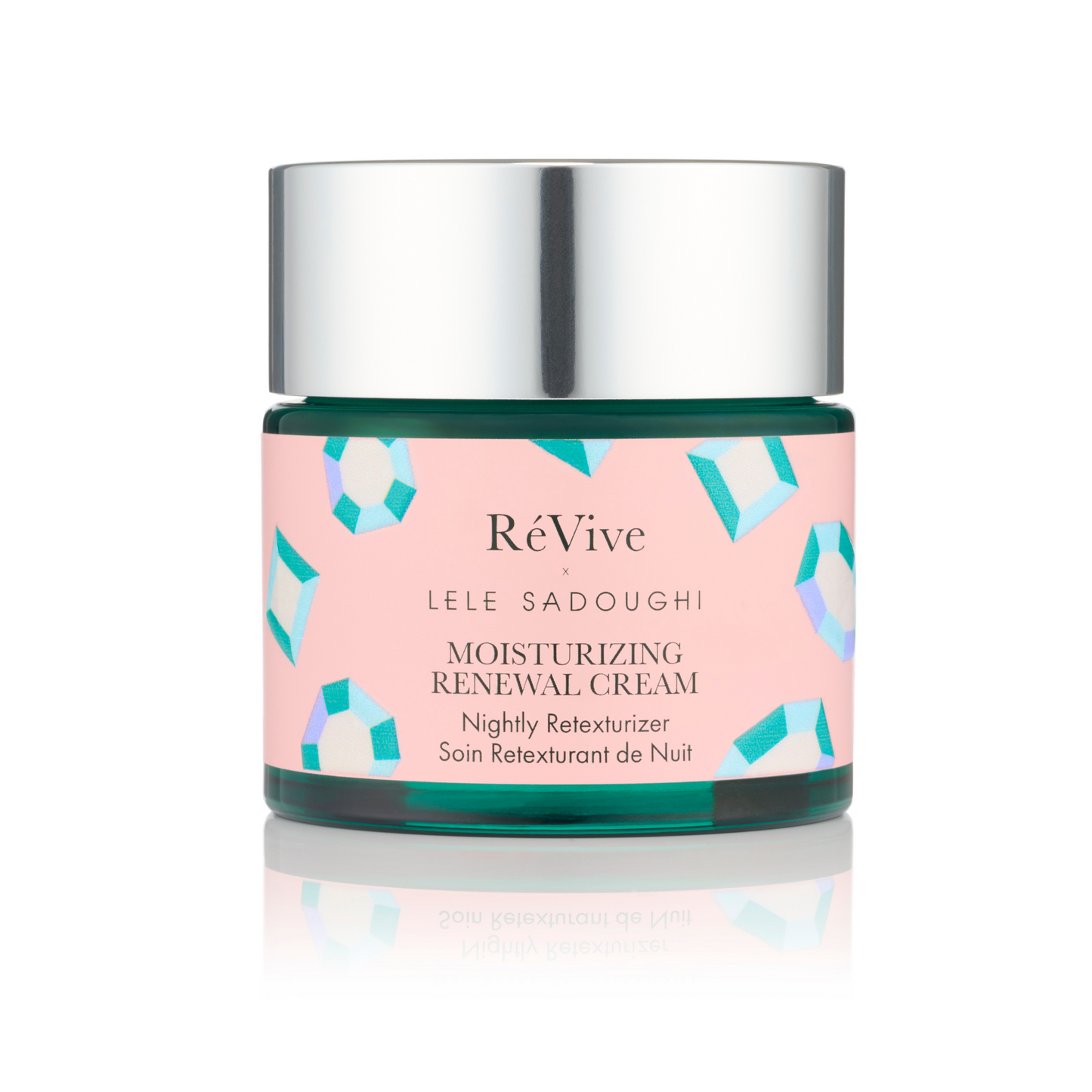
RéVive x Lele Sadoughi Moisturizing Renewal Cream ArtJar

RéVive x Lele Sadoughi Moisturizing Renewal Cream ArtJar
RéVive
revive-x-lele-sadoughi-moisturizing-renewal-cream-artjar
Moisturize
9643610800421
Morning or Evening?
How often will you use this product?
Notes


Highlights
WHAT IS IT?
Night cream moisturizer with multiple ingredients
FEATURES
Limited edition, Value size, Gently exfoliates, Smooths, and Moisturizes skin
BEST FOR
Not specified, likely suitable for multiple skin types
CHECKS
Does not contain information provided
Who Is It For?
Adults (default Above 18) Both Women And MenWhat Does It Help With?
Exfoliation Smoothing MoisturizingBudget
PremiumHow To Use
Which routine should it be used in?
Instructions:
Key Information

What RéVive Says
Product Description:
A gift that's brilliant by design. RéVive's annual limited edition, value size ArtJar is brought to you in collaboration with Lele Sadoughi, a NYC and Dallas-based designer and founder of her namesake brand. Lele Sadoughi is renowned for her cult-favorite accessories, including headbands, hats, and jewelry adored by celebrities.
About the Brand:
Ingredients Overview
Ingredients List
Aqua (Water, Eau), Diisopropyl Dimer Dilinoleate, Dicaprylyl Maleate, Glycolic Acid, Cyclopentasiloxane, Glycerin, Helianthus Annuus (Sunflower) Seed Oil, Glyceryl Stearate, Butylene Glycol, Cetyl Alcohol, Cetyl Phosphate, Sodium Hydroxide, Isostearic Acid, Squalane, Sclerotium Gum, Oligopeptide-24, Ascorbyl Palmitate, Tocopheryl Acetate, Glycolipids, Sodium Hyaluronate, Tocopherol, Bisabolol, Allantoin, Sodium PCA, Butyrospermum Parkii (Shea) Butter, Caprylyl Glycol, Persea Gratissima (Avocado) Oil, Dimethicone, Phytosterols, Olea Europaea (Olive) Fruit Oil, Sodium Carbonate, Glycine Soja (Soybean) Oil, Sodium Oleate, Hydrogenated Lecithin, Myristic Acid, Citrus Aurantium Dulcis (Orange) Peel Oil, Sorbitan Oleate, Palmitic Acid, Stearic Acid, Phenoxyethanol, Disodium EDTA, Limonene, Linalool
Key Ingredients
Bio-Renewal Peptide, Glycolic Acid, Shea Butter, Squalane, Bisabolol, Glycolipids
Ingredients Details
Butylene Glycol
Common Name(s): 1,3-butanediol,bg,1,3-butylene glycol
CAS Number: 107-88-0
DESCRIPTION
What It Does: Provides humectant hydration and active ingredient solubilization with excellent skin feel.
Why It's Used: Preferred glycol humectant in premium and k-beauty formulations for superior skin feel vs propylene glycol with equivalent functionality.
How It Works: Two hydroxyl groups at 1,3-positions provide water binding and solvent activity. better tolerated than propylene glycol with minimal sensitization risk. 4-carbon backbone provides slightly greater hydrophobic character enabling dissolution of less polar actives vs pg.
Typically Found In: Toners,essences,serums,k-beauty formulas
TECHNICAL DETAILS
Primary Category: Functional ingredient – glycol humectant
Secondary Functions: Tewl reduction,skin plumping
Application Areas:

Facial Skincare
Body Care
Hair Care

Beard Care
Color Cosmetics (Makeup)
Dietary/Oral Supplements
Typical Concentration Range: 1%–10%
SOURCING & ETHICS
Vegan Status: Yes – synthetic
Halal Status: Yes
Source Notes: Synthetic or naturally derived. excellent aqueous solubility.
SKIN COMPATIBILITY
Irritancy Rating: 1/5 – very low
Comedogenicity Rating: 0/5 – non-comedogenic
Sensitivity Concerns: Non-irritating; suitable for all skin types.
Safe for Sensitive Skin: Yes
SAFETY & COMPATIBILITY
Safety Profile: Excellent safety profile. ewg score: 1.
Works Well With: Ceramides,emollients,occlusives,glycerin,hyaluronic acid
Avoid Combining With: No significant incompatibilities
SCIENTIFIC NOTE
K-beauty's preference for butylene glycol over propylene glycol is driven by two factors: bg's superior skin feel (less tacky than pg's higher viscosity) and its lower sensitization potential (1,3-bg has better spatial distribution of hydroxyl groups that reduces protein interaction vs pg's 1,2-position oh groups).
Last Verified: Cosing database,cir safety assessment
Primary Sources: 2026-03-12
Cetyl Alcohol
Common Name(s): 1-hexadecanol,palmityl alcohol,n-cetyl alcohol
CAS Number: 36653-82-4
DESCRIPTION
What It Does: Provides c16 fatty alcohol emolliency and thickening for well-textured cosmetic emulsions.
Why It's Used: Lighter-textured fatty alcohol alternative to stearyl alcohol for creams and conditioners requiring less heavy emolliency.
How It Works: C16 chain length provides slightly lower melting point (49°c) than stearyl (60°c) giving softer, lighter emulsion texture. forms lamellar networks for thickening and stability. direct skin and hair conditioning via fatty alcohol film.
Typically Found In: Creams,hair conditioners,lotions
TECHNICAL DETAILS
Primary Category: Functional ingredient – fatty alcohol
Secondary Functions: Barrier sealing,softening
Application Areas:
Facial Skincare
Body Care
Hair Care
Beard Care
Color Cosmetics (Makeup)
Dietary/Oral Supplements
Typical Concentration Range: 1%–15%
SOURCING & ETHICS
Vegan Status: Yes – from vegetable or coconut/palm fatty acids
Halal Status: Yes
Source Notes: Plant-derived, synthetic or animal-derived. verify source.
SKIN COMPATIBILITY
Irritancy Rating: 1/5 – very low
Comedogenicity Rating: 1/5 – low; formulation-dependent
Sensitivity Concerns: Non-irritating.
Safe for Sensitive Skin: Yes
SAFETY & COMPATIBILITY
Safety Profile: Excellent safety profile. ewg score: 1.
Works Well With: Humectants,ceramides,actives as carrier
Avoid Combining With: No significant incompatibilities
SCIENTIFIC NOTE
Cetyl alcohol's c16 chain length is at the approximate thermal transition point for fatty alcohol lamellar crystallization at skin temperature (33°c). this transition (from ordered crystalline to disordered liquid phase near skin temperature) provides the characteristic 'melts on application' sensory profile that makes cetyl alcohol-containing products feel cooling and light on initial application.
Last Verified: Cosing database,cir safety assessment
Primary Sources: 2026-03-12
Cyclopentasiloxane
Common Name(s): Cyclopentasiloxane,cyclic volatile silicone,dry-touch carrier solvent
CAS Number: N/a
DESCRIPTION
What It Does: Provides a dry, weightless application vehicle that evaporates cleanly leaving actives and non-volatile silicones deposited on skin — eliminating the residual heaviness of conventional liquid carrier solvents.
Why It's Used: Cyclosiloxanes are the unique volatile silicone solvents that dissolve non-volatile silicones (dimethicone, cyclomethicone), organic uv filters, and lipophilic actives, providing the sensory-superior dry-touch application experience in premium formulations.
How It Works: Cyclosiloxane vapour pressure (d5 cyclopentasiloxane ~0.3 mmhg at 25°c) provides clean evaporation at body temperature. the cyclic ring structure provides lower boiling point than equivalent linear dimethicone, enabling faster evaporation while the ring conformation maintains the silicone's low surface energy for smooth application.
Typically Found In: Primers,antiperspirants,sunscreens
TECHNICAL DETAILS
Primary Category: Functional ingredient – emollient
Secondary Functions: Barrier sealing,softening
Application Areas:
Facial Skincare
Body Care
Hair Care
Beard Care
Color Cosmetics (Makeup)
Dietary/Oral Supplements
Typical Concentration Range: 1%–50%
SOURCING & ETHICS
Vegan Status: Yes
Halal Status: Yes
Source Notes: Plant-derived, synthetic or animal-derived. verify source.
SKIN COMPATIBILITY
Irritancy Rating: 1/5 – very low
Comedogenicity Rating: 1/5 – low; formulation-dependent
Sensitivity Concerns: Non-irritating.
Safe for Sensitive Skin: Yes
SAFETY & COMPATIBILITY
Safety Profile: Excellent safety profile. ewg score: 1.
Works Well With: Humectants,ceramides,actives as carrier
Avoid Combining With: No significant incompatibilities
SCIENTIFIC NOTE
Cyclopentasiloxane (d5) and cyclohexasiloxane (d6) are under eu regulatory review for potential environmental persistence (pbt assessment) — formulators should monitor eu regulation 2018/35 implementation for restrictions in wash-off products.
Last Verified: Cosing database,eu cyclosiloxane regulatory review
Primary Sources: 2026-03-12
Dicaprylyl Maleate
Common Name(s): Dicaprylyl maleate
DESCRIPTION
What It Does: Smooths and softens skin by filling intercorneocyte spaces, reducing friction, and providing a pleasant aesthetic skin feel in formulations.
Why It's Used: Synthetic esters provide tailored aesthetic properties — spreadability, skin feel, volatility, refractive index — that natural oils alone cannot consistently deliver.
How It Works: The ester molecule fills microscopic surface irregularities between corneocytes, reducing coefficient of friction, reflecting light uniformly, and providing a lubrication layer that protects the skin surface.
Typically Found In: Moisturizers,sunscreens,color cosmetics,body lotions,lip products
TECHNICAL DETAILS
Primary Category: Synthetic emollients
Secondary Functions: Emollient
Application Areas:
Facial Skincare
Body Care
Hair Care
Beard Care
Color Cosmetics (Makeup)
Dietary/Oral Supplements
Typical Concentration Range: 1–20%
SOURCING & ETHICS
Vegan Status: Yes
Halal Status: Yes
Source Notes: Synthetically produced ester emollient; no animal components.
SKIN COMPATIBILITY
Irritancy Rating: 1
Comedogenicity Rating: 1
Sensitivity Concerns: Low sensitization potential at recommended use concentrations.
Safe for Sensitive Skin: Yes
SAFETY & COMPATIBILITY
Safety Profile: Well-characterized cosmetic ingredient with established safety profile. generally non-irritating at typical use concentrations. suitable for leave-on and rinse-off cosmetics.
Works Well With: Silicones,uv filters,other emollients
Avoid Combining With: Strongly alkaline conditions (risk of saponification of ester-type emollients)
SCIENTIFIC NOTE
The spreading coefficient of an emollient is governed by its surface tension, viscosity, and polarity. esters with branched alkyl chains (e.g., isopropyl, isostearyl) spread rapidly and leave a non-tacky film; linear long-chain esters provide more substantive moisturization. hlb value determines the preferred formulation system (w/o vs o/w emulsions).
Last Verified: Cosing eu database; pcpc cosmetic ingredient safety reviews; ingredient-specific safety and efficacy literature
Primary Sources: 2025-01-15
