
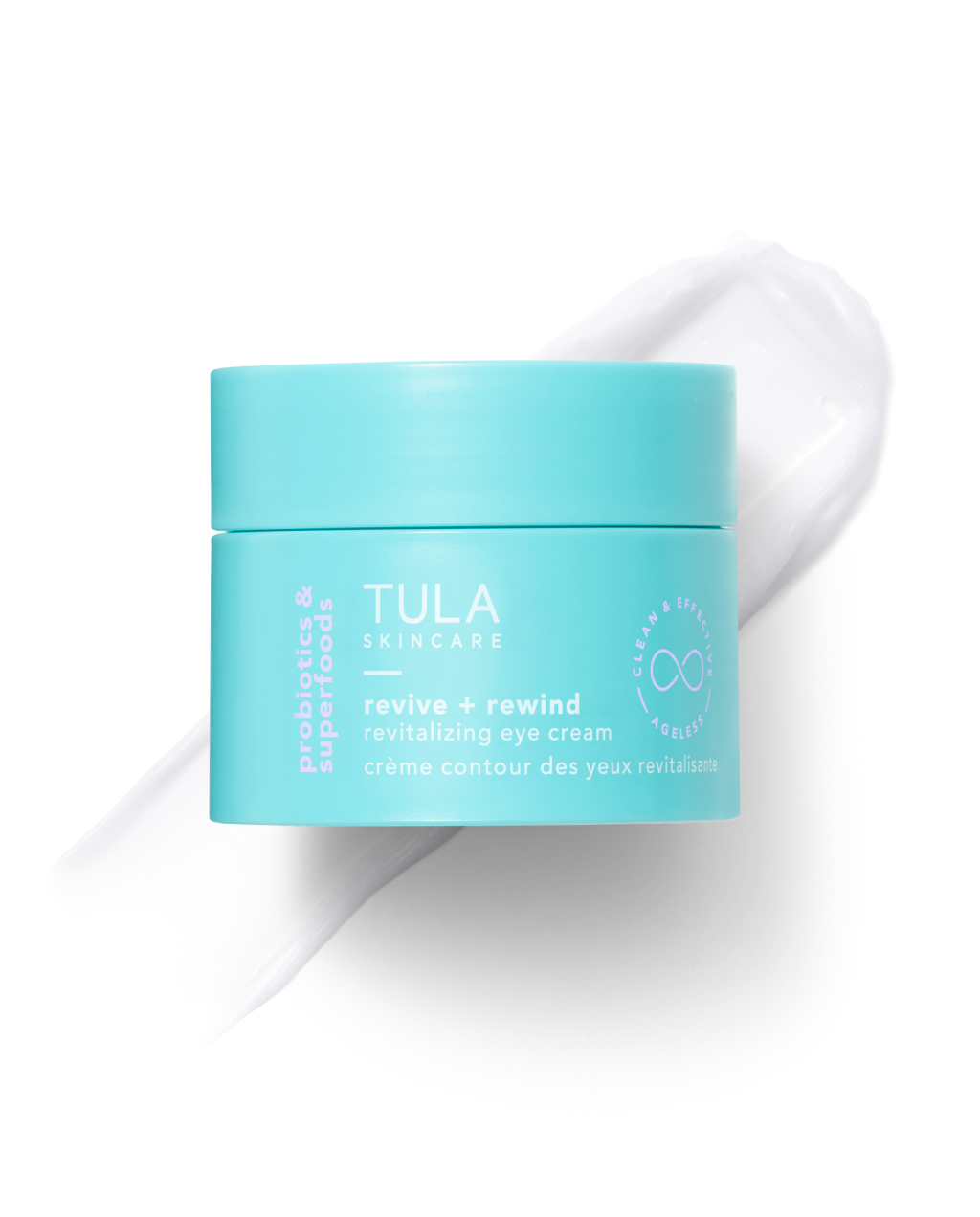

TULA
Revive + Rewind

Revive + Rewind
TULA
revive-rewind
Eyecare
9818386006309
Morning or Evening?
How often will you use this product?
Notes


Highlights
WHAT IS IT?
Eye cream with peptides and probiotic extracts
FEATURES
Reduces appearance of wrinkles, Improves firmness and elasticity, Hydrates and nourishes delicate eye area
BEST FOR
normal
CHECKS
Free of alcohol
Who Is It For?
Adults Concerned With Aging Around Eye AreaWhat Does It Help With?
Wrinkles Firmness Elasticity Hydration Around EyesBudget
Mid-range ($30-$75)How To Use
Which routine should it be used in?
Instructions:
Key Information


What TULA Says
Product Description:
The do-it-all eye cream that works as hard as you do. This nourishing eye cream reduces the appearance of wrinkles & improves the look of firmness & elasticity around the delicate eye area.
About the Brand:
Ingredients Overview
Ingredients List
Aqua/Water/Eau, Squalane, Butylene Glycol, Cetyl Alcohol, Hydrogenated Vegetable Oil, PEG-8 Dimethicone, Vitis Vinifera (Grape) Seed Oil, Butyrospermum Parkii (Shea) Butter, Glyceryl Stearate, PEG-100 Stearate, C12-15 Alkyl Benzoate, Glycerin, Simmondsia Chinensis (Jojoba) Seed Oil, Lactose, Bifida Ferment Lysate, Yogurt Powder, Hydrolyzed Rice Protein, Cichorium Intybus (Chicory) Root Extract, Curcuma Longa (Turmeric) Root Extract, Vaccinium Angustifolium (Blueberry) Fruit Extract, Olus Oil/Vegetable Oil/Huile végétale, Camelina Sativa Seed Oil, Camellia Sinensis Leaf Extract, Tocopheryl Acetate, Ascorbyl Palmitate, Lactic Acid, Lactis proteinum/Milk Protein/Protéine du lait, Carthamus Tinctorius (Safflower) Seed Oil, Carbomer, Tribehenin, Ceramide NG, PEG-10 Phytosterol, Palmitoyl Hexapeptide-12, Ethylhexylglycerin, Inulin, Sodium Hydroxide, Citric Acid, Trisodium Ethylenediamine Disuccinate, Caprylyl Glycol, Sorbic Acid, Stearyl Alcohol, Phenethyl Alcohol, Pentylene Glycol, Phenoxyethanol, Fragrance (Parfum), Alpha-Isomethyl Ionone, Benzyl Benzoate, Linalyl Acetate
Key Ingredients
olive squalane, probiotic extracts, peptides
Ingredients Details
Olive Squalane
Common Name(s): Olive squalane,phytosqualane,certified plant squalane
CAS Number: 0111-01-03
DESCRIPTION
What It Does: Provides certified olive-origin skin-identical hydrocarbon emolliency with highest natural credentials.
Why It's Used: Premium credentialled squalane — olive squalane provides the most prestigious and verifiable squalane provenance from traditional mediterranean olive heritage, essential for brands requiring the highest supply chain transparency and natural origin documentation.
How It Works: Identical molecular formula to other plant squalane (c30h62) — chemically indistinguishable. origin verified via carbon-14 isotope analysis or supply chain documentation. extracted from olive oil deodoriser distillate then hydrogenated. traditional mediterranean sourcing from certified olive mills.
Typically Found In: Premium mediterranean skincare,certified natural products,verified sustainable beauty
TECHNICAL DETAILS
Primary Category: Functional ingredient – emollient
Secondary Functions: Barrier sealing,softening
Application Areas:

Facial Skincare
Body Care
Hair Care

Beard Care
Color Cosmetics (Makeup)
Dietary/Oral Supplements
Typical Concentration Range: 1%–100%
SOURCING & ETHICS
Vegan Status: Conditional - feedstock declaration required
Halal Status: Unverified - feedstock declaration required (plant, animal and petrochemical routes all exist)
Source Notes: Plant-derived, synthetic or animal-derived. verify source. [audit 2026-07-29 rev2: origin-dependent: the same inci exists in plant, animal and petrochemical versions and the name does not discriminate. determination requires shariah-panel sign-off.]
SKIN COMPATIBILITY
Irritancy Rating: 2026-01-05 00:00:00 -0800
Comedogenicity Rating: 0/5
Sensitivity Concerns: Non-irritating.
Safe for Sensitive Skin: Yes
SAFETY & COMPATIBILITY
Safety Profile: Excellent safety profile. ewg score: 1.
Works Well With: Humectants,ceramides,actives as carrier
Avoid Combining With: No significant incompatibilities
SCIENTIFIC NOTE
Olive squalane's origin verification via carbon-14 isotope dating (plant carbon has different ¹⁴c signature than petrochemical carbon which has no ¹⁴c from being geologically old) provides scientific authenticity validation — an absolute verification method distinguishing genuine plant-derived from petroleum-derived squalane that cannot be falsified by adulteration.
Last Verified: 2026-03-12
Primary Sources: Cosing database,cir safety assessment
Peptides
Common Name(s): Peptides,functional category descriptor,skin care
CAS Number: N/a
DESCRIPTION
What It Does: Provides the functional class benefits described by the 'peptides' category — specific activity depends on the precise ingredient within this functional class.
Why It's Used: Used as a category label when listing ingredient classes rather than specific inci names — relevant for consumer-facing communication and ingredient disclosure frameworks.
How It Works: Activity depends on specific ingredient within the category; the category designation indicates the broad functional mechanism shared by all members of the group.
Typically Found In: Consumer communication,ingredient disclosure
TECHNICAL DETAILS
Primary Category: Active ingredient – cosmetic active
Secondary Functions: Skin conditioning
Application Areas:
Facial Skincare
Body Care
Hair Care
Beard Care
Color Cosmetics (Makeup)
Dietary/Oral Supplements
Typical Concentration Range: Varies
SOURCING & ETHICS
Vegan Status: Conditional - supplier confirmation required
Halal Status: Unverified - supplier confirmation required
Source Notes: Commercially produced for cosmetic use. verify vegan/halal status with supplier. [audit 2026-07-29 rev2: the record's own source_notes does not assert a non-animal origin, or instructs the reader to verify with the supplier; "yes" asserts knowledge the record does not hold. determination requires shariah-panel sign-off.]
SKIN COMPATIBILITY
Irritancy Rating: 1/5 – very low
Comedogenicity Rating: 0/5 – non-comedogenic
Sensitivity Concerns: Well-tolerated by most skin types.
Safe for Sensitive Skin: Yes
SAFETY & COMPATIBILITY
Safety Profile: Good safety profile at recommended concentrations. ewg score: 1–2.
Works Well With: Standard skincare actives
Avoid Combining With: No known significant incompatibilities
SCIENTIFIC NOTE
Peptides as a category encompasses multiple specific inci ingredients each with individual safety and efficacy profiles; see individual ingredient entries for specific mechanistic detail.
Last Verified: 2026-03-12
Primary Sources: Cosing database,functional category descriptor