

Clinique
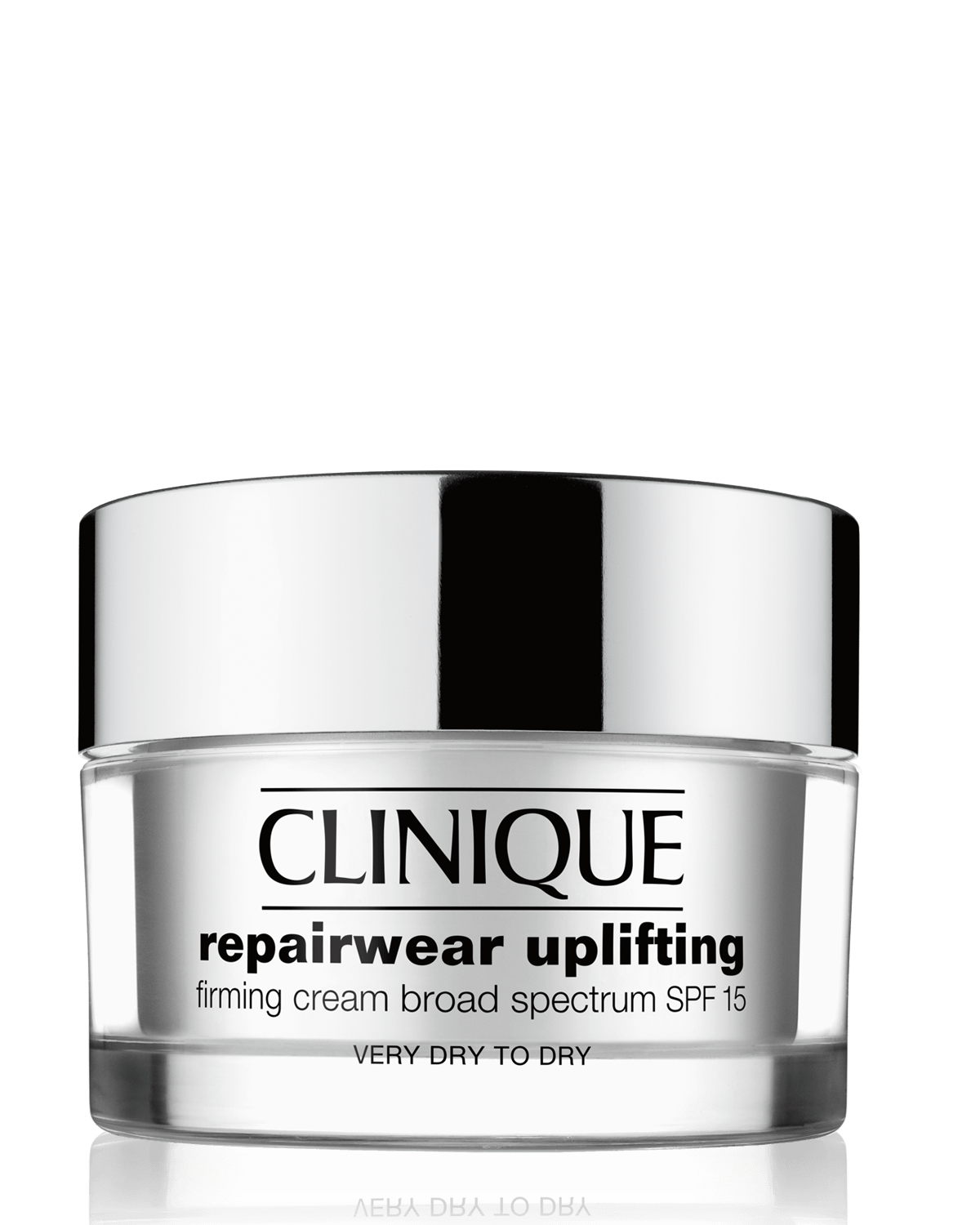
Repairwear Uplifting Firming Cream Broad Spectrum SPF 15

Repairwear Uplifting Firming Cream Broad Spectrum SPF 15
Clinique
repairwear-uplifting-firming-cream-broad-spectrum-spf-15
Moisturize
9784800248101
Morning or Evening?
How often will you use this product?
Notes


Highlights
WHAT IS IT?
Moisturizing cream with SPF 15
FEATURES
Helps visibly tighten, lift, and firm the face and neck, Provides SPF protection
BEST FOR
dry
CHECKS
Free of Fragrance, Parabens, Phthalates, essential oil
Who Is It For?
Adult WomenWhat Does It Help With?
Firming Lifting Sun ProtectionBudget
Premium ($76-$150)How To Use
Which routine should it be used in?
Instructions:
Key Information


What Clinique Says
Product Description:
Light yet rich moisturizing cream helps visibly tighten, lift, and firm the face and neck. Protects with SPF.
About the Brand:
Ingredients Overview
Ingredients List
Water\Aqua\Eau, Ethylhexyl Methoxycinnamate, Simmondsia Chinensis (Jojoba) Butter, Ethylhexyl Salicylate, Petrolatum, Polyethylene, Glycerin, Octyldodecyl Neopentanoate, Di-C12-15 Alkyl Fumarate, Titanium Dioxide, Dimethicone, Hydrogenated Lecithin, Butylene Glycol, Hydrogenated Polyisobutene, Hexyldecyl Stearate, Glyceryl Stearate, Pentylene Glycol, Potato Starch Modified, Sigesbeckia Orientalis (St. Paul'S Wort) Extract, Salvia Sclarea (Clary) Extract, Chlorella Vulgaris Extract, Commiphora Mukul Resin Extract, Litchi Chinensis Seed Extract, Laminaria Digitata Extract, Plankton Extract, Cladosiphon Okamuranus Extract, Whey Protein\Lactis Protein\Proteine Du Petit-Lait, Astrocaryum Murumuru Seed Butter, Sorbitol, Caffeine, Cholesterol, Lecithin, Acetyl Hexapeptide-8, Sodium Hyaluronate, Peg-100 Stearate, Pentaerythrityl Tetraethylhexanoate, Behenyl Alcohol, Tocopheryl Acetate, Caprylyl Glycol, C12-16 Alcohols, Silica, Dimethicone Silylate, Caprylic/Capric Triglyceride, Ergothioneine, Polysilicone-11, Dextrin, Palmitic Acid, Ammonium Acryloyldimethyltaurate/Vp Copolymer, Tetrahexyldecyl Ascorbate, Hexylene Glycol, Citric Acid, Potassium Sorbate, Xanthan Gum, Sodium Hydroxide, Disodium Edta, Phenoxyethanol, Red 4 (Ci 14700), Yellow 5 (Ci 19140), Titanium Dioxide (Ci 77891), Mica
Key Ingredients
Tocopheryl Acetate, Caffeine, Tetrahexyldecyl Ascorbate, Ergothioneine, Whey Protein\Lactis Protein\Protéine Du Petit-Lait, Acetyl Hexapeptide-8, Tetrahexyldecyl Ascorbate, Glycerin, Cholesterol, Sodium Hyaluronate, Salvia Sclarea (Clary) Extract, Octinoxate (7.5%), Octisalate (3.5%), Titanium Dioxide (1.7%)
Ingredients Details
Di-c12-15 Alkyl Fumarate
Common Name(s): Emollient wm,c12-15 alkyl fumarate
CAS Number: N/a
DESCRIPTION
What It Does: Provides silky non-tacky emolliency with excellent silicone and uv filter compatibility.
Why It's Used: Silicone-compatible ester emollient for premium gel and anhydrous formulations where silicone-like aesthetics are desired from a non-silicone ingredient.
How It Works: Fumarate diester provides silicone-like skin feel from low surface tension. excellent compatibility with cyclomethicone, dimethicone, and cyclopentasiloxane for hybrid silicone-ester formulations. non-tacky from low molecular weight. compatible with uv filters reducing white cast.
Typically Found In: Gel formulations,silicone-ester hybrid products,sunscreens
TECHNICAL DETAILS
Primary Category: Functional ingredient – fumarate ester emollient
Secondary Functions: Barrier sealing,softening
Application Areas:

Facial Skincare
Body Care
Hair Care

Beard Care
Color Cosmetics (Makeup)
Dietary/Oral Supplements
Typical Concentration Range: 1%–20%
SOURCING & ETHICS
Vegan Status: Yes – synthetic
Halal Status: Yes
Source Notes: Plant-derived, synthetic or animal-derived. verify source.
SKIN COMPATIBILITY
Irritancy Rating: 1/5 – very low
Comedogenicity Rating: 1/5 – low; formulation-dependent
Sensitivity Concerns: Non-irritating.
Safe for Sensitive Skin: Yes
SAFETY & COMPATIBILITY
Safety Profile: Excellent safety profile. ewg score: 1.
Works Well With: Humectants,ceramides,actives as carrier
Avoid Combining With: No significant incompatibilities
SCIENTIFIC NOTE
Di-c12-15 alkyl fumarate's silicone-like skin feel despite being a hydrocarbon ester arises from the trans-fumarate geometry: the rigid trans double bond in the fumarate backbone provides a specific molecular shape that interacts with skin surface proteins and lipids to reduce friction in a way similar to pdms's siloxane chain flexibility, providing the characteristic silky application feel without silicone chemistry.
Last Verified: Cosing database,cir safety assessment
Primary Sources: 2026-03-12
Ethylhexyl Methoxycinnamate
Common Name(s): Ethylhexyl methoxycinnamate,organic uv filter,photostabilising sunscreen active
CAS Number: N/a
DESCRIPTION
What It Does: Absorbs uv radiation at specific wavelengths (uva 320–400 nm, uvb 290–320 nm) and dissipates photon energy as heat rather than skin-damaging photochemical reactions.
Why It's Used: Organic uv filters are chosen for their high molar extinction coefficient, specific spectral coverage, and formulation compatibility — individual filters are combined to provide broad-spectrum coverage across uva+uvb.
How It Works: Uv photon absorption by the aromatic chromophore π-system excites the molecule from s₀ ground state to s₁ excited state. rapid internal conversion or photoisomerisation dissipates energy as vibrational heat before it can initiate skin photodamage.
Typically Found In: Sunscreens,photoprotective products
TECHNICAL DETAILS
Primary Category: Active ingredient – cosmetic active
Secondary Functions: Skin conditioning
Application Areas:
Facial Skincare
Body Care
Hair Care
Beard Care
Color Cosmetics (Makeup)
Dietary/Oral Supplements
Typical Concentration Range: Check local sunscreen regulations
SOURCING & ETHICS
Vegan Status: Yes
Halal Status: Yes
Source Notes: Commercially produced for cosmetic use. verify vegan/halal status with supplier.
SKIN COMPATIBILITY
Irritancy Rating: 1/5 – very low
Comedogenicity Rating: 0/5 – non-comedogenic
Sensitivity Concerns: Well-tolerated by most skin types.
Safe for Sensitive Skin: Yes
SAFETY & COMPATIBILITY
Safety Profile: Good safety profile at recommended concentrations. ewg score: 1–2.
Works Well With: Standard skincare actives
Avoid Combining With: No known significant incompatibilities
SCIENTIFIC NOTE
Organic uv filters require photostabilisation (by avobenzone-octocrylene pairing, or triazine stabilisers) as some absorbers degrade on uv exposure — formulator must verify photostability of the chosen filter combination.
Last Verified: Cosing database,ethylhexyl methoxycinnamate organic uv filter review
Primary Sources: 2026-03-12
Ethylhexyl Salicylate
Common Name(s): Ethylhexyl salicylate,organic uv filter,photostabilising sunscreen active
CAS Number: N/a
DESCRIPTION
What It Does: Absorbs uv radiation at specific wavelengths (uva 320–400 nm, uvb 290–320 nm) and dissipates photon energy as heat rather than skin-damaging photochemical reactions.
Why It's Used: Organic uv filters are chosen for their high molar extinction coefficient, specific spectral coverage, and formulation compatibility — individual filters are combined to provide broad-spectrum coverage across uva+uvb.
How It Works: Uv photon absorption by the aromatic chromophore π-system excites the molecule from s₀ ground state to s₁ excited state. rapid internal conversion or photoisomerisation dissipates energy as vibrational heat before it can initiate skin photodamage.
Typically Found In: Sunscreens,photoprotective products
TECHNICAL DETAILS
Primary Category: Active ingredient – cosmetic active
Secondary Functions: Skin conditioning
Application Areas:
Facial Skincare
Body Care
Hair Care
Beard Care
Color Cosmetics (Makeup)
Dietary/Oral Supplements
Typical Concentration Range: Check local sunscreen regulations
SOURCING & ETHICS
Vegan Status: Yes
Halal Status: Yes
Source Notes: Commercially produced for cosmetic use. verify vegan/halal status with supplier.
SKIN COMPATIBILITY
Irritancy Rating: 1/5 – very low
Comedogenicity Rating: 0/5 – non-comedogenic
Sensitivity Concerns: Well-tolerated by most skin types.
Safe for Sensitive Skin: Yes
SAFETY & COMPATIBILITY
Safety Profile: Good safety profile at recommended concentrations. ewg score: 1–2.
Works Well With: Standard skincare actives
Avoid Combining With: No known significant incompatibilities
SCIENTIFIC NOTE
Organic uv filters require photostabilisation (by avobenzone-octocrylene pairing, or triazine stabilisers) as some absorbers degrade on uv exposure — formulator must verify photostability of the chosen filter combination.
Last Verified: Cosing database,ethylhexyl salicylate organic uv filter review
Primary Sources: 2026-03-12
Glycerin
Common Name(s): Glycerol,glycerine,1,2,3-propanetriol
CAS Number: 56-81-5
DESCRIPTION
What It Does: Glycerin pulls water from the environment and deeper skin layers into the outer skin layer (epidermis), boosting moisture levels and keeping skin soft, smooth, and plump.
Why It's Used: It is used in virtually every moisturizer, serum, and cleanser because it is highly effective at hydrating skin, is well-tolerated by all skin types, and enhances the texture and spreadability of formulations.
How It Works: As a humectant, glycerin forms hydrogen bonds with water molecules, trapping them in the skin. it also reinforces the skin barrier by integrating into lipid structures between skin cells.
Typically Found In: Moisturizers,serums,cleansers,toners,sheet masks,sunscreens,body lotions,shampoos,conditioners
TECHNICAL DETAILS
Primary Category: Humectant
Secondary Functions: Skin barrier support,emollient,solvent
Application Areas:
Facial Skincare
Body Care
Hair Care
Beard Care
Color Cosmetics (Makeup)
Dietary/Oral Supplements
Typical Concentration Range: 1%–30% (typical: 3–10%)
SOURCING & ETHICS
Vegan Status: Yes – plant-derived (coconut, soy, palm) or synthetic
Halal Status: Yes – when plant-derived or synthetic; verify source with supplier
Source Notes: Derived from plant oils via hydrolysis or saponification; synthetic versions also available. palm-derived glycerin carries sustainability concerns.
SKIN COMPATIBILITY
Irritancy Rating: 1/5 – very low; non-irritating at all standard concentrations
Comedogenicity Rating: 0/5 – non-comedogenic
Sensitivity Concerns: Extremely rare allergic reactions; generally safe for all skin types including sensitive and baby skin
Safe for Sensitive Skin: Yes
SAFETY & COMPATIBILITY
Safety Profile: Widely recognized as safe. ewg hazard score: 1. no significant concerns for irritation, sensitization, or toxicity at typical concentrations (up to 50%).
Works Well With: Hyaluronic acid,ceramides,niacinamide,panthenol,urea,peptides,retinol,ahas/bhas
Avoid Combining With: No known incompatibilities at standard concentrations
SCIENTIFIC NOTE
Glycerin is an endogenous skin component found naturally in the stratum corneum. aquaporin-3 channels in keratinocytes facilitate glycerin transport, making it integral to natural skin hydration pathways.
Last Verified: Cosing database,cir safety assessment,ewg skin deep,inci decoder
Primary Sources: 2026-03-12
