
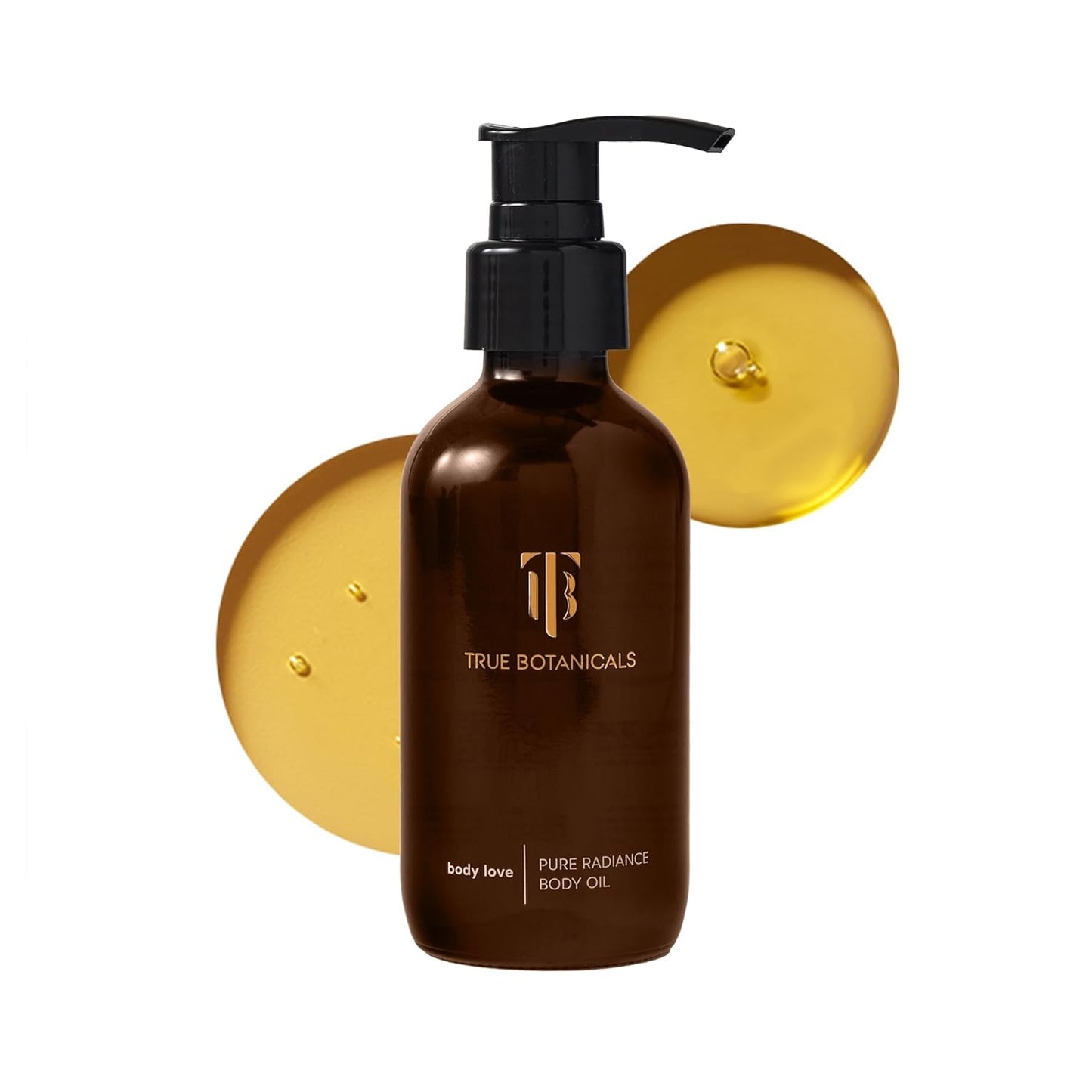

True Botanicals
Renew Pure Radiance Oil

Renew Pure Radiance Oil
True Botanicals
renew-pure-radiance-oil
Face Oil
9628149547301
Morning or Evening?
How often will you use this product?
Notes


Highlights
WHAT IS IT?
Face oil with multiple seed oils and plant extracts
FEATURES
Clinically proven to reduce appearance of fine lines and wrinkles, increase hydration levels
BEST FOR
Normal to dry skin
CHECKS
Free of sulfates, phthalates, parabens, petrochemicals, mineral oil, silicone and talc, synthetic fragrances, gluten
Who Is It For?
Adults Both Women And MenWhat Does It Help With?
Signs Of Aging Fine Lines Wrinkles HydrationBudget
PremiumHow To Use
Which routine should it be used in?
Instructions:
Key Information


What True Botanicals Says
Product Description:
Our best-selling face oil that helps target signs of aging and is clinically proven to outperform a leading anti-aging moisturizer.
About the Brand:
Ingredients Overview
Ingredients List
camellia oleifera (camellia) seed oil, vitis vinifera (grape) seed oil, persea gratissima (avocado) oil, sclerocarya birrea (marula) seed oil, cannabis sativa (hemp) seed oil, salvia hispanica (chia) seed oil, citrullus lanatus (watermelon) seed oil, borago officinalis (borage) seed oil, rosa rubiginosa (rosehip) seed oil, rubus idaeus (raspberry) seed oil, oenothera biennis (evening primrose) oil, argania spinosa (argan) kernel oil, squalane, carica papaya (papaya) seed oil, actinidia chinensis (kiwi) seed oil, passiflora incarnata (passion fruit) seed oil, passiflora edulis seed oil, olea europaea (olive) fruit oil, silybum marianum (milk thistle) seed oil, cinnamomum camphora (camphor) leaf extract, boswellia carterii (frankincense) oil, citrus aurantium amara (bitter orange) leaf/twig extract, tocopherol, vetiveria zizanoides (vetiver) root oil, rosa damascena (rose) flower oil, jasminum officinale (jasmine) oil, abies sibirica (fir) oil, haematococcus pluvialis (astaxanthin) extract, nannochloropsis oculata (algae) extract, pinus densiflora (red pine) extract, porphyra umbilicalis (red algae) extract, rosmarinus officinalis (rosemary) extract, linalool, citronellol, geraniol, farnesol, benzyl alcohol, citral, eugenol, benzyl benzoate, limonene
Key Ingredients
Camellia seed oil, Grape seed oil, Avocado oil, Marula seed oil, Hemp seed oil, Chia seed oil, Watermelon seed oil, Astaxanthin extract, Algae extract
Ingredients Details
Borago Officinalis Borage Seed Oil
Common Name(s): Borago officinalis borage seed oil oil
DESCRIPTION
What It Does: Nourishes and softens skin through its balanced fatty acid profile, while antioxidant compounds protect against oxidative skin damage.
Why It's Used: Plant oils provide physiologically compatible lipid structures that integrate into the skin barrier and deliver fat-soluble antioxidants directly to skin cells.
How It Works: Fatty acids integrate into stratum corneum lipid lamellae, reinforcing the lipid barrier. antioxidants (tocopherols, carotenoids, polyphenols) neutralize ros through electron donation or singlet oxygen quenching.
Typically Found In: Face oils,serums,moisturizers,hair treatments,body oils
TECHNICAL DETAILS
Primary Category: Plant oils
Secondary Functions: Emollient,antioxidant
Application Areas:

Facial Skincare
Body Care
Hair Care

Beard Care
Color Cosmetics (Makeup)
Dietary/Oral Supplements
Typical Concentration Range: 0.5–30%
SOURCING & ETHICS
Vegan Status: Yes
Halal Status: Yes
Source Notes: Cold-pressed or solvent-extracted plant oil; no animal components.
SKIN COMPATIBILITY
Irritancy Rating: 1899-12-31 00:00:00 -0800
Comedogenicity Rating: 2000-01-01 00:00:00 -0800
Sensitivity Concerns: Low sensitization potential at recommended use concentrations.
Safe for Sensitive Skin: Yes
SAFETY & COMPATIBILITY
Safety Profile: Well-characterized cosmetic ingredient with established safety profile. generally non-irritating at typical use concentrations. suitable for leave-on and rinse-off cosmetics.
Works Well With: Vitamin e,ceramides,other plant oils,squalane
Avoid Combining With: Strong oxidizers (accelerate rancidity)
SCIENTIFIC NOTE
Vegetable oils are triglyceride matrices where the fatty acid composition determines skin compatibility, barrier function, and comedogenicity. oleic acid-rich oils (>60%) soften barrier lipids and enhance penetration; linoleic acid-rich oils reinforce ceramide-poor stratum corneum; saturated fatty acid-rich oils provide occlusion without skin penetration.
Last Verified: 2025-01-15
Primary Sources: Cosing eu database; pcpc cosmetic ingredient safety reviews; aocs plant oil composition databases; fatty acid pharmacology reviews
Camellia Oleifera Camellia Seed Oil
Common Name(s): Camellia oleifera camellia seed oil oil
DESCRIPTION
What It Does: Nourishes and softens skin through its balanced fatty acid profile, while antioxidant compounds protect against oxidative skin damage.
Why It's Used: Plant oils provide physiologically compatible lipid structures that integrate into the skin barrier and deliver fat-soluble antioxidants directly to skin cells.
How It Works: Fatty acids integrate into stratum corneum lipid lamellae, reinforcing the lipid barrier. antioxidants (tocopherols, carotenoids, polyphenols) neutralize ros through electron donation or singlet oxygen quenching.
Typically Found In: Face oils,serums,moisturizers,hair treatments,body oils
TECHNICAL DETAILS
Primary Category: Plant oils
Secondary Functions: Emollient,antioxidant
Application Areas:
Facial Skincare
Body Care
Hair Care
Beard Care
Color Cosmetics (Makeup)
Dietary/Oral Supplements
Typical Concentration Range: 0.5–30%
SOURCING & ETHICS
Vegan Status: Yes
Halal Status: Yes
Source Notes: Cold-pressed or solvent-extracted plant oil; no animal components.
SKIN COMPATIBILITY
Irritancy Rating: 1899-12-31 00:00:00 -0800
Comedogenicity Rating: 2000-01-01 00:00:00 -0800
Sensitivity Concerns: Low sensitization potential at recommended use concentrations.
Safe for Sensitive Skin: Yes
SAFETY & COMPATIBILITY
Safety Profile: Well-characterized cosmetic ingredient with established safety profile. generally non-irritating at typical use concentrations. suitable for leave-on and rinse-off cosmetics.
Works Well With: Vitamin e,ceramides,other plant oils,squalane
Avoid Combining With: Strong oxidizers (accelerate rancidity)
SCIENTIFIC NOTE
Vegetable oils are triglyceride matrices where the fatty acid composition determines skin compatibility, barrier function, and comedogenicity. oleic acid-rich oils (>60%) soften barrier lipids and enhance penetration; linoleic acid-rich oils reinforce ceramide-poor stratum corneum; saturated fatty acid-rich oils provide occlusion without skin penetration.
Last Verified: 2025-01-15
Primary Sources: Cosing eu database; pcpc cosmetic ingredient safety reviews; aocs plant oil composition databases; fatty acid pharmacology reviews
Cannabis Sativa Hemp Seed Oil
Common Name(s): Cannabis sativa hemp seed oil oil
DESCRIPTION
What It Does: Nourishes and softens skin through its balanced fatty acid profile, while antioxidant compounds protect against oxidative skin damage.
Why It's Used: Plant oils provide physiologically compatible lipid structures that integrate into the skin barrier and deliver fat-soluble antioxidants directly to skin cells.
How It Works: Fatty acids integrate into stratum corneum lipid lamellae, reinforcing the lipid barrier. antioxidants (tocopherols, carotenoids, polyphenols) neutralize ros through electron donation or singlet oxygen quenching.
Typically Found In: Face oils,serums,moisturizers,hair treatments,body oils
TECHNICAL DETAILS
Primary Category: Plant oils
Secondary Functions: Emollient,antioxidant
Application Areas:
Facial Skincare
Body Care
Hair Care
Beard Care
Color Cosmetics (Makeup)
Dietary/Oral Supplements
Typical Concentration Range: 0.5–30%
SOURCING & ETHICS
Vegan Status: Yes
Halal Status: Yes
Source Notes: Cold-pressed or solvent-extracted plant oil; no animal components.
SKIN COMPATIBILITY
Irritancy Rating: 1899-12-31 00:00:00 -0800
Comedogenicity Rating: 2000-01-01 00:00:00 -0800
Sensitivity Concerns: Low sensitization potential at recommended use concentrations.
Safe for Sensitive Skin: Yes
SAFETY & COMPATIBILITY
Safety Profile: Well-characterized cosmetic ingredient with established safety profile. generally non-irritating at typical use concentrations. suitable for leave-on and rinse-off cosmetics.
Works Well With: Vitamin e,ceramides,other plant oils,squalane
Avoid Combining With: Strong oxidizers (accelerate rancidity)
SCIENTIFIC NOTE
Vegetable oils are triglyceride matrices where the fatty acid composition determines skin compatibility, barrier function, and comedogenicity. oleic acid-rich oils (>60%) soften barrier lipids and enhance penetration; linoleic acid-rich oils reinforce ceramide-poor stratum corneum; saturated fatty acid-rich oils provide occlusion without skin penetration.
Last Verified: 2025-01-15
Primary Sources: Cosing eu database; pcpc cosmetic ingredient safety reviews; aocs plant oil composition databases; fatty acid pharmacology reviews
Citrullus Lanatus (watermelon) Seed Oil
Common Name(s): Citrullus lanatus (watermelon) seed oil,botanical oil,phytochemical active
CAS Number: N/a
DESCRIPTION
What It Does: Provides antioxidant protection from reactive oxygen species, reduces inflammatory cytokine production in skin, and conditions skin through the plant's phytochemical complex.
Why It's Used: Natural origin narrative, traditional use heritage, and multi-functional phytochemical profile supporting concurrent skin care claims from one ingredient.
How It Works: Polyphenols, terpenoids, and alkaloids scavenge ros via h• donation, inhibit nf-kb or cox-2 inflammatory pathways, and interact with skin surface proteins for conditioning.
Typically Found In: Botanical skin care,natural products
TECHNICAL DETAILS
Primary Category: Active ingredient – antioxidant
Secondary Functions: Free radical scavenging,anti-aging
Application Areas:
Facial Skincare
Body Care
Hair Care
Beard Care
Color Cosmetics (Makeup)
Dietary/Oral Supplements
Typical Concentration Range: 0.1%–10%
SOURCING & ETHICS
Vegan Status: Conditional - supplier confirmation required
Halal Status: Yes
Source Notes: Plant-derived extract or synthetic. [audit 2026-07-29 rev2: status downgraded on audit. determination requires shariah-panel sign-off.]
SKIN COMPATIBILITY
Irritancy Rating: 1/5 – very low
Comedogenicity Rating: 0/5 – non-comedogenic
Sensitivity Concerns: Non-irritating; well-tolerated.
Safe for Sensitive Skin: Yes
SAFETY & COMPATIBILITY
Safety Profile: Excellent safety profile. ewg score: 1.
Works Well With: Vitamin c,vitamin e,ferulic acid,spf,other antioxidants
Avoid Combining With: No significant incompatibilities
SCIENTIFIC NOTE
Plant secondary metabolites evolved as photoprotectants and antimicrobials — mechanisms directly applicable to cosmetic antioxidant and anti-inflammatory activity in human skin.
Last Verified: 2026-03-12
Primary Sources: Cosing database,citrullus lanatus (watermelon) seed botanical review