

Redken
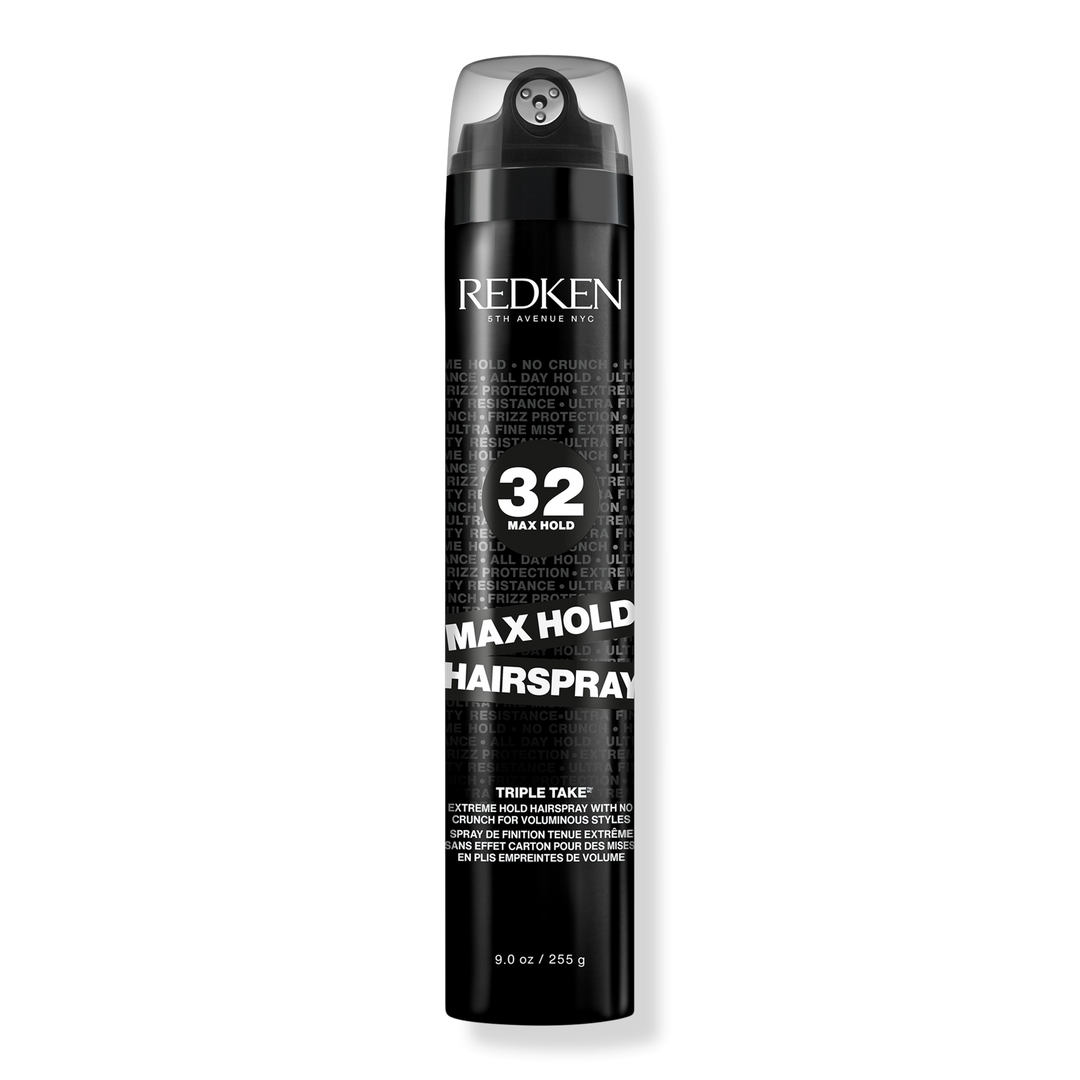
Redken Max Hold Hairspray
Redken Max Hold Hairspray is a maximum hold hairspray that provides long-lasting lift and control without the crunch of a traditional hairspray. This professional product features a super fine, fast-drying mist that leaves hair with touchable results.
Color-safe
Heat Protection
Volume
Anti-Frizz
Frizz
Breakage
Optimized for Your Environment & Lifestyle
Nykaa
In stock
Recommended

Redken Max Hold Hairspray
Redken
redken-max-hold-hairspray
Hairspray
10365005562149
Morning or Evening?
How often will you use this product?
Notes


Secure payment protection
Your Biodata Compatibility Analysis
Based on your 6 hair health indices and environmental factors
Poor Match
Significant incompatibilities
Growth Cycle Health Index
Hair Match
Hair Health Index Alignment
Optimal for OSI, SSI, DI, HSI
Ingredient Efficacy
Matching Ingredient Score
Environment Compatibility
Current UV, Air Quality & Humidity
Why This Works for Your Specific Profile
Damage Index:
Water Quality:
Hair:
Active Lifestyle:
Your Hair Profile Integration
Your Hair Archetype

Density Level

Washing Frequency

Shedding Level

Oil Level
Your Hair Health Indices
Oil Secretion (OSI)
Very low oil production
Scalp Sensitivity (SSI)
Very low sensitivity
Growth Rate (CMR)
Poor metabolism rate
Damage Index (DI)
Minimal damage
Hair Strength (HSI)
Very weak strength
Softness Index (SI)
Significant improvement needed
Water & Environmental Integration

Water:


Expected Results & Timeline
Key Highlights

What is it?
Hairspray with 14 ingredients

Who Is It For
All ages and genders

Budget
$28.00 - $56.00

Timeline
Immediate hold upon application
Why You’ll Love It

What Does It Help With?
Frizz control, Volume, Long-lasting hold

Best for
Frizz

Features
Keeps hair in place, Humidity resistant and offering control for 24 hours, Dry finish and no crunch or residue from this fast-drying spray, Hold without the crunch, Long-lasting root lift and volumizing body, Super fine, fast-drying mist, Lasting, touchable results, Dry finish, Anti-frizz

Checks
Vegan, Sustainable Packaging
Ingredients Overview
Ingredients List
alcohol-denat, hydrofluorocarbon-152a, dimethyl-ether, va/crotonates/vinyl-neodecanoate-copolymer, aqua/water, octylacrylamide/acrylates/butylaminoethyl-methacrylate-copolymer, aminomethyl-propanol, hexyl-cinnamal, benzyl-alcohol, linalool, benzyl-salicylate, hydroxycitronellal, amyl-cinnamal, limonene, citronellol, cinnamyl-alcohol, geraniol, alpha-isomethyl-ionone, eugenol, parfum/fragrance
Key Ingredients
Alcohol Denat., Hydrofluorocarbon 152a, Dimethyl Ether, VA/Crotonates/Vinyl Neodecanoate Copolymer
Ingredients Details
Alcohol Denat.
Common Name(s): Alcohol denat.,denatured ethanol,solvent antimicrobial astringent
CAS Number: N/a
DESCRIPTION
What It Does: Alcohol denat. dissolves oil-soluble and water-soluble cosmetic actives, provides rapid antimicrobial activity at concentrations above 60–70% by denaturing microbial proteins, delivers a refreshing cooling sensation through evaporative cooling on skin, and temporarily enhances the penetration of topical actives by transiently disrupting the stratum corneum lipid bilayer organisation.
Why It's Used: Formulators choose alcohol denat. for its irreplaceable combination of solvent power, antimicrobial activity, and penetration-enhancing properties. no other cosmetic solvent simultaneously provides the cooling sensory experience of alcohol (from evaporative cooling at the skin surface), the immediate antimicrobial activity required for sanitisers (from protein denaturation above 60%), and the transient sc lipid disruption that improves active ingredient delivery (essential in actives-rich toners and essences). for denatured alcohol specifically, denaturing agents (typically 5% isopropanol or bitrex) prevent consumption without affecting cosmetic function.
How It Works: Alcohol denat. works through multiple mechanisms depending on concentration: (1) solvent action — alcohol's hydroxyl group provides hydrogen bonding with water while the short alkyl chain provides interaction with organic solutes, enabling dissolution of both hydrophilic and moderately lipophilic cosmetic actives in a single solvent; (2) antimicrobial — above 60% concentration, ethanol denatures microbial proteins by disrupting non-covalent bonds maintaining protein secondary and tertiary structure — the alcohol molecules intercalate between protein chains, disrupting the hydrophobic interactions and hydrogen bonds that maintain enzyme active site geometry. this non-specific protein denaturation is immediately bactericidal and virucidal with no resistance mechanism possible; (3) sc penetration enhancement — at lower concentrations (5–30%), ethanol transiently fluidises the sc lipid bilayer by intercalating between the ordered lipid lamellae, disrupting the crystal packing and increasing lipid bilayer fluidity. this transient fluidisation increases the diffusion coefficient of co-applied actives through the sc for up to 30 minutes post-application; (4) astringency — alcohol's protein precipitating action at the skin surface contracts superficial proteins, temporarily tightening pores and reducing oiliness.
Typically Found In: Toners,hand sanitisers,actives serums
TECHNICAL DETAILS
Primary Category: Active ingredient – cosmetic active
Secondary Functions: Skin conditioning
Application Areas:

Facial Skincare

Body Care
Hair Care
Beard Care
Color Cosmetics (Makeup)
Dietary/Oral Supplements
Typical Concentration Range: 5%–95%
SOURCING & ETHICS
Vegan Status: Yes
Halal Status: Yes
Source Notes: Commercially produced for cosmetic use. verify vegan/halal status with supplier.
SKIN COMPATIBILITY
Irritancy Rating: 1/5 – very low
Comedogenicity Rating: 0/5 – non-comedogenic
Sensitivity Concerns: Well-tolerated by most skin types.
Safe for Sensitive Skin: Yes
SAFETY & COMPATIBILITY
Safety Profile: Good safety profile at recommended concentrations. ewg score: 1–2.
Works Well With: Standard skincare actives
Avoid Combining With: No known significant incompatibilities
SCIENTIFIC NOTE
Ethanol concentration-dependent antimicrobial efficacy: below 40% — minimal bactericidal effect (insufficient protein denaturation); 40–60% — bacteriostatic, not bactericidal; 60–70% — peak bactericidal efficacy against both enveloped and non-enveloped viruses and vegetative bacteria (optimal water content maintains protein hydration required for denaturation to proceed); 80–90% — remains effective but slightly reduced from decreased water activity; 95–100% — reduced efficacy (insufficient water for protein denaturation). the 70% 'sweet spot' for sanitisers reflects this concentration-efficacy peak, not a formulation convenience.
Last Verified: Cosing database,alcohol denat. ethanol solvent antimicrobial review
Primary Sources: 2026-03-12
Citronellol
Common Name(s): (r)-3,7-dimethyl-6-octen-1-ol,rhodinol
CAS Number: 106-22-9
DESCRIPTION
What It Does: Provides soft, lasting rose-floral fragrance note.
Why It's Used: Essential rose fragrance monoterpene for lasting smooth floral notes in high-quality perfumery and cosmetic fragrances.
How It Works: Allylic alcohol monoterpene provides fixative property in fragrance blends. good skin substantivity for lasting scent. softer, rounder rose note vs geraniol's fresher character. natural in rose otto at 18-34%.
Typically Found In: Rose perfumes,floral fragrances,luxury skincare
TECHNICAL DETAILS
Primary Category: Fragrance component – monoterpene alcohol
Secondary Functions: Skin conditioning
Application Areas:
Facial Skincare
Body Care
Hair Care
Beard Care
Color Cosmetics (Makeup)
Dietary/Oral Supplements
Typical Concentration Range: 0.001%–1%
SOURCING & ETHICS
Vegan Status: Yes – from rose, geranium, citronella oils
Halal Status: Yes
Source Notes: Commercially produced for cosmetic use. verify vegan/halal status with supplier.
SKIN COMPATIBILITY
Irritancy Rating: 1/5 – very low
Comedogenicity Rating: 0/5 – non-comedogenic
Sensitivity Concerns: Well-tolerated by most skin types.
Safe for Sensitive Skin: Yes
SAFETY & COMPATIBILITY
Safety Profile: Eu cosmetics regulation: declared fragrance allergen. ifra guidelines apply.
Works Well With: Standard skincare actives
Avoid Combining With: No known significant incompatibilities
SCIENTIFIC NOTE
Citronellol's r-enantiomer (natural) vs s-enantiomer (synthetic) provide meaningfully different scent character – a remarkable demonstration of chiral scent discrimination by olfactory receptors. the (r) form provides the characteristic rose note while the (s) form has a distinctly different, less pleasant character. this enantiomeric scent difference means that the biological handedness of naturally-sourced vs racemic synthetic citronellol produces perceptibly different fragrance quality.
Last Verified: Cosing database,ifra standards
Primary Sources: 2026-03-12
Dimethyl Ether
Common Name(s): Dimethyl ether,dimethyl ether,dimethyl ether aerosol propellant,spray dispensing gas
CAS Number: N/a
DESCRIPTION
What It Does: Generates the vapour pressure required for aerosol dispensing — the propellant expands on valve opening providing the driving force that atomises the formulation into fine spray droplets for even, controlled application.
Why It's Used: Propellant selection determines aerosol performance characteristics: spray pattern, droplet size, particle distribution, and environmental profile. the propellant balance sets container pressure throughout the product's use life for consistent spray from full to near-empty.
How It Works: Propellant liquefies under pressure inside the container — vapour pressure (~4-10 bar) provides the driving force for spray dispensing. hydrocarbon propellants: vapour pressure from van der waals attraction in liquid phase; hfcs: vapour pressure from f-atom electronic effects on boiling point; co₂/n₂: dissolved compressed gas providing pressure from henry's law equilibrium.
Typically Found In: Aerosol products
TECHNICAL DETAILS
Primary Category: Active ingredient – cosmetic active
Secondary Functions: Skin conditioning
Application Areas:
Facial Skincare
Body Care
Hair Care
Beard Care
Color Cosmetics (Makeup)
Dietary/Oral Supplements
Typical Concentration Range: Functional — sufficient for product pressure
SOURCING & ETHICS
Vegan Status: Yes
Halal Status: Yes
Source Notes: Commercially produced for cosmetic use. verify vegan/halal status with supplier.
SKIN COMPATIBILITY
Irritancy Rating: 1/5 – very low
Comedogenicity Rating: 0/5 – non-comedogenic
Sensitivity Concerns: Well-tolerated by most skin types.
Safe for Sensitive Skin: Yes
SAFETY & COMPATIBILITY
Safety Profile: Good safety profile at recommended concentrations. ewg score: 1–2.
Works Well With: Standard skincare actives
Avoid Combining With: No known significant incompatibilities
SCIENTIFIC NOTE
Verify current eu f-gas regulations for this specific propellant grade.
Last Verified: Eu regulation 75/324/eec aerosol,eu f-gas regulations,dimethyl ether propellant review
Primary Sources: 2026-03-22
Eugenol
Common Name(s): 4-allyl-2-methoxyphenol,clove oil component,caryophyllene companion
CAS Number: 97-53-0
DESCRIPTION
What It Does: Provides warm clove fragrance note with local anaesthetic and antimicrobial properties.
Why It's Used: Natural local anaesthetic fragrance – eugenol provides clove's dual function as both a fragrance compound and a topical anaesthetic used in dentistry for pain relief.
How It Works: Activates trpv1 for local anaesthetic desensitisation (same mechanism as capsaicin but much weaker). inhibits cox and lox for anti-inflammatory activity. membrane disruption for antimicrobial activity. antioxidant via phenolic radical scavenging.
Typically Found In: Spice fragrances,dental products,clove-scented cosmetics
TECHNICAL DETAILS
Primary Category: Fragrance component – phenylpropanoid
Secondary Functions: Skin conditioning
Application Areas:
Facial Skincare
Body Care
Hair Care
Beard Care
Color Cosmetics (Makeup)
Dietary/Oral Supplements
Typical Concentration Range: 0.001%–0.5%
SOURCING & ETHICS
Vegan Status: Yes – from clove essential oil (syzygium aromaticum)
Halal Status: Yes
Source Notes: Commercially produced for cosmetic use. verify vegan/halal status with supplier.
SKIN COMPATIBILITY
Irritancy Rating: 1/5 – very low
Comedogenicity Rating: 0/5 – non-comedogenic
Sensitivity Concerns: Well-tolerated by most skin types.
Safe for Sensitive Skin: Yes
SAFETY & COMPATIBILITY
Safety Profile: Eu cosmetics regulation: declared fragrance allergen. ifra guidelines apply. sensitiser at high concentrations.
Works Well With: Standard skincare actives
Avoid Combining With: No known significant incompatibilities
SCIENTIFIC NOTE
Eugenol's dental anaesthetic use predates modern pharmaceutical dentistry – oil of cloves (primarily eugenol) has been used for toothache relief for centuries. modern dentistry still uses eugenol in zinc oxide-eugenol cement for temporary cavity filling, where eugenol's trpv1 desensitisation provides pain relief while zinc oxide provides structural material – a pharmaceutical application of a fragrance compound still standard in clinical dentistry.
Last Verified: Cosing database,ifra standards,eugenol dental review
Primary Sources: 2026-03-12
Personalized Usage Instructions
How to Use
Step 1
Hold 8-12 inches away and mist on dry, styled hair
Step 2
Layer for added hold
Medical Chemicals

Protein/Moisture
- Protein/Moisture balance
pH Level
- Acidic

Porosity Taget
- Normal Porosity
Customized for Your Profile
Scalp Condtions
Sensitive Scalp
Climate Suitability
Humid, Dry, UV Protection
Clinical Claims
Frequency
Hold 8-12 inches away and mist on dry, styled hair. Layer for added hold.
Product Information

Vegan
Sustainable Packaging
