
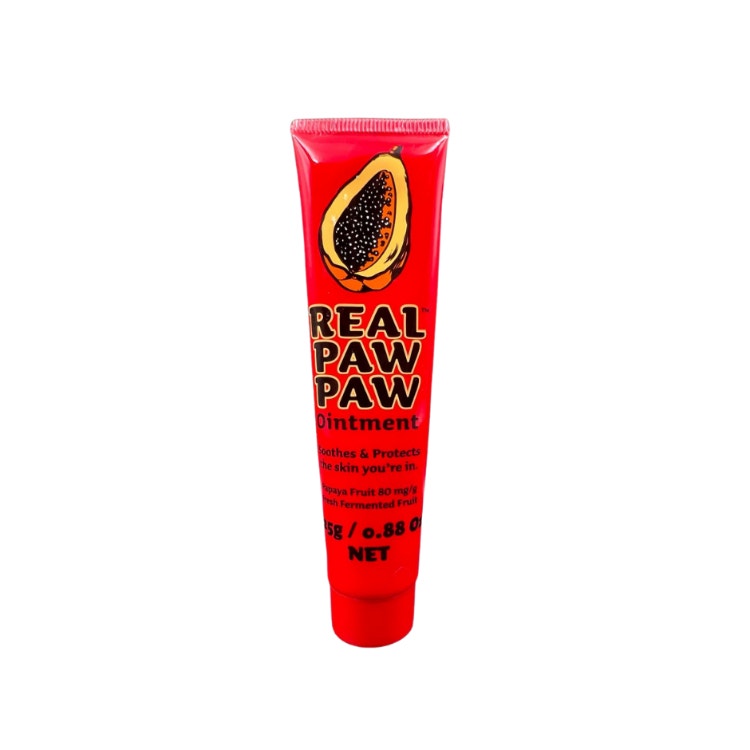

REAL PAW PAW
Real Paw Paw Ointment 25G

Real Paw Paw Ointment 25G
REAL PAW PAW
real-paw-paw-ointment-25g
Moisturize
10084969480485
Morning or Evening?
How often will you use this product?
Notes


Highlights
WHAT IS IT?
Topical ointment with 12 ingredients
FEATURES
Anti-bacterial properties, high concentration of fermented paw paw, soothing calendula, beeswax, sunflower oil, moisturizing
BEST FOR
sensitive
CHECKS
Does not contain harmful preservatives
Who Is It For?
No Specific Age Range Or Gender StatedWhat Does It Help With?
Dry Chapped Lips Nappy Rashes Dry & Cracked Skin Eczema Bites Burns Wound Care Other Skin ComplicationsBudget
Affordable (under $30)How To Use
Which routine should it be used in?
Instructions:
Key Information


What REAL PAW PAW Says
Product Description:
Real Paw Paw is an all-in-one topical ointment with anti-bacterial properties for your everyday skin needs. It is enriched with a high concentration of fermented paw paw and combined with the natural soothing properties of calendula, beeswax and sunflower oil that aid in moisturizing.
About the Brand:
Ingredients Overview
Ingredients List
Petrolatum,Lactobacillus/Papaya-Fruit-Ferment-Extract,Beeswax-(Cera-Alba),Polyglyceryl-3-Diisostearate,Helianthus-Annus-(Sunflower)-Seed-Oil,Calendula-Officinalis-Flower-Extract,Glycine-Soja-(Soybean)-Oil,Daucus-Carota-Sativa-(Carrot)-Root-Extract,Beta-Carotene,Tocopherol,Flavour-(Aroma),Potassium-Sorbate,Sodium-Benzoate
Key Ingredients
Papaya Fruit Ferment Extract, Calendula Officinalis Flower Extract, Beeswax, Sunflower Seed Oil
Ingredients Details
Beta-carotene
Common Name(s): Provitamin a,all-trans-beta-carotene
CAS Number: 7235-40-7
DESCRIPTION
What It Does: Neutralizes free radicals, provides photoprotection support, conditions skin, and imparts healthy skin tone.
Why It's Used: Natural antioxidant, skin conditioning, and natural colorant with additional provitamin a activity.
How It Works: Quenches singlet oxygen and free radicals. enzymatic cleavage yields retinal. accumulates in stratum corneum for photoprotective antioxidant defense.
Typically Found In: Self-tanners,sunscreens,natural colorants,anti-aging formulations
TECHNICAL DETAILS
Primary Category: Active ingredient – vitamin a derivative
Secondary Functions: Uv protection support,natural colorant,vitamin a precursor
Application Areas:

Facial Skincare
Body Care

Hair Care
Beard Care
Color Cosmetics (Makeup)
Dietary/Oral Supplements
Typical Concentration Range: 0.01%–1%
SOURCING & ETHICS
Vegan Status: Yes – plant-derived or fermentation
Halal Status: Yes
Source Notes: Derived from dunaliella salina algae, carrot oil, or synthesized. algae-derived most sustainable.
SKIN COMPATIBILITY
Irritancy Rating: 1/5 – very low
Comedogenicity Rating: 0/5 – non-comedogenic
Sensitivity Concerns: Very well-tolerated; high concentrations may impart orange tint.
Safe for Sensitive Skin: Yes
SAFETY & COMPATIBILITY
Safety Profile: Safe at cosmetic concentrations. use spf. avoid during pregnancy. ewg score: 2.
Works Well With: Niacinamide,ceramides,hyaluronic acid,spf,tocopherol
Avoid Combining With: No significant incompatibilities
SCIENTIFIC NOTE
Beta-carotene accumulates in the stratum corneum and provides measurable photoprotection against uv-induced oxidative stress when applied topically. not a replacement for uv filters.
Last Verified: Cosing database,cir safety assessment,stahl & sies carotenoid review
Primary Sources: 2026-03-12
Petrolatum
Common Name(s): Petroleum jelly,vaseline,white petrolatum
DESCRIPTION
What It Does: Provides the highest level of skin occlusion and wound healing protection of any cosmetic ingredient.
Why It's Used: The most effective skin barrier protection ingredient available – fda-approved otc skin protectant with unparalleled occlusive moisturization and wound healing evidence.
How It Works: Semi-solid blend of long-chain hydrocarbons creates an extremely cohesive, impermeable occlusive film. physically prevents bacterial and irritant ingress while completely preventing tewl. does not absorb into skin. promotes moist wound healing environment by maintaining wound surface hydration.
Typically Found In: Intensive moisturizers,wound healing ointments,lip balms,baby products,eczema treatments
TECHNICAL DETAILS
Primary Category: Functional ingredient – petroleum ointment base / gold-standard occlusive
Secondary Functions: Maximum occlusion,wound healing,otc skin protectant
Application Areas:
Facial Skincare
Body Care
Hair Care
Beard Care
Color Cosmetics (Makeup)
Dietary/Oral Supplements
Typical Concentration Range: 1%–100%
SOURCING & ETHICS
Vegan Status: Yes – petroleum-derived
Halal Status: Yes
Source Notes: Plant-derived, synthetic or animal-derived. verify source.
SKIN COMPATIBILITY
Irritancy Rating: 1/5 – very low
Comedogenicity Rating: 0/5 – non-comedogenic (clinical evidence)
Sensitivity Concerns: Non-irritating.
Safe for Sensitive Skin: Yes
SAFETY & COMPATIBILITY
Safety Profile: Fda category i grase otc skin protectant. ewg score: 1.
Works Well With: Humectants,ceramides,actives as carrier
Avoid Combining With: No significant incompatibilities
SCIENTIFIC NOTE
Petrolatum's wound healing mechanism (moist wound healing) was first systematically studied by george winter (1962) and demonstrated that wounds heal 2× faster under occlusion than air-exposed. all subsequent wound dressings and occlusive skin treatments are based on this fundamental finding, with petrolatum remaining the most effective occlusive agent 60 years later.
Last Verified: Cosing database,fda otc skin protectant monograph,winter (1962) moist wound healing study
Primary Sources: 2026-03-12
Tocopherol
Common Name(s): Vitamin e,alpha-tocopherol,d-alpha-tocopherol,(+)-alpha-tocopherol
CAS Number: 59-02-9
DESCRIPTION
What It Does: Tocopherol neutralizes free radicals that damage skin cells, protects cell membranes from lipid peroxidation, moisturizes, and helps maintain a healthy skin barrier.
Why It's Used: It is used as both a skin-active antioxidant and a formulation stabilizer (preventing oxidation of other ingredients). it has decades of safety and efficacy evidence and works synergistically with vitamin c.
How It Works: As a chain-breaking antioxidant, tocopherol donates hydrogen atoms to interrupt lipid peroxidation chain reactions. it is regenerated by vitamin c (ascorbic acid) in the vitamins c+e antioxidant cycle, creating a more durable antioxidant defense.
Typically Found In: Moisturizers,serums,oils,sunscreens,eye creams,lip balms,antioxidant formulations,haircare products
TECHNICAL DETAILS
Primary Category: Active ingredient – antioxidant/vitamin e
Secondary Functions: Emollient,formulation stabilizer,barrier support
Application Areas:
Facial Skincare
Body Care
Hair Care
Beard Care
Color Cosmetics (Makeup)
Dietary/Oral Supplements
Typical Concentration Range: 0.1%–1% (typical: 0.1–0.5% as active; higher as formulation antioxidant)
SOURCING & ETHICS
Vegan Status: Yes – plant-derived (soybean, sunflower, wheat germ oil) or synthetic
Halal Status: Yes – plant-derived or synthetic
Source Notes: Natural d-alpha-tocopherol is derived from plant oils and is more bioactive. synthetic dl-alpha-tocopherol is less expensive. tocopherol acetate (tocopheryl acetate) is the more stable ester form.
SKIN COMPATIBILITY
Irritancy Rating: 1/5 – very low; rare contact sensitivity reported
Comedogenicity Rating: 2/5 – mildly comedogenic at higher concentrations; formulation-dependent
Sensitivity Concerns: A small percentage of people report contact sensitization to tocopherol, particularly with leave-on products. comedogenicity risk is higher in oil-heavy formulations.
Safe for Sensitive Skin: Generally yes; perform patch test if history of vitamin e sensitivity
SAFETY & COMPATIBILITY
Safety Profile: Very safe; widely used. ewg hazard score: 2–3 (depending on concentration). no significant systemic concerns from topical use.
Works Well With: Ascorbic acid (vitamin c) – synergistic antioxidant pair,ferulic acid – stabilizes and boosts both c and e,ceramides,spf,retinol
Avoid Combining With: Very high concentrations of benzoyl peroxide may oxidize tocopherol; potential comedogenicity concerns in acne-prone skin when in heavy oil bases
SCIENTIFIC NOTE
The combination of vitamin c, vitamin e, and ferulic acid (the 'ce ferulic' formulation) provides fourfold photoprotection against uv-induced free radical damage – a synergy documented in landmark research by pinnell et al.
Last Verified: Cosing database,cir safety assessment,pinnell et al. (2005) journal of investigative dermatology,efsa panel on food additives
Primary Sources: 2026-03-12
