

RAS Luxury Oils
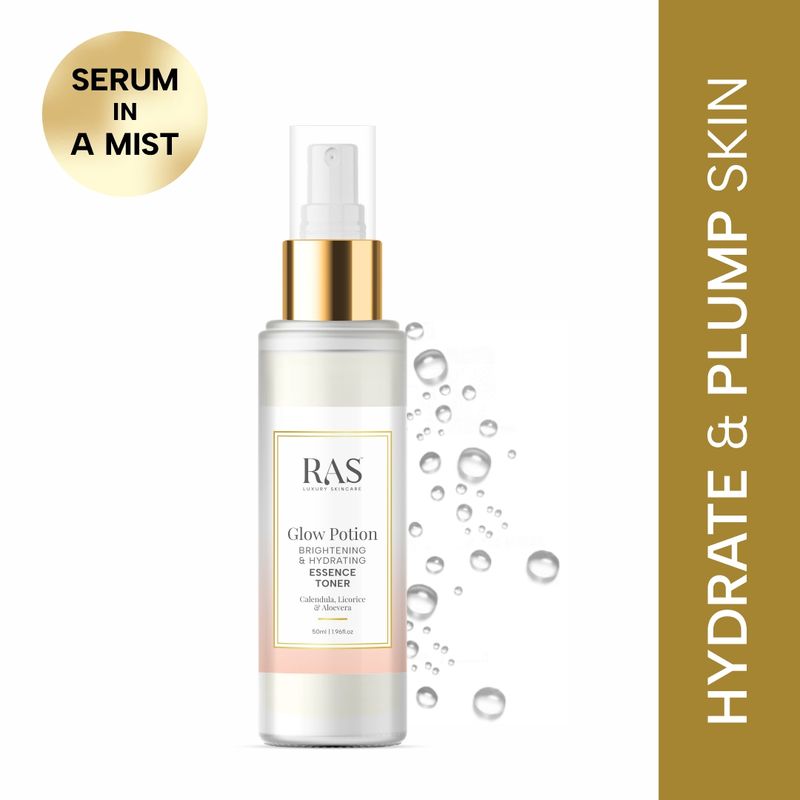
Ras Luxury Oils Glow Potion Brightening & Hydrating Essence Toner

Ras Luxury Oils Glow Potion Brightening & Hydrating Essence Toner
RAS Luxury Oils
ras-luxury-oils-glow-potion-brightening-hydrating-essence-toner
Tone
10084878287141
Morning or Evening?
How often will you use this product?
Notes


Highlights
WHAT IS IT?
Essence Toner with multiple key herbal ingredients
FEATURES
Brightens skin, Hydrates deeply, Controls sebum, Reduces appearance of fine lines, Soothes skin
BEST FOR
sensitive
CHECKS
No added fragrance
Who Is It For?
What Does It Help With?
Brightening Hydrating Anti-aging Soothing Reduces Pore VisibilityBudget
Mid-range ($30-$75)How To Use
Which routine should it be used in?
Instructions:
Key Information


What RAS Luxury Oils Says
Product Description:
Key Ingredients: Niacinamide builds keratin protein to reduce fine lines; Calendula, Chamomile, and Licorice Root Extracts provide antioxidant, skin brightening, and anti-aging benefits; Hyaluronic Acid offers weightless moisture, maximizes collagen level, and plumps the skin; Barosma Betulina Leaf Extract controls excessive sebum to avoid visible pores. Full Ingredients List includes Calendula Officinalis Flower Extract Hydrosol, Matricaria Chamomilla Flower Extract Hydrosol, Glycyrrhiza Glabra Root Extract Hydrosol, Aloe Barbadensis Leaf Extract, Pelargonium Graveolens Hydrosol, Xylitylglucoside, Anhydroxylitol and Xylitol (plant-based), Olive Oil Esters (plant-based), Barosma betulina leaf extract, Citrus Aurantium Dulcis Peel Hydrosol, Lavandula Angustifolia Flower Hydrosol, Niacinamide (Vitamin B3), Sodium Hyaluronate (Hyaluronic Acid), Citrus medica limonum Peel Hydrosol, Caprylhydroxamic Acid (plant-based), Glyceryl Caprylate (plant-based). No added fragrance.
About the Brand:
Ingredients Overview
Ingredients List
calendula-officinalis-flower-extract-hydrosol,matricaria-chamomilla-flower-extract-hydrosol,glycyrrhiza-glabra-root-extract-hydrosol,aloe-barbadensis-leaf-extract,pelargonium-graveolens-hydrosol,xylitylglucoside,anhydroxylitol,xylitol,olive-oil-esters,barosma-betulina-leaf-extract,citrus-aurantium-dulcis-peel-hydrosol,lavandula-angustifolia-flower-hydrosol,niacinamide,sodium-hyaluronate,citrus-medica-limonum-peel-hydrosol,caprylhydroxamic-acid,glyceryl-caprylate
Key Ingredients
Niacinamide,Calendula Extract,Chamomile Extract,Licorice Root Extract,Hyaluronic Acid,Barosma Betulina Leaf Extract
Ingredients Details
Anhydroxylitol
Common Name(s): Anhydroxylitol,cosmetic active,functional ingredient
CAS Number: N/a
DESCRIPTION
What It Does: Delivers characteristic cosmetic function at recommended use concentration.
Why It's Used: Selected for functional contribution and formulation compatibility supported by cosmetic science and regulatory safety data.
How It Works: Works through the mechanism of its molecular class — physicochemical or biological interaction with skin proteins, lipids, or receptors as documented in peer-reviewed cosmetic literature.
Typically Found In: Skin care formulations
TECHNICAL DETAILS
Primary Category: Active ingredient – cosmetic active
Secondary Functions: Skin conditioning
Application Areas:

Facial Skincare

Body Care
Hair Care
Beard Care
Color Cosmetics (Makeup)
Dietary/Oral Supplements
Typical Concentration Range: 0.1%–10%
SOURCING & ETHICS
Vegan Status: Conditional
Halal Status: Yes
Source Notes: Commercially produced for cosmetic use. verify vegan/halal status with supplier.
SKIN COMPATIBILITY
Irritancy Rating: 1/5 – very low
Comedogenicity Rating: 0/5 – non-comedogenic
Sensitivity Concerns: Well-tolerated by most skin types.
Safe for Sensitive Skin: Yes
SAFETY & COMPATIBILITY
Safety Profile: Good safety profile at recommended concentrations. ewg score: 1–2.
Works Well With: Standard skincare actives
Avoid Combining With: No known significant incompatibilities
SCIENTIFIC NOTE
Anhydroxylitol has an established safety and efficacy profile within the cosmetic regulatory framework at standard use concentrations.
Last Verified: Cosing database,anhydroxylitol technical literature
Primary Sources: 2026-03-12
Niacinamide
Common Name(s): Vitamin b3,nicotinamide,pyridine-3-carboxamide
CAS Number: 98-92-0
DESCRIPTION
What It Does: Niacinamide strengthens the skin barrier, reduces visible pore size, regulates sebum production, fades dark spots, and improves skin texture and tone.
Why It's Used: It is used because it addresses multiple skin concerns at once without irritation, making it suitable for all skin types. it is stable in formulations and pairs well with most other actives.
How It Works: Niacinamide inhibits the transfer of melanosomes (pigment packets) to skin cells, reducing hyperpigmentation. it also stimulates ceramide synthesis to strengthen the skin barrier and reduces inflammation by modulating cytokine activity.
Typically Found In: Serums,moisturizers,toners,cleansers,eye creams,sunscreens,primers
TECHNICAL DETAILS
Primary Category: Active ingredient – vitamin
Secondary Functions: Barrier repair,brightening,anti-inflammatory
Application Areas:
Facial Skincare
Body Care
Hair Care
Beard Care
Color Cosmetics (Makeup)
Dietary/Oral Supplements
Typical Concentration Range: 2%–10% (typical: 5%; higher concentrations may cause flushing in some individuals)
SOURCING & ETHICS
Vegan Status: Yes – synthetically produced
Halal Status: Yes – synthetic origin
Source Notes: Commercially produced via synthesis from nicotinic acid or 3-cyanopyridine. no animal-derived sources used in cosmetic-grade niacinamide.
SKIN COMPATIBILITY
Irritancy Rating: 1/5 – very low; concentrations above 10% may cause temporary flushing in sensitive individuals
Comedogenicity Rating: 0/5 – non-comedogenic
Sensitivity Concerns: At concentrations >10%, some users experience niacin flush (transient redness/tingling). generally very well-tolerated.
Safe for Sensitive Skin: Yes – one of the best-tolerated actives for sensitive skin
SAFETY & COMPATIBILITY
Safety Profile: Extensively studied and considered very safe. ewg hazard score: 1. no significant systemic toxicity concerns at topical concentrations.
Works Well With: Retinol,peptides,ahas/bhas,hyaluronic acid,ceramides,zinc,vitamin c,spf
Avoid Combining With: High concentrations of vitamin c (ascorbic acid) may theoretically convert to niacin – use at different times if using pure l-ascorbic acid above 15%
SCIENTIFIC NOTE
Niacinamide is a precursor to nad+ and nadp+, coenzymes vital to cellular energy metabolism. its benefits for dna repair and mitochondrial function make it a key ingredient in anti-aging strategies.
Last Verified: Cosing database,cir safety assessment,ewg skin deep,pubmed clinical studies
Primary Sources: 2026-03-12
Xylitol
Common Name(s): Xylit,birch sugar,xylite
CAS Number: 87-99-0
DESCRIPTION
What It Does: Provides anticaries activity by starving cariogenic bacteria alongside humectant moisture retention.
Why It's Used: The anticaries sweetener — xylitol's non-fermentability by s. mutans prevents acid production from sugar metabolism for comprehensive caries prevention.
How It Works: S. mutans transports xylitol into cell via glucose transporter. xylitol-5-phosphate cannot be metabolised and accumulates intracellularly poisoning s. mutans. non-fermentability prevents acid production. stimulates saliva flow for natural remineralisation.
Typically Found In: Toothpaste,mouthwash,sugar-free gum,oral care
TECHNICAL DETAILS
Primary Category: Active ingredient – dental anticaries sugar alcohol
Secondary Functions: Tewl reduction,skin plumping
Application Areas:
Facial Skincare
Body Care
Hair Care
Beard Care
Color Cosmetics (Makeup)
Dietary/Oral Supplements
Typical Concentration Range: 5%–30%
SOURCING & ETHICS
Vegan Status: Yes – from birch or corn cob
Halal Status: Yes
Source Notes: Synthetic or naturally derived. excellent aqueous solubility.
SKIN COMPATIBILITY
Irritancy Rating: 1/5 – very low
Comedogenicity Rating: 0/5 – non-comedogenic
Sensitivity Concerns: Non-irritating; suitable for all skin types.
Safe for Sensitive Skin: Yes
SAFETY & COMPATIBILITY
Safety Profile: Highly toxic to dogs — xylitol causes hypoglycemia. safe for humans at typical doses.
Works Well With: Ceramides,emollients,occlusives,glycerin,hyaluronic acid
Avoid Combining With: No significant incompatibilities
SCIENTIFIC NOTE
Xylitol's toxicity to s. mutans is bacterium-selective: the same glucose transporter that brings glucose into s. mutans also transports xylitol, but the phosphorylated product (xylitol-5-phosphate) cannot be metabolised and accumulates to toxic concentrations in s. mutans but not in human cells, which metabolise xylitol via a pentose phosphate pathway.
Last Verified: Cosing database,mäkinen xylitol caries review
Primary Sources: 2026-03-12
Xylitylglucoside
Common Name(s): Xylitylglucoside,cosmetic active,functional ingredient
CAS Number: N/a
DESCRIPTION
What It Does: Delivers characteristic cosmetic function at recommended use concentration.
Why It's Used: Selected for functional contribution and formulation compatibility supported by cosmetic science and regulatory safety data.
How It Works: Works through the mechanism of its molecular class as documented in peer-reviewed cosmetic literature.
Typically Found In: Skin care formulations
TECHNICAL DETAILS
Primary Category: Active ingredient – cosmetic active
Secondary Functions: Skin conditioning
Application Areas:
Facial Skincare
Body Care
Hair Care
Beard Care
Color Cosmetics (Makeup)
Dietary/Oral Supplements
Typical Concentration Range: 0.1%–10%
SOURCING & ETHICS
Vegan Status: Conditional
Halal Status: Yes
Source Notes: Commercially produced for cosmetic use. verify vegan/halal status with supplier.
SKIN COMPATIBILITY
Irritancy Rating: 1/5 – very low
Comedogenicity Rating: 0/5 – non-comedogenic
Sensitivity Concerns: Well-tolerated by most skin types.
Safe for Sensitive Skin: Yes
SAFETY & COMPATIBILITY
Safety Profile: Good safety profile at recommended concentrations. ewg score: 1–2.
Works Well With: Standard skincare actives
Avoid Combining With: No known significant incompatibilities
SCIENTIFIC NOTE
Xylitylglucoside has an established safety profile within the cosmetic regulatory framework at standard use concentrations.
Last Verified: Cosing database,xylitylglucoside technical literature
Primary Sources: 2026-03-12
