

EGO
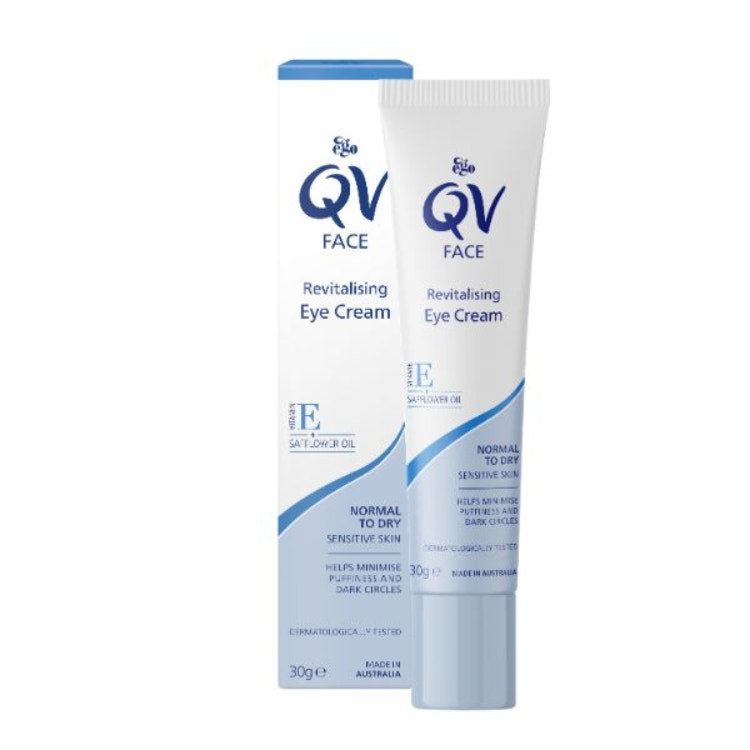
Qv Face Revital Eye Cream 30G (Normal To Dry Skin)

Qv Face Revital Eye Cream 30G (Normal To Dry Skin)
EGO
qv-face-revital-eye-cream-30g-normal-to-dry-skin
Eyecare
10085009850661
Morning or Evening?
How often will you use this product?
Notes


Highlights
WHAT IS IT?
Eye Cream with 13 ingredients
FEATURES
Reduce dark circles, fine lines and puffiness, improves microcirculation, re-hydrates skin, suitable for dry or sensitive skin, fragrance and colour free, dermatologically tested, ophthalmologically tested
BEST FOR
sensitive
CHECKS
Does not contain fragrance, colorants
Who Is It For?
What Does It Help With?
Dark Circles Fine Lines Puffiness DehydrationBudget
Mid-range ($30-$75)How To Use
Which routine should it be used in?
Instructions:
Key Information

What EGO Says
Product Description:
Reduce dark circles, fine lines and puffiness. This silky smooth, lightweight formulation helps improve microcirculation around your eyes. Sunken eyes are a sign of dehydration, use QV Face Revitalising Eye Cream to re-hydrate this area and help it look younger and feel more supple. Safflower Oil effectively hydrates your skin for greater elasticity. Enhanced PCa+ helps to minimise puffiness and dark circles. Silky smooth, lightweight cream that is suitable for dry or sensitive skin. Fragrance and colour free. Dermatologically tested. Ophthalmologically tested.
About the Brand:
Ingredients Overview
Ingredients List
Aqua-water, Cyclopentasiloxane-and-cyclohexasiloxane, Glycerin, Petrolatum, Cetearyl-alcohol, Sodium-pca, Paraffinum-liquidum, Carthamus-tinctorius-safflower-seed-oil, Ceteareth-20, Glyceryl-stearate, Triethanolamine, Methylparaben, Polyacrylic-acid, Propylparaben, Tocopherol-vitamin-e, Disodium-edta
Key Ingredients
Safflower Oil, Sodium PCA, Tocopherol (Vitamin E)
Ingredients Details
Ceteareth-20
Common Name(s): Polyethylene glycol cetearyl ether,peg-20 cetearyl ether
CAS Number: 68439-49-6
DESCRIPTION
What It Does: Provides high-hlb o/w emulsification for stable cream formation from ethoxylated cetearyl alcohol.
Why It's Used: Classic self-emulsifying wax component for standard pharmaceutical and cosmetic cream formulation.
How It Works: 20 eo units on cetearyl alcohol chain provide hlb ~15-17 for strong o/w emulsification. often pre-blended with cetearyl alcohol as 'emulsifying wax' for simplified cream making. combined low-hlb cetearyl alcohol + high-hlb ceteareth-20 forms a balanced self-emulsifying system.
Typically Found In: Classic pharmaceutical and cosmetic creams
TECHNICAL DETAILS
Primary Category: Functional ingredient – ethoxylated fatty alcohol emulsifier
Secondary Functions: Skin conditioning
Application Areas:

Facial Skincare

Body Care
Hair Care
Beard Care
Color Cosmetics (Makeup)
Dietary/Oral Supplements
Typical Concentration Range: 1%–8%
SOURCING & ETHICS
Vegan Status: Conditional – peg petroleum; cetearyl vegetable
Halal Status: Yes
Source Notes: Commercially produced for cosmetic use. verify vegan/halal status with supplier.
SKIN COMPATIBILITY
Irritancy Rating: 1/5 – very low
Comedogenicity Rating: 0/5 – non-comedogenic
Sensitivity Concerns: Well-tolerated by most skin types.
Safe for Sensitive Skin: Yes
SAFETY & COMPATIBILITY
Safety Profile: Good safety profile at recommended concentrations. ewg score: 1–2.
Works Well With: Standard skincare actives
Avoid Combining With: No known significant incompatibilities
SCIENTIFIC NOTE
Ceteareth-20's combination with cetearyl alcohol in the classic 'emulsifying wax nf' creates what is called a 'mixed emulsifier system' where the fatty alcohol forms lamellar crystal phases that physically trap and stabilize oil droplets. this physical (lamellar crystal) + chemical (hlb balance) dual stabilization provides superior stability compared to either component alone.
Last Verified: Cosing database,cir safety assessment
Primary Sources: 2026-03-12
Glycerin
Common Name(s): Glycerol,glycerine,1,2,3-propanetriol
CAS Number: 56-81-5
DESCRIPTION
What It Does: Glycerin pulls water from the environment and deeper skin layers into the outer skin layer (epidermis), boosting moisture levels and keeping skin soft, smooth, and plump.
Why It's Used: It is used in virtually every moisturizer, serum, and cleanser because it is highly effective at hydrating skin, is well-tolerated by all skin types, and enhances the texture and spreadability of formulations.
How It Works: As a humectant, glycerin forms hydrogen bonds with water molecules, trapping them in the skin. it also reinforces the skin barrier by integrating into lipid structures between skin cells.
Typically Found In: Moisturizers,serums,cleansers,toners,sheet masks,sunscreens,body lotions,shampoos,conditioners
TECHNICAL DETAILS
Primary Category: Humectant
Secondary Functions: Skin barrier support,emollient,solvent
Application Areas:
Facial Skincare
Body Care
Hair Care
Beard Care
Color Cosmetics (Makeup)
Dietary/Oral Supplements
Typical Concentration Range: 1%–30% (typical: 3–10%)
SOURCING & ETHICS
Vegan Status: Yes – plant-derived (coconut, soy, palm) or synthetic
Halal Status: Yes – when plant-derived or synthetic; verify source with supplier
Source Notes: Derived from plant oils via hydrolysis or saponification; synthetic versions also available. palm-derived glycerin carries sustainability concerns.
SKIN COMPATIBILITY
Irritancy Rating: 1/5 – very low; non-irritating at all standard concentrations
Comedogenicity Rating: 0/5 – non-comedogenic
Sensitivity Concerns: Extremely rare allergic reactions; generally safe for all skin types including sensitive and baby skin
Safe for Sensitive Skin: Yes
SAFETY & COMPATIBILITY
Safety Profile: Widely recognized as safe. ewg hazard score: 1. no significant concerns for irritation, sensitization, or toxicity at typical concentrations (up to 50%).
Works Well With: Hyaluronic acid,ceramides,niacinamide,panthenol,urea,peptides,retinol,ahas/bhas
Avoid Combining With: No known incompatibilities at standard concentrations
SCIENTIFIC NOTE
Glycerin is an endogenous skin component found naturally in the stratum corneum. aquaporin-3 channels in keratinocytes facilitate glycerin transport, making it integral to natural skin hydration pathways.
Last Verified: Cosing database,cir safety assessment,ewg skin deep,inci decoder
Primary Sources: 2026-03-12
Methylparaben
Common Name(s): Methylparaben,cosmetic active,functional ingredient
CAS Number: N/a
DESCRIPTION
What It Does: Delivers characteristic cosmetic function at recommended use concentration.
Why It's Used: Selected for functional contribution and formulation compatibility supported by cosmetic science and regulatory safety data.
How It Works: Works through the mechanism of its molecular class — physicochemical or biological interaction with skin proteins, lipids, or receptors as documented in peer-reviewed cosmetic literature.
Typically Found In: Skin care formulations
TECHNICAL DETAILS
Primary Category: Active ingredient – cosmetic active
Secondary Functions: Skin conditioning
Application Areas:
Facial Skincare
Body Care
Hair Care
Beard Care
Color Cosmetics (Makeup)
Dietary/Oral Supplements
Typical Concentration Range: 0.1%–10%
SOURCING & ETHICS
Vegan Status: Conditional
Halal Status: Yes
Source Notes: Commercially produced for cosmetic use. verify vegan/halal status with supplier.
SKIN COMPATIBILITY
Irritancy Rating: 1/5 – very low
Comedogenicity Rating: 0/5 – non-comedogenic
Sensitivity Concerns: Well-tolerated by most skin types.
Safe for Sensitive Skin: Yes
SAFETY & COMPATIBILITY
Safety Profile: Good safety profile at recommended concentrations. ewg score: 1–2.
Works Well With: Standard skincare actives
Avoid Combining With: No known significant incompatibilities
SCIENTIFIC NOTE
Methylparaben has an established safety and efficacy profile within the cosmetic regulatory framework at standard use concentrations.
Last Verified: Cosing database,methylparaben technical literature
Primary Sources: 2026-03-12
Petrolatum
Common Name(s): Petroleum jelly,vaseline,white petrolatum
DESCRIPTION
What It Does: Provides the highest level of skin occlusion and wound healing protection of any cosmetic ingredient.
Why It's Used: The most effective skin barrier protection ingredient available – fda-approved otc skin protectant with unparalleled occlusive moisturization and wound healing evidence.
How It Works: Semi-solid blend of long-chain hydrocarbons creates an extremely cohesive, impermeable occlusive film. physically prevents bacterial and irritant ingress while completely preventing tewl. does not absorb into skin. promotes moist wound healing environment by maintaining wound surface hydration.
Typically Found In: Intensive moisturizers,wound healing ointments,lip balms,baby products,eczema treatments
TECHNICAL DETAILS
Primary Category: Functional ingredient – petroleum ointment base / gold-standard occlusive
Secondary Functions: Maximum occlusion,wound healing,otc skin protectant
Application Areas:
Facial Skincare
Body Care
Hair Care
Beard Care
Color Cosmetics (Makeup)
Dietary/Oral Supplements
Typical Concentration Range: 1%–100%
SOURCING & ETHICS
Vegan Status: Yes – petroleum-derived
Halal Status: Yes
Source Notes: Plant-derived, synthetic or animal-derived. verify source.
SKIN COMPATIBILITY
Irritancy Rating: 1/5 – very low
Comedogenicity Rating: 0/5 – non-comedogenic (clinical evidence)
Sensitivity Concerns: Non-irritating.
Safe for Sensitive Skin: Yes
SAFETY & COMPATIBILITY
Safety Profile: Fda category i grase otc skin protectant. ewg score: 1.
Works Well With: Humectants,ceramides,actives as carrier
Avoid Combining With: No significant incompatibilities
SCIENTIFIC NOTE
Petrolatum's wound healing mechanism (moist wound healing) was first systematically studied by george winter (1962) and demonstrated that wounds heal 2× faster under occlusion than air-exposed. all subsequent wound dressings and occlusive skin treatments are based on this fundamental finding, with petrolatum remaining the most effective occlusive agent 60 years later.
Last Verified: Cosing database,fda otc skin protectant monograph,winter (1962) moist wound healing study
Primary Sources: 2026-03-12
