

Naturopathica
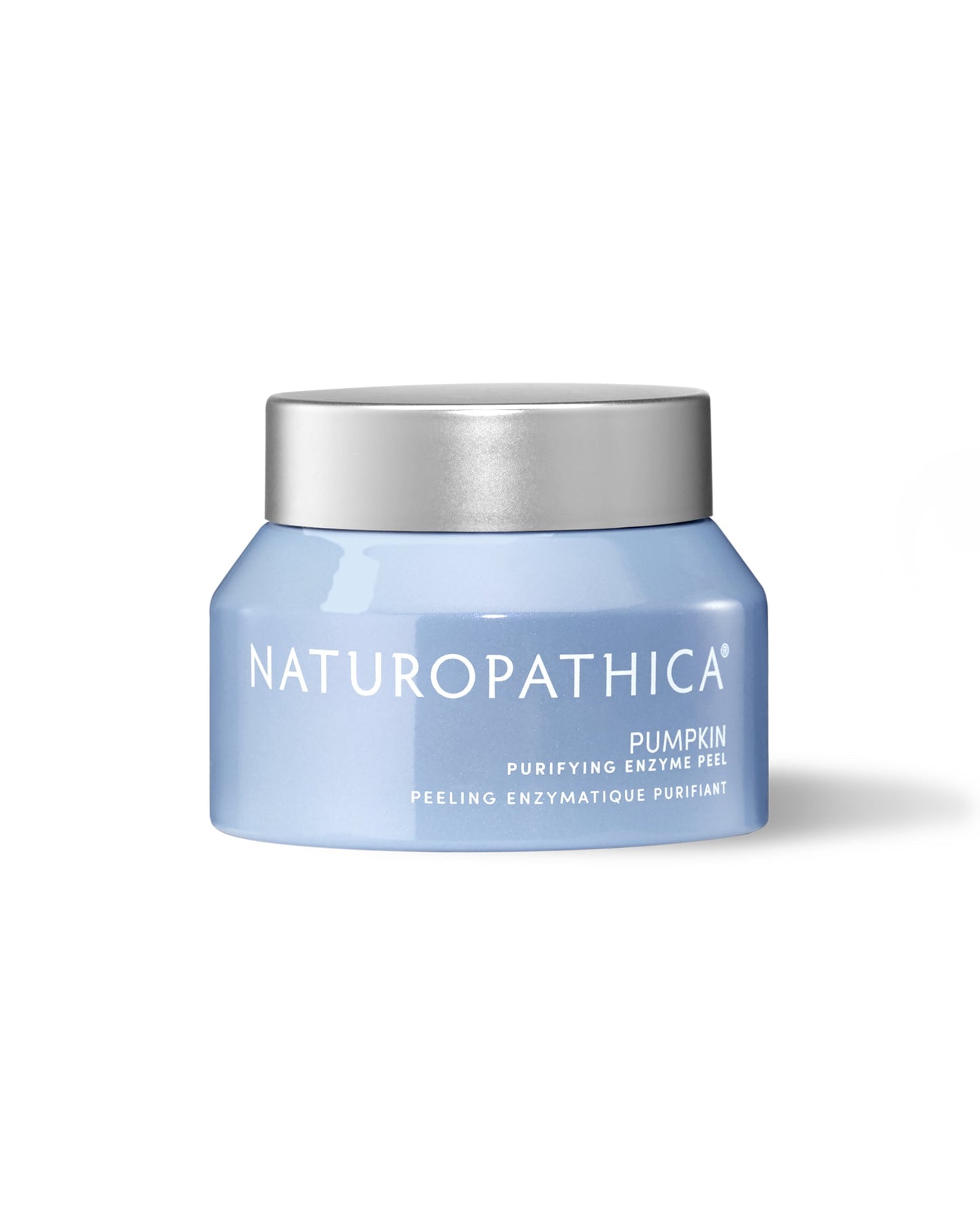
Pumpkin Purifying Enzyme Peel

Pumpkin Purifying Enzyme Peel
Naturopathica
pumpkin-purifying-enzyme-peel
Exfoliation
9784768626981
Morning or Evening?
How often will you use this product?
Notes


Highlights
WHAT IS IT?
Enzyme Peel with Pumpkin Enzymes
FEATURES
Clarifying peel that exfoliates and promotes clear, radiant complexion
BEST FOR
combination
CHECKS
Clean beauty formulation
Who Is It For?
Adults With Dull Or Congested SkinWhat Does It Help With?
Dull Skin Congested Skin Clarity RadianceBudget
Mid-range ($30-$75)How To Use
Which routine should it be used in?
Instructions:
Key Information


What Naturopathica Says
Product Description:
Formulated for dull or congested skin, this clarifying peel exfoliates with Pumpkin Enzymes to promote a clear and radiant complexion.
About the Brand:
Ingredients Overview
Ingredients List
cucurbita pepo (pumpkin),aqua/water/eau, propanediol, glycerin, lactic acid, lonicera japonica (honeysuckle) flower extract, dehydroxanthan gum, gluconic acid, hydroxypropyl methylcellulose, sodium hydroxide, lonicera caprifolium (honeysuckle) flower extract, potassium sorbate, sodium gluconate, fragrance/parfum, eugenia caryophyllus (clove) leaf oil, thymol, mentha piperita (peppermint) leaf extract, origanum vulgare (oregano) leaf extract, rosmarinus officinalis (rosemary) leaf oil, lavandula angustifolia (lavender) oil, citrus limon (lemon) peel oil, hydrastis canadensis (goldenseal) root extract, olea europaea (olive) leaf extract, cinnamomum zeylanicum (cinnamon) bark extract, sodium chloride, glyoxal, cinnamal
Key Ingredients
Pumpkin Enzymes
Ingredients Details
Dehydroxanthan Gum
Common Name(s): Modified xanthan gum,enhanced sensory biopolymer thickener,natural origin rheology modifier
CAS Number: N/a
DESCRIPTION
What It Does: Provides efficient aqueous thickening with improved sensory profile — less stringiness, smoother skin feel, better cold processability — versus native xanthan while retaining the electrolyte tolerance and natural origin.
Why It's Used: Modified xanthan solves native xanthan's main formulation limitation (draggy, stringy texture) without abandoning the biopolymer's core benefits — enabling natural-label formulations with premium sensory performance.
How It Works: Chemical modification alters xanthan double-helix conformation and inter-chain association. pyruvate removal (dehydroxanthan) reduces anionic side-chain repulsion producing shorter relaxation times and lower elasticity (less stringy); hydroxypropyl substitution disrupts crystalline ordering for improved cold-water dispersion.
Typically Found In: Premium natural skin care,cold-process formulas
TECHNICAL DETAILS
Primary Category: Active ingredient – cosmetic active
Secondary Functions: Skin conditioning
Application Areas:

Facial Skincare

Body Care
Hair Care
Beard Care
Color Cosmetics (Makeup)
Dietary/Oral Supplements
Typical Concentration Range: 0.1%–2%
SOURCING & ETHICS
Vegan Status: Yes
Halal Status: Yes
Source Notes: Commercially produced for cosmetic use. verify vegan/halal status with supplier.
SKIN COMPATIBILITY
Irritancy Rating: 1/5 – very low
Comedogenicity Rating: 0/5 – non-comedogenic
Sensitivity Concerns: Well-tolerated by most skin types.
Safe for Sensitive Skin: Yes
SAFETY & COMPATIBILITY
Safety Profile: Good safety profile at recommended concentrations. ewg score: 1–2.
Works Well With: Standard skincare actives
Avoid Combining With: No known significant incompatibilities
SCIENTIFIC NOTE
Modified xanthan inci names signal specific modification chemistry to informed formulators — enabling rational selection based on target application: dehydroxanthan for spray applications; hydroxypropyl for cold-process natural-certified systems.
Last Verified: Cosing database,dehydroxanthan gum modified xanthan sensory improvement review
Primary Sources: 2026-03-12
Gluconic Acid
Common Name(s): D-gluconic acid
CAS Number: 526-95-4
DESCRIPTION
What It Does: Provides very gentle exfoliation, moisture retention, and metal chelation for formulation stability.
Why It's Used: Gentlest available chemical exfoliant; suitable for the most sensitive skin types and post-procedure care.
How It Works: Open-chain polyhydroxy acid with 5 hydroxyl groups enabling water binding, metal chelation, and very gentle aha-like exfoliation without significant acid strength.
Typically Found In: Ultra-sensitive skin exfoliants,chelating agents
TECHNICAL DETAILS
Primary Category: Active ingredient – polyhydroxy acid (pha)
Secondary Functions: Chelating agent,gentle exfoliant,humectant
Application Areas:
Facial Skincare
Body Care
Hair Care
Beard Care
Color Cosmetics (Makeup)
Dietary/Oral Supplements
Typical Concentration Range: 1%–10%
SOURCING & ETHICS
Vegan Status: Yes – fermentation or synthetic
Halal Status: Yes
Source Notes: Fermentation-derived from sugars or synthetic.
SKIN COMPATIBILITY
Irritancy Rating: 1/5 – very low
Comedogenicity Rating: 0/5 – non-comedogenic
Sensitivity Concerns: No photosensitization; no stinging; suitable for very sensitive skin.
Safe for Sensitive Skin: Yes – ideal for sensitive, reactive, rosacea, eczema-prone skin
SAFETY & COMPATIBILITY
Safety Profile: Exceptional safety profile. no photosensitization. ewg score: 1.
Works Well With: Ceramides,niacinamide,hyaluronic acid,soothing actives
Avoid Combining With: No significant incompatibilities
SCIENTIFIC NOTE
Gluconic acid is the equilibrium hydrolysis product of gluconolactone on skin. its 5 hydroxyl groups provide superior humectant and chelation activity vs shorter-chain ahas while maintaining very gentle exfoliation.
Last Verified: Cosing database,cir safety assessment
Primary Sources: 2026-03-12
Glycerin
Common Name(s): Glycerol,glycerine,1,2,3-propanetriol
CAS Number: 56-81-5
DESCRIPTION
What It Does: Glycerin pulls water from the environment and deeper skin layers into the outer skin layer (epidermis), boosting moisture levels and keeping skin soft, smooth, and plump.
Why It's Used: It is used in virtually every moisturizer, serum, and cleanser because it is highly effective at hydrating skin, is well-tolerated by all skin types, and enhances the texture and spreadability of formulations.
How It Works: As a humectant, glycerin forms hydrogen bonds with water molecules, trapping them in the skin. it also reinforces the skin barrier by integrating into lipid structures between skin cells.
Typically Found In: Moisturizers,serums,cleansers,toners,sheet masks,sunscreens,body lotions,shampoos,conditioners
TECHNICAL DETAILS
Primary Category: Humectant
Secondary Functions: Skin barrier support,emollient,solvent
Application Areas:
Facial Skincare
Body Care
Hair Care
Beard Care
Color Cosmetics (Makeup)
Dietary/Oral Supplements
Typical Concentration Range: 1%–30% (typical: 3–10%)
SOURCING & ETHICS
Vegan Status: Yes – plant-derived (coconut, soy, palm) or synthetic
Halal Status: Yes – when plant-derived or synthetic; verify source with supplier
Source Notes: Derived from plant oils via hydrolysis or saponification; synthetic versions also available. palm-derived glycerin carries sustainability concerns.
SKIN COMPATIBILITY
Irritancy Rating: 1/5 – very low; non-irritating at all standard concentrations
Comedogenicity Rating: 0/5 – non-comedogenic
Sensitivity Concerns: Extremely rare allergic reactions; generally safe for all skin types including sensitive and baby skin
Safe for Sensitive Skin: Yes
SAFETY & COMPATIBILITY
Safety Profile: Widely recognized as safe. ewg hazard score: 1. no significant concerns for irritation, sensitization, or toxicity at typical concentrations (up to 50%).
Works Well With: Hyaluronic acid,ceramides,niacinamide,panthenol,urea,peptides,retinol,ahas/bhas
Avoid Combining With: No known incompatibilities at standard concentrations
SCIENTIFIC NOTE
Glycerin is an endogenous skin component found naturally in the stratum corneum. aquaporin-3 channels in keratinocytes facilitate glycerin transport, making it integral to natural skin hydration pathways.
Last Verified: Cosing database,cir safety assessment,ewg skin deep,inci decoder
Primary Sources: 2026-03-12
Hydroxypropyl Methylcellulose
Common Name(s): Hpmc,hypromellose,methylpropylcellulose
CAS Number: 9004-65-3
DESCRIPTION
What It Does: Provides stable thickening and film formation across broad ph and temperature ranges.
Why It's Used: Versatile cellulose thickener compatible with a broad range of cosmetic systems including electrolyte-containing formulations.
How It Works: Methylated and hydroxypropylated cellulose backbone provides thermal gelation (gels at elevated temperature vs cellulose gelation at low temperature). forms flexible, moisture-retaining films on skin. excellent electrolyte tolerance unlike carbomers.
Typically Found In: Gels,eye drops,film formers,cleansers
TECHNICAL DETAILS
Primary Category: Functional ingredient – cellulose thickener
Secondary Functions: Skin conditioning
Application Areas:
Facial Skincare
Body Care
Hair Care
Beard Care
Color Cosmetics (Makeup)
Dietary/Oral Supplements
Typical Concentration Range: 0.5%–3%
SOURCING & ETHICS
Vegan Status: Yes – cellulose-derived (plant)
Halal Status: Yes
Source Notes: Commercially produced for cosmetic use. verify vegan/halal status with supplier.
SKIN COMPATIBILITY
Irritancy Rating: 1/5 – very low
Comedogenicity Rating: 0/5 – non-comedogenic
Sensitivity Concerns: Well-tolerated by most skin types.
Safe for Sensitive Skin: Yes
SAFETY & COMPATIBILITY
Safety Profile: Good safety profile at recommended concentrations. ewg score: 1–2.
Works Well With: Standard skincare actives
Avoid Combining With: No known significant incompatibilities
SCIENTIFIC NOTE
Hpmc's thermal gelation behavior (inverse temperature gelation: liquid at 4°c, gel above cloud point ~60°c) is exploited in hot-pour formulations and temperature-triggered drug delivery systems. in cosmetics, this property is used in cold-process gel manufacturing where hpmc is dissolved hot then cooled to form gels.
Last Verified: Cosing database,cir safety assessment
Primary Sources: 2026-03-12
