

Glossier
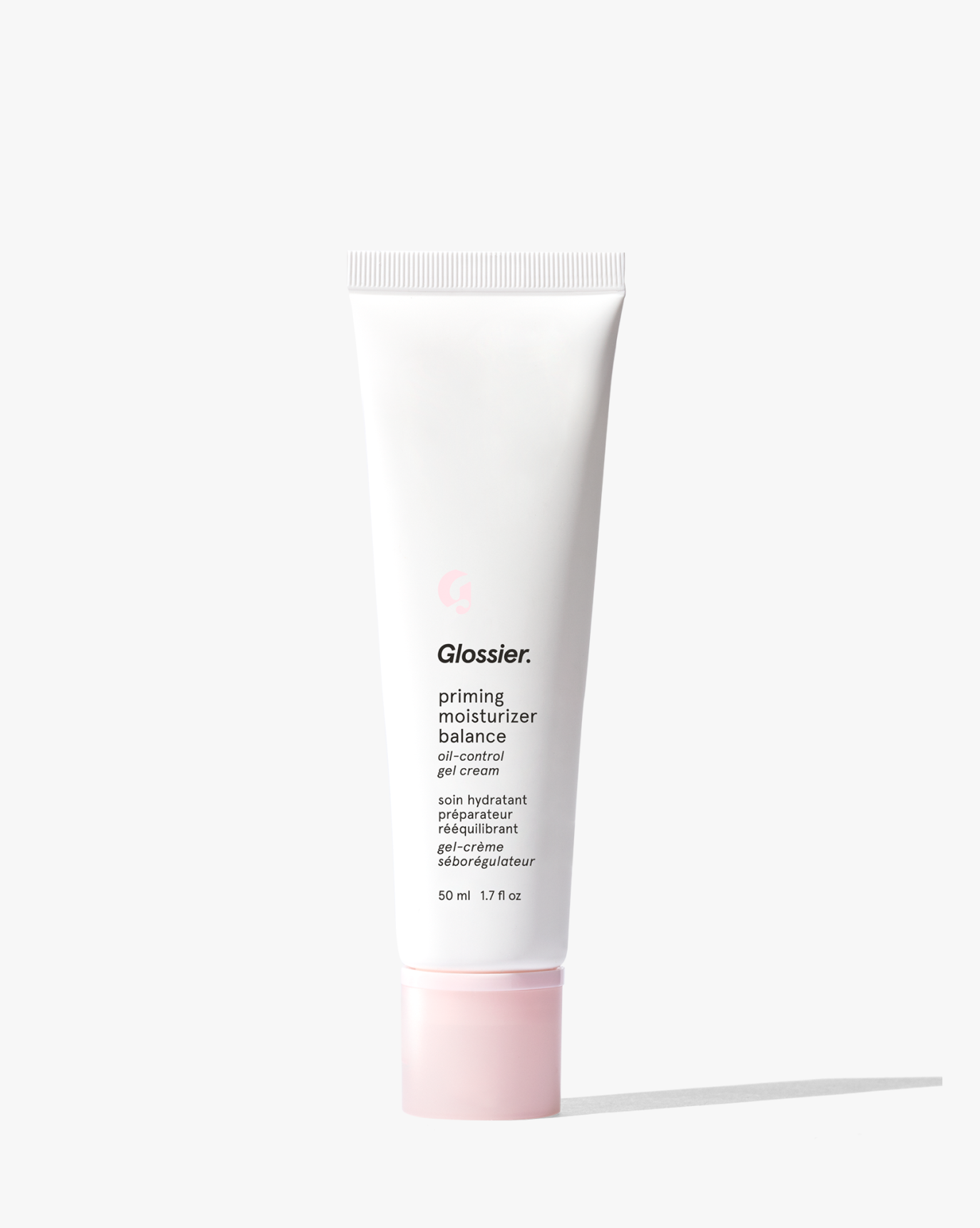
Priming Moisturizer Balance

Priming Moisturizer Balance
Glossier
priming-moisturizer-balance
Moisturize
9784789074213
Morning or Evening?
How often will you use this product?
Notes


Highlights
WHAT IS IT?
Gel cream moisturizer for oil control
FEATURES
Balancing formula, oil control properties, priming effect
BEST FOR
oily
CHECKS
Parabens-free, fragrance-free, alcohol & oil-free, gluten & dairy-free, GMO-free
Who Is It For?
All Ages All Genders With Oily SkinWhat Does It Help With?
Oil Control Skin Balancing MoisturizingBudget
Affordable (under $30)How To Use
Which routine should it be used in?
Instructions:
Key Information


What Glossier Says
Product Description:
A gel cream moisturizer for oil control and balancing oily skin
About the Brand:
Ingredients Overview
Ingredients List
Water/Aqua/Eau, Glycerin, Methyl Methacrylate Crosspolymer, Propanediol, Pyrus Malus (Apple) Fruit Extract, Pentylene Glycol, Polymethylsilsesquioxane, Pseudoalteromonas Ferment Extract, Niacinamide, Bambusa Arundinacea Stem Extract, Dimethicone, Salix Nigra (Willow) Bark Extract, Tamarindus Indica Seed Gum, Squalane, Hydroxyacetophenone, Isononyl Isononanoate, Hydroxyethyl Acrylate/Sodium Acryloyldimethyl Taurate Copolymer, Acrylates/C10-30 Alkyl Acrylate Crosspolymer, Glyceryl Citrate/Lactate/Linoleate/Oleate, Potassium Hydroxide, Carbomer, Glyceryl Caprylate, Glyceryl Polyacrylate, Tocopherol, Polyglyceryl-3 Caprate, Polyglyceryl-4 Cocoate, Trisodium Ethylenediamine Disuccinate, Polysorbate 60, Sorbitan Isostearate, Sodium Salicylate, 1,2-Hexanediol, Caprylyl Glycol
Key Ingredients
Apple Fruit Extract, Marine Extract, Niacinamide, Willow Bark Extract, Bamboo Extract
Ingredients Details
Bambusa Arundinacea Stem Extract
Common Name(s): Bambusa arundinacea stem extract,bambusa arundinacea stem extract,botanical extract,phytochemical active
CAS Number: N/a
DESCRIPTION
What It Does: Provides antioxidant protection from polyphenol radical scavenging, anti-inflammatory activity from terpenoid nf-kb/cox pathway inhibition, and skin conditioning from the phytochemical secondary metabolite complex.
Why It's Used: Bambusa arundinacea stem extract is selected for the characteristic secondary metabolite signature of bambusa arundinacea — whether polyphenols, terpenoids, alkaloids, or polysaccharides, the phytochemical profile provides antioxidant, anti-inflammatory, or skin conditioning benefits specific to this botanical species.
How It Works: Polyphenol catechol h-atom donation scavenges ros (rate constants 10⁶-10⁹ m⁻¹s⁻¹); terpenoids inhibit iκb kinase blocking nf-κb; flavonoids compete at cox-1/2; alkaloids modulate specific receptor targets for additional bioactivity.
Typically Found In: Botanical skin care
TECHNICAL DETAILS
Primary Category: Active ingredient – antioxidant
Secondary Functions: Free radical scavenging,anti-aging
Application Areas:

Facial Skincare
Body Care

Hair Care
Beard Care
Color Cosmetics (Makeup)
Dietary/Oral Supplements
Typical Concentration Range: 0.1%–10%
SOURCING & ETHICS
Vegan Status: Conditional
Halal Status: Conditional
Source Notes: Plant-derived extract or synthetic.
SKIN COMPATIBILITY
Irritancy Rating: 1/5 – very low
Comedogenicity Rating: 0/5 – non-comedogenic
Sensitivity Concerns: Non-irritating; well-tolerated.
Safe for Sensitive Skin: Yes
SAFETY & COMPATIBILITY
Safety Profile: Excellent safety profile. ewg score: 1.
Works Well With: Vitamin c,vitamin e,ferulic acid,spf,other antioxidants
Avoid Combining With: No significant incompatibilities
SCIENTIFIC NOTE
Standardise to marker compound for consistent bioactivity — field-grown material varies 3-10× in secondary metabolite content.
Last Verified: Cosing database,bambusa arundinacea stem extract botanical extract review
Primary Sources: 2026-03-22
Dimethicone
Common Name(s): Pdms,polydimethylsiloxane,silicone fluid
CAS Number: 9006-65-9
DESCRIPTION
What It Does: Provides silicone-characteristic silky feel and skin protection with adjustable viscosity.
Why It's Used: The benchmark cosmetic silicone – sets the gold standard for silky application feel, spreadability, and skin protection in virtually all skin care categories.
How It Works: Polydimethylsiloxane chain flexibility provides extremely low surface tension and high spreadability. inert si-o backbone provides chemical stability and excellent skin tolerance. occlusive film formation reduces tewl. higher viscosity grades provide more intense conditioning.
Typically Found In: Moisturizers,foundations,primers,sunscreens – nearly universal
TECHNICAL DETAILS
Primary Category: Functional ingredient – polydimethylsiloxane
Secondary Functions: Barrier sealing,softening
Application Areas:
Facial Skincare
Body Care
Hair Care
Beard Care
Color Cosmetics (Makeup)
Dietary/Oral Supplements
Typical Concentration Range: 0.1%–30%
SOURCING & ETHICS
Vegan Status: Yes – synthetic
Halal Status: Yes
Source Notes: Plant-derived, synthetic or animal-derived. verify source.
SKIN COMPATIBILITY
Irritancy Rating: 1/5 – very low
Comedogenicity Rating: 1/5 – low; formulation-dependent
Sensitivity Concerns: Non-irritating.
Safe for Sensitive Skin: Yes
SAFETY & COMPATIBILITY
Safety Profile: Excellent safety profile. ewg score: 1.
Works Well With: Humectants,ceramides,actives as carrier
Avoid Combining With: No significant incompatibilities
SCIENTIFIC NOTE
Dimethicone's exceptional silky feel arises from its very low intermolecular attractive forces (weak van der waals forces due to non-polar methyl groups) that allow silicone chains to slide freely over skin. the coefficient of kinetic friction for pdms against skin (~0.04) is among the lowest of any cosmetic material – explaining why even small amounts transform product feel.
Last Verified: Cosing database,cir safety assessment
Primary Sources: 2026-03-12
Glycerin
Common Name(s): Glycerol,glycerine,1,2,3-propanetriol
CAS Number: 56-81-5
DESCRIPTION
What It Does: Glycerin pulls water from the environment and deeper skin layers into the outer skin layer (epidermis), boosting moisture levels and keeping skin soft, smooth, and plump.
Why It's Used: It is used in virtually every moisturizer, serum, and cleanser because it is highly effective at hydrating skin, is well-tolerated by all skin types, and enhances the texture and spreadability of formulations.
How It Works: As a humectant, glycerin forms hydrogen bonds with water molecules, trapping them in the skin. it also reinforces the skin barrier by integrating into lipid structures between skin cells.
Typically Found In: Moisturizers,serums,cleansers,toners,sheet masks,sunscreens,body lotions,shampoos,conditioners
TECHNICAL DETAILS
Primary Category: Humectant
Secondary Functions: Skin barrier support,emollient,solvent
Application Areas:
Facial Skincare
Body Care
Hair Care
Beard Care
Color Cosmetics (Makeup)
Dietary/Oral Supplements
Typical Concentration Range: 1%–30% (typical: 3–10%)
SOURCING & ETHICS
Vegan Status: Yes – plant-derived (coconut, soy, palm) or synthetic
Halal Status: Yes – when plant-derived or synthetic; verify source with supplier
Source Notes: Derived from plant oils via hydrolysis or saponification; synthetic versions also available. palm-derived glycerin carries sustainability concerns.
SKIN COMPATIBILITY
Irritancy Rating: 1/5 – very low; non-irritating at all standard concentrations
Comedogenicity Rating: 0/5 – non-comedogenic
Sensitivity Concerns: Extremely rare allergic reactions; generally safe for all skin types including sensitive and baby skin
Safe for Sensitive Skin: Yes
SAFETY & COMPATIBILITY
Safety Profile: Widely recognized as safe. ewg hazard score: 1. no significant concerns for irritation, sensitization, or toxicity at typical concentrations (up to 50%).
Works Well With: Hyaluronic acid,ceramides,niacinamide,panthenol,urea,peptides,retinol,ahas/bhas
Avoid Combining With: No known incompatibilities at standard concentrations
SCIENTIFIC NOTE
Glycerin is an endogenous skin component found naturally in the stratum corneum. aquaporin-3 channels in keratinocytes facilitate glycerin transport, making it integral to natural skin hydration pathways.
Last Verified: Cosing database,cir safety assessment,ewg skin deep,inci decoder
Primary Sources: 2026-03-12
Methyl Methacrylate Crosspolymer
Common Name(s): Polymethyl methacrylate (pmma),acrylic microsphere,refractive index-matched soft-focus powder
CAS Number: N/a
DESCRIPTION
What It Does: Creates maximum skin soft-focus effect through refractive-index-matched mie scattering — blurring pores and fine lines while maintaining accurate skin colour reproduction without the whitening caused by high-ri particles.
Why It's Used: Pmma's ri 1.49 precisely matches average skin ri providing optimal scattering efficiency: too-high ri (glass 1.52) over-scatters causing whitening; too-low ri creates high contrast scatter. pmma's ri match provides maximum blur-to-colour-shift ratio.
How It Works: Suspension polymerisation produces perfectly spherical pmma particles 5-20 um. mie scattering cross-section peaks when particle diameter is approximately the wavelength of light. pmma (ri 1.49) vs skin (ri ~1.46) provides small ri contrast generating forward-dominant diffuse scatter that softens specular skin reflections without strong whitening.
Typically Found In: Face powders,foundation,primers
TECHNICAL DETAILS
Primary Category: Active ingredient – cosmetic active
Secondary Functions: Skin conditioning
Application Areas:
Facial Skincare
Body Care
Hair Care
Beard Care
Color Cosmetics (Makeup)
Dietary/Oral Supplements
Typical Concentration Range: 1%–20%
SOURCING & ETHICS
Vegan Status: Yes
Halal Status: Yes
Source Notes: Commercially produced for cosmetic use. verify vegan/halal status with supplier.
SKIN COMPATIBILITY
Irritancy Rating: 1/5 – very low
Comedogenicity Rating: 0/5 – non-comedogenic
Sensitivity Concerns: Well-tolerated by most skin types.
Safe for Sensitive Skin: Yes
SAFETY & COMPATIBILITY
Safety Profile: Good safety profile at recommended concentrations. ewg score: 1–2.
Works Well With: Standard skincare actives
Avoid Combining With: No known significant incompatibilities
SCIENTIFIC NOTE
Eu microplastic regulatory note: insoluble spherical pmma particles in rinse-off products may fall within 2023/2055 restriction scope. leave-on make-up is likely exempt but rinse-off use requires compliance verification by particle size and solubility criteria.
Last Verified: Cosing database,eu regulation 2023/2055,pmma soft-focus optical review
Primary Sources: 2026-03-12
