
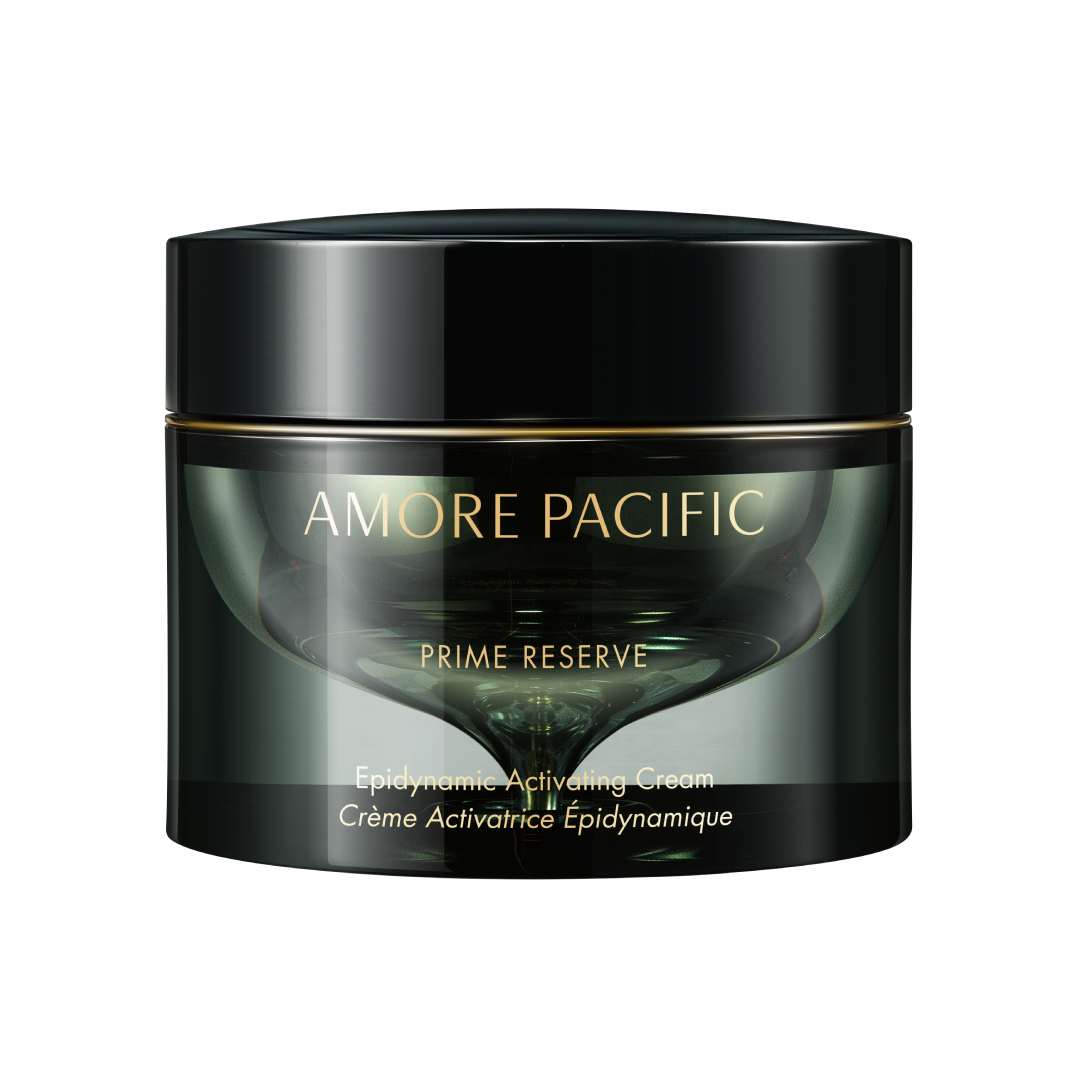

AMOREPACIFIC
Prime Reserve Epidynamic Activating Cream

Prime Reserve Epidynamic Activating Cream
AMOREPACIFIC
prime-reserve-epidynamic-activating-cream
Moisturize
9628211380517
Morning or Evening?
How often will you use this product?
Notes


Highlights
WHAT IS IT?
Antioxidant moisturizer cream
FEATURES
Contains proprietary AbsoluTea™ formula
BEST FOR
Not specified
CHECKS
Formulated without parabens, phthalates, sulfates SLS & SLES
Who Is It For?
Not Specified Default To Above 18 And Both Women And MenWhat Does It Help With?
Protect Against Future Visible Signs Of Aging Caused By Environmental And Lifestyle FactorsBudget
PremiumHow To Use
Which routine should it be used in?
Instructions:
Key Information

What AMOREPACIFIC Says
Product Description:
A revolutionary green tea antioxidant cream formula that calls upon a potent elixir of AMOREPACIFIC's proprietary AbsoluTea™ in a concentrated form to awaken skin's youthful potential.
About the Brand:
Ingredients Overview
Ingredients List
CAMELLIA SINENSIS LEAF WATER, BUTYLENE GLYCOL, GLYCERIN, HYDROGENATED OLIVE OIL LAURYL ESTERS, BUTYROSPERMUM PARKII (SHEA) BUTTER, DIMETHICONE, CETEARYL ALCOHOL, CAPRYLIC/CAPRIC TRIGLYCERIDE, HYDROGENATED CASTOR OIL ISOSTEARATE, PENTAERYTHRITYL TETRAETHYLHEXANOATE, NIACINAMIDE, GLYCERYL STEARATE, STEARYL DIMETHICONE, HYDROGENATED POLYISOBUTENE, 1, 2-HEXANEDIOL, CYCLOPENTASILOXANE, PEG-100 STEARATE, COPERNICIA CERIFERA (CARNAUBA) WAX / COPERNICIA CERIFERA CERA / CIRE DE CARNAUBA, STEARIC ACID, PEG-40 STEARATE, AQUA, PALMITIC ACID, OCTADECENE, POLYSILICONE-11, ACRYLATES/C10-30 ALKYL ACRYLATE CROSSPOLYMER, FRAGRANCE / PARFUM, TROMETHAMINE, XANTHAN GUM, GLYCERYL CAPRYLATE, DISODIUM EDTA, ETHYLHEXYLGLYCERIN, ADENOSINE, SODIUM HYALURONATE, BETAINE, XYLITOL, LIMONENE, BUTYLPHENYL METHYLPROPIONAL, DEXTRIN, CAPRYLYL GLYCOL, THEOBROMA CACAO (COCOA) EXTRACT, PENTYLENE GLYCOL, HYDROGENATED LECITHIN, GERANIOL, MYRISTIC ACID, ARACHIDIC ACID, CAMELLIA SINENSIS LEAF EXTRACT, CARTHAMUS TINCTORIUS (SAFFLOWER) FLOWER EXTRACT, CHOLESTEROL, CITRONELLOL, ALPHA-ISOMETHYL IONONE, LINALOOL, HYDROXYCITRONELLAL, GLYCOLIPIDS, CAFFEINE, THEANINE, TOCOPHEROL.
Key Ingredients
AbsoluTea™, Camellia Sinensis Leaf Water, Butylene Glycol, Glycerin, Shea Butter
Ingredients Details
Butylene Glycol
Common Name(s): 1,3-butanediol,bg,1,3-butylene glycol
CAS Number: 107-88-0
DESCRIPTION
What It Does: Provides humectant hydration and active ingredient solubilization with excellent skin feel.
Why It's Used: Preferred glycol humectant in premium and k-beauty formulations for superior skin feel vs propylene glycol with equivalent functionality.
How It Works: Two hydroxyl groups at 1,3-positions provide water binding and solvent activity. better tolerated than propylene glycol with minimal sensitization risk. 4-carbon backbone provides slightly greater hydrophobic character enabling dissolution of less polar actives vs pg.
Typically Found In: Toners,essences,serums,k-beauty formulas
TECHNICAL DETAILS
Primary Category: Functional ingredient – glycol humectant
Secondary Functions: Tewl reduction,skin plumping
Application Areas:

Facial Skincare
Body Care
Hair Care

Beard Care
Color Cosmetics (Makeup)
Dietary/Oral Supplements
Typical Concentration Range: 1%–10%
SOURCING & ETHICS
Vegan Status: Yes – synthetic
Halal Status: Yes
Source Notes: Synthetic or naturally derived. excellent aqueous solubility.
SKIN COMPATIBILITY
Irritancy Rating: 1/5 – very low
Comedogenicity Rating: 0/5 – non-comedogenic
Sensitivity Concerns: Non-irritating; suitable for all skin types.
Safe for Sensitive Skin: Yes
SAFETY & COMPATIBILITY
Safety Profile: Excellent safety profile. ewg score: 1.
Works Well With: Ceramides,emollients,occlusives,glycerin,hyaluronic acid
Avoid Combining With: No significant incompatibilities
SCIENTIFIC NOTE
K-beauty's preference for butylene glycol over propylene glycol is driven by two factors: bg's superior skin feel (less tacky than pg's higher viscosity) and its lower sensitization potential (1,3-bg has better spatial distribution of hydroxyl groups that reduces protein interaction vs pg's 1,2-position oh groups).
Last Verified: 2026-03-12
Primary Sources: Cosing database,cir safety assessment
Camellia Sinensis Leaf Water
Common Name(s): Camellia sinensis leaf water,camellia sinensis leaf water,botanical hydrosol/juice,water-soluble aromatic plant water
CAS Number: N/a
DESCRIPTION
What It Does: Provides gentle skin-active benefit from the water-soluble fraction of camellia sinensis leaf's phytochemical profile — suitable for leave-on applications where essential oils at full concentration would be irritating.
Why It's Used: Botanical waters provide the authentic plant aromatic water experience preferred in natural formulation — the gentle concentration of water-soluble actives more appropriate for direct skin contact than concentrated essential oils.
How It Works: Steam distillation co-produces the hydrosol alongside the essential oil — the aromatic water contains water-soluble volatile organics (trace terpenoid alcohols, acids) at 0.01-0.1% w/w providing the plant characteristic fragrance and gentle bioactivity. fresh juices contain the full water-soluble metabolite complement at higher active concentration.
Typically Found In: Toners,facial mists,gentle formulas
TECHNICAL DETAILS
Primary Category: Active ingredient – antioxidant
Secondary Functions: Free radical scavenging,anti-aging
Application Areas:
Facial Skincare
Body Care
Hair Care
Beard Care
Color Cosmetics (Makeup)
Dietary/Oral Supplements
Typical Concentration Range: 5%–90%
SOURCING & ETHICS
Vegan Status: Yes
Halal Status: Yes
Source Notes: Plant-derived extract or synthetic.
SKIN COMPATIBILITY
Irritancy Rating: 1/5 – very low
Comedogenicity Rating: 0/5 – non-comedogenic
Sensitivity Concerns: Non-irritating; well-tolerated.
Safe for Sensitive Skin: Yes
SAFETY & COMPATIBILITY
Safety Profile: Excellent safety profile. ewg score: 1.
Works Well With: Vitamin c,vitamin e,ferulic acid,spf,other antioxidants
Avoid Combining With: No significant incompatibilities
SCIENTIFIC NOTE
Hydrosol microbiological stability: the low active concentration and high water activity of hydrosols supports microbial growth — complete preservation system is essential. certified organic hydrosols require cosmos-compliant natural preservation.
Last Verified: 2026-03-22
Primary Sources: Cosing database,camellia sinensis leaf water botanical hydrosol review
Caprylic/capric Triglyceride
Common Name(s): Mct oil,fractionated coconut oil,c8/c10 triglyceride
CAS Number: 73398-61-5
DESCRIPTION
What It Does: Lightweight, stable emollient that solubilizes oil-soluble actives for excellent delivery without greasy feel.
Why It's Used: Universal lightweight emollient base and solubilizer for oil-soluble actives in serums and low-viscosity formulations where mineral oil or petrolatum would be too heavy.
How It Works: Medium-chain length provides ideal balance of spreading coefficient, penetration rate, and barrier-sealing properties. excellent solubilizer for vitamin e, retinoids, and other lipophilic actives.
Typically Found In: Serums,facial oils,sunscreens,anti-aging products,hair products
TECHNICAL DETAILS
Primary Category: Active ingredient – medium-chain triglyceride emollient
Secondary Functions: Active solubilizer,spreading agent
Application Areas:
Facial Skincare
Body Care
Hair Care
Beard Care
Color Cosmetics (Makeup)
Dietary/Oral Supplements
Typical Concentration Range: 1%–50%
SOURCING & ETHICS
Vegan Status: Conditional - feedstock declaration required
Halal Status: Unverified - feedstock declaration required (plant, animal and petrochemical routes all exist)
Source Notes: Fractionated by hydrolysis and re-esterification of coconut oil. only c8 and c10 fatty acids retained. [audit 2026-07-29 rev2: origin-dependent: the same inci exists in plant, animal and petrochemical versions and the name does not discriminate. determination requires shariah-panel sign-off.]
SKIN COMPATIBILITY
Irritancy Rating: 1/5 – very low
Comedogenicity Rating: 1/5 – very low; medium-chain length generally non-comedogenic
Sensitivity Concerns: Non-irritating.
Safe for Sensitive Skin: Yes
SAFETY & COMPATIBILITY
Safety Profile: Excellent safety profile. ewg score: 1.
Works Well With: Humectants,ceramides,actives as carrier
Avoid Combining With: No significant incompatibilities
SCIENTIFIC NOTE
Mct oil's medium-chain length (c8/c10) provides superior oxidative stability vs longer polyunsaturated chains and better skin aesthetics (lighter, less greasy) vs longer chain emollients (c16/c18). excellent solubilizer for retinoic acid, tocopheryl esters, and other lipophilic actives.
Last Verified: 2026-03-12
Primary Sources: Cosing database,cir safety assessment,ewg skin deep
Cetearyl Alcohol
Common Name(s): Cetostearyl alcohol,c16-18 fatty alcohol
CAS Number: 8005-44-5
DESCRIPTION
What It Does: Provides fatty alcohol emulsification and thickening for stable, well-textured emulsions.
Why It's Used: The most widely used fatty alcohol in cosmetics – provides emulsification, thickening, and emolliency simultaneously from a single ingredient with excellent safety profile.
How It Works: Forms bilayer lamellar structures in water with emulsifiers creating a viscous structured network that thickens and stabilizes emulsions. fatty alcohol emolliency provides direct skin conditioning. bilayer formation reduces inter-droplet coalescence in emulsions.
Typically Found In: Creams,lotions,conditioners – virtually all emulsion products
TECHNICAL DETAILS
Primary Category: Functional ingredient – fatty alcohol emulsifier/thickener
Secondary Functions: Barrier sealing,softening
Application Areas:
Facial Skincare
Body Care
Hair Care
Beard Care
Color Cosmetics (Makeup)
Dietary/Oral Supplements
Typical Concentration Range: 1%–25%
SOURCING & ETHICS
Vegan Status: Yes - standard ethanol routes are non-animal; confirm denaturant origin
Halal Status: Conditional - ethanol production route and residual concentration; jurisdiction-dependent, refer to certifier stance
Source Notes: Plant-derived, synthetic or animal-derived. verify source. [audit 2026-07-29 rev2: ethanol pathway; determination depends on route, on whether the plant also produces beverage alcohol, and on residual concentration. determination requires shariah-panel sign-off.]
SKIN COMPATIBILITY
Irritancy Rating: 1/5 – very low
Comedogenicity Rating: 1/5 – low; formulation-dependent
Sensitivity Concerns: Non-irritating.
Safe for Sensitive Skin: Yes
SAFETY & COMPATIBILITY
Safety Profile: Excellent safety profile. ewg score: 1.
Works Well With: Humectants,ceramides,actives as carrier
Avoid Combining With: No significant incompatibilities
SCIENTIFIC NOTE
Cetearyl alcohol's ability to form lamellar liquid crystal structures ('krafft phases') with water and co-emulsifiers provides not only emulsion stability but also enhanced skin penetration via the lamellar skin barrier pathway. these crystalline structures can act as a reservoir for active ingredients, slowly releasing them as the lamellar structure melts on skin contact.
Last Verified: 2026-03-12
Primary Sources: Cosing database,cir safety assessment