
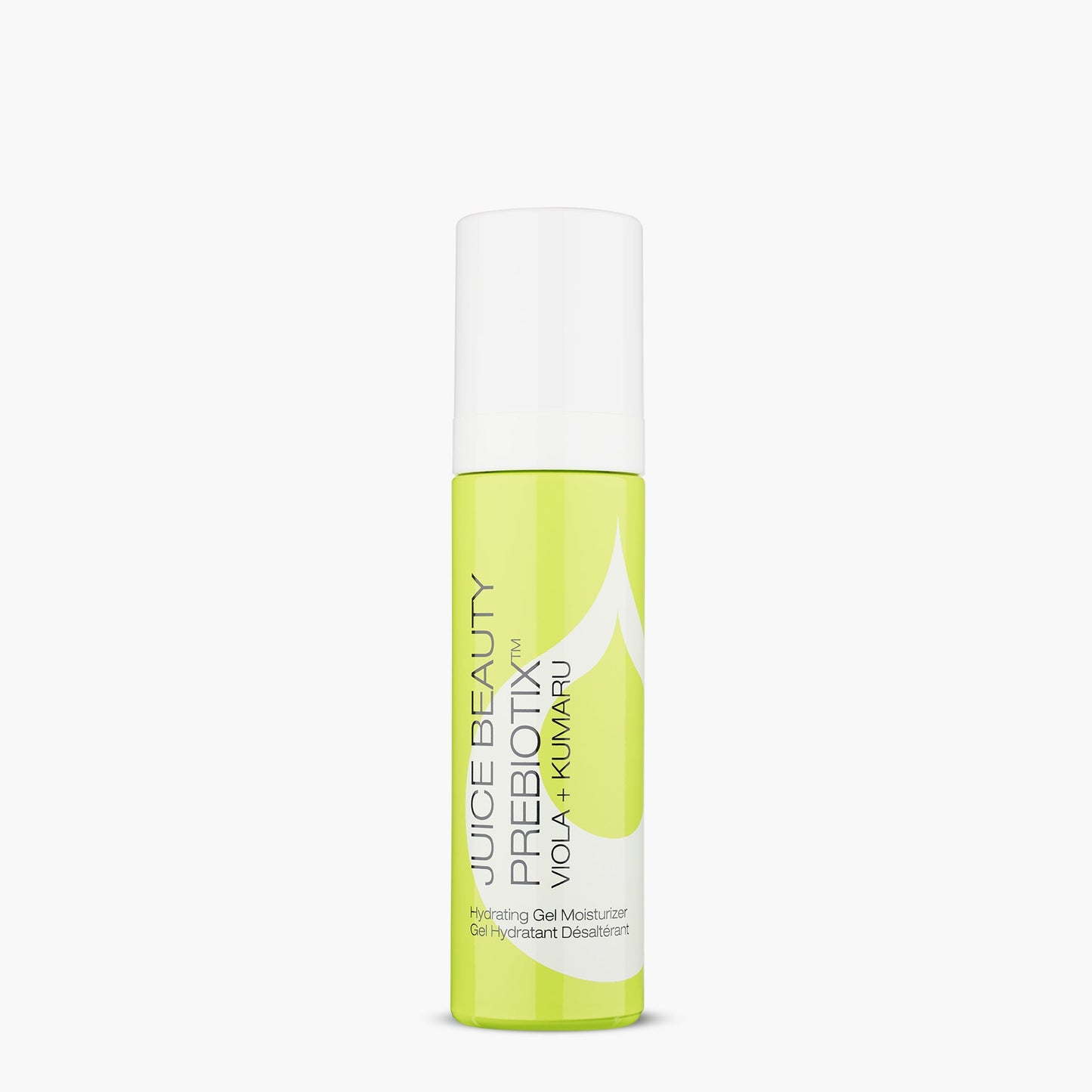

Juice Beauty
Prebiotix Hydrating Gel Moisturizer

Prebiotix Hydrating Gel Moisturizer
Juice Beauty
prebiotix-hydrating-gel-moisturizer
Moisturize
9784766759205
Morning or Evening?
How often will you use this product?
Notes


Highlights
WHAT IS IT?
Lightweight gel moisturizer with prebiotic ingredients
FEATURES
Ultra-absorbent, lightweight, patent-pending formula, provides luminosity and hydration
BEST FOR
combination
CHECKS
Free of parabens, phthalates, sulfates, petroluem, pesticides, propylene, butylene glycols, PEGs, TEA, DEA, GMOs, artificial dyes, synthetic fragrances
Who Is It For?
All Ages And GendersWhat Does It Help With?
Hydration Skin Microbiome Protection Luminosity Smooth ComplexionBudget
Mid-range ($30-$75)How To Use
Which routine should it be used in?
Instructions:
Key Information


What Juice Beauty Says
Product Description:
Quench and help protect the skin's microbiome with this patent-pending, ultra-absorbent, lightweight gel moisturizer that transforms the complexion for beautifully smooth and luminous results. High performance prebiotic & reflective ingredients for ultimate hydration and luminosity.
About the Brand:
Ingredients Overview
Ingredients List
Aloe Barbadensis (Organic Aloe Juice/Jus D’Aloès Bio)*, Pyrus Malus (Organic Apple Juice/Jus De Pomme Bio)*, Vitis Vinifera (Organic White Grape Juice/Jus De Raisin Blanc Bio)*, Glycerin (Organic/Bio)*, Olus Oil†, Sodium Pca†, Lactobacillus Ferment, Oryza Sativa (Organic Rice Bran Extract/Extrait De Son De Riz Bio)*, Bentonite, Coconut Alkanes, Simmondsia Chinensis (Jojoba Seed Oil/Huile De Graines De Jojoba), Sodium Hyaluronate†, Glyceryl Stearate SE, Lactobacillus/Dipteryx Odorata (Kumaru Seed Ferment Filtrate/Graine De Kumaru Fermentée Filtrée), Hydrolyzed Viola Tricolor Extract, Butyrospermum Parkii (Organic Shea Butter/Beurre De Karate Bio)*, Cocos Nucifera (Organic Coconut Oil/Huile De Noix De Coco Bio)*, Lactobacillus, Cocos Nucifera (Coconut Fruit Extract/Extrait De Noix De Coco), Lactobacillus Ferment Lysate, Salvia Hispanica (Chia Extract/Extrait De Chia), Lactobacillus/Arundinaria Gigantea (Bamboo Leaf Ferment Filtrate/Feuille De Bambou Fermentée Filtrée), Opuntia Ficus-Indica (Prickly Pear Stem Extract/Extrait De Cactus Nopal), Hydrolyzed Linseed Extract, Propanediol†, Xanthan Gum, Carrageenan, Biosaccharide Gum-1, Coco-Caprylate/Caprate, Sodium Lauroyl Lactylate†, Hydrogenated Lecithin, Panthenol (Vitamin B5), Potassium Sorbate, Melia Azadirachta Leaf Extract, Solanum Melongena (Eggplant Fruit Extract/Extrait D’Aubergine), Ocimum Basilicum (Basil Flower Extract/Extrait De Fleurs De Basilic), Curcuma Longa (Turmeric Root Extract/Extrait De Racine De Curcuma), Citric Acid, Bismuth Chloride Oxide, Lavandula Angustifolia Extract, Triethyl Citrate†, Citrus Aurantium Dulcis (Orange Peel Oil/Huile De Peau D’Orange), Juniperus Virginiana (Juniper Oil/Huile De Genévrier), Salvia Sclarea (Clary Sage Oil/Huile De Sauge Sclarée)
Key Ingredients
prebiotic-ingredients
Ingredients Details
Bentonite
Common Name(s): Montmorillonite,volcanic ash clay,swelling clay
CAS Number: 1302-78-9
DESCRIPTION
What It Does: Provides thixotropic clay gellation and deep oil absorption from swelling smectite clay.
Why It's Used: Strongest adsorbing clay for deep cleansing masks – bentonite's high cation exchange capacity and swelling capacity provide the deepest oil and toxin adsorption of common cosmetic clays.
How It Works: Montmorillonite 2:1 layered silicate swells up to 15× in water via interlayer water absorption. very high cation exchange capacity (cec: 80-150 meq/100g) provides exceptional adsorption of cations, oils, and toxins. thixotropic gel provides 'mask that hardens' sensory experience.
Typically Found In: Clay masks,deep cleansing products,detoxifying formulas
TECHNICAL DETAILS
Primary Category: Functional ingredient – swelling clay mineral
Secondary Functions: Skin conditioning
Application Areas:

Facial Skincare

Body Care
Hair Care
Beard Care
Color Cosmetics (Makeup)
Dietary/Oral Supplements
Typical Concentration Range: 1%–25%
SOURCING & ETHICS
Vegan Status: Yes – natural mineral
Halal Status: Yes
Source Notes: Commercially produced for cosmetic use. verify vegan/halal status with supplier.
SKIN COMPATIBILITY
Irritancy Rating: 1/5 – very low
Comedogenicity Rating: 0/5 – non-comedogenic
Sensitivity Concerns: Well-tolerated by most skin types.
Safe for Sensitive Skin: Yes
SAFETY & COMPATIBILITY
Safety Profile: Good safety profile at recommended concentrations. ewg score: 1–2.
Works Well With: Standard skincare actives
Avoid Combining With: No known significant incompatibilities
SCIENTIFIC NOTE
Bentonite's extraordinary swelling (up to 15× dry volume) arises from its 2:1 layer structure: sodium bentonite's inter-layer sodium cations attract very thick water shells, forcing the silicate layers apart by electrostatic repulsion. calcium bentonite swells only 2-3× by comparison, explaining why sodium-exchanged bentonite is the industrial standard for swelling applications.
Last Verified: Cosing database,cir safety assessment
Primary Sources: 2026-03-12
Coconut Alkanes
Common Name(s): Coconut alkanes,cosmetic active,functional ingredient
CAS Number: N/a
DESCRIPTION
What It Does: Delivers characteristic cosmetic function at recommended use concentration.
Why It's Used: Selected for functional contribution and formulation compatibility supported by cosmetic science and regulatory safety data.
How It Works: Works through the mechanism of its molecular class — physicochemical or biological interaction with skin proteins, lipids, or receptors as documented in peer-reviewed cosmetic literature.
Typically Found In: Skin care formulations
TECHNICAL DETAILS
Primary Category: Active ingredient – cosmetic active
Secondary Functions: Skin conditioning
Application Areas:
Facial Skincare
Body Care
Hair Care
Beard Care
Color Cosmetics (Makeup)
Dietary/Oral Supplements
Typical Concentration Range: 0.1%–10%
SOURCING & ETHICS
Vegan Status: Conditional
Halal Status: Yes
Source Notes: Commercially produced for cosmetic use. verify vegan/halal status with supplier.
SKIN COMPATIBILITY
Irritancy Rating: 1/5 – very low
Comedogenicity Rating: 0/5 – non-comedogenic
Sensitivity Concerns: Well-tolerated by most skin types.
Safe for Sensitive Skin: Yes
SAFETY & COMPATIBILITY
Safety Profile: Good safety profile at recommended concentrations. ewg score: 1–2.
Works Well With: Standard skincare actives
Avoid Combining With: No known significant incompatibilities
SCIENTIFIC NOTE
Coconut alkanes has an established safety and efficacy profile within the cosmetic regulatory framework at standard use concentrations.
Last Verified: Cosing database,coconut alkanes technical literature
Primary Sources: 2026-03-12
Lactobacillus Ferment
Common Name(s): Lactic acid bacteria ferment,probiotic lysate,lab ferment
CAS Number: N/a
DESCRIPTION
What It Does: Provides postbiotic benefits including barrier support, anti-inflammatory, and microbiome-balancing activity from lactic acid bacteria ferment.
Why It's Used: Postbiotic ingredient for microbiome-supportive skincare addressing the growing evidence for skin microbiome dysbiosis in inflammatory skin conditions.
How It Works: Lactobacillus-derived exopolysaccharides and peptides activate toll-like receptors tlr2/tlr6 on keratinocytes upregulating antimicrobial peptide production. lipoteichoic acid (lta) component modulates immune response reducing pro-inflammatory cytokine production. lactic acid component maintains skin acidic ph.
Typically Found In: Probiotic skincare,microbiome-supportive products,sensitive skin formulas
TECHNICAL DETAILS
Primary Category: Active ingredient – skin microbiome support
Secondary Functions: Tlr2/tlr6 activation,amp upregulation,microbiome support
Application Areas:
Facial Skincare
Body Care
Hair Care
Beard Care
Color Cosmetics (Makeup)
Dietary/Oral Supplements
Typical Concentration Range: 0.1%–5%
SOURCING & ETHICS
Vegan Status: Yes – bacterial fermentation
Halal Status: Yes
Source Notes: Fermentation-derived or plant-extracted.
SKIN COMPATIBILITY
Irritancy Rating: 1/5 – very low
Comedogenicity Rating: 0/5 – non-comedogenic
Sensitivity Concerns: Non-irritating; beneficial for sensitive skin.
Safe for Sensitive Skin: Yes
SAFETY & COMPATIBILITY
Safety Profile: Excellent safety profile. ewg score: 1.
Works Well With: Ceramides,niacinamide,soothing actives
Avoid Combining With: No significant incompatibilities
SCIENTIFIC NOTE
Topical application of heat-killed (pasteurized) lactobacillus demonstrates comparable or superior efficacy to live bacteria for skin benefits in controlled studies – the active components (exopolysaccharides, lta, cell wall components) are heat-stable, and live bacteria in cosmetics face regulatory and stability challenges.
Last Verified: Cosing database,seite & misery microbiome skin review
Primary Sources: 2026-03-12
Olus Oil
Common Name(s): Olus oil,olus oil,botanical oil/lipid,emollient efa source
CAS Number: N/a
DESCRIPTION
What It Does: Provides emollient conditioning from sc-compatible fatty acids and sterols with the lipid profile of olus oil determining barrier repair and skin feel properties.
Why It's Used: Olus oil is selected for the distinctive lipid profile of olus oil — the specific efa and sterol composition determines spreading speed, occlusion level, and sc barrier integration properties unique to this botanical source.
How It Works: Botanical lipid: fatty acid triglycerides → sc barrier emolliency; phytosterols → sc barrier lipid integration; efa → ceramide precursor; sterol esters → enhanced sc penetration.
Typically Found In: Skin care,barrier repair
TECHNICAL DETAILS
Primary Category: Active ingredient – antioxidant
Secondary Functions: Free radical scavenging,anti-aging
Application Areas:
Facial Skincare
Body Care
Hair Care
Beard Care
Color Cosmetics (Makeup)
Dietary/Oral Supplements
Typical Concentration Range: 0.5%–30%
SOURCING & ETHICS
Vegan Status: Conditional
Halal Status: Conditional
Source Notes: Plant-derived extract or synthetic.
SKIN COMPATIBILITY
Irritancy Rating: 1/5 – very low
Comedogenicity Rating: 0/5 – non-comedogenic
Sensitivity Concerns: Non-irritating; well-tolerated.
Safe for Sensitive Skin: Yes
SAFETY & COMPATIBILITY
Safety Profile: Excellent safety profile. ewg score: 1.
Works Well With: Vitamin c,vitamin e,ferulic acid,spf,other antioxidants
Avoid Combining With: No significant incompatibilities
SCIENTIFIC NOTE
Efa and sterol content should be verified — oxidative rancidity raises free radical load rather than reducing it.
Last Verified: Cosing database,olus oil botanical lipid review
Primary Sources: 2026-03-22
