

(AA) L.B.C.P.
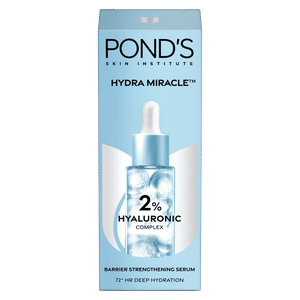
Ponds Hydra Miracle hyaluronic acid complex 2% Serum | 14 ml

Ponds Hydra Miracle hyaluronic acid complex 2% Serum | 14 ml
(AA) L.B.C.P.
ponds-hydra-miracle-hyaluronic-acid-complex-2-serum-14-ml
Serum
10084841029925
Morning or Evening?
How often will you use this product?
Notes


Highlights
WHAT IS IT?
Face Serum with 2% Hyaluronic Acid complex
FEATURES
72Hr intense hydration, micro hyaluronic acid molecules, plumps skin by 40%, improves skin elasticity by 18%, strengthens skin barrier by 30%, light water-like texture
BEST FOR
dry
CHECKS
Does not contain fragrance, oil, sulfates, parabens
Who Is It For?
Adults All GendersWhat Does It Help With?
Hydration Skin Plumping Elasticity Skin Barrier StrengtheningBudget
Affordable (under $30)How To Use
Which routine should it be used in?
Instructions:
Key Information


What (AA) L.B.C.P. Says
Product Description:
Get 72Hr intense hydration with new POND'S Hydra Light Serum. Formulated with 2% Hyaluronic acid complex. This deep hydrating serum has micro hyaluronic acid molecules which restore moisture in skin’s deepest layers for an instant plumping action. Plumps up skin by +40% instantly! Based on hydration Clinical study 2023. Light as an essence, yet deeply hydrating. Clinically proven to improve skin’s elasticity by 18% and strengthen skin barrier by 30%. It strengthens skin’s ability to stay hydrated and plump for long. POND'S Hydra Light Hyaluronic Acid Complex 2% Serum has a thin water like viscosity that helps it to absorb into the skin deeply for a plump hydrated skin. Use the entire hydration range for best results. After facewash, use POND'S Hydra Light Hyaluronic Acid Complex 2% Serum and POND'S Super Light Gel for day. And POND'S Hydra Light Hyaluronic Acid Complex 2% Serum and POND'S Hydrating Night gel at night post wash every day.
About the Brand:
Ingredients Overview
Ingredients List
Water, Glycerin,Niacinamide, Polysorbate 20,Phenoxyethanol, Ethyl Ascorbic Acid,Pentylene Glycol, Sodium AcetylatedHyaluronate, Sodium Hyaluronate,Sodium Hyaluronate Crosspolymer,Ethylhexylglycerin, Hydrolyzed SodiumHyaluronate, Disodium EDTA, SodiumHydroxide, Allantoin, TocopherylAcetate, Acrylates/C10-30Alkyl Acrylate Crosspolymer,lodopropynyl Butylcarbamate,Fragrance, Citronellol, HexylCinnamal, Limonene, Linalool,CI 42090
Key Ingredients
hyaluronic-acid-complex
Ingredients Details
Allantoin
Common Name(s): 5-ureidohydantoin,glyoxyldiureide,aluminum dihydroxy allantoinate
CAS Number: 97-59-6
DESCRIPTION
What It Does: Soothes irritation, accelerates wound healing, promotes skin cell renewal, and provides mild keratolytic exfoliation.
Why It's Used: Gold standard multi-function soothing active – one of the most widely used cosmetic ingredients across all product types for its exceptional tolerability and clinically proven multi-action skin conditioning.
How It Works: Promotes keratinocyte proliferation and fibroblast migration for wound healing. mild keratolytic activity by disrupting corneocyte binding. anti-irritant via direct protein binding and anti-inflammatory cytokine reduction. humectant activity via hydroxyl groups.
Typically Found In: Post-procedure products,sensitive skin formulas,wound care,anti-acne treatments,baby products
TECHNICAL DETAILS
Primary Category: Active ingredient – soothing / anti-inflammatory
Secondary Functions: Wound healing,keratolytic,anti-irritant
Application Areas:

Facial Skincare
Body Care

Hair Care
Beard Care
Color Cosmetics (Makeup)
Dietary/Oral Supplements
Typical Concentration Range: 0.1%–2%
SOURCING & ETHICS
Vegan Status: Yes – synthetic or comfrey-derived
Halal Status: Yes
Source Notes: Plant-derived extract or synthetic.
SKIN COMPATIBILITY
Irritancy Rating: 1/5 – very low
Comedogenicity Rating: 0/5 – non-comedogenic
Sensitivity Concerns: Exceptionally well-tolerated; suitable for all skin types including baby and compromised skin.
Safe for Sensitive Skin: Yes – particularly recommended for sensitive skin
SAFETY & COMPATIBILITY
Safety Profile: Excellent safety profile. ewg score: 1.
Works Well With: Ceramides,panthenol,allantoin,hyaluronic acid,centella asiatica
Avoid Combining With: No significant incompatibilities
SCIENTIFIC NOTE
Allantoin's keratinocyte proliferation stimulation occurs via receptor-mediated signaling (possibly machr activation) rather than non-specific irritation-driven proliferation, making it a true wound-healing stimulant rather than a pro-inflammatory proliferative signal.
Last Verified: Cosing database,cir safety assessment,araújo et al. allantoin review
Primary Sources: 2026-03-12
Ci 42090
Common Name(s): Ci 42090,approved cosmetic colorant,fd&c blue 1 pigment
CAS Number: N/a
DESCRIPTION
What It Does: Provides colour in cosmetic formulations within permitted application areas (eye, lip, or general) as specified per ci 42090 in fda 21 cfr 73/74 and eu annex iv.
Why It's Used: Regulatory compliance requires verifying permitted use category (fd&c, d&c, ext. d&c) and approved application area for each target market before formulating.
How It Works: Colour from electronic transitions in the chromophore structure — metal d-orbital transitions (inorganic pigments) or π→π* transitions (organic chromophores) absorb specific visible wavelengths providing the perceived complementary colour.
Typically Found In: Colour cosmetics
TECHNICAL DETAILS
Primary Category: Active ingredient – mineral / metal active
Secondary Functions: Antimicrobial,sebum regulation,antioxidant enzyme cofactor
Application Areas:
Facial Skincare
Body Care
Hair Care
Beard Care
Color Cosmetics (Makeup)
Dietary/Oral Supplements
Typical Concentration Range: Per fda/eu permitted list
SOURCING & ETHICS
Vegan Status: Conditional
Halal Status: Conditional
Source Notes: Mineral/inorganic compound. cosmetic or pharmaceutical grade.
SKIN COMPATIBILITY
Irritancy Rating: 1/5 – very low
Comedogenicity Rating: 0/5 – non-comedogenic
Sensitivity Concerns: Non-irritating at recommended concentrations.
Safe for Sensitive Skin: Yes at recommended concentrations
SAFETY & COMPATIBILITY
Safety Profile: Excellent safety profile at cosmetic concentrations. ewg score: 1–2.
Works Well With: Niacinamide,salicylic acid,other actives
Avoid Combining With: No significant incompatibilities at standard concentrations
SCIENTIFIC NOTE
Us fda requires batch certification per lot; eu annex iv restricts by product type. both markets require verifying the specific permitted use category for each colorant.
Last Verified: Fda 21 cfr 73/74,eu annex iv cosmetic colorant
Primary Sources: 2026-03-12
Citronellol
Common Name(s): (r)-3,7-dimethyl-6-octen-1-ol,rhodinol
CAS Number: 106-22-9
DESCRIPTION
What It Does: Provides soft, lasting rose-floral fragrance note.
Why It's Used: Essential rose fragrance monoterpene for lasting smooth floral notes in high-quality perfumery and cosmetic fragrances.
How It Works: Allylic alcohol monoterpene provides fixative property in fragrance blends. good skin substantivity for lasting scent. softer, rounder rose note vs geraniol's fresher character. natural in rose otto at 18-34%.
Typically Found In: Rose perfumes,floral fragrances,luxury skincare
TECHNICAL DETAILS
Primary Category: Fragrance component – monoterpene alcohol
Secondary Functions: Skin conditioning
Application Areas:
Facial Skincare
Body Care
Hair Care
Beard Care
Color Cosmetics (Makeup)
Dietary/Oral Supplements
Typical Concentration Range: 0.001%–1%
SOURCING & ETHICS
Vegan Status: Yes – from rose, geranium, citronella oils
Halal Status: Yes
Source Notes: Commercially produced for cosmetic use. verify vegan/halal status with supplier.
SKIN COMPATIBILITY
Irritancy Rating: 1/5 – very low
Comedogenicity Rating: 0/5 – non-comedogenic
Sensitivity Concerns: Well-tolerated by most skin types.
Safe for Sensitive Skin: Yes
SAFETY & COMPATIBILITY
Safety Profile: Eu cosmetics regulation: declared fragrance allergen. ifra guidelines apply.
Works Well With: Standard skincare actives
Avoid Combining With: No known significant incompatibilities
SCIENTIFIC NOTE
Citronellol's r-enantiomer (natural) vs s-enantiomer (synthetic) provide meaningfully different scent character – a remarkable demonstration of chiral scent discrimination by olfactory receptors. the (r) form provides the characteristic rose note while the (s) form has a distinctly different, less pleasant character. this enantiomeric scent difference means that the biological handedness of naturally-sourced vs racemic synthetic citronellol produces perceptibly different fragrance quality.
Last Verified: Cosing database,ifra standards
Primary Sources: 2026-03-12
Disodium Edta
Common Name(s): Edathamil disodium,edta disodium,versene 100
CAS Number: 139-33-3
DESCRIPTION
What It Does: Provides metal ion chelation to prevent product degradation and boost preservative and antioxidant efficacy.
Why It's Used: The most essential stability ingredient in cosmetics — disodium edta's metal chelation prevents rancidity, discoloration, and preservative failure caused by trace metal contamination in virtually all aqueous cosmetic formulations.
How It Works: Ethylenediaminetetraacetic acid provides six potential coordination sites for metal ions (aminodiacetate groups). chelates ca²⁺, mg²⁺ (stability), fe³⁺ (fenton radical prevention), cu²⁺ (oxidase inhibition). disrupts gram-negative bacterial outer membrane by chelating membrane calcium, enhancing preservative penetration.
Typically Found In: Virtually all aqueous cosmetics — creams, lotions, shampoos, toners
TECHNICAL DETAILS
Primary Category: Functional ingredient – chelating agent
Secondary Functions: Skin conditioning
Application Areas:
Facial Skincare
Body Care
Hair Care
Beard Care
Color Cosmetics (Makeup)
Dietary/Oral Supplements
Typical Concentration Range: 0.005%–0.1%
SOURCING & ETHICS
Vegan Status: Yes – synthetic
Halal Status: Yes
Source Notes: Commercially produced for cosmetic use. verify vegan/halal status with supplier.
SKIN COMPATIBILITY
Irritancy Rating: 1/5 – very low
Comedogenicity Rating: 0/5 – non-comedogenic
Sensitivity Concerns: Well-tolerated by most skin types.
Safe for Sensitive Skin: Yes
SAFETY & COMPATIBILITY
Safety Profile: Good safety profile at recommended concentrations. ewg score: 1–2.
Works Well With: Standard skincare actives
Avoid Combining With: No known significant incompatibilities
SCIENTIFIC NOTE
Disodium edta's preservative potentiation against gram-negative bacteria is mechanistically elegant: gram-negative outer membranes contain lipopolysaccharide stabilised by calcium and magnesium bridges. edta chelates these metal ions, destabilising the lps layer and creating pores that allow hydrophobic preservatives (phenoxyethanol, parabens) to penetrate — converting gram-negative-resistant preservatives into broad-spectrum ones.
Last Verified: Cosing database,cir safety assessment
Primary Sources: 2026-03-12
