

Plum
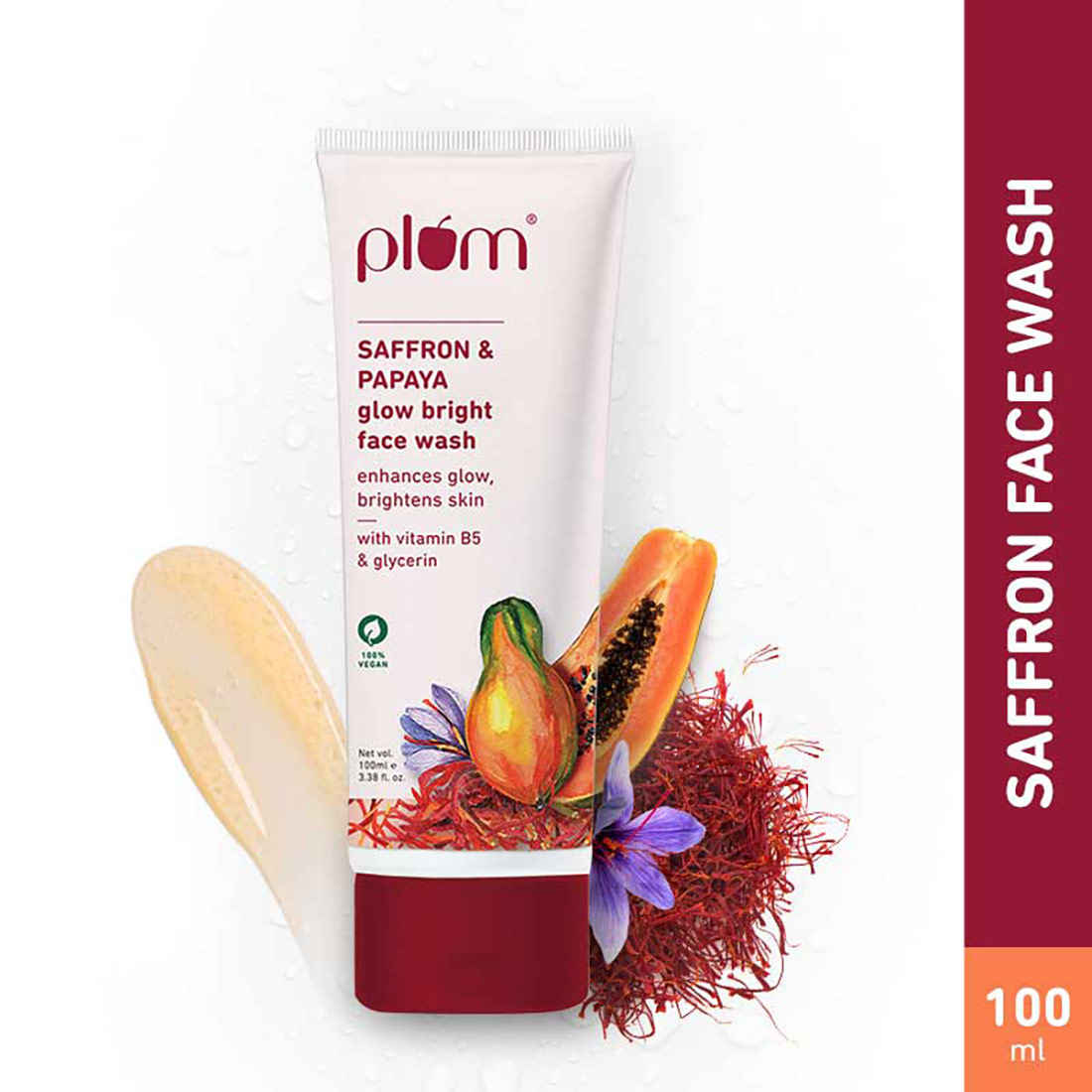
Plum Saffron & Papaya Glow Bright Gel Face Wash For Daily Use, Fights Dull Skin, Gentle & Non-Drying 100 ml

Plum Saffron & Papaya Glow Bright Gel Face Wash For Daily Use, Fights Dull Skin, Gentle & Non-Drying 100 ml
Plum
plum-saffron-papaya-glow-bright-gel-face-wash-for-daily-use-fights-dull-skin-gentle-non-drying-100-ml
Cleanse
10084779819301
Morning or Evening?
How often will you use this product?
Notes


Highlights
WHAT IS IT?
Face Wash with multiple ingredients: Saffron, Papaya Enzyme, Vitamin B5, Glycerin
FEATURES
Enhances overall skin health and youthfulness, improves cell turnover, gentle and non-drying, sulphate-free, boosts glow, fights dullness and dark spots
BEST FOR
all skin types
CHECKS
Sulfates
Who Is It For?
All Gender(s) All Age GroupsWhat Does It Help With?
Dull Skin Dark Spots Glow Enhancement Skin HealthBudget
Affordable (under ₹30) [note: Inr 220 Converted Approximately Selecting Affordable By Price Range]How To Use
Which routine should it be used in?
Instructions:
Key Information


What Plum Says
Product Description:
Meet the dream team of Saffron, Papaya Enzyme, Vitamin B5 & Glycerin in this luxurious face wash that enhances overall skin health & youthfulness by improving cell turnover. This gentle, non-drying sulphate-free face wash helps boost glow, fight dullness & dark spots to make you glow like never before!
About the Brand:
Ingredients Overview
Ingredients List
Aqua, Cocamidopropyl Betaine, Acrylates Copolymer, Coco Glucoside, Sodium Cocoyl Glycinate, Glycerin, Propanediol, Olive Oil PEG-7 Esters, Capryloyl/Caproyl Methyl Glucamide, Lauroyl/Myristoyl Methyl Glucamide, Crocus Sativus (Saffron) Oil, Lactobacillus/Papaya Fruit Ferment Extract, Leuconostoc/Radish Root Ferment Filtrate, Phenoxyethanol, Ethylhexylglycerin, Niacinamide, Triethanolamine, Panthenol, Fragrance, Sodium Gluconate, CI 15510, CI 47005
Key Ingredients
Saffron, Papaya Enzyme, Vitamin B5, Glycerin
Ingredients Details
Acrylates Copolymer
Common Name(s): Acrylic copolymer,carbopol ez,flexible film former
CAS Number: 25133-97-5
DESCRIPTION
What It Does: Provides versatile acrylic film formation and thickening across broad ph range.
Why It's Used: Versatile workhorse polymer for film formation and thickening across diverse cosmetic product types from acidic aha serums to alkaline cleansers.
How It Works: Copolymer of acrylic acid and methacrylic acid esters. thickens via polymer chain entanglement and electrostatic repulsion. film formation from chain entanglement on water evaporation. broad ph stability from balanced acid/neutral monomer composition.
Typically Found In: Serums,lotions,sunscreens — versatile across formulation types
TECHNICAL DETAILS
Primary Category: Functional ingredient – acrylic film former
Secondary Functions: Skin conditioning
Application Areas:

Facial Skincare

Body Care
Hair Care
Beard Care
Color Cosmetics (Makeup)
Dietary/Oral Supplements
Typical Concentration Range: 0.1%–3%
SOURCING & ETHICS
Vegan Status: Conditional - supplier confirmation required
Halal Status: Unverified - supplier confirmation required
Source Notes: Commercially produced for cosmetic use. verify vegan/halal status with supplier. [audit 2026-07-29 rev2: the record's own source_notes does not assert a non-animal origin, or instructs the reader to verify with the supplier; "yes" asserts knowledge the record does not hold. determination requires shariah-panel sign-off.]
SKIN COMPATIBILITY
Irritancy Rating: 1/5 – very low
Comedogenicity Rating: 0/5 – non-comedogenic
Sensitivity Concerns: Well-tolerated by most skin types.
Safe for Sensitive Skin: Yes
SAFETY & COMPATIBILITY
Safety Profile: Good safety profile at recommended concentrations. ewg score: 1–2.
Works Well With: Standard skincare actives
Avoid Combining With: No known significant incompatibilities
SCIENTIFIC NOTE
Acrylates copolymers' broad ph thickening stability (vs carbomer's ph-sensitive thickening, requiring neutralisation for viscosity) enables thickening of acidic aha serums (ph 3-4) without neutralisation — maintaining the low ph required for aha efficacy while providing viscosity control. this acid-stable thickening is impossible with conventional carbomers.
Last Verified:
Capryloyl/caproyl Methyl Glucamide
Common Name(s): Capryloyl/caproyl methyl glucamide
DESCRIPTION
What It Does: Delivers targeted skin-conditioning or bioactive benefits through a specific mechanism of action suited to the formulation's intended purpose.
Why It's Used: Specialty actives address specific skin concerns through targeted molecular mechanisms, providing efficacy beyond what base formulation ingredients alone can achieve.
How It Works: The bioactive compound interacts with specific molecular targets in skin cells or the extracellular matrix — enzymes, receptors, structural proteins, or signaling molecules — triggering beneficial biological responses.
Typically Found In: Serums,treatments,moisturizers,specialty products
TECHNICAL DETAILS
Primary Category: Specialty actives
Secondary Functions: Skin-conditioning,anti-aging
Application Areas:
Facial Skincare
Body Care
Hair Care
Beard Care
Color Cosmetics (Makeup)
Dietary/Oral Supplements
Typical Concentration Range: 0.01–5%
SOURCING & ETHICS
Vegan Status: Conditional - supplier confirmation required
Halal Status: Unverified - supplier confirmation required
Source Notes: Specialty active ingredient; check individual sourcing for vegan status. [audit 2026-07-29 rev2: the record's own source_notes does not assert a non-animal origin, or instructs the reader to verify with the supplier; "yes" asserts knowledge the record does not hold. determination requires shariah-panel sign-off.]
SKIN COMPATIBILITY
Irritancy Rating: 1
Comedogenicity Rating: 0
Sensitivity Concerns: Low sensitization potential at recommended use concentrations.
Safe for Sensitive Skin: Yes
SAFETY & COMPATIBILITY
Safety Profile: Well-characterized cosmetic ingredient with established safety profile. generally non-irritating at typical use concentrations. suitable for leave-on and rinse-off cosmetics.
Works Well With: Niacinamide,hyaluronic acid,vitamin c,peptides
Avoid Combining With: Incompatible with oxidizing agents; check ph stability
SCIENTIFIC NOTE
Specialty actives typically work through enzyme inhibition (e.g., tyrosinase inhibition for brightening, mmp inhibition for anti-aging), receptor activation (e.g., retinoid receptors, ppar-γ for barrier genes), or transcription factor modulation (e.g., nrf2 for antioxidant gene upregulation). structure-activity relationships determine potency and selectivity.
Last Verified: 2025-01-15
Primary Sources: Cosing eu database; pcpc cosmetic ingredient safety reviews; ingredient-specific safety and efficacy literature
Ci 15510
Common Name(s): Ci 15510,approved cosmetic colorant,colour cosmetics pigment
CAS Number: N/a
DESCRIPTION
What It Does: Provides colour in cosmetic formulations within the permitted application areas and concentrations specified by fda 21 cfr 73/74 and eu cosmetics regulation annex iv.
Why It's Used: Regulatory compliance requires verifying both the permitted use category (fd&c, d&c, ext. d&c) and the specific application area approval for each colorant in each target market.
How It Works: Colour arises from selective wavelength absorption by the chromophore structure — electronic transitions (d-orbital for transition metal pigments; π→π* for organic chromophores) absorb specific visible wavelengths providing the perceived complementary colour.
Typically Found In: Colour cosmetics
TECHNICAL DETAILS
Primary Category: Active ingredient – mineral / metal active
Secondary Functions: Antimicrobial,sebum regulation,antioxidant enzyme cofactor
Application Areas:
Facial Skincare
Body Care
Hair Care
Beard Care
Color Cosmetics (Makeup)
Dietary/Oral Supplements
Typical Concentration Range: Per product type — check fda/eu permitted list
SOURCING & ETHICS
Vegan Status: Conditional - supplier confirmation required
Halal Status: Conditional - basis not stated in source record; supplier origin confirmation required to determine what evidence applies
Source Notes: Mineral/inorganic compound. cosmetic or pharmaceutical grade. [audit 2026-07-29 rev2: status downgraded on audit. determination requires shariah-panel sign-off.]
SKIN COMPATIBILITY
Irritancy Rating: 1/5 – very low
Comedogenicity Rating: 0/5 – non-comedogenic
Sensitivity Concerns: Non-irritating at recommended concentrations.
Safe for Sensitive Skin: Yes at recommended concentrations
SAFETY & COMPATIBILITY
Safety Profile: Excellent safety profile at cosmetic concentrations. ewg score: 1–2.
Works Well With: Niacinamide,salicylic acid,other actives
Avoid Combining With: No significant incompatibilities at standard concentrations
SCIENTIFIC NOTE
All cosmetic colorants in the us require fda batch certification confirming identity and purity per lot — uncertified batches cannot legally appear in finished us cosmetics. eu annex iv lists permitted colorants with specific maximum concentrations and use restrictions by product category.
Last Verified: 2026-03-12
Primary Sources: Fda 21 cfr 73/74,eu cosmetics regulation annex iv,colorant regulatory review
Ci 47005
Common Name(s): Ci 47005,approved cosmetic colorant,colour cosmetics pigment
CAS Number: N/a
DESCRIPTION
What It Does: Provides colour in cosmetic formulations within the permitted application areas and concentrations specified by fda 21 cfr 73/74 and eu cosmetics regulation annex iv.
Why It's Used: Regulatory compliance requires verifying both the permitted use category (fd&c, d&c, ext. d&c) and the specific application area approval for each colorant in each target market.
How It Works: Colour arises from selective wavelength absorption by the chromophore structure — electronic transitions (d-orbital for transition metal pigments; π→π* for organic chromophores) absorb specific visible wavelengths providing the perceived complementary colour.
Typically Found In: Colour cosmetics
TECHNICAL DETAILS
Primary Category: Active ingredient – mineral / metal active
Secondary Functions: Antimicrobial,sebum regulation,antioxidant enzyme cofactor
Application Areas:
Facial Skincare
Body Care
Hair Care
Beard Care
Color Cosmetics (Makeup)
Dietary/Oral Supplements
Typical Concentration Range: Per product type — check fda/eu permitted list
SOURCING & ETHICS
Vegan Status: Conditional - supplier confirmation required
Halal Status: Conditional - basis not stated in source record; supplier origin confirmation required to determine what evidence applies
Source Notes: Mineral/inorganic compound. cosmetic or pharmaceutical grade. [audit 2026-07-29 rev2: status downgraded on audit. determination requires shariah-panel sign-off.]
SKIN COMPATIBILITY
Irritancy Rating: 1/5 – very low
Comedogenicity Rating: 0/5 – non-comedogenic
Sensitivity Concerns: Non-irritating at recommended concentrations.
Safe for Sensitive Skin: Yes at recommended concentrations
SAFETY & COMPATIBILITY
Safety Profile: Excellent safety profile at cosmetic concentrations. ewg score: 1–2.
Works Well With: Niacinamide,salicylic acid,other actives
Avoid Combining With: No significant incompatibilities at standard concentrations
SCIENTIFIC NOTE
All cosmetic colorants in the us require fda batch certification confirming identity and purity per lot — uncertified batches cannot legally appear in finished us cosmetics. eu annex iv lists permitted colorants with specific maximum concentrations and use restrictions by product category.
Last Verified: 2026-03-12
Primary Sources: Fda 21 cfr 73/74,eu cosmetics regulation annex iv,colorant regulatory review