
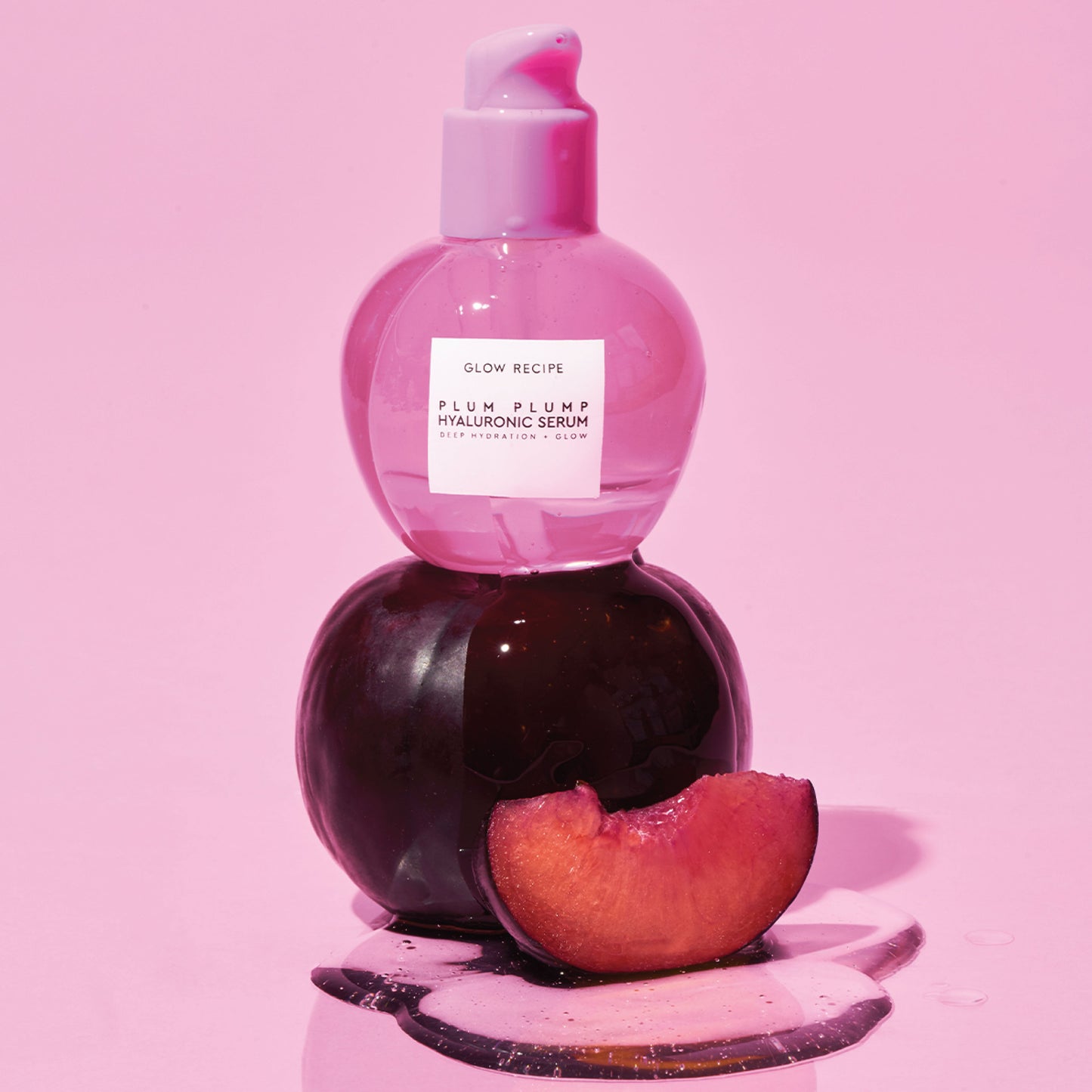

Glow Recipe
Plum Plump Hyaluronic Serum

Plum Plump Hyaluronic Serum
Glow Recipe
plum-plump-hyaluronic-serum
Serum
9784796283173
Morning or Evening?
How often will you use this product?
Notes


Highlights
WHAT IS IT?
Hyaluronic Serum with 5 molecular weights of hyaluronic acid
FEATURES
Silky watergel texture, Lightweight, Oil-free, Contains vegan silk protein
BEST FOR
dry
CHECKS
Oil-free
Who Is It For?
All Ages All GendersWhat Does It Help With?
Hydration Fine Lines Plumping Dehydrated SkinBudget
Mid-range ($30-$75)How To Use
Which routine should it be used in?
Instructions:
Key Information


What Glow Recipe Says
Product Description:
Plump your skin by filling each skin layer with intense, juicy hydration with the Plum Plump Hyaluronic Serum. Its silky, watergel texture is infused with juicy plum and 5 molecular weights of next-gen hyaluronic acid that fill each skin layer with hydration for visibly plumper skin. Formulated with vegan silk protein, this lightweight, oil-free serum deeply hydrates dry, dehydrated skin and diminishes the appearance of visible fine lines for healthy, bouncy, youthful skin.
About the Brand:
Ingredients Overview
Ingredients List
Aqua/Water/Eau, Glycerin, Propanediol, Pentylene Glycol, Pleiogynium Timorense Fruit Extract, Podocarpus Elatus Fruit Extract, Terminalia Ferdinandiana Fruit Extract, Sodium Acetylated Hyaluronate, Sodium Hyaluronate, Tremella Fuciformis Polysaccharide, Acacia Seyal Gum Extract, sr-Spider Polypeptide-1**, Pantothenic Acid, Phospholipids, Sodium Hydroxide, Spirulina Platensis Extract, Raphanus Sativus Root Extract, Caprylyl Glycol, Chlorphenesin, Tetrasodium Glutamate Diacetate, Polyglyceryl-6 Caprylate, Polyglyceryl-4 Caprate, Potassium Sorbate, Propylene Glycol, Leuconostoc/Radish Root Ferment Filtrate, 1,2-Hexanediol, Citric Acid, Ethylhexylglycerin, Hydroxyacetophenone, Carrageenan, Xanthan Gum, Sodium Glycolate, Sodium Formate, Phenoxyethanol, Fragrance/Parfum*. *Natural Fragrance
Key Ingredients
plum, hyaluronic-acid, vegan-silk-protein
Ingredients Details
Glycerin
Common Name(s): Glycerol,glycerine,1,2,3-propanetriol
CAS Number: 56-81-5
DESCRIPTION
What It Does: Glycerin pulls water from the environment and deeper skin layers into the outer skin layer (epidermis), boosting moisture levels and keeping skin soft, smooth, and plump.
Why It's Used: It is used in virtually every moisturizer, serum, and cleanser because it is highly effective at hydrating skin, is well-tolerated by all skin types, and enhances the texture and spreadability of formulations.
How It Works: As a humectant, glycerin forms hydrogen bonds with water molecules, trapping them in the skin. it also reinforces the skin barrier by integrating into lipid structures between skin cells.
Typically Found In: Moisturizers,serums,cleansers,toners,sheet masks,sunscreens,body lotions,shampoos,conditioners
TECHNICAL DETAILS
Primary Category: Humectant
Secondary Functions: Skin barrier support,emollient,solvent
Application Areas:

Facial Skincare
Body Care
Hair Care
Beard Care

Color Cosmetics (Makeup)
Dietary/Oral Supplements
Typical Concentration Range: 1%–30% (typical: 3–10%)
SOURCING & ETHICS
Vegan Status: Conditional - feedstock declaration required
Halal Status: Unverified - feedstock declaration required (plant, animal and petrochemical routes all exist)
Source Notes: Derived from plant oils via hydrolysis or saponification; synthetic versions also available. palm-derived glycerin carries sustainability concerns. [audit 2026-07-29 rev2: origin-dependent: the same inci exists in plant, animal and petrochemical versions and the name does not discriminate. determination requires shariah-panel sign-off.]
SKIN COMPATIBILITY
Irritancy Rating: 1/5 – very low; non-irritating at all standard concentrations
Comedogenicity Rating: 0/5 – non-comedogenic
Sensitivity Concerns: Extremely rare allergic reactions; generally safe for all skin types including sensitive and baby skin
Safe for Sensitive Skin: Yes
SAFETY & COMPATIBILITY
Safety Profile: Widely recognized as safe. ewg hazard score: 1. no significant concerns for irritation, sensitization, or toxicity at typical concentrations (up to 50%).
Works Well With: Hyaluronic acid,ceramides,niacinamide,panthenol,urea,peptides,retinol,ahas/bhas
Avoid Combining With: No known incompatibilities at standard concentrations
SCIENTIFIC NOTE
Glycerin is an endogenous skin component found naturally in the stratum corneum. aquaporin-3 channels in keratinocytes facilitate glycerin transport, making it integral to natural skin hydration pathways.
Last Verified: 2026-03-12
Primary Sources: Cosing database,cir safety assessment,ewg skin deep,inci decoder
Pentylene Glycol
Common Name(s): 1,2-pentanediol,pentanediol,hydrolite-5
CAS Number: 5765-44-6
DESCRIPTION
What It Does: Provides humectant moisture retention with antimicrobial preservative-boosting activity.
Why It's Used: The balanced multifunctional diol — pentylene glycol provides the ideal balance of humectancy and antimicrobial activity for clean beauty preservation systems with excellent sensory compatibility.
How It Works: C5 diol: longer chain than propylene glycol providing better antimicrobial activity but shorter than 1,2-hexanediol (slightly lower membrane activity). two oh groups provide humectant water binding. solvent for fragrances and some actives. synergistic with phenoxyethanol reducing required phenoxyethanol concentration.
Typically Found In: Clean beauty products,natural preservation systems,moisturisers
TECHNICAL DETAILS
Primary Category: Functional ingredient – multifunctional pentanediol
Secondary Functions: Tewl reduction,skin plumping
Application Areas:
Facial Skincare
Body Care
Hair Care
Beard Care
Color Cosmetics (Makeup)
Dietary/Oral Supplements
Typical Concentration Range: 0.5%–3%
SOURCING & ETHICS
Vegan Status: Yes – synthetic
Halal Status: Yes
Source Notes: Synthetic or naturally derived. excellent aqueous solubility.
SKIN COMPATIBILITY
Irritancy Rating: 1/5 – very low
Comedogenicity Rating: 0/5 – non-comedogenic
Sensitivity Concerns: Non-irritating; suitable for all skin types.
Safe for Sensitive Skin: Yes
SAFETY & COMPATIBILITY
Safety Profile: Excellent safety profile. ewg score: 1.
Works Well With: Ceramides,emollients,occlusives,glycerin,hyaluronic acid
Avoid Combining With: No significant incompatibilities
SCIENTIFIC NOTE
Pentylene glycol's position in clean beauty preservation is due to a regulatory quirk: 1,2-pentanediol is not classified as a preservative in eu cosmetics regulations (unlike phenoxyethanol which requires preservative listing), so it can provide antimicrobial activity while not requiring the 'contains preservative' designation — enabling cleaner labels in natural-positioned formulations.
Last Verified: 2026-03-12
Primary Sources: Cosing database,dsm hydrolite-5 technical data,cir safety assessment
Podocarpus Elatus Fruit Extract
Common Name(s): Podocarpus elatus fruit extract,podocarpus elatus fruit extract,botanical extract,phytochemical active
CAS Number: N/a
DESCRIPTION
What It Does: Provides antioxidant protection from polyphenol radical scavenging, anti-inflammatory activity from terpenoid nf-kb/cox pathway inhibition, and skin conditioning from the secondary metabolite complex.
Why It's Used: Podocarpus elatus fruit extract is selected for the characteristic secondary metabolite signature of podocarpus elatus — whether polyphenols, terpenoids, alkaloids, or polysaccharides, the phytochemical profile provides antioxidant, anti-inflammatory, or skin conditioning benefits specific to this botanical species.
How It Works: Polyphenol catechol h-atom donation for ros scavenging (10⁶-10⁹ m⁻¹s⁻¹); terpenoids inhibit iκb kinase; flavonoids compete at cox-1/2; alkaloids modulate specific receptor targets.
Typically Found In: Botanical skin care
TECHNICAL DETAILS
Primary Category: Active ingredient – antioxidant
Secondary Functions: Free radical scavenging,anti-aging
Application Areas:
Facial Skincare
Body Care
Hair Care
Beard Care
Color Cosmetics (Makeup)
Dietary/Oral Supplements
Typical Concentration Range: 0.1%–10%
SOURCING & ETHICS
Vegan Status: Conditional - supplier confirmation required
Halal Status: Conditional - basis not stated in source record; supplier origin confirmation required to determine what evidence applies
Source Notes: Plant-derived extract or synthetic. [audit 2026-07-29 rev2: status downgraded on audit. determination requires shariah-panel sign-off.]
SKIN COMPATIBILITY
Irritancy Rating: 1/5 – very low
Comedogenicity Rating: 0/5 – non-comedogenic
Sensitivity Concerns: Non-irritating; well-tolerated.
Safe for Sensitive Skin: Yes
SAFETY & COMPATIBILITY
Safety Profile: Excellent safety profile. ewg score: 1.
Works Well With: Vitamin c,vitamin e,ferulic acid,spf,other antioxidants
Avoid Combining With: No significant incompatibilities
SCIENTIFIC NOTE
Standardise to marker compounds for consistent bioactivity — field-grown material varies 3-10× in secondary metabolite content.
Last Verified: 2026-03-22
Primary Sources: Cosing database,podocarpus elatus fruit extract botanical extract review
Propanediol
Common Name(s): 1,3-propanediol,zemea,bio-propanediol
CAS Number: 504-63-2
DESCRIPTION
What It Does: Provides humectant and solvent functionality from sustainable corn-based fermentation.
Why It's Used: Bio-based propylene glycol alternative from renewable corn — propanediol provides equivalent functionality to propylene glycol with sustainable renewable feedstock and superior skin feel.
How It Works: Two oh groups provide humectant water binding. excellent solvent for fragrances, actives, and preservatives. mild antimicrobial from diol structure for preservative system boosting. renew corn fermentation origin (dupont zemea process). better skin feel than propylene glycol — less sticky.
Typically Found In: Virtually all cosmetic categories as pg alternative
TECHNICAL DETAILS
Primary Category: Functional ingredient – humectant
Secondary Functions: Tewl reduction,skin plumping
Application Areas:
Facial Skincare
Body Care
Hair Care
Beard Care
Color Cosmetics (Makeup)
Dietary/Oral Supplements
Typical Concentration Range: 1%–20%
SOURCING & ETHICS
Vegan Status: Yes – from corn sugar fermentation
Halal Status: Yes
Source Notes: Synthetic or naturally derived. excellent aqueous solubility.
SKIN COMPATIBILITY
Irritancy Rating: 1/5 – very low
Comedogenicity Rating: 0/5 – non-comedogenic
Sensitivity Concerns: Non-irritating; suitable for all skin types.
Safe for Sensitive Skin: Yes
SAFETY & COMPATIBILITY
Safety Profile: Excellent safety profile. ewg score: 1.
Works Well With: Ceramides,emollients,occlusives,glycerin,hyaluronic acid
Avoid Combining With: No significant incompatibilities
SCIENTIFIC NOTE
Propanediol's dupont tate & lyle bio products 'zemea' process ferments corn sugar to 1,3-propanediol using engineered e. coli — one of the first commercially viable bio-fermentation routes to a cosmetic diol previously made only from petroleum. the renewable route produces chemically identical 1,3-propanediol while reducing carbon footprint by approximately 40% vs petrochemical synthesis.
Last Verified: 2026-03-12
Primary Sources: Cosing database,dupont tate & lyle zemea technical data,cir safety assessment