

Plum
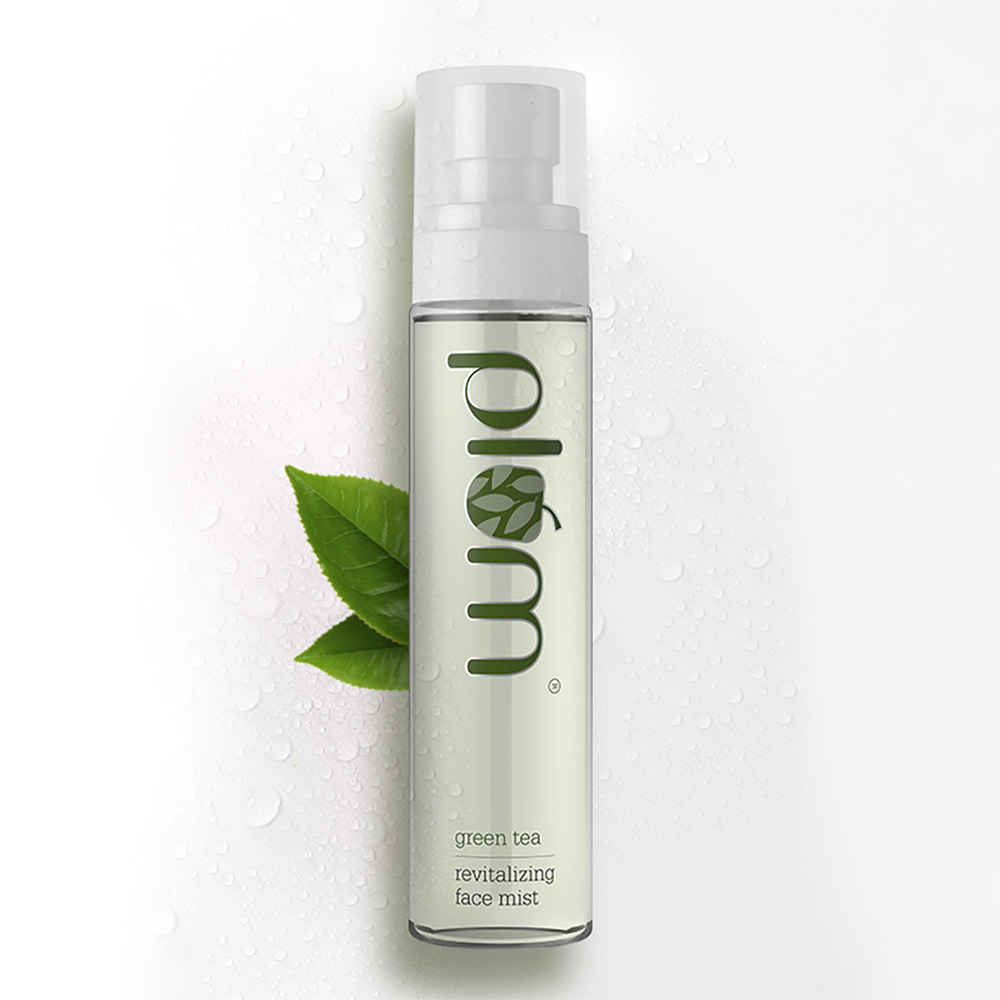
Plum Green Tea Revitalizing Face Mist Spray With Glycolic Acid & Aloe Vera - Hydrates & Refreshes 100 ml

Plum Green Tea Revitalizing Face Mist Spray With Glycolic Acid & Aloe Vera - Hydrates & Refreshes 100 ml
Plum
plum-green-tea-revitalizing-face-mist-spray-with-glycolic-acid-aloe-vera-hydrates-refreshes-100-ml
Face Mist
10084942315813
Morning or Evening?
How often will you use this product?
Notes


Highlights
WHAT IS IT?
Face mist product with Green Tea ingredient
FEATURES
Instantly cooling, refreshing & revitalizing; Noncomedogenic; Can be used alongside SPF and moisturizers; Travel-friendly spray pack
BEST FOR
sensitive
CHECKS
no heavy fragrances mentioned, no parabens mentioned
Who Is It For?
All Genders No Specific Age Range MentionedWhat Does It Help With?
Hydrates & Refreshes SkinBudget
Affordable (under $30)How To Use
Which routine should it be used in?
Instructions:
Key Information


What Plum Says
Product Description:
Instantly cooling, refreshing & revitalizing face mist. Noncomedogenic ingredients. Can be used alongside SPF and moisturizers. Travel-friendly spray pack
About the Brand:
Ingredients Overview
Ingredients List
Aqua, Aloe Barbadensis (Aloe) Leaf Juice, PEG-40 Hydrogenated Castor Oil, Camellia Sinensis (Green Tea) Leaf Extract, Lycium Barbarum (Goji) Fruit Extract, Ginkgo Biloba Leaf Extract, Zingiber Officinale (Ginger) Root Extract, Glycerin, Phenoxyethanol, Ethylhexylglycerin, Fragrance, Polysorbate 20, Sodium Gluconate, Glycolic Acid, CI 42090, CI 19140
Key Ingredients
Green Tea,Glycolic Acid,Aloe Vera
Ingredients Details
Ci 19140
Common Name(s): Ci 19140,approved cosmetic colorant,fd&c yellow 5 pigment
CAS Number: N/a
DESCRIPTION
What It Does: Provides colour in cosmetic formulations within permitted application areas (eye, lip, or general) as specified per ci 19140 in fda 21 cfr 73/74 and eu annex iv.
Why It's Used: Regulatory compliance requires verifying permitted use category (fd&c, d&c, ext. d&c) and approved application area for each target market before formulating.
How It Works: Colour from electronic transitions in the chromophore structure — metal d-orbital transitions (inorganic pigments) or π→π* transitions (organic chromophores) absorb specific visible wavelengths providing the perceived complementary colour.
Typically Found In: Colour cosmetics
TECHNICAL DETAILS
Primary Category: Active ingredient – mineral / metal active
Secondary Functions: Antimicrobial,sebum regulation,antioxidant enzyme cofactor
Application Areas:

Facial Skincare

Body Care
Hair Care
Beard Care
Color Cosmetics (Makeup)
Dietary/Oral Supplements
Typical Concentration Range: Per fda/eu permitted list
SOURCING & ETHICS
Vegan Status: Conditional - supplier confirmation required
Halal Status: Conditional - basis not stated in source record; supplier origin confirmation required to determine what evidence applies
Source Notes: Mineral/inorganic compound. cosmetic or pharmaceutical grade. [audit 2026-07-29 rev2: status downgraded on audit. determination requires shariah-panel sign-off.]
SKIN COMPATIBILITY
Irritancy Rating: 1/5 – very low
Comedogenicity Rating: 0/5 – non-comedogenic
Sensitivity Concerns: Non-irritating at recommended concentrations.
Safe for Sensitive Skin: Yes at recommended concentrations
SAFETY & COMPATIBILITY
Safety Profile: Excellent safety profile at cosmetic concentrations. ewg score: 1–2.
Works Well With: Niacinamide,salicylic acid,other actives
Avoid Combining With: No significant incompatibilities at standard concentrations
SCIENTIFIC NOTE
Us fda requires batch certification per lot; eu annex iv restricts by product type. both markets require verifying the specific permitted use category for each colorant.
Last Verified: 2026-03-12
Primary Sources: Fda 21 cfr 73/74,eu annex iv cosmetic colorant
Ci 42090
Common Name(s): Ci 42090,approved cosmetic colorant,fd&c blue 1 pigment
CAS Number: N/a
DESCRIPTION
What It Does: Provides colour in cosmetic formulations within permitted application areas (eye, lip, or general) as specified per ci 42090 in fda 21 cfr 73/74 and eu annex iv.
Why It's Used: Regulatory compliance requires verifying permitted use category (fd&c, d&c, ext. d&c) and approved application area for each target market before formulating.
How It Works: Colour from electronic transitions in the chromophore structure — metal d-orbital transitions (inorganic pigments) or π→π* transitions (organic chromophores) absorb specific visible wavelengths providing the perceived complementary colour.
Typically Found In: Colour cosmetics
TECHNICAL DETAILS
Primary Category: Active ingredient – mineral / metal active
Secondary Functions: Antimicrobial,sebum regulation,antioxidant enzyme cofactor
Application Areas:
Facial Skincare
Body Care
Hair Care
Beard Care
Color Cosmetics (Makeup)
Dietary/Oral Supplements
Typical Concentration Range: Per fda/eu permitted list
SOURCING & ETHICS
Vegan Status: Conditional - supplier confirmation required
Halal Status: Conditional - basis not stated in source record; supplier origin confirmation required to determine what evidence applies
Source Notes: Mineral/inorganic compound. cosmetic or pharmaceutical grade. [audit 2026-07-29 rev2: status downgraded on audit. determination requires shariah-panel sign-off.]
SKIN COMPATIBILITY
Irritancy Rating: 1/5 – very low
Comedogenicity Rating: 0/5 – non-comedogenic
Sensitivity Concerns: Non-irritating at recommended concentrations.
Safe for Sensitive Skin: Yes at recommended concentrations
SAFETY & COMPATIBILITY
Safety Profile: Excellent safety profile at cosmetic concentrations. ewg score: 1–2.
Works Well With: Niacinamide,salicylic acid,other actives
Avoid Combining With: No significant incompatibilities at standard concentrations
SCIENTIFIC NOTE
Us fda requires batch certification per lot; eu annex iv restricts by product type. both markets require verifying the specific permitted use category for each colorant.
Last Verified: 2026-03-12
Primary Sources: Fda 21 cfr 73/74,eu annex iv cosmetic colorant
Ethylhexylglycerin
Common Name(s): Octylglycerin,2-ethylhexyl glycerol ether,sensiva sc 10
CAS Number: 70445-33-9
DESCRIPTION
What It Does: Provides antimicrobial skin conditioning with deodorant activity and preservation system enhancement.
Why It's Used: Multifunctional clean beauty preservation active — ethylhexylglycerin provides antimicrobial, deodorant, and skin conditioning in a single ingredient accepted in most natural cosmetic certification schemes.
How It Works: Glycerol ether provides antimicrobial via bacterial membrane phospholipid disruption. deodorant activity via reduction of underarm lipase enzyme activity (similar mechanism to triethyl citrate). skin conditioning from glycerol humectant component. synergistic with phenoxyethanol and diols.
Typically Found In: Natural preservation systems,deodorants,skin conditioning products
TECHNICAL DETAILS
Primary Category: Functional ingredient – antimicrobial glycerol ether
Secondary Functions: Skin conditioning
Application Areas:
Facial Skincare
Body Care
Hair Care
Beard Care
Color Cosmetics (Makeup)
Dietary/Oral Supplements
Typical Concentration Range: 0.1%–0.5%
SOURCING & ETHICS
Vegan Status: Conditional - supplier confirmation required
Halal Status: Unverified - supplier confirmation required
Source Notes: Commercially produced for cosmetic use. verify vegan/halal status with supplier. [audit 2026-07-29 rev2: the record's own source_notes does not assert a non-animal origin, or instructs the reader to verify with the supplier; "yes" asserts knowledge the record does not hold. determination requires shariah-panel sign-off.]
SKIN COMPATIBILITY
Irritancy Rating: 1/5 – very low
Comedogenicity Rating: 0/5 – non-comedogenic
Sensitivity Concerns: Well-tolerated by most skin types.
Safe for Sensitive Skin: Yes
SAFETY & COMPATIBILITY
Safety Profile: Good safety profile at recommended concentrations. ewg score: 1–2.
Works Well With: Standard skincare actives
Avoid Combining With: No known significant incompatibilities
SCIENTIFIC NOTE
Ethylhexylglycerin's deodorant mechanism is pharmacologically identical to triethyl citrate: both inhibit skin surface microbial lipase enzymes that convert odourless triglycerides to odorous free fatty acids. the glycerol ether structure of ethylhexylglycerin, combined with the 2-ethylhexyl chain, provides lipase inhibition similar to ester-based lipase inhibitors from a different chemical class.
Last Verified: 2026-03-12
Primary Sources: Cosing database,schülke sensiva sc 10 technical data,cir safety assessment
Fragrance
Common Name(s): Fragrance ingredient,eu allergen or aromatic component,olfactory/flavour
CAS Number: N/a
DESCRIPTION
What It Does: Provides the complete fragrance profile contributing to product sensory experience and consumer appeal.
Why It's Used: Fragrance is a major consumer purchase driver — up to 70% of consumers make purchasing decisions partially based on product scent.
How It Works: Fragrance blends interact with olfactory receptors providing the sensory profile — complex mixtures activate multiple receptor types for rich, multidimensional scent experiences.
Typically Found In: All fragrance products
TECHNICAL DETAILS
Primary Category: Active ingredient – cosmetic active
Secondary Functions: Skin conditioning
Application Areas:
Facial Skincare
Body Care
Hair Care
Beard Care
Color Cosmetics (Makeup)
Dietary/Oral Supplements
Typical Concentration Range: Standard use levels
SOURCING & ETHICS
Vegan Status: Conditional - supplier confirmation required
Halal Status: Unverified - supplier confirmation required
Source Notes: Commercially produced for cosmetic use. verify vegan/halal status with supplier. [audit 2026-07-29 rev2: the record's own source_notes does not assert a non-animal origin, or instructs the reader to verify with the supplier; "yes" asserts knowledge the record does not hold. determination requires shariah-panel sign-off.]
SKIN COMPATIBILITY
Irritancy Rating: 1/5 – very low
Comedogenicity Rating: 0/5 – non-comedogenic
Sensitivity Concerns: Well-tolerated by most skin types.
Safe for Sensitive Skin: Yes
SAFETY & COMPATIBILITY
Safety Profile: Good safety profile at recommended concentrations. ewg score: 1–2.
Works Well With: Standard skincare actives
Avoid Combining With: No known significant incompatibilities
SCIENTIFIC NOTE
Ifra guidelines set usage limits for fragrance ingredients based on skin sensitisation and phototoxicity assessment for each application category.
Last Verified: 2026-03-12
Primary Sources: Eu regulation 1223/2009 annex iii,ifra standards,fragrance allergen declaration requirements