

Satiya Nutraceuticals Pvt Ltd
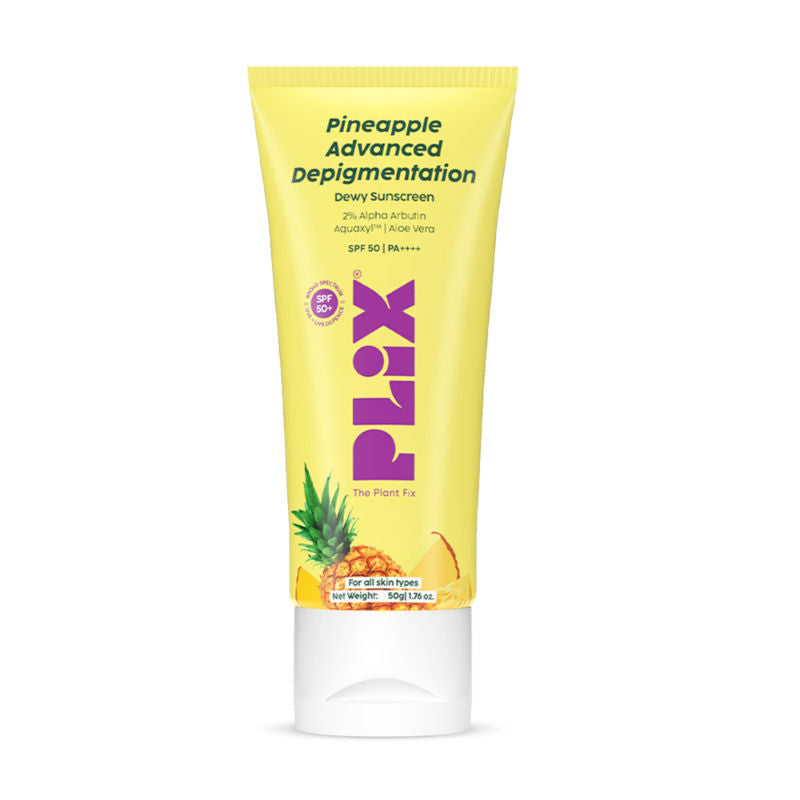
Plix Pineapple Advanced Depigmentation Dewy Sunscreen SPF 50 PA++++

Plix Pineapple Advanced Depigmentation Dewy Sunscreen SPF 50 PA++++
Satiya Nutraceuticals Pvt Ltd
plix-pineapple-advanced-depigmentation-dewy-sunscreen-spf-50-pa
Suncare
10084828905765
Morning or Evening?
How often will you use this product?
Notes


Highlights
WHAT IS IT?
Sunscreen with 2% Alpha Arbutin and other hydrating and soothing ingredients
FEATURES
Broad-spectrum sun protection with SPF 50 PA++++, reduces dark spots with 2% Alpha Arbutin, deep hydration with Aquaxyl, soothing with Aloe Vera, lightweight dewy non-greasy formula
BEST FOR
sensitive
CHECKS
parabens,mineral oils,silicones
Who Is It For?
What Does It Help With?
Sun Protection Hyperpigmentation Dark Spots Hydration Soothing Irritation Anti-photoagingBudget
Affordable (under $30)How To Use
Which routine should it be used in?
Instructions:
Key Information


What Satiya Nutraceuticals Pvt Ltd Says
Product Description:
The Pineapple Advanced Depigmentation Dewy Sunscreen SPF 50 PA++++ is your go-to solution for sun protection and skin brightening. This advanced sunscreen blends potent ingredients like 2% Alpha Arbutin, Aquaxyl, Aloe Vera, and Suncat De to not only protect your skin from harmful UVA, UVB, and blue light rays but also target hyperpigmentation and improve skin tone. The inclusion of Alpha Arbutin helps reduce dark spots, while Aquaxyl deeply hydrates and strengthens the skin’s moisture barrier. Aloe Vera soothes the skin, reducing pigmentation and promoting an even skin tone. Suncat De offers broad-spectrum protection, shielding your skin from photoaging caused by sun exposure. With its dewy, non-greasy formula, this sunscreen absorbs quickly, leaving your skin hydrated, glowing, and protected. For optimal results, apply this sunscreen daily as the last step of your skincare routine.Plix Pineapple Advanced Depigmentation Dewy Sunscreen SPF 50 PA++++ is a scientifically formulated sunscreen designed to provide broad-spectrum protection while addressing skin pigmentation concerns. Enriched with 2% Alpha Arbutin, this advanced formulation helps reduce the appearance of dark spots and uneven skin tone by inhibiting excess melanin production.Powered by Suncat De, a clinically proven sun protection complex, this sunscreen shields against UVA, UVB, and blue light damage, preventing premature aging and sun-induced pigmentation. The addition of Aquaxyl, a potent humectant, ensures long-lasting hydration, strengthening the skin’s moisture barrier and preventing dryness. Aloe Vera further enhances the formula by soothing irritation, promoting skin healing, and maintaining a healthy, radiant complexion. The lightweight, dewy-finish formula absorbs quickly into the skin without leaving a white cast, making it ideal for daily use. Dermatologically tested and free from parabens, mineral oils, and silicones, this vegan sunscreen is suitable for all skin types, providing high-performance sun defense with skincare benefits.
About the Brand:
Ingredients Overview
Ingredients List
aqua,ethylhexyl-methoxycinnamate,butyl-methoxydibenzoylmethane,benzophenone-3,phospholipids,1,3-butylene-glycol,c12-15-alkyl-benzoate,alpha-arbutin,dimethicone,sodium-acrylates-copolymer,lecithin,ananas-sativus-pineapple-extract,xylitylglucoside,anhydroxylitol,xylitol,glycerin,aloe-barbadensis-leaf-juice,phenoxyethanol,sodium-levulinate,zinc-oxide,titanium-dioxide,helianthus-annuus-sunflower-seed-oil,glyceryl-stearate,allantoin,fragrance,ethoxydiglycol,d-alpha-tocopheryl-acetate,e-ascorbic-acid,hyaluronic-acid,ci-no-19140
Key Ingredients
Suncatde,2% Alpha Arbutin,Aquaxyl,Aloe Vera
Ingredients Details
Allantoin
Common Name(s): 5-ureidohydantoin,glyoxyldiureide,aluminum dihydroxy allantoinate
CAS Number: 97-59-6
DESCRIPTION
What It Does: Soothes irritation, accelerates wound healing, promotes skin cell renewal, and provides mild keratolytic exfoliation.
Why It's Used: Gold standard multi-function soothing active – one of the most widely used cosmetic ingredients across all product types for its exceptional tolerability and clinically proven multi-action skin conditioning.
How It Works: Promotes keratinocyte proliferation and fibroblast migration for wound healing. mild keratolytic activity by disrupting corneocyte binding. anti-irritant via direct protein binding and anti-inflammatory cytokine reduction. humectant activity via hydroxyl groups.
Typically Found In: Post-procedure products,sensitive skin formulas,wound care,anti-acne treatments,baby products
TECHNICAL DETAILS
Primary Category: Active ingredient – soothing / anti-inflammatory
Secondary Functions: Wound healing,keratolytic,anti-irritant
Application Areas:

Facial Skincare
Body Care

Hair Care
Beard Care
Color Cosmetics (Makeup)
Dietary/Oral Supplements
Typical Concentration Range: 0.1%–2%
SOURCING & ETHICS
Vegan Status: Yes – synthetic or comfrey-derived
Halal Status: Yes
Source Notes: Plant-derived extract or synthetic.
SKIN COMPATIBILITY
Irritancy Rating: 1/5 – very low
Comedogenicity Rating: 0/5 – non-comedogenic
Sensitivity Concerns: Exceptionally well-tolerated; suitable for all skin types including baby and compromised skin.
Safe for Sensitive Skin: Yes – particularly recommended for sensitive skin
SAFETY & COMPATIBILITY
Safety Profile: Excellent safety profile. ewg score: 1.
Works Well With: Ceramides,panthenol,allantoin,hyaluronic acid,centella asiatica
Avoid Combining With: No significant incompatibilities
SCIENTIFIC NOTE
Allantoin's keratinocyte proliferation stimulation occurs via receptor-mediated signaling (possibly machr activation) rather than non-specific irritation-driven proliferation, making it a true wound-healing stimulant rather than a pro-inflammatory proliferative signal.
Last Verified: Cosing database,cir safety assessment,araújo et al. allantoin review
Primary Sources: 2026-03-12
Alpha-arbutin
Common Name(s): 4-hydroxyphenyl-alpha-d-glucopyranoside
DESCRIPTION
What It Does: Provides potent tyrosinase inhibition with improved stability and tolerability over other arbutin forms.
Why It's Used: Premium arbutin — alpha configuration provides 10× greater tyrosinase inhibition than beta-arbutin at equivalent concentration, making alpha-arbutin the most effective arbutin form.
How It Works: Alpha-glucoside linkage provides enhanced metabolic stability vs beta-arbutin (less enzymatic hydrolysis to free hydroquinone in skin). inhibits tyrosinase via competitive substrate inhibition (ic50 ~24μg/ml vs beta-arbutin ~525μg/ml — 20× more potent). inhibits dopa oxidase step in melanogenesis.
Typically Found In: Brightening serums,anti-spot products,premium lightening
TECHNICAL DETAILS
Primary Category: Active ingredient – arbutin brightening agent
Secondary Functions: Melanin inhibition,hyperpigmentation reduction
Application Areas:
Facial Skincare
Body Care
Hair Care
Beard Care
Color Cosmetics (Makeup)
Dietary/Oral Supplements
Typical Concentration Range: 0.5%–2%
SOURCING & ETHICS
Vegan Status: Yes – synthetic enzymatic synthesis
Halal Status: Yes
Source Notes: Synthetic or plant-derived.
SKIN COMPATIBILITY
Irritancy Rating: 1/5 – very low
Comedogenicity Rating: 0/5 – non-comedogenic
Sensitivity Concerns: Non-irritating; well-tolerated.
Safe for Sensitive Skin: Yes
SAFETY & COMPATIBILITY
Safety Profile: Excellent safety profile. use with spf for maximum efficacy. ewg score: 1.
Works Well With: Niacinamide,vitamin c,alpha-arbutin,tranexamic acid,spf
Avoid Combining With: No significant incompatibilities
SCIENTIFIC NOTE
Alpha-arbutin's 10–20× greater potency vs beta-arbutin at equivalent concentration arises from the alpha-glycosidic bond geometry — the alpha configuration positions the hydroquinone aglycone at a specific orientation relative to the glucose that fits the tyrosinase active site copper more precisely than the beta isomer's different spatial arrangement.
Last Verified: Cosing database,sugimoto et al. arbutin tyrosinase study
Primary Sources: 2026-03-12
Anhydroxylitol
Common Name(s): Anhydroxylitol,cosmetic active,functional ingredient
CAS Number: N/a
DESCRIPTION
What It Does: Delivers characteristic cosmetic function at recommended use concentration.
Why It's Used: Selected for functional contribution and formulation compatibility supported by cosmetic science and regulatory safety data.
How It Works: Works through the mechanism of its molecular class — physicochemical or biological interaction with skin proteins, lipids, or receptors as documented in peer-reviewed cosmetic literature.
Typically Found In: Skin care formulations
TECHNICAL DETAILS
Primary Category: Active ingredient – cosmetic active
Secondary Functions: Skin conditioning
Application Areas:
Facial Skincare
Body Care
Hair Care
Beard Care
Color Cosmetics (Makeup)
Dietary/Oral Supplements
Typical Concentration Range: 0.1%–10%
SOURCING & ETHICS
Vegan Status: Conditional
Halal Status: Yes
Source Notes: Commercially produced for cosmetic use. verify vegan/halal status with supplier.
SKIN COMPATIBILITY
Irritancy Rating: 1/5 – very low
Comedogenicity Rating: 0/5 – non-comedogenic
Sensitivity Concerns: Well-tolerated by most skin types.
Safe for Sensitive Skin: Yes
SAFETY & COMPATIBILITY
Safety Profile: Good safety profile at recommended concentrations. ewg score: 1–2.
Works Well With: Standard skincare actives
Avoid Combining With: No known significant incompatibilities
SCIENTIFIC NOTE
Anhydroxylitol has an established safety and efficacy profile within the cosmetic regulatory framework at standard use concentrations.
Last Verified: Cosing database,anhydroxylitol technical literature
Primary Sources: 2026-03-12
Benzophenone-3
Common Name(s): Oxybenzone,2-hydroxy-4-methoxybenzophenone,uva+uvb filter
CAS Number: 131-57-7
DESCRIPTION
What It Does: Provides combined uva and uvb filtration in a single chemical uv filter molecule.
Why It's Used: Combined uva+uvb filter historically used for broad-spectrum coverage in a single ingredient, now increasingly restricted.
How It Works: Benzophenone chromophore absorbs uvb (305nm) and uva-ii (326nm) via two separate n→π* transitions. water-soluble allows aqueous phase formulation. single filter providing partial broad-spectrum coverage.
Typically Found In: Sunscreens (being phased out in many markets)
TECHNICAL DETAILS
Primary Category: Active ingredient – chemical uva/uvb filter
Secondary Functions: Skin conditioning
Application Areas:
Facial Skincare
Body Care
Hair Care
Beard Care
Color Cosmetics (Makeup)
Dietary/Oral Supplements
Typical Concentration Range: Up to 6% (eu), 6% (us fda)
SOURCING & ETHICS
Vegan Status: Yes – synthetic
Halal Status: Yes
Source Notes: Commercially produced for cosmetic use. verify vegan/halal status with supplier.
SKIN COMPATIBILITY
Irritancy Rating: 1/5 – very low
Comedogenicity Rating: 0/5 – non-comedogenic
Sensitivity Concerns: Well-tolerated by most skin types.
Safe for Sensitive Skin: Yes
SAFETY & COMPATIBILITY
Safety Profile: Eu max 6%. coral reef/aquatic toxicity — banned hawaii, palau, some us states. potential endocrine activity at high systemic exposure. ewg score: 7. use declining due to regulatory pressure.
Works Well With: Standard skincare actives
Avoid Combining With: No known significant incompatibilities
SCIENTIFIC NOTE
Benzophenone-3's declining use reflects evolving understanding of environmental and endocrine impacts: discovered in coral bleaching studies, its restriction in hawaii (2018) sparked a global trend in marine-safe sunscreen formulations that is reshaping the industry away from bp-3 toward mineral filters and marine-safer organic alternatives.
Last Verified: Cosing database,fda uv filter otc monograph,hawaii bp-3 restriction law
Primary Sources: 2026-03-12
