

Origins
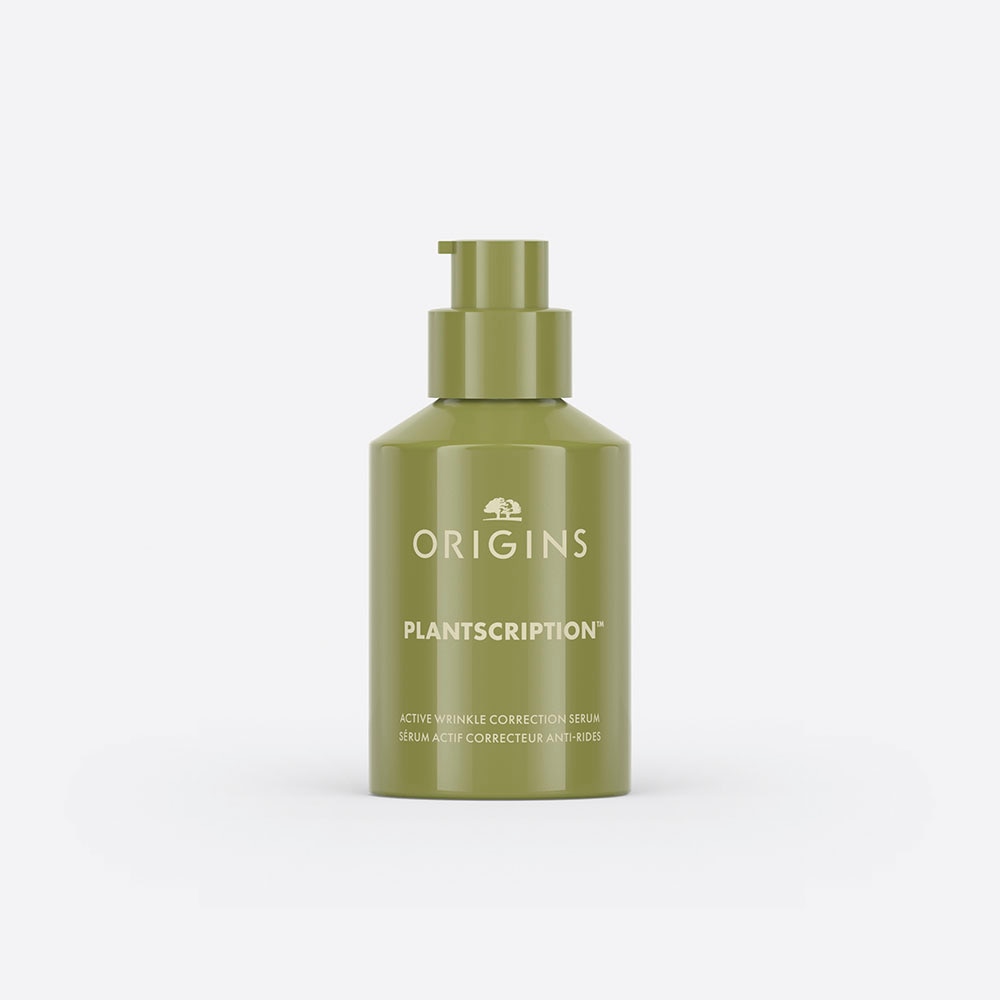
Plantscription Active Wrinkle Correction Serum With Retinoid

Plantscription Active Wrinkle Correction Serum With Retinoid
Origins
plantscription-active-wrinkle-correction-serum-with-retinoid
Serum
9818389971237
Morning or Evening?
How often will you use this product?
Notes


Highlights
WHAT IS IT?
Anti-aging retinoid serum with 94% naturally-derived ingredients
FEATURES
Reduces appearance of stubborn wrinkles in 2 weeks, Gentle enough for twice daily use, Appropriate for sensitive skin
BEST FOR
Dry, Oily, Normal, Combination, Sensitive
CHECKS
Free of parabens, phthalates, formaldehyde, SLS, mineral oil, petrolatum, paraffin, DEA, polyethylene beads
Who Is It For?
Adults Concerned With Aging All Skin Types Including SensitiveWhat Does It Help With?
Wrinkles Fine Lines Firmness Skin AgingBudget
Mid-range ($30-$75)How To Use
Which routine should it be used in?
Instructions:
Key Information


What Origins Says
Product Description:
94% naturally-derived Active Wrinkle Serum with Retinoid for powerful, visible wrinkle transformation. Gentle enough for day and night use, appropriate for all skin types including sensitive skin.
About the Brand:
Ingredients Overview
Ingredients List
water\aqua\eau • glycerin • butylene glycol • dicaprylyl carbonate • octyldodecanol • silica • ascorbyl glucoside • hydroxypinacolone retinoate • anogeissus leiocarpus bark extract • acetyl hexapeptide-8 • palmitoyl tripeptide-1 • palmitoyl tetrapeptide-7 • palmitoyl hexapeptide-12 • glycyrrhetinic acid • laminaria digitata extract • sigesbeckia orientalis (st. paul's wort) extract • niacinamide • sodium hyaluronate • caffeine • glycine soja (soybean) seed extract • porphyridium cruentum extract • sorbitol • oryzanol • glycine soja (soybean) oil • lecithin • lauroyl lysine • ethylhexylglycerin • lauryl glucoside • myristyl glucoside • tocopherol • polyglyceryl-10 laurate • xanthan gum • sodium citrate • sodium phytate • citric acid • polyglyceryl-6 laurate • dimethyl isosorbide • polysorbate 20 • peg-8 • glyceryl polymethacrylate • sodium acrylates copolymer • carbomer • hibiscus abelmoschus extract*, illicium verum (anise) fruit/seed oil*, citrus aurantium bergamia (bergamot) fruit oil*, pelargonium graveolens flower oil*, lavandula angustifolia (lavender) oil*, citrus limon (lemon) peel oil*, carthamus tinctorius (safflower) seed oil, litsea cubeba fruit oil*, citrus nobilis (mandarin orange) peel oil*, myristica fragrans (nutmeg) kernel oil*, citrus aurantium dulcis (orange) peel oil*, rosa damascena flower oil • linalool • citronellol • limonene • geraniol • sodium hydroxide • phenoxyethanol • potassium sorbate * essential oil
Key Ingredients
Retinoid, Acetyl Hexapeptide-8, Anogeissus Bark Extract, Laminaria Digitata
Ingredients Details
Acetyl Hexapeptide-8
Common Name(s): Argireline plus,snap-6,acetyl glutamyl hexapeptide-3 modified
CAS Number: 616204-22-9
DESCRIPTION
What It Does: Inhibits neuromuscular acetylcholine release for reduced facial muscle contraction and expression line formation.
Why It's Used: Enhanced argireline analog with improved stability for formulations requiring optimized neuro-inhibiting anti-wrinkle performance.
How It Works: Competes with snap-25 protein for binding to the snare complex, reducing vesicular acetylcholine release at neuromuscular junctions. reduced acetylcholine binding decreases muscle contraction amplitude, reducing expression line depth with repeated use.
Typically Found In: Anti-wrinkle creams,expression line treatments,forehead/eye area products
TECHNICAL DETAILS
Primary Category: Active ingredient – neurotransmitter-inhibiting peptide
Secondary Functions: Enhanced snare inhibition,improved stability
Application Areas:

Facial Skincare

Body Care
Hair Care
Beard Care
Color Cosmetics (Makeup)
Dietary/Oral Supplements
Typical Concentration Range: 3–1000 ppm
SOURCING & ETHICS
Vegan Status: Yes – synthetic
Halal Status: Yes
Source Notes: Synthetically produced. encapsulation may improve delivery to neuromuscular junction.
SKIN COMPATIBILITY
Irritancy Rating: 1/5 – very low
Comedogenicity Rating: 0/5 – non-comedogenic
Sensitivity Concerns: Non-irritating.
Safe for Sensitive Skin: Yes
SAFETY & COMPATIBILITY
Safety Profile: Exceptional safety profile. ewg score: 1.
Works Well With: Hyaluronic acid,ceramides,retinol,moisturizers
Avoid Combining With: No significant incompatibilities
SCIENTIFIC NOTE
Hexapeptide-8 differs from argireline (hexapeptide-3) in its c-terminal modification that increases resistance to enzymatic degradation by skin proteases. this improved stability extends the bioavailability of the active peptide at the neuromuscular junction, potentially improving clinical anti-wrinkle efficacy vs the original argireline.
Last Verified: 2026-03-12
Primary Sources: Cosing database,lipotec argireline plus data
Anogeissus Leiocarpus Bark Extract
Common Name(s): Anogeissus leiocarpus bark extract
DESCRIPTION
What It Does: Provides antioxidant protection, soothing anti-inflammatory effects, and skin-conditioning benefits through plant-derived polyphenols and phytochemicals.
Why It's Used: Plant extracts concentrate bioactive phytochemicals evolved for environmental protection — uv, microbial, and oxidative stressors — that translate to skin benefits.
How It Works: Polyphenols (flavonoids, phenolic acids) inhibit nf-κb-mediated inflammatory signaling, scavenge reactive oxygen species through electron donation, and chelate pro-oxidant metal ions to reduce oxidative skin damage.
Typically Found In: Serums,toners,moisturizers,masks,essences
TECHNICAL DETAILS
Primary Category: Botanical extracts
Secondary Functions: Antioxidant,anti-inflammatory
Application Areas:
Facial Skincare
Body Care
Hair Care
Beard Care
Color Cosmetics (Makeup)
Dietary/Oral Supplements
Typical Concentration Range: 0.1–10%
SOURCING & ETHICS
Vegan Status: Yes
Halal Status: Yes
Source Notes: Plant-derived extract; no animal components.
SKIN COMPATIBILITY
Irritancy Rating: 1
Comedogenicity Rating: 0
Sensitivity Concerns: Low sensitization potential at recommended use concentrations.
Safe for Sensitive Skin: Yes
SAFETY & COMPATIBILITY
Safety Profile: Well-characterized cosmetic ingredient with established safety profile. generally non-irritating at typical use concentrations. suitable for leave-on and rinse-off cosmetics.
Works Well With: Niacinamide,hyaluronic acid,vitamin c,ceramides
Avoid Combining With: Strong oxidizing agents
SCIENTIFIC NOTE
Plant secondary metabolites (flavonoids, terpenes, phenolic acids) are biosynthesized as defense compounds against uv, herbivores, and pathogens. their anti-inflammatory activity typically derives from competitive inhibition of cox-2 and 5-lox enzymes (ic50 1–50 µm), while antioxidant activity involves single electron transfer (set) and hydrogen atom transfer (hat) mechanisms with structure-dependent rate constants.
Last Verified: 2025-01-15
Primary Sources: Cosing eu database; pcpc cosmetic ingredient safety reviews; phytochemical and ethnobotanical literature
Ascorbyl Glucoside
Common Name(s): Aa2g,2-o-alpha-d-glucopyranosyl-l-ascorbic acid
CAS Number: 129499-78-1
DESCRIPTION
What It Does: Provides stable gradual-release vitamin c activity for brightening and antioxidant protection.
Why It's Used: Most formulation-stable vitamin c derivative — ascorbyl glucoside remains stable in aqueous formulations where pure ascorbic acid oxidises within days, providing sustained vitamin c delivery over weeks of shelf life.
How It Works: Alpha-glucoside bond resists oxidation until cleaved by skin alpha-glucosidase enzymes. releases free l-ascorbic acid in viable epidermis. released ascorbic acid inhibits tyrosinase, stimulates collagen synthesis, and provides antioxidant activity. glucose group provides enhanced water solubility vs ascorbic acid.
Typically Found In: Stable vitamin c serums,brightening products,anti-aging
TECHNICAL DETAILS
Primary Category: Active ingredient – stable vitamin c glucoside
Secondary Functions: Tyrosinase inhibitor,collagen cofactor
Application Areas:
Facial Skincare
Body Care
Hair Care
Beard Care
Color Cosmetics (Makeup)
Dietary/Oral Supplements
Typical Concentration Range: 1%–5%
SOURCING & ETHICS
Vegan Status: Yes – enzymatic synthesis from ascorbic acid and glucose
Halal Status: Yes
Source Notes: Synthetically produced vitamin c derivative.
SKIN COMPATIBILITY
Irritancy Rating: 1/5 – very low
Comedogenicity Rating: 0/5 – non-comedogenic
Sensitivity Concerns: Non-irritating; suitable for all skin types.
Safe for Sensitive Skin: Yes
SAFETY & COMPATIBILITY
Safety Profile: Excellent safety profile. ewg score: 1.
Works Well With: Tocopherol,ferulic acid,niacinamide,spf
Avoid Combining With: No significant incompatibilities
SCIENTIFIC NOTE
Ascorbyl glucoside's stability advantage (18+ months in aqueous formulation vs days for ascorbic acid) arises from the glucose group's steric protection of ascorbic acid's c2 enediol that is the primary oxidation site. glucosidase cleavage in skin removes this protection in situ, releasing active ascorbic acid only where enzymatic activity exists — providing both formulation stability and bioactivation where needed.
Last Verified: ##########
Primary Sources: Cosing database,yamamoto et al. ascorbyl glucoside stability study
Butylene Glycol
Common Name(s): 1,3-butanediol,bg,1,3-butylene glycol
CAS Number: 107-88-0
DESCRIPTION
What It Does: Provides humectant hydration and active ingredient solubilization with excellent skin feel.
Why It's Used: Preferred glycol humectant in premium and k-beauty formulations for superior skin feel vs propylene glycol with equivalent functionality.
How It Works: Two hydroxyl groups at 1,3-positions provide water binding and solvent activity. better tolerated than propylene glycol with minimal sensitization risk. 4-carbon backbone provides slightly greater hydrophobic character enabling dissolution of less polar actives vs pg.
Typically Found In: Toners,essences,serums,k-beauty formulas
TECHNICAL DETAILS
Primary Category: Functional ingredient – glycol humectant
Secondary Functions: Tewl reduction,skin plumping
Application Areas:
Facial Skincare
Body Care
Hair Care
Beard Care
Color Cosmetics (Makeup)
Dietary/Oral Supplements
Typical Concentration Range: 1%–10%
SOURCING & ETHICS
Vegan Status: Yes – synthetic
Halal Status: Yes
Source Notes: Synthetic or naturally derived. excellent aqueous solubility.
SKIN COMPATIBILITY
Irritancy Rating: 1/5 – very low
Comedogenicity Rating: 0/5 – non-comedogenic
Sensitivity Concerns: Non-irritating; suitable for all skin types.
Safe for Sensitive Skin: Yes
SAFETY & COMPATIBILITY
Safety Profile: Excellent safety profile. ewg score: 1.
Works Well With: Ceramides,emollients,occlusives,glycerin,hyaluronic acid
Avoid Combining With: No significant incompatibilities
SCIENTIFIC NOTE
K-beauty's preference for butylene glycol over propylene glycol is driven by two factors: bg's superior skin feel (less tacky than pg's higher viscosity) and its lower sensitization potential (1,3-bg has better spatial distribution of hydroxyl groups that reduces protein interaction vs pg's 1,2-position oh groups).
Last Verified: 2026-03-12
Primary Sources: Cosing database,cir safety assessment