

Herbivore Botanicals
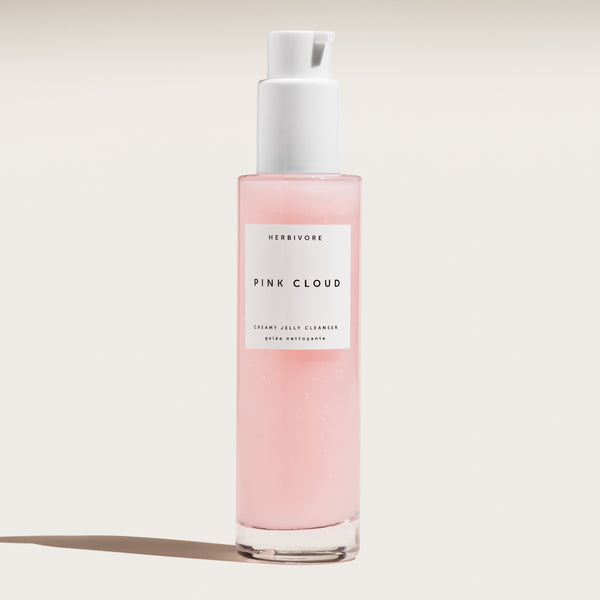
PINK CLOUD Rosewater + Tremella Creamy Jelly Cleanser

PINK CLOUD Rosewater + Tremella Creamy Jelly Cleanser
Herbivore Botanicals
pink-cloud-rosewater-tremella-creamy-jelly-cleanser
Cleanse
9706798416165
Morning or Evening?
How often will you use this product?
Notes


Highlights
WHAT IS IT?
Creamy Jelly Cleanser
FEATURES
Contains rosewater and tremella mushroom
BEST FOR
dry
CHECKS
Free of synthetic ingredients, parabens, sodium laurel sulfate, phthalates, chemicals, fillers, mineral oils, petroleum
Who Is It For?
What Does It Help With?
Barrier Repair Hydration Redness Texture ImprovementBudget
Affordable (under $30)How To Use
Which routine should it be used in?
Instructions:
Key Information


About the Brand:
Ingredients Overview
Ingredients List
Aqua/Water/Eau, Rosa Damascena Flower Water, Decyl Glucoside, Glycerin, Sodium Lauroyl Lactylate, Squalane, Glyceryl Caprylate, Xanthan Gum, Glyceryl Stearate, Tremella Fuciformis Sporocarp Extract, Caprylhydroxamic Acid, Camellia Sinensis Leaf Extract, Aloe Barbadensis Leaf Juice, Citric Acid, Eclipta Prostrata Extract, Sodium Hyaluronate, Melia Azadirachta Leaf Extract, Moringa Oleifera Seed Oil, Cocos Nucifera (Coconut) Fruit Juice, Tapioca Starch
Key Ingredients
rosewater, tremella-mushroom, glycerin, squalane
Ingredients Details
Camellia Sinensis Leaf Extract
Common Name(s): Camellia sinensis leaf extract,botanical extract,phytochemical active
CAS Number: N/a
DESCRIPTION
What It Does: Provides antioxidant protection from reactive oxygen species, reduces inflammatory cytokine production in skin, and conditions skin surface through the plant's secondary metabolite complex.
Why It's Used: Chosen for its natural origin narrative, traditional use heritage, and multi-functional phytochemical profile that supports several concurrent skin care claims from one ingredient.
How It Works: Polyphenols, terpenoids, and alkaloids in the extract scavenge ros via hydrogen atom transfer, inhibit nf-kb or cox-2 inflammatory pathways, and interact with skin surface proteins for conditioning.
Typically Found In: Botanical skin care,natural products
TECHNICAL DETAILS
Primary Category: Active ingredient – antioxidant
Secondary Functions: Free radical scavenging,anti-aging
Application Areas:

Facial Skincare
Body Care

Hair Care
Beard Care
Color Cosmetics (Makeup)
Dietary/Oral Supplements
Typical Concentration Range: 0.1%–10%
SOURCING & ETHICS
Vegan Status: Yes
Halal Status: Yes
Source Notes: Plant-derived extract or synthetic.
SKIN COMPATIBILITY
Irritancy Rating: 1/5 – very low
Comedogenicity Rating: 0/5 – non-comedogenic
Sensitivity Concerns: Non-irritating; well-tolerated.
Safe for Sensitive Skin: Yes
SAFETY & COMPATIBILITY
Safety Profile: Excellent safety profile. ewg score: 1.
Works Well With: Vitamin c,vitamin e,ferulic acid,spf,other antioxidants
Avoid Combining With: No significant incompatibilities
SCIENTIFIC NOTE
Plant secondary metabolites evolved as uv photoprotectants and antimicrobial agents — mechanisms that directly translate to cosmetic antioxidant and anti-inflammatory activity in human skin.
Last Verified: Cosing database,camellia sinensis leaf extract botanical review
Primary Sources: 2026-03-12
Decyl Glucoside
Common Name(s): Capryl glucoside,apg surfactant,alkyl polyglucoside
CAS Number: 68515-73-1
DESCRIPTION
What It Does: Provides gentle non-ionic cleansing from natural glucose-derived surfactant chemistry.
Why It's Used: Leading natural-origin surfactant for green/natural formulations requiring gentle, non-ionic cleansing with excellent biodegradability credentials.
How It Works: Non-ionic surfactant with glucoside headgroup and decyl (c10) chain provides mild cleansing via micelle formation. non-ionic character provides lower irritation potential than anionic surfactants. fully biodegradable and from renewable sources.
Typically Found In: Natural cleansers,baby products,green beauty formulas,scalp cleansers
TECHNICAL DETAILS
Primary Category: Functional ingredient – alkyl glucoside surfactant
Secondary Functions: Skin conditioning
Application Areas:
Facial Skincare
Body Care
Hair Care
Beard Care
Color Cosmetics (Makeup)
Dietary/Oral Supplements
Typical Concentration Range: 2%–20%
SOURCING & ETHICS
Vegan Status: Yes – from glucose (plant) and fatty alcohols
Halal Status: Yes
Source Notes: Commercially produced for cosmetic use. verify vegan/halal status with supplier.
SKIN COMPATIBILITY
Irritancy Rating: 1/5 – very low
Comedogenicity Rating: 0/5 – non-comedogenic
Sensitivity Concerns: Well-tolerated by most skin types.
Safe for Sensitive Skin: Yes
SAFETY & COMPATIBILITY
Safety Profile: Good safety profile at recommended concentrations. ewg score: 1–2.
Works Well With: Standard skincare actives
Avoid Combining With: No known significant incompatibilities
SCIENTIFIC NOTE
Alkyl glucosides' (apgs) non-ionic character means they have no electrical charge that could interact with skin surface proteins and phospholipids – a key reason for their exceptional mildness. ionic surfactants (sulfates, carboxylates) bind to positively charged protein lysine/arginine residues causing denaturation; apgs have no such binding affinity.
Last Verified: Cosing database,cir safety assessment
Primary Sources: 2026-03-12
Glycerin
Common Name(s): Glycerol,glycerine,1,2,3-propanetriol
CAS Number: 56-81-5
DESCRIPTION
What It Does: Glycerin pulls water from the environment and deeper skin layers into the outer skin layer (epidermis), boosting moisture levels and keeping skin soft, smooth, and plump.
Why It's Used: It is used in virtually every moisturizer, serum, and cleanser because it is highly effective at hydrating skin, is well-tolerated by all skin types, and enhances the texture and spreadability of formulations.
How It Works: As a humectant, glycerin forms hydrogen bonds with water molecules, trapping them in the skin. it also reinforces the skin barrier by integrating into lipid structures between skin cells.
Typically Found In: Moisturizers,serums,cleansers,toners,sheet masks,sunscreens,body lotions,shampoos,conditioners
TECHNICAL DETAILS
Primary Category: Humectant
Secondary Functions: Skin barrier support,emollient,solvent
Application Areas:
Facial Skincare
Body Care
Hair Care
Beard Care
Color Cosmetics (Makeup)
Dietary/Oral Supplements
Typical Concentration Range: 1%–30% (typical: 3–10%)
SOURCING & ETHICS
Vegan Status: Yes – plant-derived (coconut, soy, palm) or synthetic
Halal Status: Yes – when plant-derived or synthetic; verify source with supplier
Source Notes: Derived from plant oils via hydrolysis or saponification; synthetic versions also available. palm-derived glycerin carries sustainability concerns.
SKIN COMPATIBILITY
Irritancy Rating: 1/5 – very low; non-irritating at all standard concentrations
Comedogenicity Rating: 0/5 – non-comedogenic
Sensitivity Concerns: Extremely rare allergic reactions; generally safe for all skin types including sensitive and baby skin
Safe for Sensitive Skin: Yes
SAFETY & COMPATIBILITY
Safety Profile: Widely recognized as safe. ewg hazard score: 1. no significant concerns for irritation, sensitization, or toxicity at typical concentrations (up to 50%).
Works Well With: Hyaluronic acid,ceramides,niacinamide,panthenol,urea,peptides,retinol,ahas/bhas
Avoid Combining With: No known incompatibilities at standard concentrations
SCIENTIFIC NOTE
Glycerin is an endogenous skin component found naturally in the stratum corneum. aquaporin-3 channels in keratinocytes facilitate glycerin transport, making it integral to natural skin hydration pathways.
Last Verified: Cosing database,cir safety assessment,ewg skin deep,inci decoder
Primary Sources: 2026-03-12
Glyceryl Caprylate
Common Name(s): Glycerol monocaprylate,mono caprylate of glycerol,schercemol gmc
CAS Number: 26402-26-6
DESCRIPTION
What It Does: Provides natural origin antimicrobial preservation alongside skin conditioning in clean beauty formulations.
Why It's Used: Natural-origin preservative for truly natural formulations seeking effective preservation without synthetic preservatives.
How It Works: Monoglyceride structure inserts into microbial cell membranes via the caprylic acid chain, disrupting membrane integrity. glycerol moiety contributes skin conditioning. effective against gram-positive bacteria and some yeasts at formulation concentrations.
Typically Found In: Natural and organic cosmetics,clean beauty,cosmos-certified products
TECHNICAL DETAILS
Primary Category: Functional ingredient – natural monoglyceride preservative
Secondary Functions: Skin conditioning
Application Areas:
Facial Skincare
Body Care
Hair Care
Beard Care
Color Cosmetics (Makeup)
Dietary/Oral Supplements
Typical Concentration Range: 0.3%–1.5%
SOURCING & ETHICS
Vegan Status: Yes – from glycerol and caprylic acid (plant sources)
Halal Status: Yes
Source Notes: From vegetable glycerol and plant-derived caprylic acid (coconut/palm kernel). cosmos-approved for certified natural cosmetics.
SKIN COMPATIBILITY
Irritancy Rating: 1/5 – very low
Comedogenicity Rating: 0/5 – non-comedogenic
Sensitivity Concerns: Well-tolerated by most skin types.
Safe for Sensitive Skin: Yes
SAFETY & COMPATIBILITY
Safety Profile: Good safety profile at recommended concentrations. ewg score: 1–2.
Works Well With: Standard skincare actives
Avoid Combining With: No known significant incompatibilities
SCIENTIFIC NOTE
Glyceryl caprylate's preservation mechanism (membrane disruption via monoglyceride structure) is distinct from synthetic preservatives (protein enzyme inhibition). this mechanistic difference is why it is approved in cosmos natural certification where synthetic enzyme inhibitors are not permitted.
Last Verified: Cosing database,cosmos standard,basf technical data
Primary Sources: 2026-03-12
