

Pilgrim
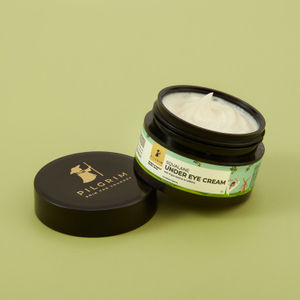
Pilgrim Squalane under eye cream for dark circles with Phyto-Retinol & caffeine 30 gm

Pilgrim Squalane under eye cream for dark circles with Phyto-Retinol & caffeine 30 gm
Pilgrim
pilgrim-squalane-under-eye-cream-for-dark-circles-with-phyto-retinol-caffeine-30-gm
Eyecare
10084768284965
Morning or Evening?
How often will you use this product?
Notes


Highlights
WHAT IS IT?
Under eye cream with Phyto-retinol and caffeine
FEATURES
Weightless, ultra-hydrating; reduces fine lines and wrinkles; soothes delicate skin; calms puffiness; improves blood circulation; refreshed bright look
BEST FOR
sensitive
CHECKS
No redness or skin irritation from retinol alternative mentioned
Who Is It For?
No Specific Age Or Gender MentionedWhat Does It Help With?
Dark Circles Puffiness Fine Lines Wrinkles Dullness Around EyesBudget
Affordable (under $30)How To Use
Which routine should it be used in?
Instructions:
Key Information


What Pilgrim Says
Product Description:
Squalane Under Eye Cream is a weightless, ultra-hydrating eye cream that gives a refreshed and rejuvenated look. Crafted with squalane that locks in moisture by strengthening the protective skin barrier. The cream delivers reduced fine lines and wrinkles around the eyes. Phyto-retinol, a natural alternative to retinol minus the redness or skin irritation, soothes the delicate skin around the eyes and helps calm the look of puffiness. Caffeine in the eye cream boosts blood circulation and keeps eyes looking bright. Just a few dabs of Pilgrim Squalane Under Eye Cream can give a refreshed bright look.
About the Brand:
Ingredients Overview
Ingredients List
Purified Water, Caffeine, Niacinamide, Squalane, Betaine, Cetyl Alcohol, Ethylhexyl Olivate, Sodium Acrylates Copolymer, Polyglyceryl-4 Olivate, Stearic Acid, Acetyl Tetrapeptide-5, Maltodextrin, Punica Granatum Flower Extract, Sodium Ascorbyl Phosphate, Psoralea Corylifolia (Bakuchi) Oil, Cucumis Sativus (Cucumber) Fruit Extract, Persea Gratissima (Avocado) Fruit Extract, Glycerin, Sodium Hyaluronate, Phenoxyethanol, Ethylhexylglycerin, Astrocaryum Murumuru Seed Butter, Bidens Pilosa Extract, Gossypium Herbaceum (Cotton) Seed Oil, Linum Usitatissimum (Linseed) Seed Oil, Sodium Acrylates Copolymer, Lecithin, Sodium Benzoate, Potassium Sorbate, Olea Europaea (Olive) Leaf Extract, Panthenol, Tocopheryl Acetate, Sodium Gluconate, Rose Oil, Tuberose Oil, Bergamot Oil
Key Ingredients
Squalane, Phyto-retinol, Caffeine
Ingredients Details
Acetyl Tetrapeptide-5
Common Name(s): Eyeseryl,ac-beta-ala-his-ser-his
CAS Number: 820959-17-9
DESCRIPTION
What It Does: Reduces periorbital puffiness and edema by limiting hyaluronan accumulation and improving vascular integrity.
Why It's Used: Targeted eye peptide for comprehensive under-eye treatment addressing puffiness, dark circles, and loss of firmness through multiple complementary mechanisms.
How It Works: Inhibits hyaluronan-protein cross-linking that causes excessive water retention (edema) under eyes. also reduces vascular permeability and improves lymphatic drainage. anti-glycation activity reduces skin stiffness.
Typically Found In: Eye creams,under-eye serums,anti-puffiness products
TECHNICAL DETAILS
Primary Category: Active ingredient – eyeseryl eye peptide
Secondary Functions: Anti-edema,dark circle reduction,eye firmness
Application Areas:

Facial Skincare

Body Care
Hair Care
Beard Care
Color Cosmetics (Makeup)
Dietary/Oral Supplements
Typical Concentration Range: 50–500 ppm
SOURCING & ETHICS
Vegan Status: Conditional - supplier confirmation required
Halal Status: Unverified - supplier confirmation required
Source Notes: Spps synthesis. commercially available as eyeseryl (lipotec). [audit 2026-07-29 rev2: the record's own source_notes does not assert a non-animal origin, or instructs the reader to verify with the supplier; "yes" asserts knowledge the record does not hold. determination requires shariah-panel sign-off.]
SKIN COMPATIBILITY
Irritancy Rating: 1/5 – very low
Comedogenicity Rating: 0/5 – non-comedogenic
Sensitivity Concerns: Non-irritating; suitable for all skin types.
Safe for Sensitive Skin: Yes
SAFETY & COMPATIBILITY
Safety Profile: Exceptional safety profile. ewg score: 1.
Works Well With: Hyaluronic acid,ceramides,retinol,vitamin c,niacinamide
Avoid Combining With: Avoid mixing with high-concentration ahas at same ph (may hydrolyze peptide bonds)
SCIENTIFIC NOTE
Under-eye puffiness is driven by hyaluronan accumulation (water binding) and impaired lymphatic drainage. eyeseryl's inhibition of ha-protein crosslinking reduces the osmotic water-trapping capacity of the extracellular matrix, providing a mechanistically unique anti-puffiness approach.
Last Verified: 2026-03-12
Primary Sources: Cosing database,lipotec eyeseryl technical data,clinical study journal of cosmetic dermatology
Astrocaryum Murumuru Seed Butter
Common Name(s): Astrocaryum murumuru seed butter,botanical oil/butter,phytochemical active
CAS Number: N/a
DESCRIPTION
What It Does: Provides emollient conditioning, essential fatty acid supplementation, and barrier lipid support from the natural triglyceride/wax ester composition.
Why It's Used: Natural carrier oils provide sc-compatible lipid composition for genuine barrier integration rather than surface-only occlusion.
How It Works: Fatty acid triglycerides integrate into sc lipid bilayers delivering oleic, linoleic, and linolenic acid for emolliency and barrier repair; essential fatty acids serve as ceramide biosynthesis precursors.
Typically Found In: Botanical skin care,natural products
TECHNICAL DETAILS
Primary Category: Active ingredient – antioxidant
Secondary Functions: Free radical scavenging,anti-aging
Application Areas:
Facial Skincare
Body Care
Hair Care
Beard Care
Color Cosmetics (Makeup)
Dietary/Oral Supplements
Typical Concentration Range: 0.1%–30%
SOURCING & ETHICS
Vegan Status: Conditional - supplier confirmation required
Halal Status: Conditional - basis not stated in source record; supplier origin confirmation required to determine what evidence applies
Source Notes: Plant-derived extract or synthetic. [audit 2026-07-29 rev2: status downgraded on audit. determination requires shariah-panel sign-off.]
SKIN COMPATIBILITY
Irritancy Rating: 1/5 – very low
Comedogenicity Rating: 0/5 – non-comedogenic
Sensitivity Concerns: Non-irritating; well-tolerated.
Safe for Sensitive Skin: Yes
SAFETY & COMPATIBILITY
Safety Profile: Excellent safety profile. ewg score: 1.
Works Well With: Vitamin c,vitamin e,ferulic acid,spf,other antioxidants
Avoid Combining With: No significant incompatibilities
SCIENTIFIC NOTE
Plant secondary metabolites evolved for uv photoprotection and pathogen defence — mechanisms directly applicable to cosmetic antioxidant and anti-inflammatory activity in human skin.
Last Verified: 2026-03-12
Primary Sources: Cosing database,astrocaryum murumuru seed butter botanical review
Bergamot Oil
Common Name(s): Bergamot oil,fcf bergamot,calabrian bergamot
CAS Number: 89957-91-5
DESCRIPTION
What It Does: Provides the signature citrus-floral bergamot scent central to eau de cologne tradition.
Why It's Used: The defining eau de cologne fragrance – bergamot oil's unique linalyl acetate-limonene balance creates the fresh floral-citrus character that defines classic cologne and most modern citrus fragrances.
How It Works: Linalyl acetate (25-40%) provides floral note; d-limonene (30-45%) provides citrus. bergaptene (naturally phototoxic furanocoumarin) removed in fcf (furocoumarin-free) certified grades. linalool provides anxiolytic gaba-a activity.
Typically Found In: Cologne/eau de toilette,men's and women's fragrance,earl grey products
TECHNICAL DETAILS
Primary Category: Fragrance – citrus floral
Secondary Functions: Skin conditioning
Application Areas:
Facial Skincare
Body Care
Hair Care
Beard Care
Color Cosmetics (Makeup)
Dietary/Oral Supplements
Typical Concentration Range: 0.001%–5%
SOURCING & ETHICS
Vegan Status: Conditional - supplier confirmation required
Halal Status: Unverified - supplier confirmation required
Source Notes: Commercially produced for cosmetic use. verify vegan/halal status with supplier. [audit 2026-07-29 rev2: the record's own source_notes does not assert a non-animal origin, or instructs the reader to verify with the supplier; "yes" asserts knowledge the record does not hold. determination requires shariah-panel sign-off.]
SKIN COMPATIBILITY
Irritancy Rating: 1/5 – very low
Comedogenicity Rating: 0/5 – non-comedogenic
Sensitivity Concerns: Well-tolerated by most skin types.
Safe for Sensitive Skin: Yes
SAFETY & COMPATIBILITY
Safety Profile: Use fcf (furocoumarin-free) grade for leave-on skin products to avoid bergaptene phototoxicity. multiple eu declared allergens present.
Works Well With: Standard skincare actives
Avoid Combining With: No known significant incompatibilities
SCIENTIFIC NOTE
Genuine bergamot oil is grown exclusively in a small coastal strip of calabria, southern italy (reggio calabria province). eu pdo (protected designation of origin) certification was granted to calabrian bergamot in 2001 – one of the few essential oils with geographic origin protection comparable to champagne for sparkling wine, reflecting the terroir-dependent composition differences between calabrian and other bergamot sources.
Last Verified: 2026-03-12
Primary Sources: Cosing database,ifra standards
Betaine
Common Name(s): Trimethylglycine,tmg,natural betaine
CAS Number: 107-43-7
DESCRIPTION
What It Does: Provides osmoprotective humectant conditioning with anti-irritant and mild foam-boosting activity.
Why It's Used: Natural-origin multifunctional osmolyte from sugar beet providing hydration, anti-irritancy, and conditioning in virtually every cosmetic category.
How It Works: Quaternary ammonium betaine provides zwitterionic character for water binding via ionic hydration. osmoprotective function at 100–500mm as compatible solute protecting cells from osmotic stress. reduces surfactant irritation by competing with sls for protein binding sites. mild foam enhancement.
Typically Found In: Virtually all categories — moisturisers, shampoos, cleansers
TECHNICAL DETAILS
Primary Category: Functional ingredient – humectant
Secondary Functions: Tewl reduction,skin plumping
Application Areas:
Facial Skincare
Body Care
Hair Care
Beard Care
Color Cosmetics (Makeup)
Dietary/Oral Supplements
Typical Concentration Range: 0.5%–10%
SOURCING & ETHICS
Vegan Status: Conditional - feedstock declaration required
Halal Status: Unverified - feedstock declaration required (plant, animal and petrochemical routes all exist)
Source Notes: Synthetic or naturally derived. excellent aqueous solubility. [audit 2026-07-29 rev2: origin-dependent: the same inci exists in plant, animal and petrochemical versions and the name does not discriminate. determination requires shariah-panel sign-off.]
SKIN COMPATIBILITY
Irritancy Rating: 1/5 – very low
Comedogenicity Rating: 0/5 – non-comedogenic
Sensitivity Concerns: Non-irritating; suitable for all skin types.
Safe for Sensitive Skin: Yes
SAFETY & COMPATIBILITY
Safety Profile: Excellent safety profile. ewg score: 1.
Works Well With: Ceramides,emollients,occlusives,glycerin,hyaluronic acid
Avoid Combining With: No significant incompatibilities
SCIENTIFIC NOTE
Betaine's anti-irritant mechanism for surfactant systems involves competitive protein protection: betaine at high concentrations preferentially interacts with skin proteins, occupying binding sites that would otherwise be occupied by surfactant molecules causing protein denaturation. this competition reduces available protein binding for irritating surfactants, explaining betaine's well-documented ability to reduce sls irritation when co-formulated.
Last Verified: 2026-03-12
Primary Sources: Cosing database,craig betaine osmoprotective review,cir safety assessment